Quarantine Zombies: How to Detect Infected Symptoms in Stones Games’ Prologue
I’ve played enough survival games over the years to become skeptical whenever another ‘zombie apocalypse’ title appears on Steam. We’ve seen everything from hardcore survival simulators to arcade shooters that completely ignore tension in favor of endless action. Quarantine Zombies: Prologue surprised me because it tries to combine two completely different genres: an intense first-person zombie shooter and a checkpoint inspection simulator where every decision actually matters.
Instead of simply mowing down endless waves of undead, you’re responsible for deciding who gets to leave a quarantined Chicago and who never makes it past your checkpoint. That sounds simple at first, but after several hours with the Prologue, I realized the developers built a surprisingly stressful gameplay loop. Every refugee could either be another innocent survivor or the person who accidentally destroys what’s left of humanity.
If you’ve been struggling to identify infected civilians consistently, here’s everything I’ve learned from my own experience together with techniques that experienced players have been discussing across the community.
Quarantine Zombies Scanner Guide: How to Use Full Body Scanner Properly
Why Infection Detection Is the Most Important Mechanic
The shooting is satisfying, the exploration sections are enjoyable, and upgrading your equipment feels rewarding. However, none of those systems matter if your inspection process is sloppy.
One mistake can completely change the flow of your run.
Allowing an infected refugee into the safe zone isn’t simply a minor gameplay penalty. It creates long-term problems, wastes valuable resources, and can eventually spiral into complete failure. On the other hand, executing innocent civilians too often damages your economy and makes future days even more difficult.
That constant pressure is what makes the checkpoint gameplay surprisingly addictive.
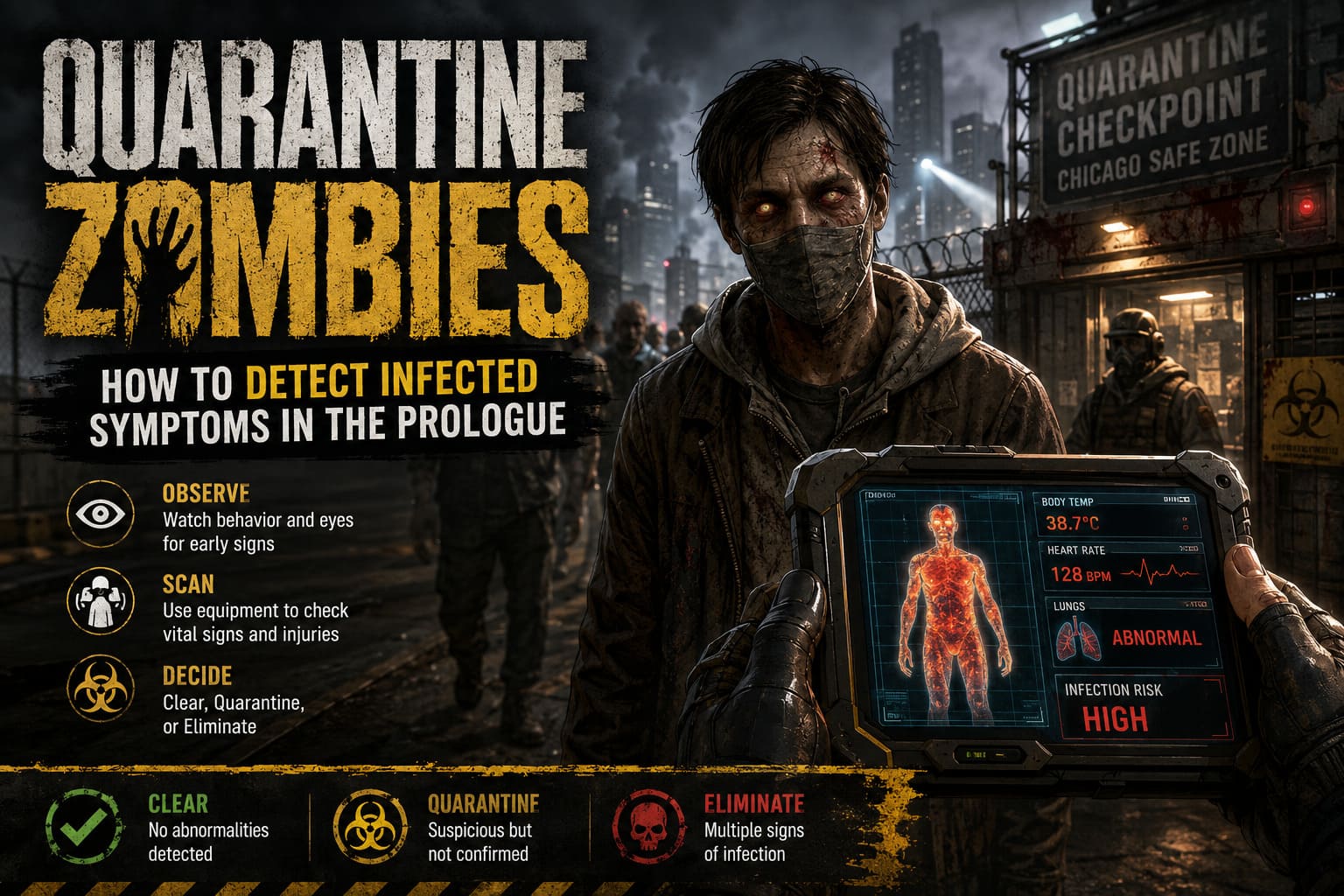
The Three-Step Inspection Routine I Always Follow
After experimenting with different approaches, I found one inspection routine that dramatically reduced my mistakes. Instead of rushing through refugees, I started treating every inspection like a small investigation.
1. Watch Before You Scan
The biggest beginner mistake is relying on technology immediately.
Before activating any equipment, simply observe the refugee.
Small animations often reveal more than players expect:
- nervous body language
- unusual eye movement
- slow reactions
- awkward posture
- inconsistent speech
Sometimes a person who looks completely healthy suddenly begins acting strangely halfway through the conversation. Those little details are rarely random.
2. Use Diagnostic Equipment Properly
Once someone raises suspicion, it’s time for the scanner.
Unlike many survival games where scanning feels like a gimmick, the body scanner here provides meaningful information that can completely change your decision.
Internal damage, unusual heat signatures, hidden injuries, and suspicious biological activity become much easier to recognize once you stop rushing through each refugee.
Personally, I found that combining visual observation with scanner results is significantly more reliable than trusting either one independently.
3. Make the Final Decision Quickly
Eventually you’ll have to decide between three outcomes:
| Decision | When I Usually Choose It |
|---|---|
| Clear the refugee | No visual or scanner abnormalities appear. |
| Send to quarantine | Results are suspicious but inconclusive. |
| Eliminate immediately | Multiple infection indicators strongly confirm contamination. |
This final choice never becomes comfortable, and that’s exactly why the mechanic works so well.
The Most Common Infection Symptoms
One thing I appreciate about Quarantine Zombies is that infection isn’t always obvious.
Not every infected refugee looks like a classic movie zombie.
Instead, symptoms appear gradually, forcing players to pay attention to smaller details.
Eye Abnormalities
The eyes became the first thing I checked during every inspection.
Healthy survivors usually maintain natural eye movement and normal coloration.
Infected refugees often display:
- yellow discoloration
- bloodshot sclera
- unfocused stare
- unnaturally wide pupils
These visual clues don’t always guarantee infection, but they deserve additional investigation.
Strange Body Movements
Movement is another major giveaway.
Several infected NPCs subtly shake while standing still.
Others move with delayed coordination or appear unable to maintain balance naturally. These aren’t exaggerated horror animations—they’re intentionally understated, making them easy to overlook if you’re trying to process refugees too quickly.
Hidden Bite Marks
This quickly became one of the easiest ways to identify dangerous survivors.
Many refugees deliberately wear extra layers of clothing.
Always inspect exposed skin whenever possible.
Fresh bites, deep scratches, blackened tissue, and spreading veins almost always indicate serious trouble. Skipping clothing inspections simply isn’t worth the risk.
Unusual Dialogue
One feature I didn’t expect to enjoy was the dialogue system.
Some infected civilians begin repeating themselves.
Others become paranoid for no obvious reason.
You’ll occasionally encounter refugees desperately demanding immediate clearance without allowing proper inspection. That urgency itself should immediately raise suspicion.
Reading Scanner Data Correctly
The scanner isn’t difficult to understand once you know what you’re looking for.
Unfortunately, many players only glance at it for a second before making a decision.
I started slowing down and noticed several patterns appearing repeatedly.
Temperature Readings
Watch for:
- concentrated heat around the brain
- unusually cold extremities
- inconsistent body temperatures
These irregularities often suggest active infection progression.
Heart Activity
One interesting detail is how heart rate behaves.
A frightened civilian naturally has an elevated pulse.
An infected refugee, however, frequently maintains an abnormally high heartbeat regardless of conversation outcomes. That consistency becomes a useful warning sign.
Lung Condition
Respiratory scans deserve even more attention.
Darkened lungs or restricted breathing patterns frequently appeared before obvious physical symptoms developed. Ignoring those readings caused several failed inspections during my first playthrough.
Don’t Ignore Your Secondary Tools
The scanner gets most of the attention, but the supporting equipment deserves just as much credit.
Bio Flashlight
The flashlight isn’t only for visibility.
Checking pupil response often provides an incredibly fast first impression. Delayed reactions almost always justify additional testing.
Reflex Hammer
I underestimated this tool at first.
After using it consistently, I realized missing or delayed muscle responses frequently matched infected scanner results. It’s fast, requires little effort, and helps reduce unnecessary scanner usage.
Quarantine Room
One mechanic I wish more players used is temporary isolation.
Sometimes a refugee displays only one suspicious symptom.
Instead of gambling, quarantine becomes the safest option. Several questionable civilians later revealed obvious infection signs after additional observation.
Managing Long Refugee Lines
Difficulty increases significantly after the opening days.
More civilians arrive. Paperwork becomes more complicated. Symptoms become harder to identify.
Eventually you need a consistent workflow instead of relying on instinct.
The routine that worked best for me looked like this:
- Check documents.
- Observe behavior.
- Perform quick physical inspection.
- Use secondary tools.
- Scan only when necessary.
- Decide immediately.
This rhythm keeps the checkpoint moving without sacrificing accuracy.
Resource Management Matters More Than You Think
Another reason I enjoyed the Prologue is that checkpoint performance directly affects everything outside the checkpoint.
Accurate inspections earn more money. Money upgrades your equipment. Better equipment makes city expeditions safer. Safer expeditions provide more supplies.
Everything feeds back into the same gameplay loop. That creates a satisfying progression system instead of making inspection feel like a disconnected minigame.
My Personal Thoughts After Playing
After spending several sessions with Quarantine Zombies: Prologue, I honestly think its checkpoint mechanic is stronger than the zombie shooting itself.
The combat is enjoyable, but inspecting frightened civilians while wondering whether they’re hiding an infection creates far more tension than another hallway filled with zombies.
The game also deserves credit for avoiding overly obvious infection indicators. Instead of relying on dramatic visual transformations, it asks players to notice subtle details, compare evidence, and trust observation over assumptions. That slower pace keeps every inspection engaging from beginning to end.
Of course, the Prologue isn’t perfect. Some animations repeat, and after enough inspections you’ll begin recognizing familiar behavior patterns. Still, for an early version of the game, there’s already enough depth to make each day feel unpredictable.
If Stones Games continues expanding this foundation with additional symptoms, more advanced scanner mechanics, tougher moral decisions, and larger city raids, the full release could become one of the more memorable indie survival games in recent years.
For now, my biggest piece of advice is simple: slow down. Don’t trust appearances, don’t rush paperwork, and never assume calm behavior means someone is healthy. In Quarantine Zombies, careful observation saves more lives than perfect aim ever will.