The Moral Horror of Blood Baptism: Brencis, Silver Poison, and the Vampire Empire Lore
When I first read about The Blood of Dawnwalker, I had that familiar reaction I get with certain dark fantasy RPGs — a mix of curiosity and slight unease.
It’s the kind of game that doesn’t just want to entertain you; it wants to pull you into a world where morality feels like something constantly under erosion.
And at the center of that erosion sits one of its most disturbing and fascinating elements: the Blood Baptism ritual.
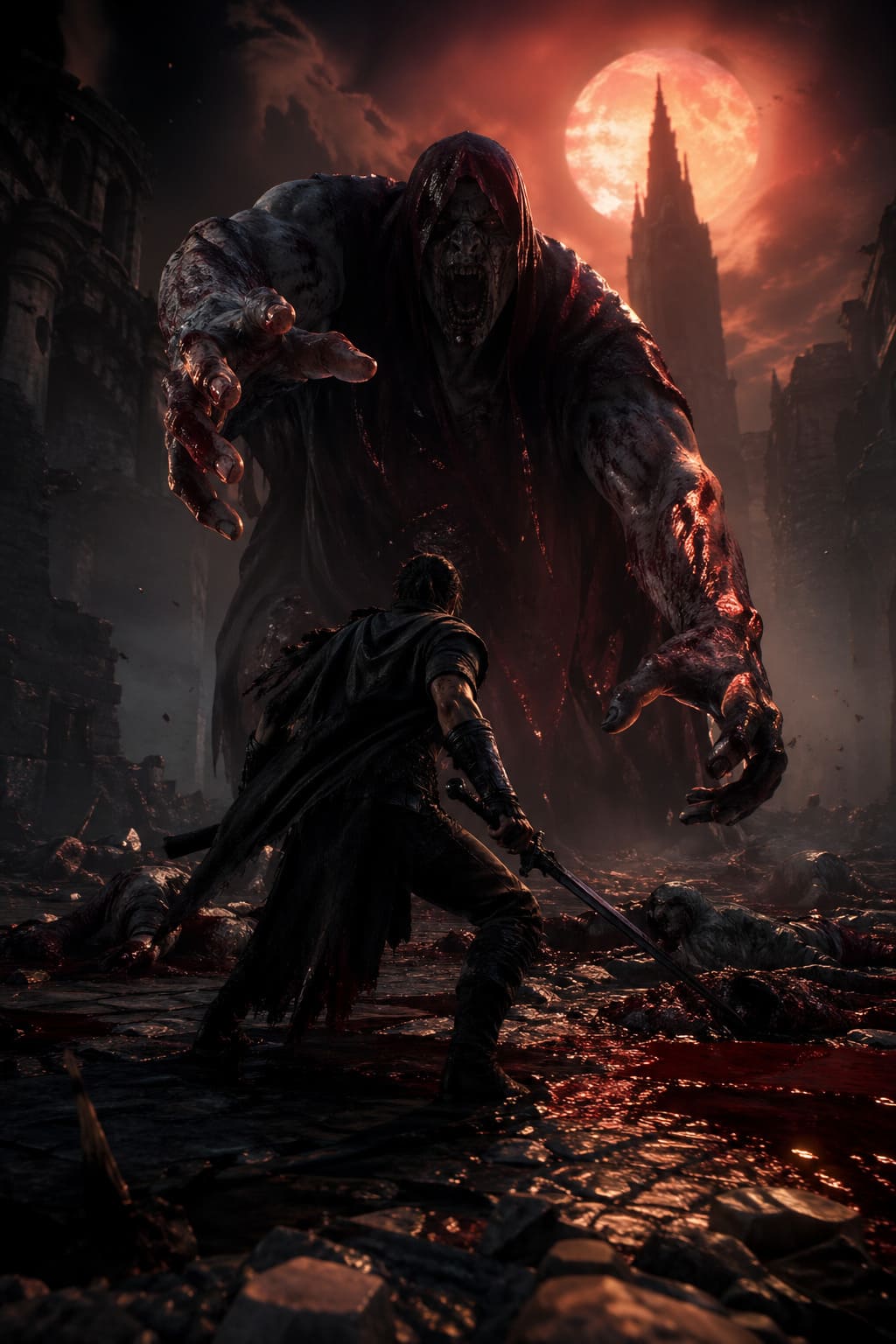
Set in the grim 14th-century inspired land of Vale Sangora, this ritual is more than just a scripted event. It feels like a narrative engine, a gameplay system, and a philosophical question rolled into one.
Let’s break it down in a way that actually feels human — because honestly, this is the kind of lore you don’t just “consume,” you sit with it.
Neebs Gaming & Hidden Legends: 10 Easter Eggs Every Conan Exiles Player Needs to Find in 2026
What the Blood Baptism Really Is (And Why It Sticks With You)
At first glance, the Blood Baptism looks like a corrupted religious ceremony. But the deeper you look, the more it resembles something far more unsettling: a system of control disguised as salvation.
Held inside the Svartrau Cathedral, the ritual is led publicly and framed as a sacred act. People line up not just out of fear, but hope — and that’s what makes it interesting.
The vampire lord Brencis positions himself as a healer. A savior. A divine answer to a plague-ridden valley.
But the truth underneath is much darker:
- His “healing blood” is not mercy, but dependency
- The ritual reinforces loyalty through physical and spiritual submission
- Faith becomes a currency exchanged for survival
What struck me most is how believable it feels in a medieval context. If you’ve ever played RPGs that deal with corrupted religion, you know this trope — but here, it’s handled with a heavier psychological edge.
Brencis: Savior, Tyrant, or Something Worse?
Brencis is not just a villain sitting in a castle waiting to be defeated. He’s a system.
He doesn’t force worship through pure violence — he engineers it through necessity. That’s what makes him dangerous.
From a narrative perspective, he replaces traditional saints like St. Mihai and St. Tyna, twisting their legacy into something that supports his authority. It’s not just conquest; it’s reinterpretation of history.
In many ways, the Blood Baptism is his masterpiece:
- It makes people choose submission
- It turns survival into devotion
- It erases resistance through gratitude
As a player, I find that more unsettling than outright tyranny. Because it raises a question most RPGs avoid: what if the “monster” is actually keeping people alive — just at a cost you can’t morally accept?
Gameplay Mechanics: Where Story Meets Pressure
One thing I appreciate about modern RPG design is when narrative choices actually affect gameplay tension. The Blood Baptism sequence isn’t just a cutscene — it’s interactive infiltration layered with risk.

Here’s how the system reportedly works:
| Mechanic | Description | Player Impact |
|---|---|---|
| Day/Night Duality | Approach the ritual as human by day or vampire by night | Changes dialogue, stealth, and combat options |
| Social Infiltration | Interact with priests, pilgrims, and guards | Mistakes can raise suspicion or trigger hostility |
| Confession System | Father Florin may interrogate Coen directly | Lies may still be detected, affecting reputation |
| Infamy Tracking | Your actions during the ritual influence how the world reacts | NPC behavior shifts dynamically |
What I find especially clever is the confession mechanic. It’s not just a dialogue check — it feels like psychological pressure. Even when you lie successfully, there’s always the sense that the system remembers who you are.
That’s good RPG design: making the player feel watched.
Coen: The Dawnwalker in the Middle of Faith and Blood
You play as Coen, a Dawnwalker — a rare being caught between human and vampire states. Mechanically, that already sounds fun. But narratively, it puts you in an uncomfortable middle ground.
You’re not fully human. Not fully monster. And during the Blood Baptism, that duality becomes central to how you experience the ritual.
Depending on timing, you can:
- Walk in as a human and blend with the crowd
- Use vampire abilities to manipulate or infiltrate at night
- Switch perspectives to exploit weaknesses in security and perception
It’s not just about efficiency. It’s about identity. Every approach feels like it says something different about who Coen is becoming.
The Moral Weight of Vale Sangora
What makes the Blood Baptism more than just a creepy event is the world surrounding it.
Vale Sangora isn’t just “dark for aesthetic.” It’s a region already broken:
- A plague weakens the population
- Religion fills the gaps left by fear
- Survival depends on unstable alliances
So when Brencis offers healing, it’s not rejected outright. It’s embraced.
This creates the central moral tension: destroy the ritual and risk worsening the plague, or allow it to continue and enable vampiric control.
There’s no clean answer, and that’s where the game feels most interesting.
The 30-Day Countdown: Time as a Resource, Not Just a Story Tool
One of the most intriguing systems in The Blood of Dawnwalker is its 30-day narrative timer.
This isn’t just background urgency — it actively shapes your decisions.
Every investigation, including exploring the cathedral or learning about the Blood Baptism, consumes time. And time is tied directly to survival outcomes.
This creates a very different mindset compared to traditional RPGs:
- You can’t do everything
- You must prioritize consequences
- Missing content is part of the design, not a failure
I personally like systems like this because they remove the “completionist safety net.” You’re forced to live with your choices.

Why the Blood Baptism Works as a Game Design Concept
From a design perspective, the ritual succeeds because it operates on multiple levels at once:
- Narrative: corruption of faith and history
- Mechanical: infiltration, stealth, and consequence systems
- Emotional: guilt, curiosity, and moral uncertainty
Few RPG moments manage to unify all three without feeling forced.
Even if you strip away the lore, the structure alone is compelling. It’s not just a quest — it’s a controlled social experiment inside a dying world.
Why This Ritual Stays With You
What makes the Blood Baptism memorable isn’t just its horror elements or vampire aesthetics. It’s the way it quietly asks uncomfortable questions without giving you easy outs.
Is salvation still salvation if it demands obedience? Is survival worth surrendering autonomy? And at what point does “healing” become control?
The Blood of Dawnwalker doesn’t seem interested in answering those questions. It’s more interested in letting you sit inside them for a while.
And honestly, that’s what makes it compelling.
Not just for combat or exploration — but for the uneasy space it creates between faith, fear, and survival.
The Blood of Dawnwalker: Brencis, the Silver Poison, and the Moral Horror of a “Healing” Vampire Empire
In a sea of upcoming dark fantasy RPGs, The Blood of Dawnwalker stands out for one uncomfortable reason: it doesn’t just ask you to fight monsters—it asks you to decide whether the monster might actually be necessary.
After reading and rewatching the trailers and dev breakdowns, I keep coming back to one idea that feels both brilliant and disturbing: the entire world of Vale Sangora is held together by something that should logically destroy it. The conflict between the Silver Poison and Brencis’ Healing Blood isn’t just a plot device—it feels like the philosophical backbone of the game.
And honestly? I love when RPGs make me question whether “saving the world” is even a clean concept anymore.
A World Where Disease Is Not the Worst Outcome
Vale Sangora isn’t your typical cursed fantasy land. It’s not just overrun by monsters or war—it’s rotting from the inside out thanks to the Silver Poison, a supernatural affliction that twists human biology into something metallic, unstable, and horrifying.
What makes it worse is how it changes perception of reality itself. From what we’ve seen in trailers and lore discussions, infected individuals don’t just die—they deteriorate into something almost crystalline and delirious. It’s slow, painful, and unavoidable without intervention.
Key traits of the Silver Poison:
- Turns blood into metallic sludge-like matter
- Causes hallucinations and cognitive breakdown
- Leads to crystallization of the body over time
- Spreads through corrupted zones like the “Mercury regions”
- Has no known natural cure
It’s the kind of plague that doesn’t just kill civilization—it makes survival feel like a temporary glitch in a broken system.
And that’s where Brencis enters.
Brencis: Not a Savior, Not a Monster—Something Worse
Brencis is not written like a traditional vampire antagonist. He doesn’t come off as chaotic evil or even purely predatory. Instead, he feels… rational. Controlled. Almost clinical.
He discovers that his own blood, altered through arcane and alchemical refinement, can stabilize the Silver Poison. Not cure it—just stop its progression.
That detail changes everything.
Because once survival becomes dependent on him, Brencis stops being just a villain. He becomes infrastructure.
He becomes policy.
He becomes necessary.
The Problem with “Healing Blood”
The so-called healing process comes with a terrifying dependency loop:
- Temporary stabilization of infection
- Repeated “Blood Baptism” rituals required
- Growing physiological reliance on Brencis’ blood
- Psychological submission through ritualized gratitude
At that point, it stops feeling like medicine and starts feeling like controlled addiction.
And the worst part? It works.
Gameplay Meets Philosophy: The Infection System
What is most interesting is how this conflict isn’t just lore—it’s directly tied to gameplay systems. The Infection Meter turns exploration into risk management. You’re constantly deciding whether the reward of a dangerous zone is worth pushing your body closer to collapse.
Infection Levels Breakdown:
| Infection Stage | Effects | Gameplay Impact |
|---|---|---|
| Low | Mild debuffs | Slight resistance to vampiric influence |
| Medium | Hallucinations, reduced stamina | Increased risk during combat |
| High | Severe vision distortion | Potential game over without intervention |
This isn’t just a health bar mechanic. It feels more like a slow moral pressure system. The deeper you go into corrupted land, the more you need Brencis—even if you hate him.
That’s smart design. And also kind of unsettling.
The Real Horror: Dependence vs Freedom
The Blood of Dawnwalker seems to refuse giving players a clean moral binary. Instead, you get two equally uncomfortable paths.
The Brencis-Aligned Path:
- Stable cities and functioning trade
- Reduced suffering from the Silver Poison
- Heavy surveillance and social control
- Cultural normalization of vampire dependency
The Anti-Brencis Path:
- Search for ancient or alchemical cures
- Unstable regions and higher mortality rates
- Resistance factions and underground networks
- Freedom at the cost of chaos and loss
Neither path feels heroic in a traditional sense. One is survival under ownership. The other is freedom under collapse.
And that’s exactly the kind of decision I enjoy in RPGs—one where you don’t feel like you’re “winning,” just choosing what kind of damage you can live with.
Vale Sangora as a Living Moral Map
One of the most talked-about aspects of the game is how the world visually changes depending on your alignment with Brencis or resistance movements.
- Silver Poison regions become pale, crystalline wastelands
- Brencis-controlled areas appear alive but ritualized
- Religious structures transform into blood-processing systems
- NPC behavior shifts toward paranoia or devotion
It’s not just cosmetic—it’s ideological geography. You can literally read the politics of the world through its architecture. That’s rare in RPG design, and it pushes the setting into something closer to biological horror than traditional fantasy.
Social Stealth and the Weight of Belief
The social stealth system turns belief into gameplay currency. You’re not just sneaking past guards—you’re navigating ideological detection.
You can:
- Blend in as a believer and access inner circles
- Pretend compliance while secretly resisting
- Openly oppose the system and live under suspicion
This makes interactions feel less like dialogue trees and more like emotional survival mechanics. Every conversation is a risk assessment disguised as roleplay.
Why Brencis Works as a Modern Antagonist
Brencis feels different from typical gothic villains. He’s not seductive chaos or theatrical evil. He’s systemic control disguised as mercy.
He doesn’t ask, “Do you want power?”
He asks, “Do you want to survive?”
That’s a much harder question to refuse.
Final Thoughts: A Game About Compromised Salvation
At its core, The Blood of Dawnwalker seems less about defeating evil and more about negotiating with it. Brencis isn’t trying to destroy the world. The Silver Poison already is.
He’s just offering a way to slow the collapse—at the cost of everything that makes survival meaningful in the first place.
As a player, I don’t think the choice will ever feel clean. And that’s exactly why it’s compelling.
Because in Vale Sangora, salvation doesn’t look like freedom. It looks like dependence with better lighting.