Alien: Isolation 2’s Multiple Predator AI: Testing the “Twins Theory” in the Next Generation
If you’ve ever played Alien: Isolation, you probably remember that feeling of never being safe. Not “unsafe in a scripted horror game” unsafe — but genuinely hunted, like something is learning you.
For years, players have debated one of the most persistent community theories: the so-called “Twins Theory”, which suggests Amanda Ripley wasn’t just dealing with a single Xenomorph, but potentially multiple creatures operating across Sevastopol Station.
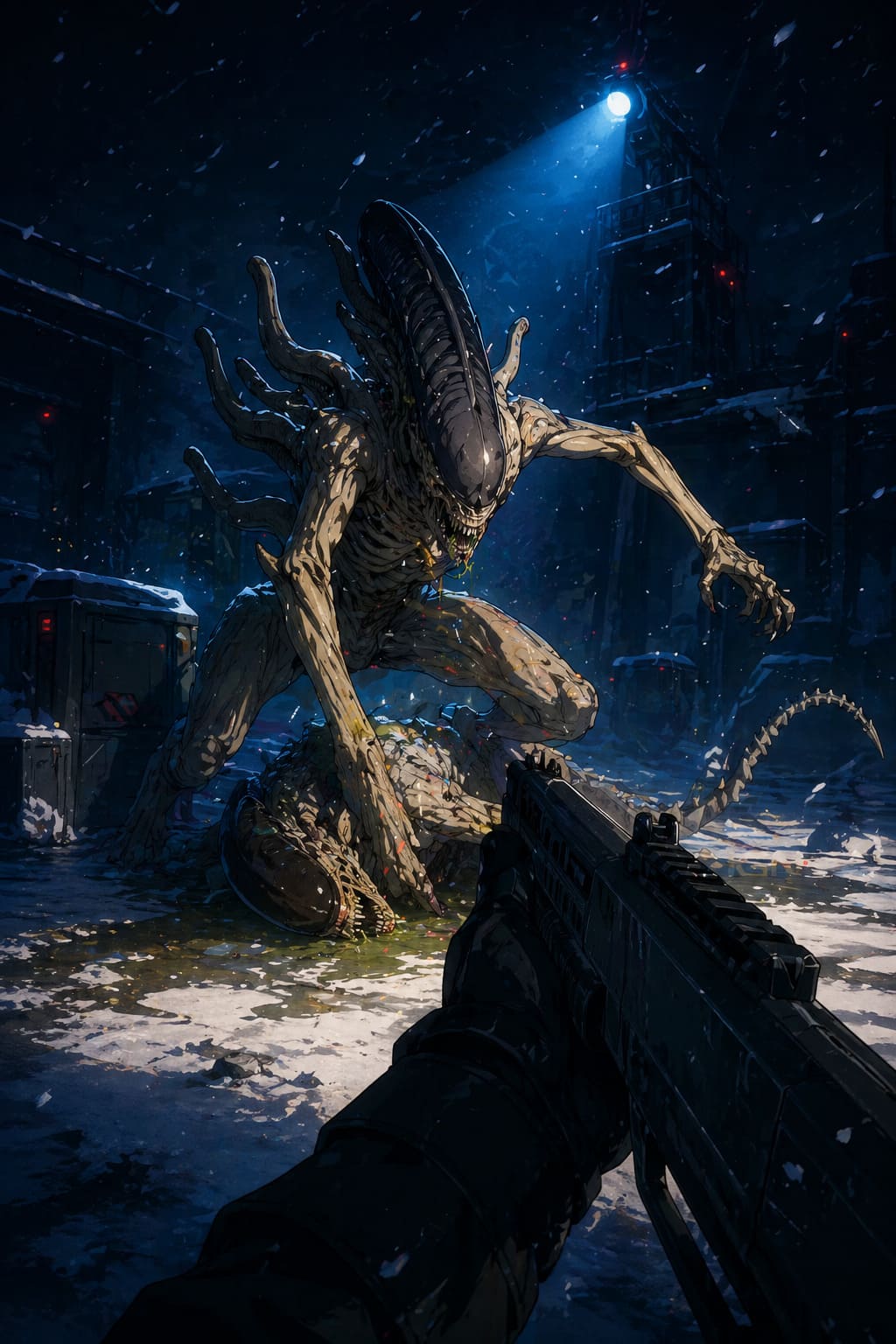
It’s one of those fan theories that sits in a strange place between believable systems design and full-on survival horror paranoia. And honestly, that’s exactly why it refuses to die.
Soulmask Dual Blades vs Greatsword: Best Weapon Analysis & 2026 Builds
Why the Twins Theory Even Exists in the First Place
At its core, the theory comes from a simple contradiction players feel while playing: “How is it always right there… no matter where I go?” Even though the game heavily implies a single stalking Xenomorph for much of the experience, players repeatedly encounter situations that feel inconsistent with a single physical creature moving through a large space.
This leads to observations like the Alien appearing in one distant area and then seemingly showing up elsewhere almost instantly, reacting with unnatural efficiency, or behaving in ways that feel subtly different between encounters. These impressions create the feeling that there might be more than one creature — or at least more than one active presence influencing the station.
The Real Reason It Feels Like “Twins”: The AI System
The truth behind most of these perceptions lies in the game’s dual-layer AI architecture in Alien: Isolation. The system is designed to create relentless tension rather than strict physical simulation.
The first layer is often referred to as the “Director” AI. It constantly tracks the player’s general location and influences where danger should feel present. It doesn’t directly control the Alien, but it nudges the experience so that the player never feels truly safe for long.
The second layer is the Alien AI itself. This governs actual movement, sensory perception, and adaptive behavior. The creature learns from the player’s habits, such as overusing lockers or relying too heavily on certain hiding patterns.
When these systems interact, the Alien can appear to “reposition” in ways that feel like teleportation or duplication, even though it is technically being guided dynamically rather than physically replaced.
Core Claims Behind the Twins Theory
Despite the technical explanation, the community still points to recurring patterns that feel too strange to ignore. These are the most commonly cited arguments supporting the Twins Theory.
Impossible Movement Speed: Players often feel the Alien covers vast distances across Sevastopol too quickly to be believable through standard traversal.
Behavioral Inconsistency: Some encounters show a cautious, vent-heavy approach, while others feel aggressively direct and grounded, as if different “versions” of the creature exist.
Simultaneous Events: Logs and NPC deaths suggest widespread attacks occurring across multiple sectors in overlapping timeframes.
Rare Dual-Appearance Glitches: On very rare occasions, players have recorded what appears to be two Xenomorph-like entities or overlapping behaviors outside scripted sequences.
Single Xenomorph vs Twins Theory Interpretation
Understanding the theory becomes clearer when comparing how each interpretation changes the experience of the game.
| Aspect | Single Xenomorph Model | Twins Theory Interpretation |
|---|---|---|
| Threat Structure | One adaptive predator | Multiple coordinated threats |
| AI Behavior | Dynamic but singular logic | Perceived overlapping systems |
| Player Experience | Constant stalking tension | All-encompassing paranoia |
| Lore Consistency | Matches original film inspiration | Expands infestation interpretation |
| Horror Impact | Isolation and inevitability | Systemic entrapment feeling |
Lore Perspective: Does the Story Support Multiple Aliens?
From a narrative standpoint, Sevastopol Station is already beyond containment by the time Amanda Ripley arrives. The infestation has spread extensively, and a full Hive is established deep within the structure. This means multiple Xenomorph life stages are clearly present: eggs, facehuggers, and fully grown adults.
So in a broader biological sense, multiple Xenomorphs absolutely exist on the station. However, the key distinction is between a population existing in the world and a singular hunter presence experienced during gameplay. The story supports the former, while gameplay often feels like the latter.
Why the AI Design Accidentally Feeds the Myth
The design of Alien: Isolation is built around unpredictability. The game avoids deterministic enemy behavior in favor of emergent tension. This creates moments where the Alien feels too aware, too responsive, or too present across the map simultaneously.
From a design perspective, this is intentional. The goal is not realism but sustained psychological pressure. The unintended side effect is that players begin to interpret these behaviors as evidence of multiple independent entities rather than one dynamically managed system.
Counterarguments: Why the Twins Theory Isn’t Literal Canon
From a technical standpoint, the game simulates a single active Xenomorph entity during core gameplay loops. Apparent teleportation is the result of dynamic repositioning systems rather than duplication. Multiple aliens are only explicitly present in scripted endgame sequences within the Hive.
Additionally, hardware and design limitations at the time of development made full parallel simulation of multiple independent apex predators impractical for continuous gameplay. This strongly supports the interpretation of a single adaptive AI-driven entity.
Alien: Isolation 2 – Why the “Multiple Predator” AI Could Change Horror Games Forever
There are very few games that still stick with me years after I’ve finished them, and Alien: Isolation is definitely one of those rare cases. It wasn’t just a horror game—it was a stress simulator in the best possible way.
So when talk of a sequel started gaining serious momentum after the 2024 announcement window and the 2026 Alien Day teaser, I couldn’t ignore it anymore.
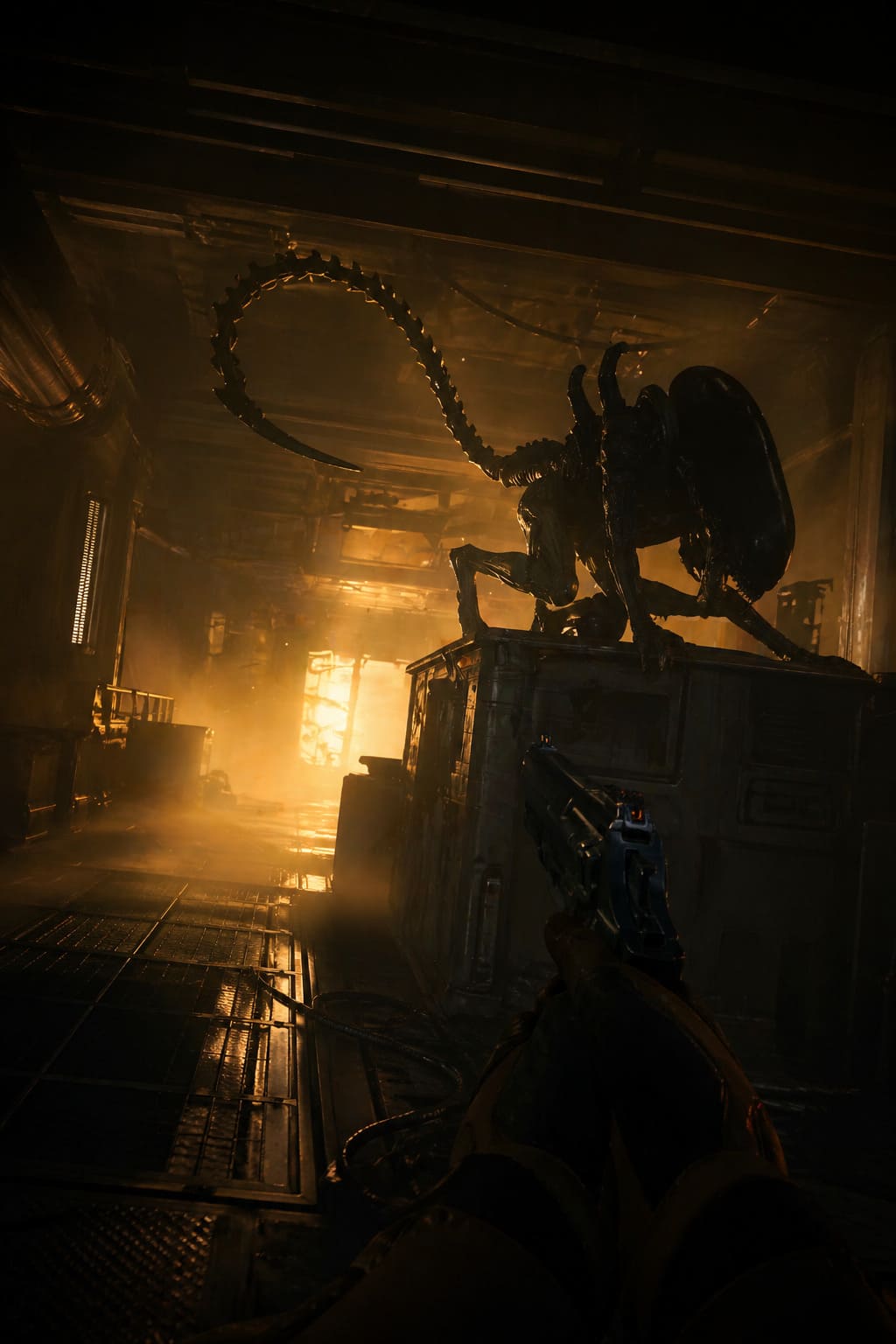
What really grabbed my attention wasn’t just the fact that Alien: Isolation 2 is happening, but how it might evolve. Especially the idea floating around the community: the so-called “Multiple Predator AI system.” If even half of the speculation turns out true, this sequel might not just improve the original—it could redefine stealth horror entirely.
The Original’s Genius: One Alien, Infinite Fear
Before diving into the sequel, it’s worth remembering what made the first game so effective. The original Alien: Isolation used a clever system often described as a “Double Brain AI.” In simple terms, the Alien wasn’t fully scripted, but it also wasn’t completely free. It had two layers of intelligence: a hidden “Director” guiding overall tension and a physical Alien behaving unpredictably in real time.
That combination created something terrifyingly believable: a single creature that always felt like it was thinking. Even though there was only one Xenomorph, it rarely felt like it was repeating patterns. That illusion is what made the game legendary.
The Sequel Shift: From Lone Hunter to Coordinated Terror
Now things get interesting. The biggest rumor surrounding Alien: Isolation 2 is that we are moving away from a single predator system into something far more dangerous: multiple Xenomorphs operating together. If true, this is not just a gameplay tweak—it is a complete redesign of fear itself.
The community speculation usually revolves around three major systems:
- Coordinated Hunting: Instead of one alien stalking you, there could be several working together. They don’t act independently, they share awareness, and one may flush you out while another intercepts your escape.
- Hive Mind AI Layer: A centralized intelligence system could manage multiple predators, assigning roles dynamically such as tracker, hunter, or blocker depending on player behavior.
- Environmental Trapping: Xenomorphs may use ceilings, vents, and corridors more intelligently to force players into dead zones or cut off escape routes entirely.
Each of these systems alone would be a major upgrade. Combined, they suggest a shift from scripted horror to adaptive survival pressure.
Unreal Engine 5: The Technical Backbone of Fear
One of the more grounded aspects of all this speculation is the engine transition. Moving from older technology to Unreal Engine 5 opens up significant possibilities for both AI and environmental design. More computational power means more active entities, better pathfinding, and more dynamic lighting systems that directly impact stealth gameplay.
In practical terms, this could mean:
- More AI-driven enemies active at the same time
- Improved vertical movement and spatial awareness
- Dynamic lighting that enhances stealth tension
- More reactive environments that respond to player movement
If the first game was about limitation creating tension, the sequel could be about complexity creating chaos.
What We Know (and What We Don’t)
While speculation is running wild, there are still a few grounded points worth acknowledging. Creative Assembly is actively working on a sequel, and early teaser material titled “False Sense of Security” was shown during Alien Day 2026. The project appears to be in active development, likely mid-stage or earlier. However, many key details remain unconfirmed, especially regarding gameplay systems and AI structure.
Confirmed or likely elements include:
- Active development by Creative Assembly
- Return of key creative leadership
- Early teaser content shown in 2026
Uncertain elements include:
- Whether multiple Xenomorphs will actually appear in gameplay
- The final structure of the AI system
- Exact story direction and setting
- Official release window, likely speculated between 2027 and 2028
Comparing the Old and the New Direction
| Feature | Alien: Isolation (2014) | Alien: Isolation 2 (Speculated) |
|---|---|---|
| Enemy Count | Single Alien | Multiple Xenomorphs |
| AI Structure | Dual-layer Director system | Hive Mind or coordinated AI network |
| Player Pressure | Stalking and unpredictability | Strategic encirclement and coordination |
| Environment Use | Basic navigation and venting | Advanced trapping and vertical mobility |
| Fear Style | Psychological dread | Systemic survival panic |
Amanda Ripley’s Possible Return
One of the more emotional aspects of the speculation is the potential return of Amanda Ripley. Many fans feel her story was never fully resolved, and early leaks suggest the sequel could continue directly from her survival arc.
Interestingly, some theories suggest that certain spin-off events may be ignored to keep narrative continuity focused and clean. If true, this would allow the sequel to stay tightly connected to the original emotional tone.
Why This Sequel Matters Beyond Horror Fans
Even if someone doesn’t typically play horror games, Alien: Isolation 2 is worth paying attention to because it represents a larger shift in game design philosophy. Modern games are increasingly moving toward systems-driven experiences rather than scripted sequences. Instead of pre-written scares, developers are building AI ecosystems that react, adapt, and evolve in real time.
This means:
- Less predictable gameplay
- More emergent storytelling
- Higher replay value based on system behavior
If the multiple predator system becomes real, it could become a benchmark for future survival horror AI design.
Personal Take as a Gamer
From a personal perspective, the idea of multiple intelligent predators is both exciting and slightly unsettling in a design sense. The original worked because fear came from uncertainty, but there was still a sense of structure—only one hunter existed. Removing that structure entirely changes everything.
If executed poorly, it could become overwhelming or frustrating instead of scary. But if executed properly, it could create something rare in gaming: a true feeling of being outmatched not by difficulty settings, but by intelligence itself.
Final Thoughts
Alien: Isolation 2 is still surrounded by more questions than answers, but that uncertainty is part of what makes it so intriguing. The combination of Unreal Engine 5 capabilities, rumored Hive Mind AI systems, and the potential introduction of multiple coordinated predators suggests a bold direction for survival horror.
Whether it becomes a genre-defining masterpiece or struggles under its own ambition will depend entirely on execution. But the concept alone is powerful: not just being hunted, but being strategically outmaneuvered by multiple intelligent predators working together.
And if that vision comes to life, hiding won’t be enough anymore.