Soulmask Automated Farming Guide: 2026 Strategy for Infinite Resources
If you’ve spent enough time in Soulmask, you already know the truth: manual farming becomes a trap. In the first hours, planting crops by hand feels fine. Later, when you need mountains of cotton, healing herbs, food, and crafting materials, it turns into busywork that steals time from exploration, raiding, and base expansion.
After many hours with the 1.0 version, I can honestly say one thing — automation is where Soulmask truly opens up. Once your tribe starts handling the farm alone, the game changes completely. You stop surviving and start growing.
This guide is based on practical experience and smart optimization, not theory. If you want a reliable farm that keeps producing while you fight, travel, or log off, this is the setup I recommend.
Why Farming Automation Matters in Soulmask
A lot of players delay automation because they think manual gathering is “good enough.” It is not.
As your progression moves into better gear, stronger buildings, mounts, medicine, and advanced crafting, your farm becomes one of the most important systems in the game.
Here’s why I prioritize automation early:
- Constant resources while exploring the map
- Large fiber production for armor and construction
- Reliable food supply for workers and mounts
- Steady medicine crafting from herbs like Aloe
- Less boring maintenance and more actual gameplay
The best part? Once everything is tuned correctly, your tribe handles the work better than most players do manually.
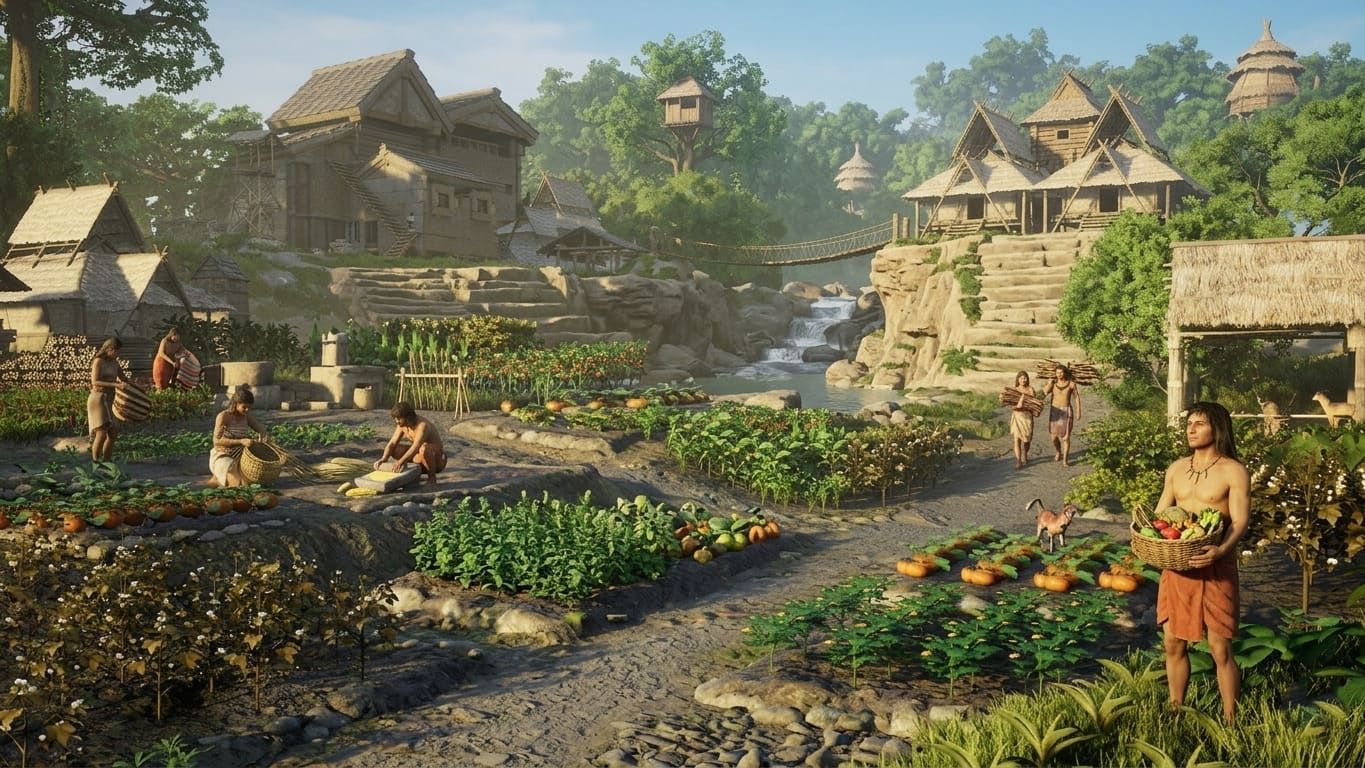
Build the Farm Like a Production Line
The biggest mistake I see is players placing random plots across their base. It looks nice, but it kills efficiency.
In Soulmask, distance matters. Every extra step your worker takes is lost productivity.
My preferred farm layout keeps everything compact:
| Structure | Why It Matters |
|---|---|
| Farm Plots | Core crop production |
| Granary | Controls farming tasks |
| Water Source | Keeps crops hydrated |
| Storage Chests | Seeds, fertilizer, tools |
| Path Space | Prevents AI getting stuck |
I usually place plots in a 3×3 or 4×4 grid, then surround them with utility buildings.
Important Tip: Do not overdecorate your farm. Narrow gates, clutter, fences, and unnecessary objects often confuse worker pathing. Open layouts perform much better.
Soulmask Anubis Mask Spirit Summoner Build: The Definitive Guide for 2026 Meta
The Granary Is More Important Than It Looks
Many players underestimate the Granary.
In my experience, once unlocked, it becomes the real brain of the agricultural system. Without proper management buildings, workers often behave inconsistently.
As soon as you can build it, do it.
That single upgrade made my base feel twice as organized.
Choosing the Right Workers
Not every tribesman should become a farmer.
Some NPCs are clearly faster, smarter, or naturally suited for planting. If you assign random low-stat workers, you’ll notice slower cycles and weaker output.
What I look for:
- Strong Planting stat
- Useful passive traits
- Good stamina
- Reliable pathing behavior
- Close living quarters to farm zone
If I find a rare high-quality worker with farming bonuses, I protect them like treasure.
A good farmer can outperform two average ones.
Soulmask: Mask of the Sun God vs. Mask of Eternity – 2026 Comparison
Set Work Priorities Correctly
This is where many automated farms fail.
The system itself works, but bad priorities create downtime. My recommended order:
- Harvesting – mature crops should never sit too long
- Planting – empty soil means wasted production
- Fertilizing – keeps yield strong
- Watering – still necessary, but less urgent if storage is good
That order gave me the smoothest results.
If workers water first while ripe crops wait, your efficiency drops fast.
Always Protect Your Seed Supply
This sounds small, but it can destroy your whole loop.
If workers use every seed and one cycle fails, production stops completely.
I always keep backup reserves in storage.
Safe minimums I use:
| Crop Type | Minimum Seeds |
|---|---|
| Cotton | 100 |
| Corn | 80 |
| Aloe | 60 |
| Agave | 60 |
| Quinoa | 50 |
Having reserves means your farm recovers automatically after mistakes or losses.
The Real Bottleneck: Fertilizer
In late game Soulmask, fertilizer matters almost as much as seeds.
Without it, output drops and fields feel sluggish.
That’s why I strongly recommend creating a second automation chain dedicated only to fertilizer materials.
Best sources:
| Fertilizer Style | Good Sources | Best Use |
|---|---|---|
| Compost | Animal waste | Fiber crops |
| Ash Mix | Fire stations, kilns | Specialty plants |
| Bone Powder | Butchering leftovers | Grain crops |
| Stone Blend | Grinder materials | Exotic farming |
This turns waste into profit.
One worker dedicated to processing byproducts can support your entire agricultural network.
Honestly, once I did this, farming stopped feeling limited.
Crops Worth Prioritizing in Mid and Late Game
Not every plant deserves equal space.
Some crops simply give more long-term value.
My personal priority list:
1. Cotton
If you ask me for one must-grow crop, it’s cotton.
Armor, textiles, construction, crafting — you always need more than expected.
2. Aloe
Top tier for healing production. I never run a serious base without a steady Aloe supply.
3. Corn
Flexible and dependable.
Useful for food, workers, animals, and future recipes.
4. Agave
Excellent secondary resource for crafting and medicine chains.
5. Quinoa
Great once your base matures and you care more about advanced buffs and efficient meals.
Use Sorting Storage to Save Worker Time
One of the smartest upgrades in modern Soulmask systems is storage specialization.
Instead of letting workers dump everything into random boxes, create dedicated containers.
My setup:
- Seeds Chest
- Food Chest
- Fiber Chest
- Fertilizer Chest
- Tool Chest
- Overflow Chest
This saves hidden time because workers stop wandering and searching.
It also makes your base cleaner and easier to manage manually.
Common Reasons Farms Suddenly Stop Working
Even good setups fail sometimes.
Usually the problem is one of these:
- Broken tools
- No water access
- Too much distance
- Blocked paths
- No seeds left
The classic silent killer is seed shortage, so always check storage first.
My Best Personal Advice After Many Hours
Don’t build for today. Build for scale.
A lot of players make tiny farms, then rebuild later. I prefer creating a larger organized zone early, even if some plots stay unused at first.
That way, when demand spikes, expansion is instant.
Also keep one backup worker trained for farming. If your main specialist gets injured or reassigned, production continues.
Example of a Self-Sustaining Base Loop
| Worker Role | Job |
|---|---|
| Farmer #1 | Harvest + Plant |
| Farmer #2 | Water + Fertilize |
| Crafter | Turn crops into food and medicine |
| Processor | Make fertilizer |
| Sorter | Move items to storage |
Once running, it feels incredible. You come back from combat trips and your warehouse is full.
That is one of the most satisfying parts of Soulmask.
Final Verdict
Soulmask rewards smart systems more than constant grinding.
If you’re still hand-harvesting every crop in 2026, you’re playing harder than necessary. Build a proper automated farm, assign quality workers, secure seeds, maintain fertilizer flow, and organize storage.
Once your tribe feeds itself, the game becomes far more fun.
You’ll spend less time doing chores and more time doing what Soulmask does best — conquering, exploring, and expanding.