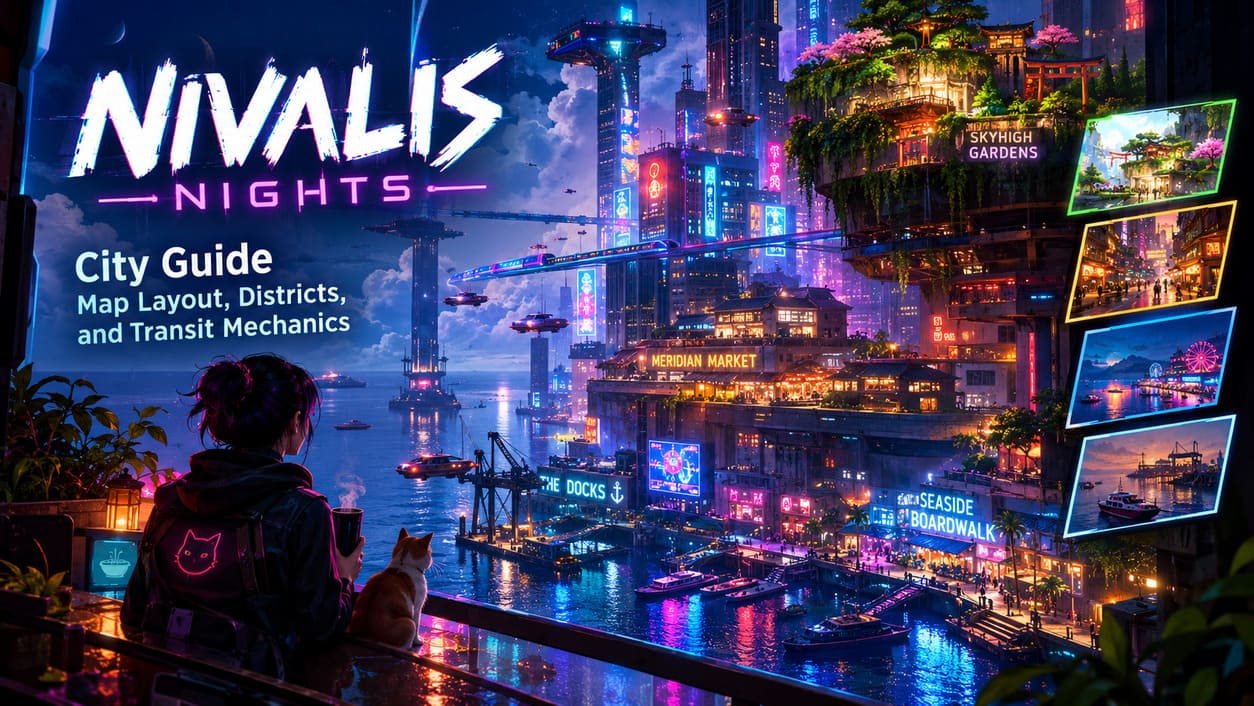
Nivalis Nights City Guide: Map Layout, Districts, and Transit Mechanics
After playing a lot of open-world games, city builders, life sims, and cyberpunk RPGs, I’ve learned that a beautiful map means very little if moving around it becomes a chore. That is why Nivalis Nights immediately caught my attention. ION LANDS is taking the city introduced in Cloudpunk and turning it into something much more personal: a place where you are not simply passing through on missions, but actually building a life, running businesses, meeting people, decorating spaces, fishing, growing food, and trying to understand how this strange vertical metropolis works.
What makes Nivalis particularly interesting is its structure. This isn’t a normal cyberpunk city where you simply follow roads from one district to another. Nivalis rises from the ocean toward the clouds, with different communities, businesses, homes, and activities occupying different layers of the enormous city. Once you understand that layout, the rest of the game starts making much more sense.
Nivalis Nights Character Guide: Ava, Neighbors, and Cyberpunk Romance Mechanics
Nivalis Is a City Designed Around Vertical Exploration
The first thing I would tell anyone starting Nivalis Nights is to forget the traditional open-world mindset. You aren’t dealing with a huge horizontal landscape where the main challenge is figuring out which road leads to the next objective. Instead, the challenge is understanding which level of the city you need to reach and which transport option makes the most sense.
That vertical structure also appears to influence the business simulation. Where you establish your venues can affect pedestrian traffic, ingredient logistics, and the amount of time required to move supplies around. That sounds like a small detail on paper, but anyone who has played management games knows that logistics can eventually become the difference between a smooth operation and constant frustration.
The official material currently identifies several important areas, although the complete district list has not yet been published. Based on the information available so far, these are the locations I would keep in mind while learning the city.
| District | Main Character | Why It Matters |
|---|---|---|
| Seaside Boardwalk | Waterfront commerce | Restaurants, docks, crowds, and waterways |
| Meridian Market | Starting business area | Your introduction to commercial life in Nivalis |
| Skyhigh Gardens | Luxury upper tier | Gardens, restaurants, bridges, and spectacular views |
| The Docks | Home and fishing hub | Starting home, boat, and access to fishing |
Seaside Boardwalk: Busy, Crowded, and Full of Atmosphere
The Seaside Boardwalk is probably one of the locations I am most interested in exploring properly. Waterfront areas in cyberpunk games can sometimes feel like little more than visual backdrops, but Nivalis seems to make the water an actual part of everyday gameplay.
This lower section of the city combines restaurants, docks, crowded streets, and narrow paths with views toward the ocean. There is something appealing about the contrast here. You have all this futuristic neon architecture towering above an environment that still feels connected to the sea.
For business owners, the crowds could be especially important. A district with lots of pedestrian traffic naturally sounds like a useful place for restaurants, food businesses, or nightlife venues. Location isn’t just cosmetic in Nivalis Nights; it can become part of your business strategy.
Meridian Market Is Where Your Story Really Gets Moving
Meridian Market has a much more practical role because it is tied to the beginning of your commercial journey. This is where Thaddeus Carminus retires and passes his noodle business on to you.
I like this setup because it gives the player a reason to care about the neighborhood before the game starts throwing larger systems at them. Instead of immediately giving you a gigantic business empire to manage, Nivalis Nights appears to let you grow from a relatively humble starting point.
Meridian Market should therefore be treated as more than simply the starting district. It is effectively your first lesson in how Nivalis works. Customer expectations, inventory, relationships, and the physical position of your business all begin coming together here.
Skyhigh Gardens Shows the Other Side of Nivalis
If the lower districts represent the crowded and gritty side of Nivalis, Skyhigh Gardens feels like the complete opposite.
This upper-level district is built around greenery, hanging gardens, traditional wooden bridges, torii gates, neon illumination, and high-end dining. The combination sounds almost surreal, especially when you remember that all of this is part of the same enormous city stretching above the ocean.
This is also where the game’s vertical design becomes visually obvious. Going from a busy waterfront environment to a peaceful garden high above the city isn’t simply changing neighborhoods. You’re effectively changing the atmosphere, architecture, and social environment at the same time.
And yes, I fully expect to spend too much time just looking around here instead of doing whatever business objective I was supposed to be completing.
The Docks Are More Important Than They First Appear
The Docks sit at the base of the city and are particularly important because your first home is located there. Your private boat is also moored here, making the area a natural starting point for exploring the waterways.
The boat isn’t just a decorative feature, either. Fishing is connected to the game’s food and business systems, so trips away from the city can potentially become part of your regular supply routine.
That creates an interesting gameplay loop: you’re not simply traveling because the game tells you to. You might travel because you need ingredients, want to explore, have a business task somewhere else, or simply feel like getting away from the neon streets for a while.
How Travel Works in Nivalis Nights
One thing worth clearing up immediately is that Nivalis Nights does not appear to have manual driving. If you are expecting another vehicle-focused experience like Cloudpunk, that’s an important distinction.
Instead, the game uses three main forms of transportation:
- Taxi: Fast automated travel between different parts of the city.
- Metro: The main option for longer-distance movement across the vertical structure.
- Private Boat: Water-based exploration and fishing around the lower levels.
I actually think this system fits the game better than traditional driving would. Nivalis Nights isn’t trying to be a futuristic taxi simulator again. Its focus is on the life you are building inside the city, so transportation can function as a way of connecting different activities without turning every trip into ten minutes of traffic.
Taxi vs Metro vs Boat
| Transport | Best Use | Gameplay Role |
|---|---|---|
| Taxi | Quick district changes | Convenient everyday travel |
| Metro | Long-distance journeys | Connects major vertical areas |
| Boat | Water exploration | Fishing and slower exploration |
The key is knowing when to use each one. If you’re moving across the city for a quick meeting, a taxi sounds ideal. For major vertical journeys, the Metro should save considerably more time. The boat is different because it is less about efficiency and more about exploration, fishing, and enjoying the lower-city atmosphere.
Weather Could Make the City Feel Completely Different
One feature I hope Nivalis Nights gets right is its dynamic weather. Cyberpunk cities practically beg for changing weather because rain, fog, reflections, and neon lighting can completely transform the same street.
A dynamic weather system means that Nivalis shouldn’t always look like the same carefully composed screenshot. A location that feels warm and inviting during one part of the day could become much darker and more isolated when rain rolls through.
For an exploration-focused game, that’s a big deal. The city needs to feel like somewhere that continues existing even when you’re not actively following a quest. Weather is one of the easiest ways to achieve that feeling.
Nighttime Changes the Rules
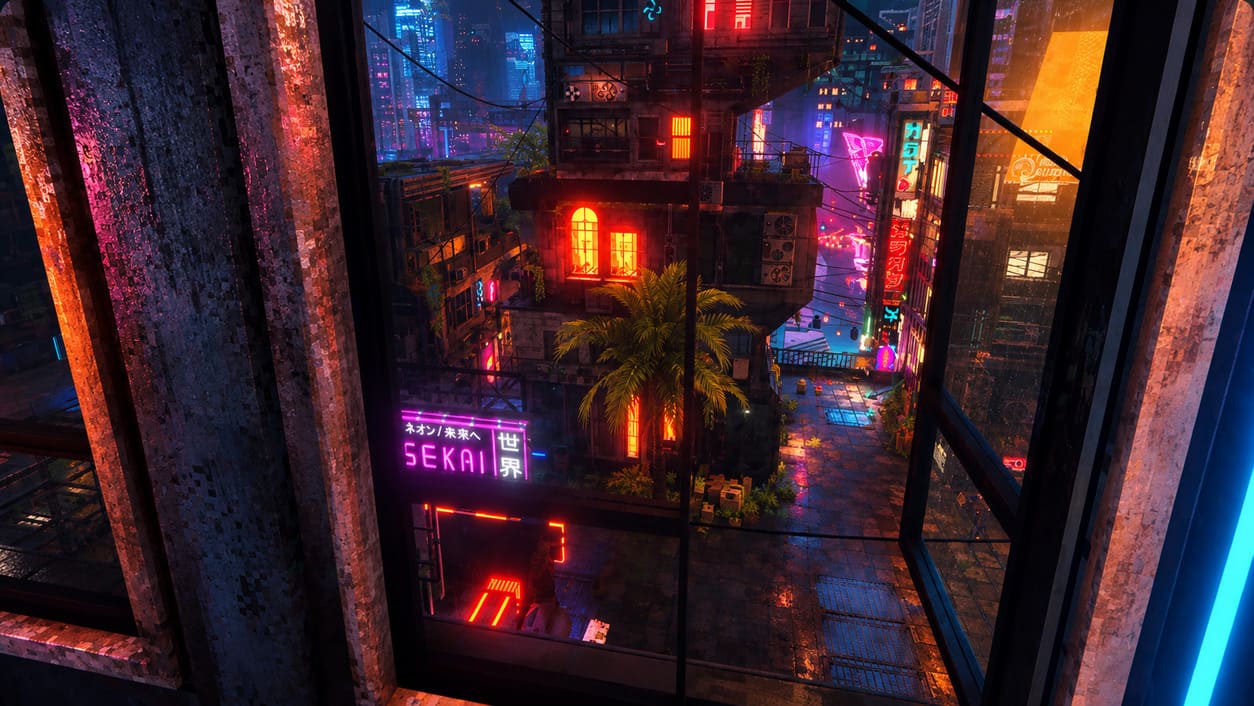
The day-night cycle also appears to have a more meaningful purpose than simply changing the lighting.
Security systems become active after dark, and nighttime travel can involve restrictions and additional danger. There is also an ongoing serial-killer investigation that adds another layer of tension to the city’s nighttime atmosphere.
This is where I think Nivalis Nights could separate itself from a lot of cozy life-sim games. The game may let you run restaurants, decorate apartments, develop relationships, and generally enjoy city life, but Nivalis is still a dystopian cyberpunk metropolis.
That contrast is one of the things I find most appealing. You can spend your afternoon worrying about ingredients and restaurant layouts, then walk through a completely different-looking city after sunset while security systems tighten around you.
My Navigation Tips for New Players
If you’re planning to spend dozens of hours in Nivalis, I wouldn’t treat transportation as something you only think about when the game tells you to travel. The map itself appears to be part of the strategy.
Optimize Your Supply Routes
First, pay attention to supply routes. If your restaurants depend on ingredients produced or collected somewhere far away, transportation time can become a genuine management problem. The shortest route isn’t necessarily the route you’ll naturally discover.
Watch Pedestrian Traffic
Second, watch pedestrian traffic. A beautiful venue hidden away in a quiet corner might not perform the same way as a less glamorous business located beside a busy walkway. District population and foot traffic could become just as important as interior decoration.
Plan Around the Clock
Third, don’t ignore the clock. If nighttime security restrictions affect movement, leaving everything until the last possible moment could create unnecessary problems. Plan longer trips before the late hours rather than assuming you can always wander home whenever you want.
Use the Boat
Finally, use the boat. It’s easy to look at an optional exploration system and decide to ignore it while focusing on business progression. I’d resist that temptation. Fishing appears to connect directly to the food economy, while the waterways should also provide some of the quieter exploration moments in the game.
Why the Nivalis Map Has Me Interested
I’ve played enough open-world games to know that a huge map isn’t automatically a good map. Some worlds are enormous but strangely empty, while others give you a much smaller space that feels memorable because every district has its own identity.
Nivalis seems to be aiming for the second approach, even though the city itself is gigantic.
The vertical design is the real hook. You aren’t simply crossing a massive map; you’re moving through different social and environmental layers of one enormous urban structure. The Docks, Meridian Market, Seaside Boardwalk, and Skyhigh Gardens already suggest dramatically different experiences, and there are presumably more parts of Nivalis still waiting to be revealed.
For me, that makes Nivalis Nights more interesting than a straightforward cyberpunk sandbox. I don’t just want another game where I can walk through neon streets and take screenshots. I want a city where where I live, where I work, what I buy, how I travel, and when I travel actually matter.
If ION LANDS manages to make those systems work together naturally, Nivalis could become one of those game worlds that players remember less for a single storyline and more for the little routines they created inside it. And honestly, after playing so many games built around constant combat and endless objectives, the idea of simply building a life in a gigantic city above the ocean sounds pretty refreshing.
Nivalis Nights looks like it could reward players who learn its geography rather than simply memorize a fast-travel menu. Once you understand the relationship between its vertical districts, transportation systems, businesses, waterways, weather, and nighttime restrictions, the city should start feeling less like a collection of locations and more like one enormous interconnected machine.
Nivalis may stretch from the ocean floor to the clouds, but the most interesting part could be learning how all those layers fit together.