Nivalis Nights Character Guide: Ava, Neighbors, and Cyberpunk Romance Mechanics
I’ve played plenty of life sims, management games, RPGs, and cyberpunk adventures, and one thing I always notice is whether the characters actually feel like part of the game or just another system to grind. Nivalis Nights looks particularly interesting because it seems determined to make its people, relationships, businesses, and everyday routines matter just as much as the money-making side of the game. Instead of simply giving us a neon city to admire, ION LANDS appears to be building a world where knowing the right person can be just as useful as buying the right upgrade.
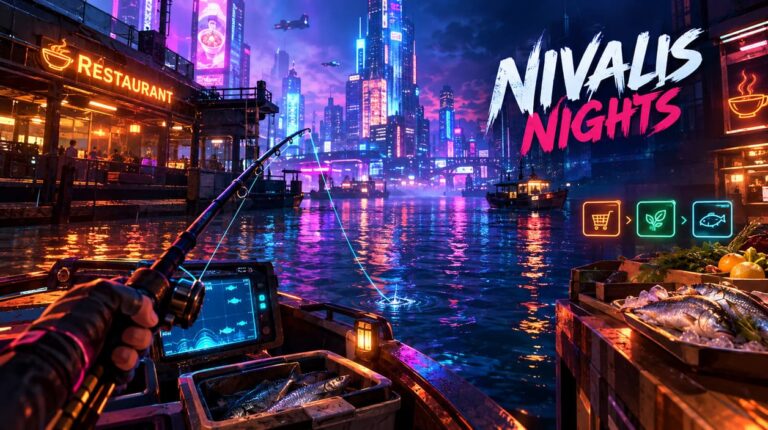
The game takes place in the same massive cyberpunk city previously seen in Cloudpunk, but the experience is very different. Here, you are not primarily delivering packages through Nivalis from one destination to another. You play as Ava, an entrepreneur trying to build something of her own while dealing with customers, employees, neighbors, rivals, friendships, romance, and the occasional reminder that this is still a dangerous dystopian city. That combination immediately caught my attention because it gives the usual life-sim formula a much darker personality.
Nivalis Nights Food Guide: Ultimate Guide to Menus, Dishes, and Ingredients
Ava Starts With Almost Nothing
Ava’s story begins in a pretty humble way. She arrives in Nivalis with a small noodle business and limited resources, meaning the early game is much more about survival and figuring things out than immediately becoming the owner of some ridiculous neon megaclub. The Meridian Market provides the starting point for that journey, and I like the idea of beginning somewhere cramped and chaotic before gradually expanding into more impressive properties.
The business side sounds surprisingly detailed. You need to think about ingredients, recipes, inventory, employees, schedules, and the physical design of your venues, rather than simply clicking an upgrade button whenever you have enough cash. That’s the kind of management system I personally enjoy because it gives progression some texture. When a restaurant or nightclub finally starts feeling successful, you can actually see why it happened.
Ava can eventually move beyond the noodle stand and purchase different types of properties. Restaurants, bars, and larger entertainment venues become part of the expansion process, creating a nice contrast between the modest beginnings and the ambitious endgame.
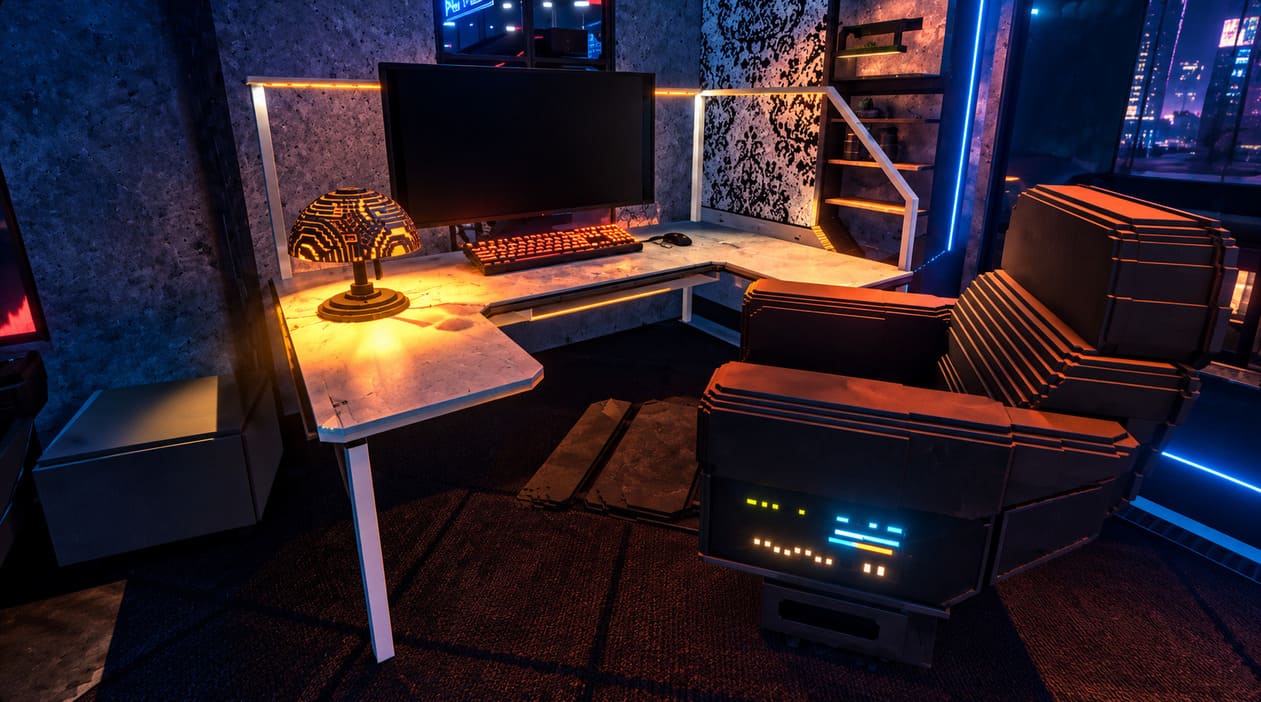
There is also a personal side to Ava that should make the character feel less like a management-game avatar. Players can acquire and decorate apartments throughout Nivalis, adding furniture, lighting, entertainment equipment, and practical improvements. The home isn’t just decoration either. It can become a place to cook, relax, invite people over, and develop relationships away from the constant noise of the city.
That detail matters more than it might initially seem. I’ve played enough simulation games where housing is basically a pretty menu screen to know that actually giving an apartment social and functional purposes can make a huge difference.
Nivalis Needs More Than Generic NPCs
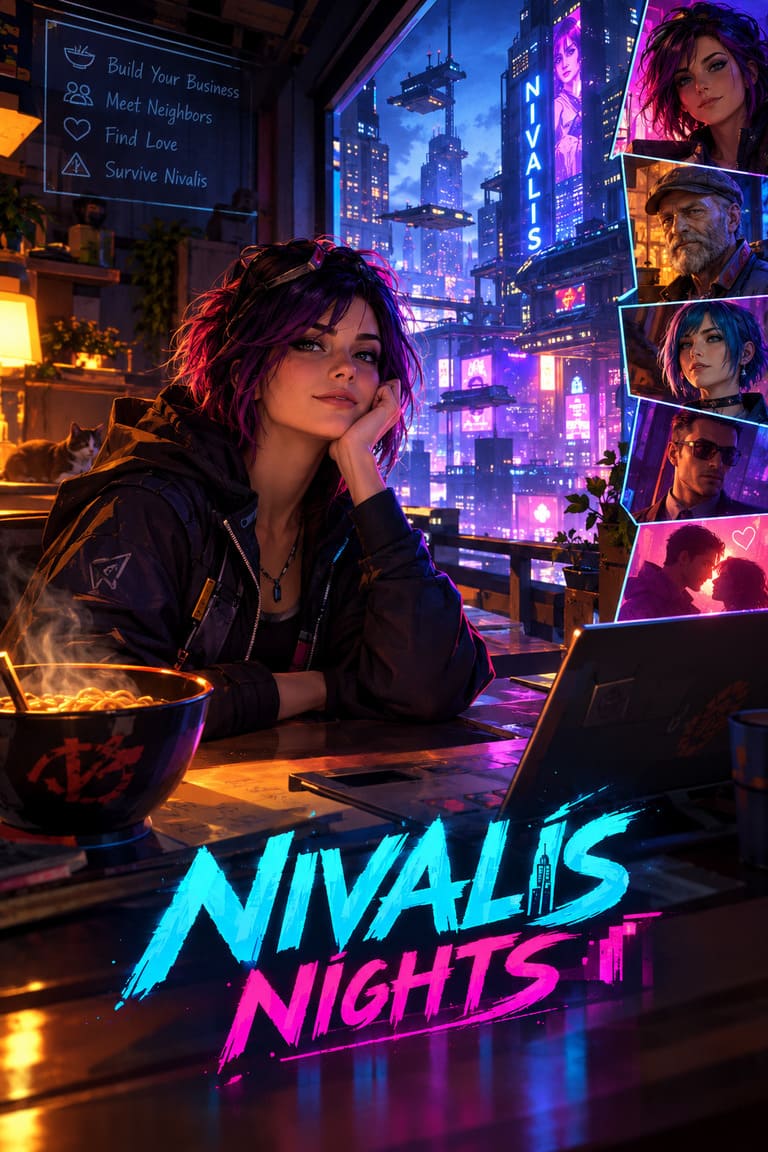
One of the most promising aspects of Nivalis Nights is its focus on characters. The game is described as having around 135 fully voiced primary and secondary characters, supported by a substantial amount of dialogue. If those characters actually have meaningful routines and personalities, this could become one of the game’s strongest features.
What interests me most is that residents aren’t apparently designed simply as walking wallets. Customers have their own stories, while neighbors have individual schedules and attitudes. That creates the possibility that visiting the same place repeatedly won’t always feel identical.
The difference between a generic NPC and a character you remember is enormous. If I can recognize someone because of the way they speak, what they want, where they spend their evenings, or how they reacted to something I did several hours earlier, then the city starts feeling inhabited instead of procedurally populated.
Thaddeus Carminus and the Beginning of Ava’s Business
Thaddeus Carminus is one of the more memorable characters connected to Ava’s early journey. He is an older, cynical cook who has spent years working in the Meridian Market and becomes an important figure in Ava’s introduction to the local food business.
His role is particularly interesting because he isn’t simply there to hand out tutorials and disappear. His retirement eventually leads to Ava taking over his noodle operation, giving the player a believable reason to become involved in the local economy.
I like this kind of setup. It makes progression feel connected to the world rather than treating the first business as something that magically appears because the tutorial needs it. Thaddeus also offers an opportunity for the game to explain Nivalis through personal stories instead of endless lore dumps.
Rivals, Customers, and the Darker Side of Business
Nivalis Nights isn’t presenting business management as a completely peaceful activity. Other owners compete for customers, and the city itself can interfere with your plans through unexpected events and dangerous circumstances.
On the straightforward side, you can improve your venues through better recipes, stronger service, smarter upgrades, and good management. But there are also indications that players can take a considerably darker approach.
After curfew, the game opens the door to illegal activities, including attempts to interfere with rival businesses. That immediately changes how I look at the management mechanics. A rival isn’t just another company on a spreadsheet anymore. They’re potentially someone you interact with during the day and undermine at night.
| Character Type | Possible Role | Why It Matters |
|---|---|---|
| Ava | Player protagonist | Builds businesses and relationships |
| Thaddeus Carminus | Cook and mentor | Helps establish Ava’s early business |
| Neighbors | Social contacts | Provide stories, opinions, and opportunities |
| Customers | Recurring citizens | Can become recognizable parts of daily life |
| Business Rivals | Competitors | Create pressure beyond normal management |
| Romance Interests | Personal relationships | Add another layer to Ava’s life |
This is where Nivalis Nights starts sounding less like a traditional cozy sim and more like a hybrid of management game, RPG, social simulator, and cyberpunk sandbox.
The Relationship Matrix Could Change Everything
The Relationship Matrix is probably the system I’m most curious about. Relationship mechanics are easy to make boring. Give the player a list of characters, add hearts or numbers, throw gifts into the equation, and eventually everyone becomes your best friend.
Nivalis Nights appears to be trying something more complicated.
Relationships can apparently move in different directions depending on how Ava behaves. Someone might respect her professionally while disliking her personally. Another character could become a close friend but think her business decisions are terrible. That separation between professional reputation and personal affection is a smart idea because real relationships rarely fit into one simple meter.
Choices can also have consequences outside conversations. Treating someone well might lead to useful business connections, while damaging a relationship could potentially hurt Ava’s reputation or access to resources.
This is exactly the sort of system I want from a game like this. If every character has a personality, then the correct dialogue option shouldn’t always be obvious. Sometimes you should have to remember who you’re talking to.
Cyberpunk Romance Without Making It the Whole Game
Romance is another major part of the character system, but what I appreciate about the concept is that it isn’t supposed to replace everything else. Ava can pursue relationships, flirt casually, build deeper connections, or concentrate almost entirely on her business.
That’s important because romance systems can become exhausting when games effectively turn them into checklists. Give character favorite item, repeat dialogue, watch relationship number increase, unlock scene. Done.
The approach described for Nivalis Nights sounds more involved. Deeper relationships can be connected to personal quests and specific social situations, rather than simply showering someone with gifts every morning.
Potential romantic encounters can take place away from the normal business routine, with activities such as private flights, dinners, or helping someone through a serious personal problem. Those moments could provide a nice change of pace from managing inventory or worrying about employees.
And because the setting is Nivalis, I don’t expect these relationships to be completely free from the city’s problems. Corporate pressure, money, crime, and personal secrets give romance a little more weight than the usual ‘we exchanged enough gifts, now we’re dating’ system.
CorpSec Makes the Cozy Parts Feel Less Safe
The biggest reason Nivalis Nights stands out to me is the contrast between its relaxing activities and its darker setting.
You can decorate your apartment, cook food, build relationships, and run a restaurant. Then CorpSec can suddenly tighten security, impose restrictions, or disrupt normal life. That tension should prevent the game from becoming too comfortable.
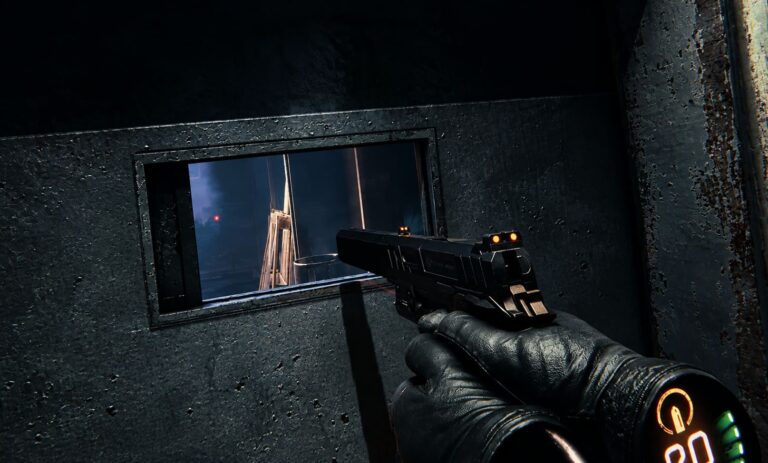
The presence of the mysterious Aseptic killer pushes the atmosphere even further toward thriller territory. The city already has corporate oppression and criminal activity, but an unidentified serial killer gives nighttime exploration an entirely different feeling.
I’m especially interested in how this mystery interacts with the simulation systems. If it exists only as background lore, it might be interesting but ultimately disconnected. If it actually affects neighborhoods, characters, schedules, businesses, or Ava’s relationships, then it could become one of the game’s defining features.
How Much Cloudpunk Is Really Here?
Fans of Cloudpunk will obviously recognize Nivalis, and that connection is one of the game’s biggest selling points. The city has the same enormous vertical identity, stretching through different levels of a futuristic metropolis where the wealthy and powerful exist far above people simply trying to survive below.
But I don’t think Nivalis Nights needs to constantly remind players that it belongs to the same universe.
The smarter approach is letting the setting and atmosphere carry that connection while Ava and her neighbors create their own stories. Characters from Cloudpunk such as Rania and Camus are beloved by fans, but the information surrounding direct crossover appearances should be separated from fan expectations unless officially confirmed.
That’s actually something I appreciate about the concept. A sequel or spin-off doesn’t always need to reuse every familiar face. Sometimes a new protagonist is exactly what a familiar world needs.
Why I’m Watching Nivalis Nights Closely
After playing a lot of games that mix simulation with RPG mechanics, I’m always looking for one thing: does the world react to the player, or is everything just a collection of disconnected systems?
Nivalis Nights has the ingredients for the former. Ava’s business affects her social life. Her relationships can affect business. Her apartment can become a social space. Rivals can create economic pressure. CorpSec can disrupt normal routines. Characters have their own schedules and personalities.
If those systems actually interact consistently, Nivalis could become one of those games where you start playing for an hour and suddenly realize you’ve been there for an entire evening.
The most exciting part isn’t even the idea of owning a cyberpunk nightclub. It’s the possibility that I’ll remember the people I met there.
Ava’s journey from a small noodle operation to a larger business empire gives Nivalis Nights a strong foundation, but the characters may ultimately be what makes the city worth living in. I’ve seen plenty of simulation games with impressive customization and complicated economies, yet very few manage to make their NPCs feel like people I genuinely want to spend time with.
That is the real test for Nivalis Nights. If its Relationship Matrix, romance mechanics, business systems, and character schedules all work together, this could be a remarkably personal cyberpunk life sim rather than simply another neon city sandbox. And honestly, after spending so many hours in games where the city is just a backdrop, I’m ready for one where the people living inside it actually matter.