Graveyard Keeper Ultimate FAQ: How to move workbenches, get blue points, and sell items
Graveyard Keeper is one of those games that can make you feel clever for figuring something out and completely lost five minutes later. I have played plenty of management, farming, crafting, and survival games, but few of them are as willing to throw a strange mechanic at you and simply expect you to understand it. That is part of the charm, but it can also be incredibly frustrating when you are trying to improve your graveyard, unlock technologies, or make some decent money.
Some questions come up again and again. Can you actually move a workbench after building it? What are you supposed to do when your Blue Points run out? Why does a merchant happily sell you something but refuse to buy the same item back? And what do you do when your inventory is full of things that look useful but apparently have no buyer anywhere in the village?
This Graveyard Keeper FAQ focuses on exactly those problems. Instead of treating the game like a simple farming simulator, I want to look at the systems the way an experienced player eventually learns to use them: where to spend resources, where not to waste them, how to recover from awkward early decisions, and how to turn the cemetery and surrounding production areas into something that actually works efficiently.
Graveyard Keeper FAQ Common Bugs, Fixes & Questions Answered
Can You Move Workbenches in Graveyard Keeper?
This is probably one of the first things I wish the game explained properly. You build your first few stations, everything seems fine, and then several hours later you realize your furnace is in the wrong place, the anvil blocks your route, and you are wasting energy walking around your own yard. Unfortunately, you cannot simply pick up a finished workbench and move it to another tile like you can in many modern farming or base-building games.
Instead, Graveyard Keeper uses a deconstruction system. You select the removal option from the appropriate building interface, dismantle the station, and then construct it again where you actually want it. It sounds simple, but there is one major catch: you should not expect every expensive component to come back intact.
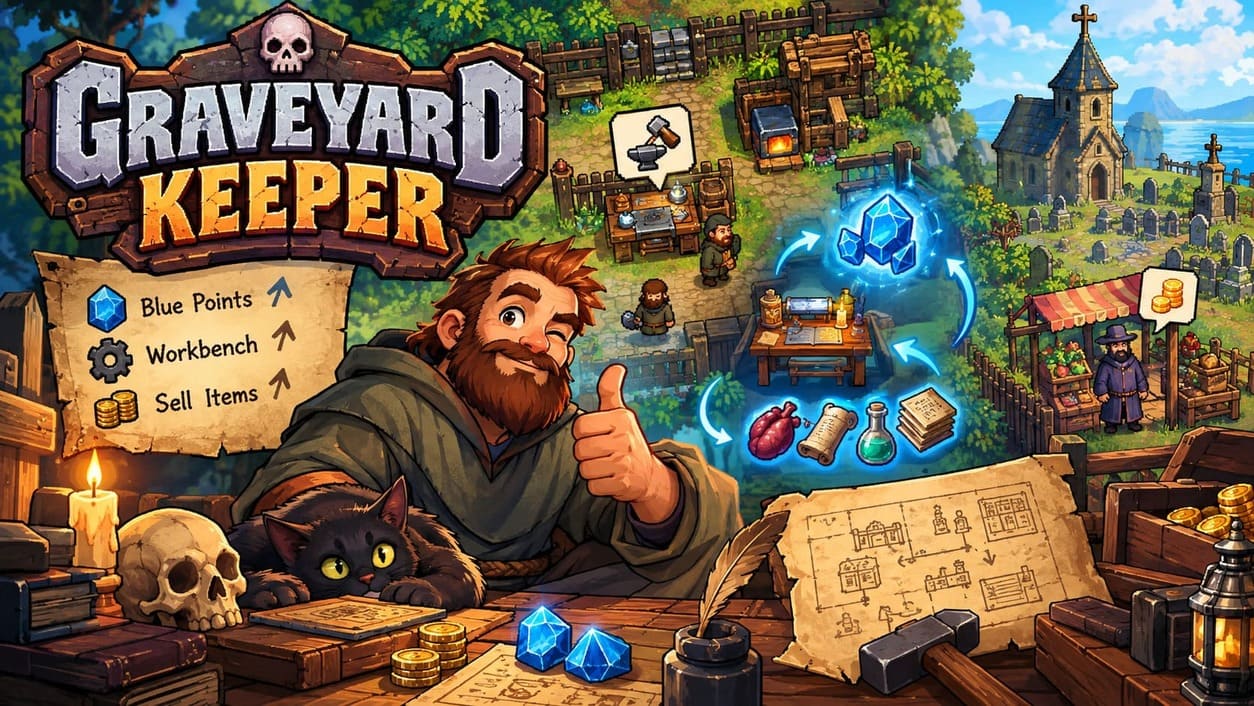
How to Rearrange Your Workyard
The process is basically the same whether you are reorganizing your Workyard, Church Cellar, Garden, Alchemy Laboratory, or another construction area. Open the relevant blueprint or building table, find the remove/deconstruct option, select the structure, and then interact with it to take it apart. Once it has disappeared, you can place another blueprint in a more convenient location and rebuild the station.
The important part is to think about the materials before destroying anything important. Basic resources can be recovered, but advanced crafting components are not necessarily returned in their original form. Losing expensive iron components or other higher-tier materials can hurt much more than the few seconds you save by making a careless layout decision.
| Before Destroying a Station | What I Would Check |
|---|---|
| Essential crafting station | Do I have enough materials to rebuild it immediately? |
| Advanced furnace | Do I have spare fuel and required components? |
| Anvil or metalworking station | Can I still craft the tools needed to recover resources? |
| Storage and production area | Will the new layout reduce walking and energy consumption? |
One of the better habits is to plan your layout before committing to expensive construction. Blueprint placement lets you see where things will go, so use that opportunity. I usually prefer keeping storage close to the stations that consume those materials, because repeatedly running across the yard for nails, wood, stone, or metal parts becomes surprisingly annoying over the course of a long playthrough.
How to Get Blue Points When You Are Stuck
Blue Points are where Graveyard Keeper starts feeling deliberately cruel. Red and Green Points are relatively easy to accumulate while playing normally, but Blue Points suddenly become the resource that determines whether you can continue unlocking important technologies. Spending your first few Blue Points badly can leave you staring at the technology tree wondering how on earth you are supposed to progress.
The good news is that running out of Blue Points does not normally mean that your save is ruined. There are several ways to recover, and once you understand the research system, Blue Points become much less mysterious. The trick is to stop looking for one magical source and start building several reliable sources around your production setup.
The Study Table Is Your Best Friend
The Study Table in the Church Cellar is one of the most important tools for Blue Point progression. It allows you to research different objects by spending Faith and Science, producing Blue Points in return. This is where the game finally rewards you for collecting all those strange materials that you probably ignored during your first hours.
Human body parts are particularly useful for research. Different organs provide different amounts of Blue Points, and the higher-value organs can give you a serious boost when you are trying to unlock several technologies at once. Graveyard decorations and various crafted objects can also provide research rewards, so do not immediately assume that every item is only useful for construction.
There is another trick worth remembering: use food buffs before researching valuable items. Cake and Grape Pie can provide useful bonuses that increase the amount of Blue Points you receive from research. If you have saved several high-value research items, using the appropriate buff first can make the session much more productive.
What If I Don’t Have Enough Science?
This is another classic beginner problem. You have the Faith, you have interesting objects waiting to be studied, but your Science total is empty. Clean paper can help here because it provides a repeatable way to generate Science at the Study Table. Once you understand this loop, the research system stops feeling like a dead end and starts looking more like a production chain.
That is really the secret to Graveyard Keeper. Almost every problem eventually turns into another production problem. If you need Science, produce the materials that generate Science. If you need Blue Points, research valuable objects. If you need more materials, automate the resource gathering. The game becomes much easier once you start thinking in chains rather than individual quests.
Glass and Flasks for Repeatable Blue Points
Eventually, you will use up many of the unique objects that provide large research rewards. At that point you need something repeatable. Glass production and flask crafting can become a useful source of additional Blue Points because the raw materials are relatively easy to obtain and can be processed repeatedly.
Sand and water are particularly convenient because they do not require you to constantly spend money on basic supplies. Set up the appropriate furnace production, keep the materials moving, and turn the resulting glass into useful alchemy or laboratory components. It is not necessarily the most exciting activity in the game, but it is exactly the kind of background production that makes the technology tree easier to maintain.
Stone Crafting Can Also Help
Another method is to produce stone graveyard items such as fences and gravestones. Some of these crafting actions award Blue Points, which makes them useful when you have a large supply of stone sitting around. If you eventually automate stone collection, this becomes even more attractive because your resource gathering can continue while you focus on other parts of the game.
I would not recommend obsessively grinding Blue Points from the beginning, though. The better approach is to use the unique research rewards first, take advantage of food buffs when appropriate, and then fall back on repeatable crafting once your easy sources are gone.
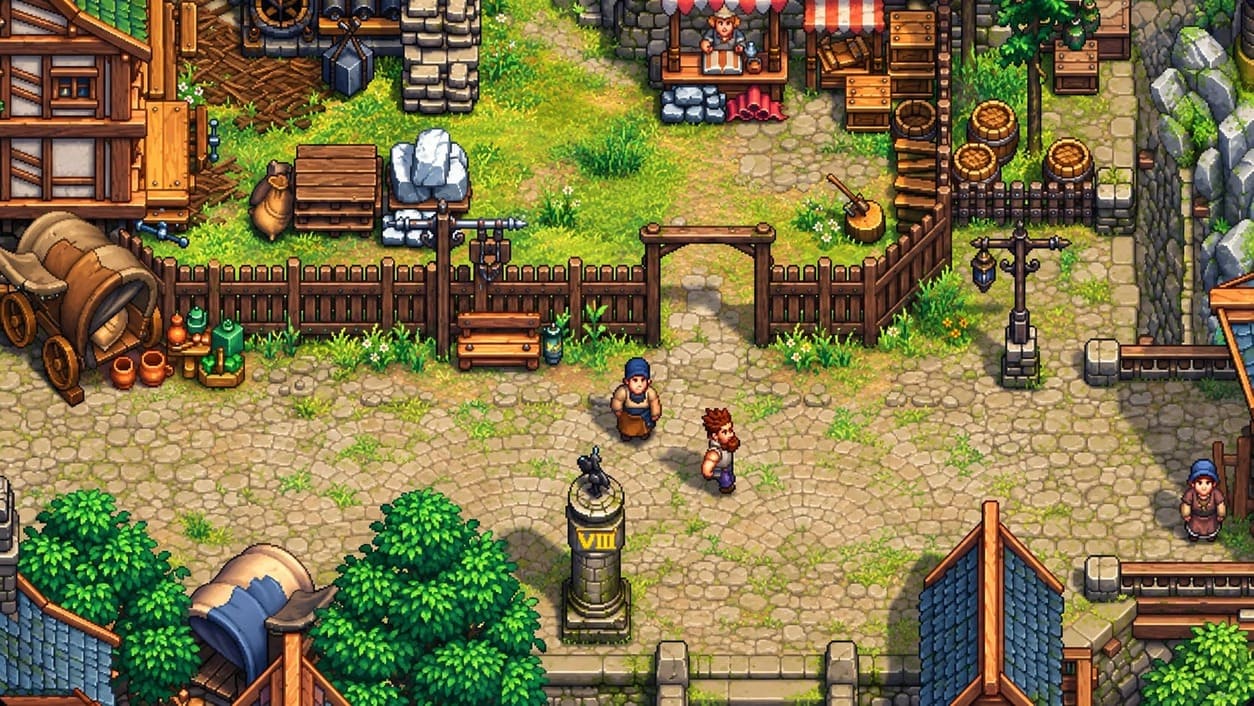
Why Can’t I Sell Everything?
The economy in Graveyard Keeper is much more restrictive than it first appears. In many games, you can walk into a shop with a bag full of crafted items and sell almost everything. Here, merchants have specific inventories and buying preferences, so carrying a pile of random goods from one NPC to another can become a complete waste of time.
Pen and Ink is a perfect example. It is easy to craft too much of it when you are working through the writing-related mechanics. Then you discover that the obvious merchant does not necessarily want to buy your surplus. Having sixteen jars sitting in a chest does not mean the game considers them valuable trade goods.
When this happens, I recommend keeping a dedicated storage chest for questionable items rather than throwing them away immediately. Some materials that seem useless early on eventually become useful for later crafting, research, or quest progression. Graveyard Keeper loves making you regret destroying something too quickly.
Who Buys What in Graveyard Keeper?
Learning the merchant system is one of the easiest ways to make your daily routine more efficient. Instead of walking around with a backpack full of vegetables, iron, fish, books, and alchemy ingredients, keep a rough idea of which NPC handles each category.
| Merchant | Useful Items to Sell |
|---|---|
| Horadric | Burial Certificates, meat, prepared food, beer, wine |
| Krezvold | Iron ore, coal, iron parts, weapons, armor and metal-related goods |
| Farmer | Vegetables, crops and grain |
| Miller | Wheat, flour and hops |
| Astrologer | Books, paper, ink, scrolls and written materials |
| Bishop | Clay products, candles and church-related items |
| Clotho | Herbs, alchemy ingredients and selected potions |
| Lighthouse Keeper | Fish and fish fillets |
Horadric is especially important early because Burial Certificates give you a straightforward source of income as you improve your cemetery. Krezvold is also useful when you start producing more metal than you personally need. Selling excess coal or other appropriate materials can help establish your first meaningful supply of silver.
Be Careful With Merchant Prices
There is a temptation to dump an entire stack of the same item on a merchant as soon as you arrive. I learned pretty quickly that this is not always the best approach. Prices can change depending on the amount you sell, so moving huge quantities at once can reduce the value of later units.
That makes small-batch selling a useful habit when you are trying to maximize your income. It takes a little more patience, but if you are already building a long-term production operation, there is little reason to destroy your profit margin just because you wanted to empty a chest in one visit.
What to Do With Bad Pumpkin Seeds
Some questlines create a different kind of problem: you technically have the required crop, but you do not have enough seeds to plant it efficiently. Pumpkin-related progression can be especially confusing if you have only a tiny number of low-quality seeds and think you have reached a dead end.
The answer is to use fertilizer and crop quality upgrades. Start with the seeds you can obtain, improve the quality of the soil, and use the resulting harvest to increase your supply of better seeds. Silver- and gold-quality fertilizer can help push crops into higher-quality variants, which means a small starting supply can eventually become a much healthier stockpile.
This is one of those mechanics that looks pointless until you understand what it is doing. You are not simply growing food; you are effectively using the farm as a resource multiplication system. Once you start thinking that way, difficult crop quests become much less intimidating.
Is Dying a Fast Travel Trick?
Here is one of the stranger things about Graveyard Keeper: death is surprisingly forgiving. Unlike many survival games, dying does not turn into a massive punishment that destroys your equipment or wipes your progress. You return home, and that can make death useful in situations where you are simply too far away from the village.
Because of that, some players intentionally use death as a crude fast-travel option after exploring dangerous areas such as the Dungeon. It sounds ridiculous when you first hear it, but once you realize how little the game punishes you for dying, the long walk back home suddenly feels much less necessary.
The Biggest Graveyard Keeper Lesson: Build Systems, Not Just Items
After spending a lot of time with games like this, I think the biggest mistake new players make is treating every problem as an isolated quest objective. Graveyard Keeper is much easier when you start connecting everything. Your graveyard produces Certificates, your farm produces food, your workshops turn raw materials into components, your research turns strange objects into Blue Points, and eventually automation allows all of these systems to feed each other.
The same philosophy applies to your base. Do not build every workstation wherever there happens to be an empty tile. Think about storage, walking distance, resource flow, and which stations you use together. A few minutes spent planning the Workyard can save a ridiculous amount of energy later.
Blue Points work the same way. Instead of panicking because the technology screen has several locked nodes, build a research routine. Gather Faith, generate Science, study valuable objects, use food buffs when they matter, and maintain a repeatable crafting method for the periods when your unique research materials run out.
And when it comes to money, stop trying to sell everything. Graveyard Keeper rewards specialization. Know which merchant wants which products, keep potentially useful junk in storage, sell valuable goods in sensible quantities, and gradually turn your production areas into reliable income sources.
That is when the game really clicks for me. At first, Graveyard Keeper feels like a chaotic collection of quests, corpses, crafting recipes, technologies, and bizarre NPC schedules. After enough hours, those systems start fitting together. You stop asking, “What am I supposed to do with this?” and start thinking, “What production chain can I build around it?”
Once you reach that point, the game becomes much more satisfying. The graveyard is no longer just something you are trying to improve for the next quest. It becomes the center of a strange medieval production empire where corpses become research, research becomes technology, technology improves production, and production eventually solves the next problem before you even encounter it.
Graveyard Keeper is confusing by design, but that confusion is also what makes finally understanding its systems so rewarding.