No Man’s Sky Alliance Territory Conquest Guide: Dominate the Cosmos in 2026
For a long time, territorial control in No Man’s Sky was mostly a community invention. Players could establish bases, create colonies, draw borders on maps, and join enormous player civilizations, but the game itself rarely treated those borders as anything more than decoration.
That has changed dramatically with the newer generation of updates.
The combination of Galactic Alliances, faction systems, station management, expanded multiplayer infrastructure, and massive player-controlled Corvettes has pushed No Man’s Sky toward something much more interesting: a galaxy where organized groups can actually build influence instead of simply claiming a patch of stars on a community map.
And honestly, this is the direction I’ve wanted the game to take for years.
Exploring an untouched planet is still fantastic, but there is something completely different about watching a previously empty system become part of a larger operation. Your alliance has a reason to be there. Your freighters have somewhere to go. Your bases become strategically useful instead of being isolated showcases.
If you’re serious about No Man’s Sky territory conquest in 2026, however, you need more than a good-looking base and a pile of units. Expansion requires planning, logistics, infrastructure, and—perhaps most importantly—knowing when not to start a fight.
How Territory Control Works in No Man’s Sky
The first thing to understand is that galactic expansion isn’t simply about planting a Base Computer and putting a flag on a planet.
A serious alliance needs two things:
- A recognizable territorial presence
- Control of important system infrastructure
The most important strategic element is the Space Station Directorship. Controlling the station gives your alliance a much stronger foothold in the system and turns your presence from simple player activity into something resembling actual administration.
This distinction matters.
A base can show that you visited a system. A station under your alliance’s control shows that you intend to stay.
The Two Pillars of Galactic Sovereignty
| System | Why It Matters |
|---|---|
| Galactic Alliance | Organizes players, territory, resources, and expansion |
| Space Station Directorship | Provides the strongest form of system-level control |
| Orbital Infrastructure | Extends your alliance’s physical presence |
| Resource Network | Supports expansion and keeps frontier systems supplied |
| Corvette Fleet | Provides mobile logistics and forward operations |
The mistake I see players making with systems like this is trying to expand as quickly as possible. More territory doesn’t automatically mean more power. Ten poorly supplied systems can be considerably weaker than three well-developed ones.
Step 1: Pick the Right System Before You Claim It
Your first major decision should happen before you build anything.
Scout potential systems and look for locations that offer a combination of economic value, resources, strategic positioning, and manageable competition.

Wealthy Economies
High-tier economic systems are obvious targets because they provide better trading opportunities and can support a growing alliance more efficiently.
But don’t look exclusively at economy ratings.
A wealthy system in an awkward location may be less useful than a slightly poorer system sitting directly between several valuable regions.
Resource-Rich Systems
Look for planets and asteroid fields containing resources your alliance actually uses.
Useful targets include:
- Valuable industrial materials
- Productive asteroid fields
- Salvage opportunities
- Large planetary resource deposits
- Convenient locations for extraction infrastructure
This is where territorial planning starts to feel less like traditional No Man’s Sky exploration and more like a strategy game.
You aren’t asking “Is this planet beautiful?”
You’re asking “Can this system support everything we want to build?”
Empty and Abandoned Systems
For smaller groups, abandoned or lightly populated systems can be excellent starting points.
You don’t have to immediately challenge a powerful established organization. Instead, find somewhere with room to develop and turn an underused system into a functioning alliance hub.
That approach is slower, but in my experience, it’s also much more sustainable.
Step 2: Secure the Space Station
Once you’ve selected a target, the real work begins.
Your alliance needs to establish control over the local station rather than treating the system as another temporary expedition site.
The exact path depends on the condition of the system.
Occupied Systems
If another authority already controls the station, expect the process to be more complicated.
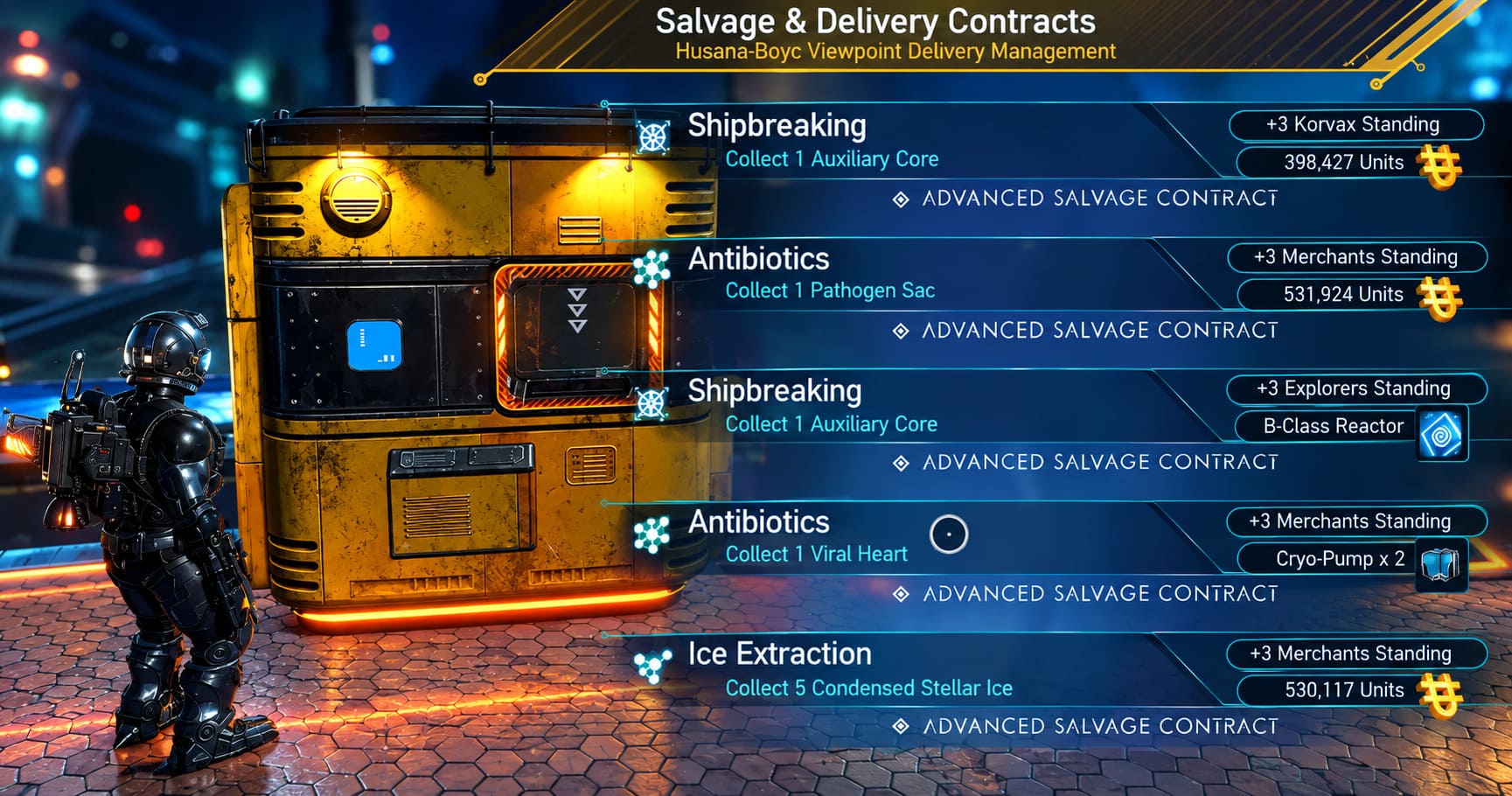
Alliance members should focus on completing relevant contracts, building reputation, and gradually increasing their influence in the system.
This is not the sort of objective one player should casually grind through while everyone else watches.
Coordinate the workload.
Have different members concentrate on missions, resources, trading, and logistical preparation. A coordinated alliance can achieve far more than ten players independently doing whatever happens to be convenient.
Derelict or Unclaimed Systems
Unclaimed systems present a different challenge.
Instead of competing directly with an established authority, your alliance may have to invest significant resources into rebuilding and activating existing infrastructure.
This can become extremely resource-intensive, which is precisely why having a dedicated logistics team is so useful.
Don’t burn through your entire stockpile just to say you captured a system.
A captured system that immediately becomes impossible to maintain isn’t really a victory.
Step 3: Build a Network, Not Just a Base
After establishing your station presence, it’s time to make the system useful.
This is where orbital and modular structures become important.
Your alliance should create a network connecting important locations, resource operations, bases, and transportation routes.
A good territorial network should accomplish three things:
- Move players and resources efficiently
- Protect important infrastructure
- Give your alliance a reliable operational hub
Think of your headquarters as the center of a wheel. Your other bases and resource sites are the spokes.
The farther you expand, the more important this network becomes.
A frontier system should never feel completely disconnected from your core territory.
Defending Your Territory
Claiming territory is only the beginning.
The uncomfortable truth about galactic expansion is that maintenance is usually harder than conquest.
A system can lose its value surprisingly quickly if infrastructure isn’t upgraded or if hostile events are allowed to disrupt your operations.
Upgrade the Right Infrastructure
Station improvements should focus on the areas that actually support your alliance’s long-term goals.
Defensive Infrastructure
Military-oriented upgrades help protect critical locations and improve your ability to respond to hostile activity.
Economic Infrastructure
Trading and economic systems can turn an important station into a source of sustained value for your alliance.
This is particularly useful for large communities where players constantly consume materials and equipment.
Resource Infrastructure
Extraction operations can supply your wider network with rare and valuable materials.
This is one of the biggest reasons to control multiple systems rather than simply stacking players into one home world.
A good territory should feed itself.
Dealing With Galactic Threats
The galaxy isn’t going to politely wait while you build your empire.
Dynamic threats, hostile events, and environmental dangers can disrupt established operations. If you’re trying to maintain several systems simultaneously, ignoring these problems can eventually hurt your economy and infrastructure.
Establish early-warning systems where possible and make sure alliance members know which systems are considered high priority.
A simple defense structure works well:
Core Systems → Frontier Systems → High-Risk Systems
Your core territory receives the strongest protection because losing it can damage everything else.
Frontier systems get enough support to remain operational.
High-risk areas should only receive major investment when their strategic value justifies the danger.
Corvettes: The Biggest Tool for Expansion
This is where large-scale territorial operations get particularly interesting.
Corvettes are not just oversized ships. For an organized alliance, they can function as mobile command centers, logistics platforms, and forward operating bases.
Their size and multiplayer capabilities make them extremely useful for operations that would otherwise require several separate ships and bases.
You can position them near strategic borders, use them for resource operations, and deploy crews to investigate deep-space wreckage and other valuable targets.
That flexibility makes them ideal for frontier expansion.
Why Corvettes Matter
| Corvette Role | Strategic Benefit |
|---|---|
| Mobile Command Center | Keeps players organized during frontier operations |
| Resource Platform | Supports large-scale gathering and salvage |
| Forward Base | Extends your operational range |
| Border Presence | Gives important systems a stronger defensive footprint |
| Multiplayer Hub | Allows several players to contribute to the same operation |
Personally, this is one of the areas where No Man’s Sky’s multiplayer systems become much more compelling.
A massive ship full of players preparing for an expedition feels substantially more meaningful than everyone simply teleporting independently between bases.
Freighters Are Your Logistics Backbone
Don’t make the classic mistake of thinking Corvettes replace freighters.
They don’t.
Freighters remain essential for moving resources between established systems.
As your territory grows, logistical problems become unavoidable. A newly conquered system might have valuable resources but lack the materials necessary to build the infrastructure you want.
That’s where your freighter network comes in.
Keep your primary freighters focused on:
- Long-distance resource transport
- Supplying frontier construction
- Supporting new colonies
- Moving industrial materials
- Connecting distant alliance systems
The larger your territory becomes, the more time you’ll spend thinking about logistics.
That’s not a bad thing.
In fact, it gives territorial control actual depth.
Diplomacy Matters More Than You Think
There is another part of territory conquest that can’t be solved with ships or resources: the player community itself.
No Man’s Sky has a long history of player-created civilizations, federations, colonies, and community projects. Some groups have spent years building recognizable regions of space.
So before expanding into another established group’s neighborhood, do your homework.
Check community maps and understand which areas are traditionally associated with major player organizations.
You might technically be able to move into an area, but that doesn’t mean doing so is a smart idea.
A diplomatic agreement can save your alliance enormous amounts of trouble.
Trade partnerships, shared access, resource agreements, and mutual defense arrangements can create more value than constantly trying to absorb neighboring territory.
Not every border needs to become a battlefield.
No Man’s Sky Connection Failed Multiplayer Error: 2026 Working Fixes
The Best Expansion Strategy for 2026
If you’re starting from scratch, I wouldn’t recommend trying to conquer a huge region immediately.
Instead, build your alliance in stages.
Phase 1 — Establish a Home System
Choose one valuable system and make it your operational center.
Phase 2 — Build Infrastructure
Create resource networks, bases, transportation links, and defensive facilities.
Phase 3 — Expand Into Two or Three Strategic Systems
Prioritize systems that actually improve your economy or military position.
Phase 4 — Establish a Frontier
Use Corvettes and freighters to support your outer systems and maintain a reliable supply chain.
Phase 5 — Build Diplomatic Relationships
Work with neighboring communities instead of automatically treating them as competitors.
This approach might look slower on a galaxy map, but it’s much harder to collapse.
No Man’s Sky Cosmos Update: Best Steam Deck Settings for Maximum Performance and Battery Life
Final Thoughts: Don’t Just Own Space—Make It Matter
The most interesting part of No Man’s Sky territory conquest in 2026 isn’t the idea of painting huge sections of the galaxy with your alliance’s name.
It’s what happens after the claim.
A successful territory needs functioning infrastructure, resource production, transportation, defense, active players, and a reason for people to keep returning to it.
That is what separates a genuine alliance from a collection of bases.
Start with one good system. Build it properly. Connect it to your logistics network. Secure the station. Develop your economy. Then expand when your infrastructure can actually support the next step.
And don’t underestimate diplomacy.
The galaxy is absurdly large, so there’s little reason to turn every neighboring group into an enemy.
Build something worth defending first. Then worry about how much of the galaxy you want to control.