How to Cure Diseases in Nested Lands (Crafting Recipes & Blueprints You Need)
If you’ve spent more than a couple of in-game weeks in Nested Lands, you already know one brutal truth: the real final boss isn’t a monster, a raid, or winter. It’s the Death Plague. And it doesn’t knock politely.
It creeps in, snowballs, and before you know it your carefully built settlement turns into a medieval biohazard simulator. I’ve lost villages to it. I’ve rage-quit over it. And eventually, I learned to respect it. Here’s my battle-tested, slightly obsessive, definitely fan-written take on how to actually control the plague instead of constantly reacting to it.
Towerborne Class Mastery Tree Explained & How to Farm Legendary Loot
Step One: Hit the Infection Hard and Fast
When infection levels start rising, you don’t philosophize. You act. The core of immediate response is Plague Medicine, and without it, you’re basically roleplaying a bystander at your own disaster. Every dose knocks infection down by one level, which may not sound dramatic, but stacked over time it’s the difference between a stable worker and a corpse you need to burn.
- Build an Apothecary’s Hut early. No hut, no medicine. No medicine, no village.
- Stockpile aggressively. If you place medicine in accessible chests, infected villagers will automatically grab doses and treat themselves. This automation alone can prevent a spiral.
- Manual intervention matters. If someone critical (like your best crafter) is spiraling, step in and administer medicine directly.
Think of medicine not as a cure-all, but as a pressure valve. It buys you time. What you do with that time determines whether you stabilize or collapse.
Medical Infrastructure: Containment Wins Wars
Here’s where Nested Lands gets surprisingly strategic. Curing infection isn’t enough if everyone keeps coughing in each other’s faces. You need containment.
Infirmaries are your first real line of defense. They isolate infected NPCs and slow down transmission. They don’t magically solve everything, but they reduce the chaos factor dramatically.
Then come Plague Hospitals, which feel like an upgrade straight out of a grim medieval management sim. Staff them with Nurses and you unlock a passive recovery mechanic. It’s slow. It’s subtle. But over time, infected villagers may reduce their infection stage without burning through your entire medicine supply.
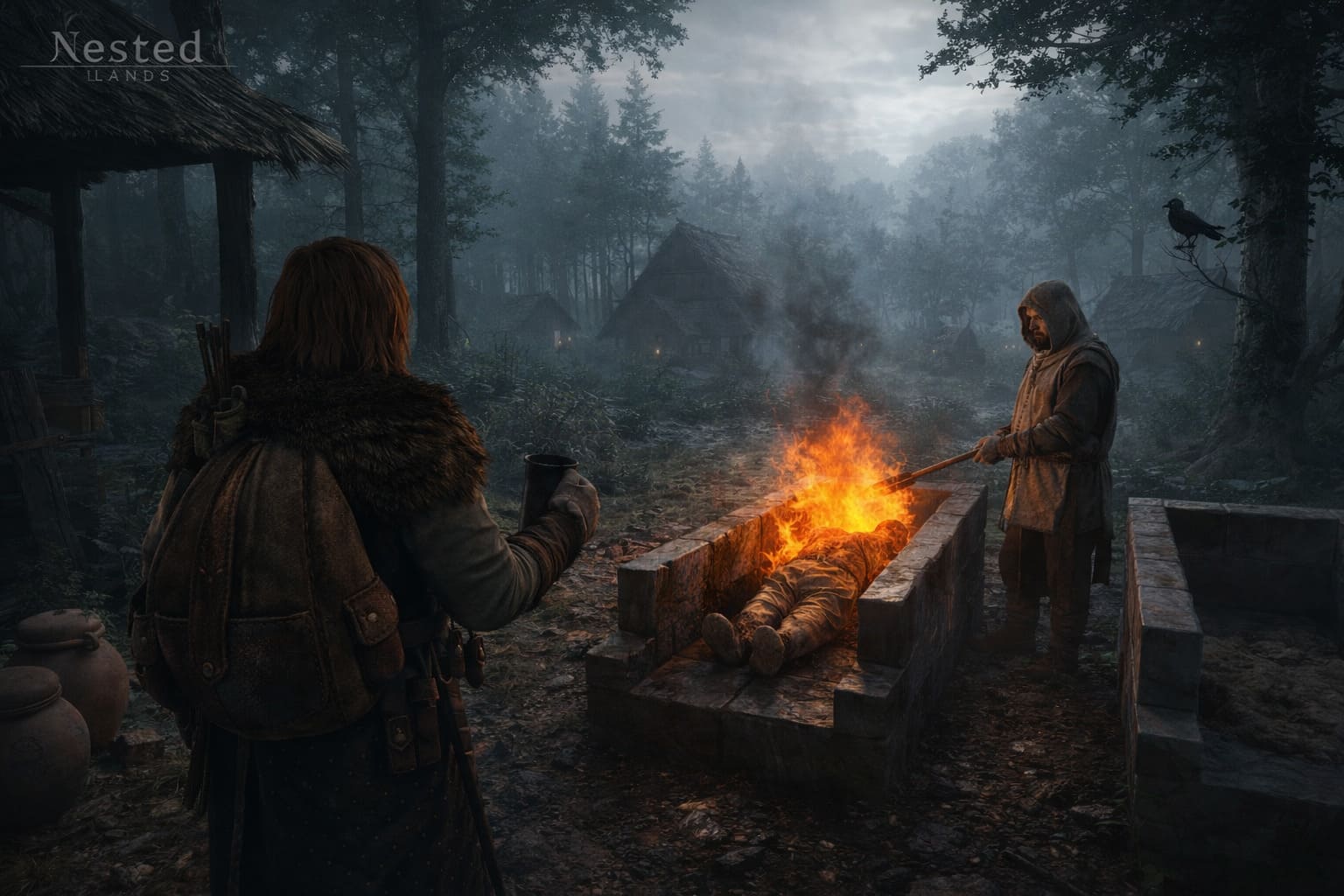
And let’s talk about the most metal building in the game: Burning Pits. Corpses are plague batteries. If you leave them lying around, you’re basically begging for a second outbreak. Cremation isn’t optional. It’s mandatory. Every body burned is one less invisible infection source poisoning your settlement.
Hygiene Is Not Flavor Text — It’s Survival
One of the biggest early mistakes I made was ignoring hygiene. It sounds like a “nice bonus” system. It’s not. It’s the backbone of prevention.
- Bath House: Raises hygiene and gives natural resistance against infection. High hygiene reduces how often you even need medicine.
- Well: Clean water underpins everything. Without it, your settlement is permanently vulnerable.
- Plague Masks: Crafted in the Tannery, these provide a steady resistance buff. On high-risk workers, they’re absolutely worth the materials.
Prevention in Nested Lands feels subtle until you compare two saves: one filthy and reactive, the other clean and controlled. The difference is night and day.
Control the Environment or It Controls You
The plague doesn’t always start inside your walls. Sometimes it radiates from the world itself.
Plague Focuses — whether that’s rotting bodies or contaminated zones — constantly emit infection. If you ignore them, your ambient infection level never truly drops. Clearing these out should be part of your routine patrol, not an afterthought.
And never underestimate foraging. Herbs gathered in the wild feed your Apothecary’s production line. No herbs means no medicine. No medicine means you’re one bad wave away from collapse. Sustainable gathering equals sustainable survival.
Quick Reference: Death Plague Management
| Method | Building Required | Main Effect |
|---|---|---|
| Plague Medicine | Apothecary’s Hut | Reduces infection by 1 level per dose |
| Containment | Infirmary / Plague Hospital | Slows spread and enables passive recovery |
| Hygiene Boost | Bath House / Well | Improves resistance and lowers infection risk |
| Cremation | Burning Pit | Eliminates corpse-based plague sources |
Forged in Plague: Why Crafting in Nested Lands Is the Real Endgame
If you strip away the fog, the plague, and the constant threat of being mauled by something with too many teeth, Nested Lands is about one thing: mastering its crafting loop. And honestly? That’s why it works. In a genre flooded with half-baked survival systems, this one feels deliberate, punishing, and incredibly satisfying when it finally clicks.
From your first crude stone tool to advanced defensive structures guarding your settlement, progression is tied directly to what you can craft, where you build, and how smartly you gather. This isn’t just a feature — it’s the backbone of the entire experience.
Early Game: Primitive, Brutal, Addictive
You start with nothing but a few personal blueprints and a dream of not dying in five minutes. The early crafting menu gives you the essentials, and every item matters.
- Stone Hatchet — Your lifeline for chopping trees and kickstarting resource flow.
- Stone Pickaxe — The key to mining flint and early iron ore deposits.
- Fiber Rope — A deceptively simple component that unlocks higher-tier tools and structures.
- Torch — Not optional. Night exploration without it is basically suicide.
What I love here is the pacing. You feel every upgrade. When you swap out your starter tools for something more durable, it’s not cosmetic — it changes how efficiently you survive. The grind feeds directly into your Strength stat progression, so better tools don’t just gather faster — they evolve your character.
Combat Crafting: From Sticks to Legendary Firepower
Weapons in Nested Lands scale beautifully from primitive to absurdly powerful. Early on, you’re crafting bows and arrows just to survive hunting trips. Later? You’re chasing world events and faction questlines for blueprints that feel borderline broken in the current meta.
- Simple Bow — Cheap, efficient, and perfect for stealth hunters.
- Wooden Arrows — Basic but reliable for early ranged builds.
- Iron Sword — Requires a Blacksmithing Station and real investment.
- Legendary Exploding Thunder Bullet — Endgame-tier chaos unlocked through faction progression.
The shift from handmade weapons to faction-earned legendary gear feels organic. You don’t just craft better weapons — you earn the knowledge to create them. That distinction matters.
Armor & Defense: Progress Feels Tangible
Protection in Nested Lands isn’t just about raw stats. It reflects your village’s technological evolution.
| Item | How to Obtain | Purpose |
|---|---|---|
| Leather Tunic | Crafted from Cured Leather | Basic early-game defense |
| Reinforced Shield | Iron Ingots + Planks | Melee survivability boost |
| Diamond Armor (Epic) | Questline + Armory Trade | High-tier defensive power spike |
When you finally step into Epic-tier armor, you feel the difference instantly. Encounters that once drained all your healing supplies suddenly become manageable. That sense of earned dominance is rare in survival MMOs.
Village Infrastructure: Where the Game Truly Opens Up
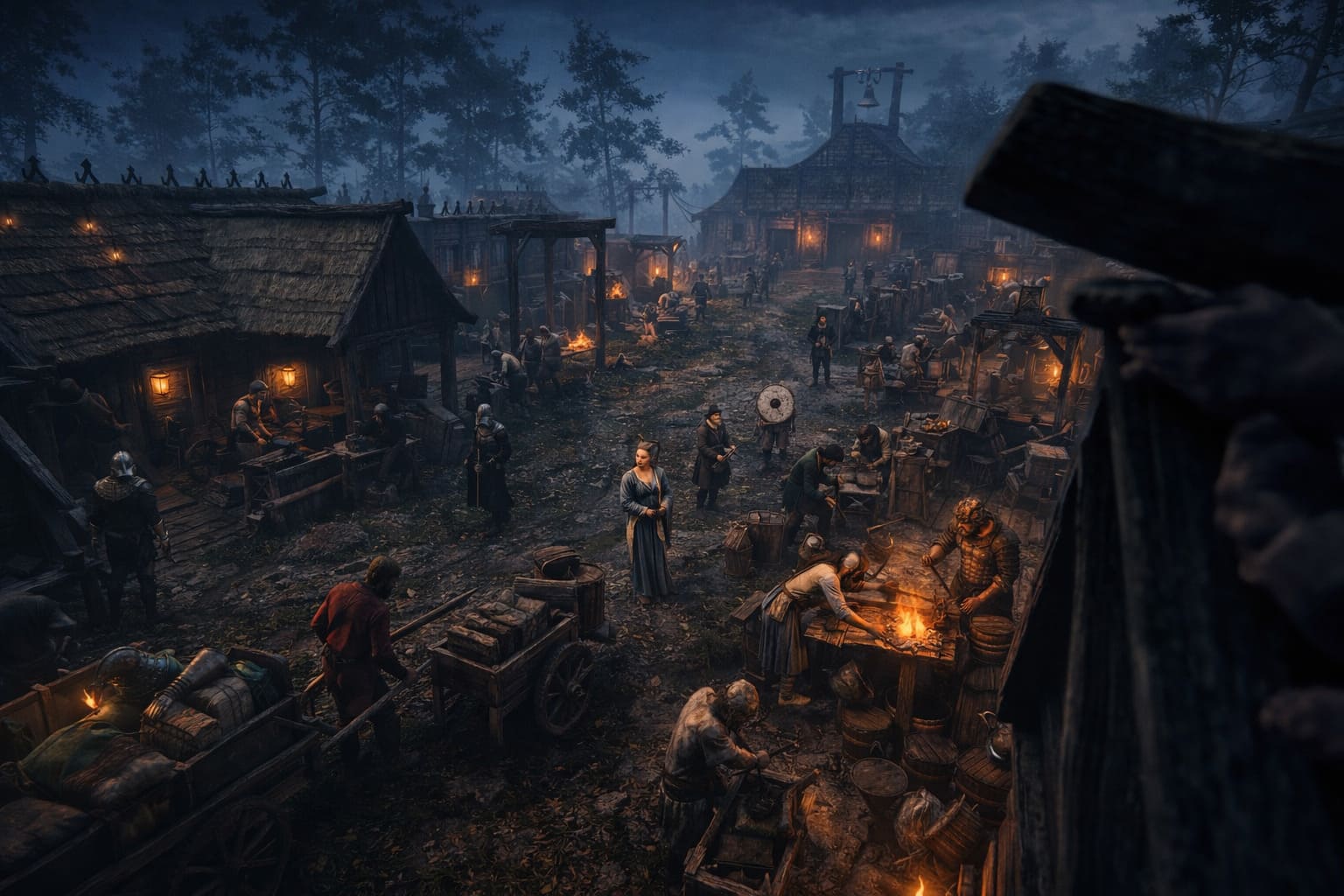
Here’s where Nested Lands separates itself from basic survival sandboxes. As village chief, you’re not just crafting items — you’re placing blueprints that define your settlement’s future.
- Workbench — The core of all advanced crafting chains.
- Smelter — Turns raw ore into real progression.
- Drying Rack — Food security and leather production in one.
- Medicine Station — Critical for plague survival and long-term sustainability.
This layer adds strategy. Resource management becomes communal, not individual. Your blueprint decisions affect everyone’s efficiency and survivability.
The Throwing Meta: Surprisingly Overpowered
Right now, high-level throwing items are dominating advanced combat builds.
- Five Poisons Plum Needle — Applies stacking debuffs and melts bosses over time.
- Violent Storm Pearl Needle — High-tier unlock tied to regional quest completion.
These tools reward players who dive into side quests and merchant systems. It’s a smart design choice — exploration feeds combat power.
Resource Strategy: Play Smart or Fall Behind
If you’re serious about long-term progression, optimize your gathering routes. Mining and chopping scale with better tools and directly influence stat growth. Meanwhile, Point of Interest exploration is where you’ll find rare blueprints for furniture, machinery, and high-end upgrades.
The smartest players don’t just farm — they rotate between gathering, looting derelict structures, and hunting regional bosses. That gameplay loop keeps Nested Lands from feeling repetitive.
Final Thoughts: Crafting With Consequence
Nested Lands doesn’t reinvent survival crafting — it refines it. Every recipe connects to a larger progression web. Every blueprint feels like a milestone. Every infrastructure choice changes how your settlement evolves.
In a market crowded with survival titles chasing trends, Nested Lands stands out because its systems have weight. Crafting isn’t filler content here — it’s identity. And if you’re the kind of player who loves meaningful progression, deep crafting trees, and village management that actually matters, this world is worth surviving in.