Blackwood Apartment Customization Guide: Ultimate Base Building Tips
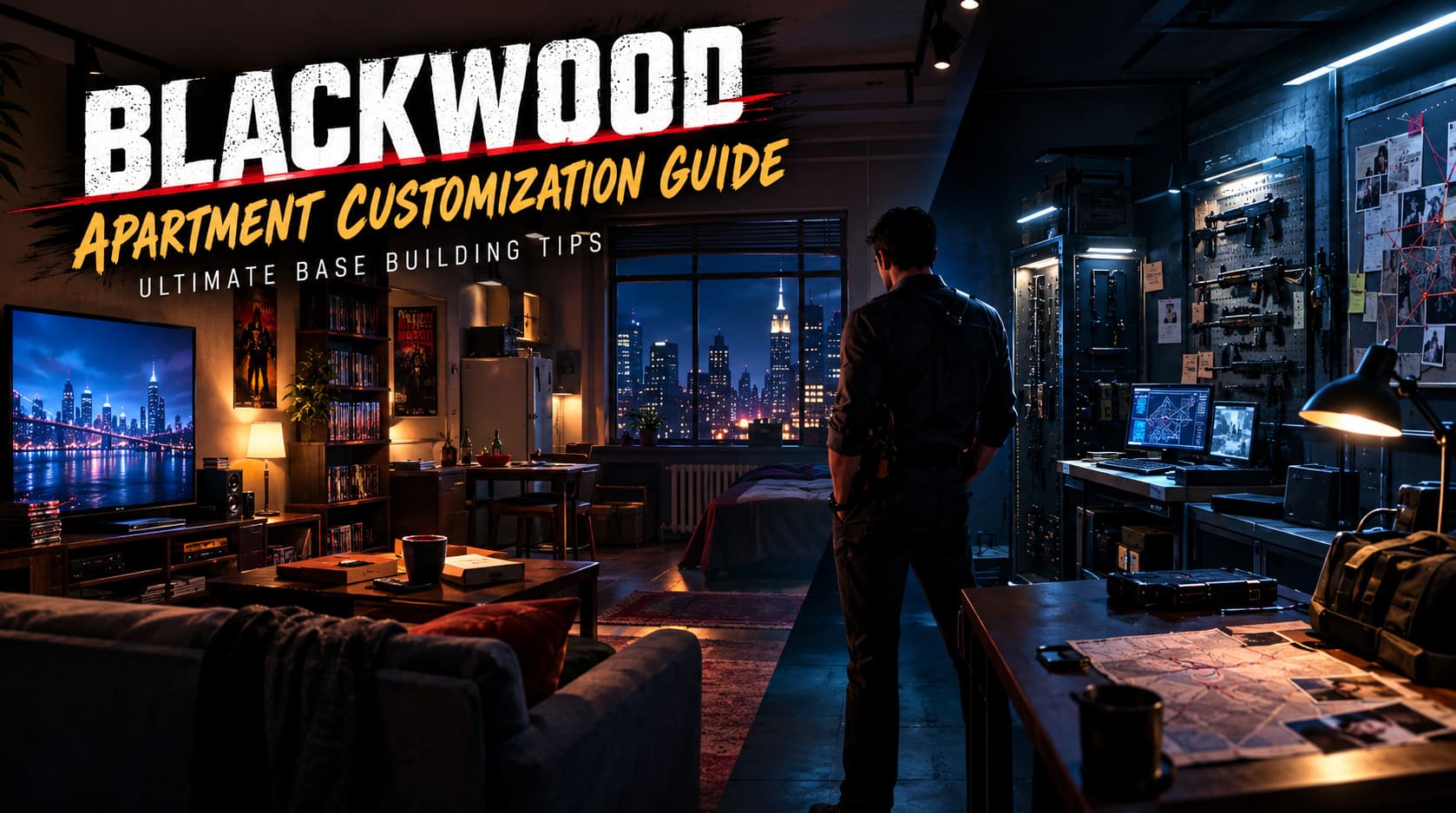
In BLACKWOOD, the apartment is much more important than it first appears. At a glance, Anton Blackwood’s place might look like another small feature designed to give the player somewhere to return after a mission, but spending more time with the game reveals a different purpose. The apartment sits directly between Anton’s two lives: the ordinary Brooklyn store manager trying to look respectable and the professional killer who disappears into the New York night after closing time.
That contrast is one of the things I find most interesting about BLACKWOOD. I’ve played plenty of games where a safehouse is basically a glorified menu with a bed and a weapons locker thrown into the corner. Here, the idea works better because the apartment reflects the character himself. The civilian side needs comfort and stability, while the hidden side needs weapons, information, storage, and security. If you treat the apartment as nothing more than decoration, you’re missing one of the more useful parts of the game’s progression.
Blackwood Game Characters and Voice Actors: The Ultimate Guide to AttritoM7’s Noir Thriller
Why Apartment Customization Matters in BLACKWOOD
BLACKWOOD takes place in a gritty version of 2012 New York City, and that setting gives the apartment customization system some personality. There is no modern smart-home technology everywhere you look, and the atmosphere leans heavily into physical media, old computers, cramped rooms, and improvised equipment. It makes the safehouse feel like a place that actually belongs to its period rather than a generic videogame headquarters.
More importantly, customization is tied to gameplay. Anton’s apartment can support recovery, stress management, equipment preparation, mission planning, storage, and the expansion of his hidden criminal operation. The best upgrades aren’t necessarily the most expensive ones either. In my experience with games that combine simulation elements with action systems, the upgrades that quietly improve your routine usually end up being more valuable than flashy additions that simply look impressive.
The Two Types of Money You Need to Manage
One of the first things to understand is the separation between Anton’s legitimate income and the money he earns from his darker profession. BLACKWOOD uses this division to reinforce the idea that Anton is constantly maintaining two identities. Your legal earnings support the life people are supposed to see, while assassination income can be redirected toward the equipment and infrastructure that must remain hidden.
| Currency | Main Source | Typical Uses | Priority |
|---|---|---|---|
| Legal Cash | DVD store and legitimate work | Furniture, entertainment, comfort, residential improvements | High for recovery and stress management |
| Blood Money | Assassination contracts | Weapons, tactical equipment, security, hidden facilities | High for combat and mission preparation |
The important thing is not to dump everything into one side. A beautifully equipped armory doesn’t help much if Anton is constantly exhausted or stressed, while an expensive living room won’t save you when you are heading into a dangerous contract with outdated equipment. A good apartment build is about balance rather than maximum spending.
The Civilian Side: Making Anton’s Apartment Feel Like Home
The visible living area represents the version of Anton that exists during the day. This is where the apartment becomes more than a functional menu. Furniture, lighting, entertainment systems, bedroom improvements, and other details can gradually turn a depressing studio into something that feels genuinely lived in.
The media setup is particularly fitting for the game’s 2012 setting. Instead of surrounding Anton with modern streaming devices, the apartment can lean into televisions, DVD collections, speakers, movie posters, and other physical-media details. I actually prefer this approach because it gives the safehouse a stronger identity. A shelf full of DVDs tells you something about the character in a way that another generic upgrade icon never could.
Focus on Rest and Recovery
Bedroom and comfort upgrades deserve more attention than they might initially receive. Improving Anton’s bed, seating, kitchen equipment, and general living conditions can make the transition between missions feel smoother. When a game has systems built around stamina, health, stress, or recovery, small improvements to downtime can eventually have a noticeable effect on the entire gameplay loop.
My advice would be simple: don’t postpone comfort upgrades forever just because they don’t involve weapons. Players naturally gravitate toward anything that increases damage or expands their arsenal, but a character who starts every major operation in better condition is easier to manage over the long term.
Customize the Apartment’s Style
This is where the system can become more personal. Changing wallpapers, furniture, rugs, lighting, and other visual elements lets you decide what Anton’s private world actually looks like. You can keep the apartment rough and almost claustrophobic, or gradually transform it into a cleaner and more sophisticated space.
Personally, I’d keep some of the rougher elements even after unlocking better furniture. BLACKWOOD works best when the apartment still feels like a hidden refuge rather than a luxury penthouse. The contrast between an ordinary-looking home and the dangerous operation hidden behind it is part of the appeal.
The Hidden Armory: Where the Real Business Happens
Then there is the other half of the apartment. Behind the respectable civilian environment is Anton’s operational space, where the tone changes immediately. Hidden rooms, concealed storage, weapon displays, tactical equipment, and workstations transform the apartment into something much closer to an underground headquarters.
This is where blood money becomes especially important. Instead of spending every paycheck on another firearm, think about the entire system supporting your weapons. Storage, maintenance, crafting, and preparation can all contribute to making the next mission easier.
Weapon Storage and Loadout Preparation
As Anton’s arsenal grows, having an organized place for weapons becomes increasingly useful. Weapon racks and lockers aren’t just there to make screenshots look cool. They give the safehouse the feeling of being a genuine staging area where you decide what you actually need before leaving for a contract.
If you’re anything like me, this is also the kind of system where organization becomes strangely satisfying. Instead of carrying everything everywhere, you can keep different weapons and equipment ready for different situations. A compact setup for stealth missions can be separated from a heavier loadout intended for situations where things are almost guaranteed to go wrong.
Upgrade the Workbench Before Chasing Luxury
The tactical workbench should be one of the higher priorities for players who enjoy experimenting with equipment. Weapon modifications, attachments, ammunition preparation, and survival equipment become more useful as the game’s missions become more demanding. A better workstation essentially expands what you can do before leaving the apartment.
If resources are limited, I’d personally put functional equipment ahead of purely cosmetic armory upgrades. A weapon displayed on a wall might look fantastic, but an improved workstation can affect several future missions. That’s the kind of investment that tends to pay for itself.
The Intel Board and Mission Planning
Another important part of the safehouse is the mission planning area. The Intel Board gives the apartment a completely different purpose from a traditional player home because it connects your physical surroundings with the next operation. Maps, photographs, notes, routes, and information about targets can all turn the wall into a visual representation of Anton’s current problems.
I particularly like this style of mission preparation because it fits the game’s noir atmosphere. Instead of simply selecting a mission from a menu, you get the feeling that you’re actually preparing for something. The apartment becomes the quiet moment before everything gets complicated again.
Better surveillance equipment can make this station even more valuable. Access to additional information, patrol details, surveillance material, or other intelligence can help you understand a target before committing to an approach. When a game rewards preparation, taking a few minutes to study the situation is usually better than rushing straight into combat.
The Safehouse Computer
The computer is another small detail that helps sell the period setting. A 2012-era desktop feels much more appropriate for BLACKWOOD than a futuristic terminal would, especially when Anton is using it to interact with the darker side of his profession.
The computer can serve as a gateway to contracts, information, equipment, and other opportunities connected to the underground economy. As you improve your setup, access to better resources can become part of the apartment’s progression. It effectively turns the safehouse into a command center without making it feel like a military bunker.
A Practical Apartment Upgrade Order
If you’re starting from scratch, I wouldn’t recommend buying upgrades randomly. A simple progression path makes the apartment much more useful without wasting valuable resources on things that don’t immediately improve your routine.
- Improve basic recovery. Start with the bed, seating, and other upgrades that make Anton’s downtime more effective.
- Upgrade essential storage. More space becomes increasingly valuable once your weapon collection starts growing.
- Invest in the workbench. Better equipment preparation can have a direct impact on future missions.
- Develop the Intel Station. Information becomes increasingly important as contracts become more complicated.
- Improve security. Protect the hidden side of the apartment as Anton’s criminal activity expands.
- Spend remaining cash on cosmetics. Once the important systems are covered, make the apartment look the way you want.
This order isn’t a strict rule, but it reflects how I generally approach upgrade systems in games. I prefer improvements that affect several gameplay loops before investing heavily in things that are purely visual. Once the functional foundation is in place, customization becomes much more enjoyable because you aren’t constantly wondering whether you should have spent that money somewhere else.
Don’t Ignore the Civilian Life
One of the easiest mistakes is focusing entirely on Anton’s assassin identity. It makes sense because weapons and contracts are more immediately exciting, but the civilian side is what helps separate BLACKWOOD from a straightforward action game.
Keeping the apartment comfortable can support Anton’s mental and physical state between missions. If stress mechanics are affecting performance, ignoring them can eventually make difficult encounters even harder. The apartment should support both halves of Anton’s life rather than becoming an armory with a bed in it.
Security and Hiding Your Tracks
Security becomes more important as Anton’s operation grows. A hidden armory is only useful if it remains hidden, and the idea of maintaining a believable civilian environment creates an interesting layer of tension. You don’t want every part of the apartment screaming that its owner is secretly running a criminal operation.
For that reason, security improvements should be considered alongside your progression rather than as an afterthought. Reinforced storage, concealed entrances, hidden compartments, and better protection for valuable equipment all contribute to making the apartment a more reliable base.
Storage Is More Important Than It Looks
Inventory management is one of those mechanics players tend to appreciate only after they run into a problem. Once you’ve collected multiple weapons and pieces of equipment, constantly deciding what to carry can become annoying. A properly upgraded safehouse gives you somewhere to keep equipment that you don’t need immediately.
I’d recommend treating the apartment as your long-term inventory rather than trying to carry everything during every mission. Keep specialized weapons and less frequently used equipment stored safely, then build your loadout around the actual contract. It makes preparation faster and can prevent the classic videogame problem of entering a mission with a backpack full of things you never use.
My Take on the Best BLACKWOOD Safehouse Build
If I were building Anton’s apartment for a long playthrough, I wouldn’t try to make it look perfect from the beginning. I’d first build a practical foundation: reliable recovery, enough storage, a capable workbench, useful intelligence equipment, and solid security. Once those systems were established, I’d start spending money on the details that make the apartment feel uniquely Anton’s.
That’s ultimately what makes this customization system interesting. It isn’t simply about decorating a room between missions. The apartment represents the tension at the center of BLACKWOOD. During the day, it needs to look like the home of an ordinary man working an ordinary job; at night, it becomes the headquarters of someone whose life is anything but ordinary.
Final Thoughts
BLACKWOOD’s apartment customization works best when you treat it as part of the gameplay loop rather than a separate decorating feature. Legal money should help maintain Anton’s civilian identity and improve his recovery, while the darker income supports the equipment, security, and infrastructure required for his assassin career.
The biggest lesson is to avoid over-specializing. An enormous armory won’t compensate for poor recovery, and a beautifully decorated apartment won’t help much if Anton is constantly under-equipped for his contracts. Build both sides gradually, prioritize upgrades that improve several systems at once, and use cosmetic customization to give the safehouse its personality once the essentials are covered.
For me, that’s the most appealing part of the whole concept. A good safehouse in a game should feel like somewhere you actually want to return to, not just another loading screen. If BLACKWOOD manages to make Anton’s apartment feel like a believable home by day and a dangerous operational headquarters by night, it could become one of the more memorable pieces of its 2012 New York setting.