Ultimate Star Wars Zero Company Soldier Build and Class Guide
If there is one class in Star Wars Zero Company that feels like the dependable friend you always want in your squad, it is the Soldier. After spending a lot of time with turn-based tactics games, I tend to appreciate classes that do not need some elaborate setup just to be useful. The Soldier fits that role beautifully: it can deal reliable damage, survive when things go wrong, control dangerous enemies, and still contribute when the original plan has completely fallen apart.
Star Wars Zero Company takes a lot of familiar ideas from games such as XCOM and mixes them with the Star Wars universe, particularly the darker atmosphere of the late Clone Wars. You play as Hawks, a former Republic officer assembling a team of mercenaries and outsiders to fight the mysterious Infinite Coil. Every mission asks you to think ahead, but the Soldier gives you something particularly valuable when those carefully planned turns start going sideways: consistency.
For me, that is what makes the class so interesting. The Soldier is not necessarily the flashiest character on the battlefield, but a well-built one can quietly become the unit that holds the entire squad together. With the right abilities, weapons, and positioning, you can turn this straightforward combat class into an aggressive frontline sweeper capable of dealing with both armored targets and groups of enemies.
Ultimate Star Wars Zero Company Sharpshooter Build and Class Guide
Why the Soldier Is So Important
The Soldier is essentially the reliable damage dealer of your Zero Company roster. It has enough durability to operate near the front, enough firepower to punish exposed enemies, and enough flexibility to adapt to different mission situations. That combination makes it considerably more forgiving than specialized classes that become ineffective when the battlefield does not cooperate with their particular strengths.
The class becomes especially valuable when you start dealing with tougher enemies. Against heavily protected targets, the Soldier can maintain pressure while other members of the squad concentrate on flanking, scouting, hacking, or providing support. Against weaker enemies, meanwhile, its consistent weapon damage allows you to finish targets without constantly depending on powerful abilities with long cooldowns.
Cover is also extremely important. Soldiers are at their best when they can establish a strong position behind full cover and turn that location into an anchor for the rest of the squad. They can threaten important lanes, punish enemies attempting to reposition, and create a defensive perimeter while more mobile teammates search for better angles.
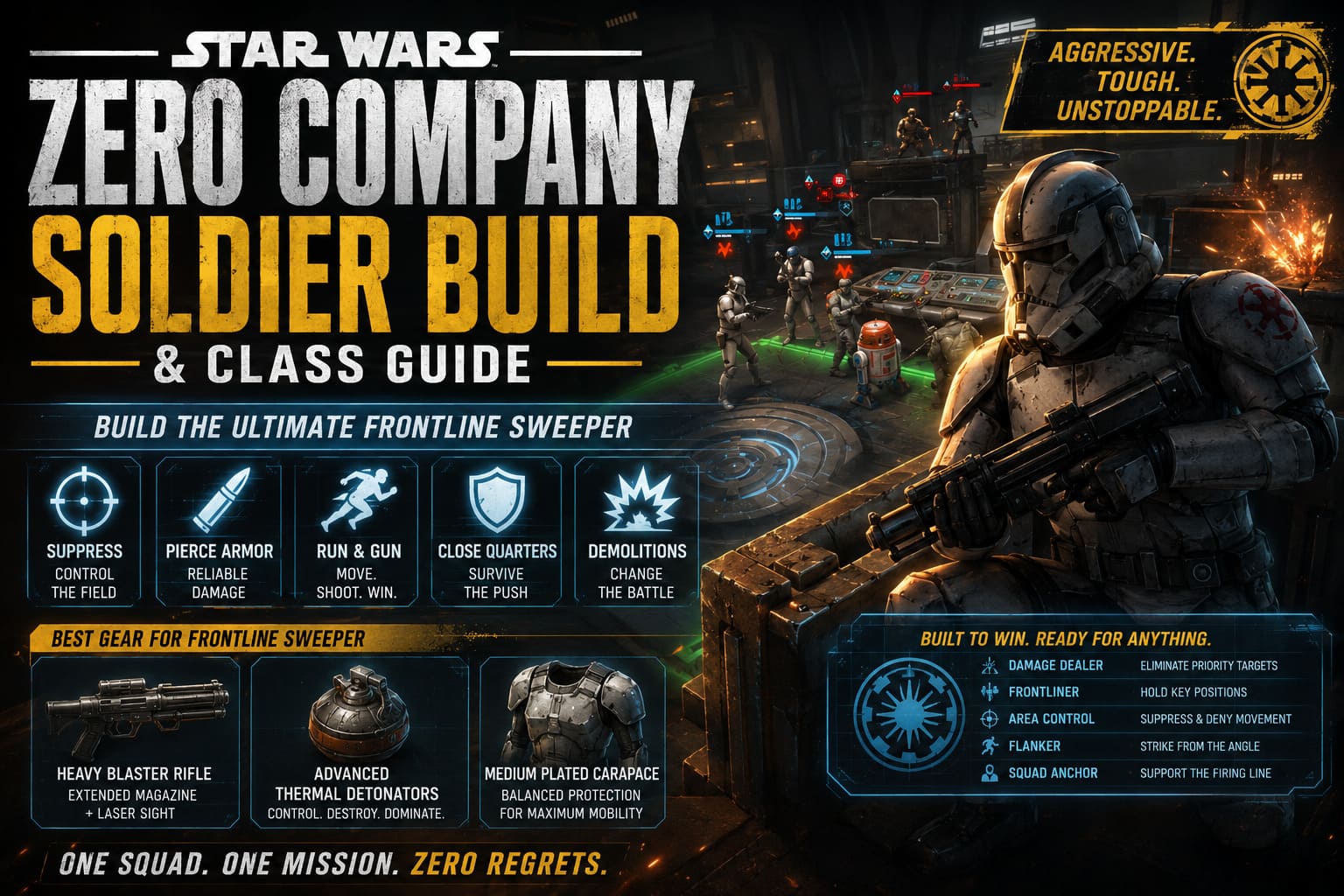
Soldier Class Strengths at a Glance
| Role | Strength | Best Use |
|---|---|---|
| Damage Dealer | Reliable weapon damage | Removing priority targets |
| Frontliner | Strong survivability | Holding important positions |
| Area Control | Suppression and explosives | Restricting enemy movement |
| Flanker | Good mobility with the right build | Attacking exposed targets |
| Squad Anchor | Excellent use of cover | Supporting the team’s firing line |
What I like most about this design is that the Soldier doesn’t force you into one particular style from the beginning. You can lean into heavy weapons and explosives, build around aggressive mobility, or combine the two approaches. That last option is where I think the class becomes particularly fun.
Heavy Vanguard vs. Tactical Commando
As your Soldier develops, two broad approaches stand out. The first is the Heavy Vanguard, which focuses on durability, area denial, armor penetration, and explosive firepower. The second is the Tactical Commando, which emphasizes movement, precision, critical hits, and aggressive positioning.
The Heavy Vanguard is the obvious choice if you enjoy being the wall between your squad and the enemy. This style works particularly well when missions contain fortified positions or groups of heavily protected opponents. Heavy weapons and stronger explosives allow you to damage multiple enemies or destroy cover, while your improved durability gives you more freedom to stay in dangerous areas.
The Tactical Commando is almost the opposite philosophy. Rather than asking, ‘How much punishment can I take?’ it asks, ‘How quickly can I get to the angle that wins this fight?’ Mobility becomes a weapon in itself. A Commando-style Soldier can move into a flank, eliminate an exposed target, and reposition before the enemy gets a comfortable opportunity to respond.
Having played plenty of tactical RPGs, I usually prefer hybrid builds over extremely specialized ones unless the game strongly rewards specialization. That is exactly why the Frontline Sweeper approach stands out to me.
The Frontline Sweeper Soldier Build
The Frontline Sweeper is built around one simple idea: never let your Soldier become irrelevant during a turn.
You want enough defensive power to survive concentrated fire, enough offensive power to eliminate priority targets, and enough mobility to take advantage of opportunities when they appear. Instead of committing completely to either Heavy Vanguard or Tactical Commando, this setup borrows the strongest qualities from both.
The result is a Soldier that can begin an encounter from cover, suppress a dangerous enemy, advance when necessary, destroy defensive positions, and still fire in situations where a more traditional Soldier would have been forced to sacrifice its entire turn.
1. Suppression Fire
Suppression Fire is one of the most useful tools for controlling the battlefield. Rather than simply trying to kill the strongest enemy immediately, you can temporarily reduce their effectiveness and restrict their movement.
This is particularly valuable against enemies that want to rush your formation. A dangerous melee unit can become much less threatening when its movement is limited, while a powerful ranged opponent may be forced to remain in an unfavorable position.
I also like suppression because it gives the Soldier something productive to do when a clean kill is not available. In tactical games, preventing an enemy’s best move can sometimes be more valuable than dealing another small chunk of damage.
2. Armor Piercing Rounds
The Armor Piercing Rounds passive is an obvious choice for the later stages of the campaign, when enemies start becoming increasingly difficult to chew through.
The important advantage is consistency. Instead of waiting for the perfect cooldown or relying on a specialized attack, your standard weapon fire becomes more effective against protected targets. That matters because regular attacks are the foundation of your Soldier’s turn economy.
If the enemy relies heavily on armor, shields, or other forms of damage mitigation, this ability becomes even more attractive. Your Soldier can keep applying pressure while the rest of the squad concentrates on other objectives.
3. Run and Gun
This is arguably the ability that changes how the entire build feels.
Run and Gun gives your Soldier the ability to reposition aggressively and still make a meaningful attack. Normally, moving a long distance can mean sacrificing your opportunity to deal damage. Run and Gun removes much of that limitation.
Suddenly, your Soldier can react to a developing battlefield instead of being chained to its original position. You can move toward a newly exposed target, take an unexpected flank, throw an explosive, or reinforce another section of the battlefield without feeling like you completely wasted the turn.
For a hybrid build, this ability is essential because it gives the Soldier the mobility it needs to take advantage of the offensive opportunities created by the rest of the squad.
4. Close Quarters Combatant
Every good frontline build needs an answer for enemies that get too close.
Close Quarters Combatant improves the Soldier’s effectiveness when opponents enter its immediate area. That makes it a useful safety net against ambushes and aggressive enemies that manage to slip through your defensive line.
I particularly like abilities like this because they make a character less fragile when your plan fails. And if there is one lesson every XCOM-style game teaches eventually, it is that your plan will fail at some point.
5. Demolitions Expert
The final piece of the build is Demolitions Expert.
Explosives are already valuable in a tactical game, but increasing their destructive potential can completely change the geometry of an encounter. Destroying cover can expose enemies who thought they were safe and create firing opportunities for the entire squad.
This ability also makes the Soldier useful against entrenched groups. Instead of spending several turns trying to win a conventional firefight, you can reshape the battlefield and force the enemy to fight on your terms.
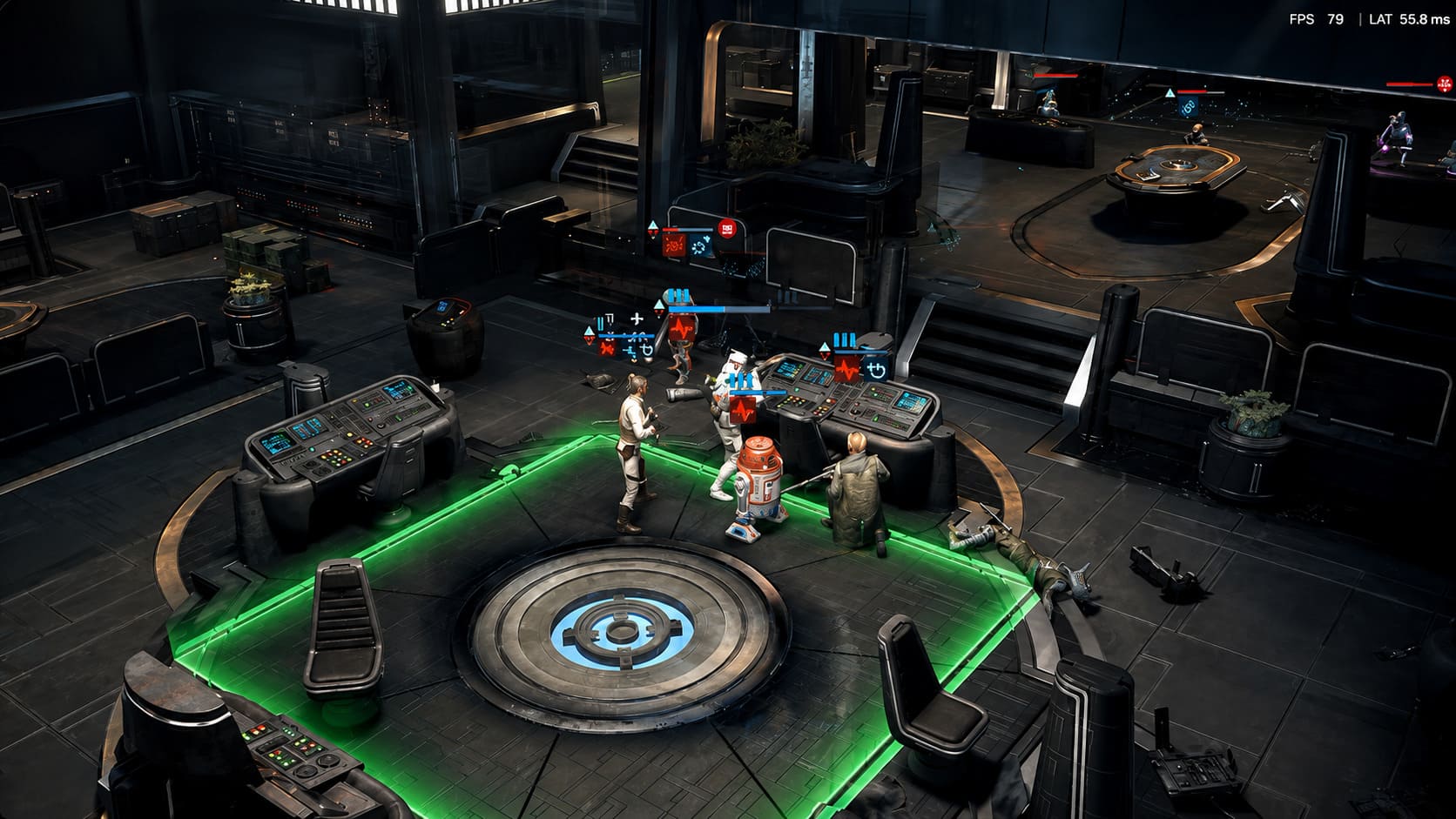
Best Weapons and Gear
The build works best with equipment that supports both sustained damage and aggressive repositioning.
For the primary weapon, I would go with a Heavy Blaster Rifle equipped with an Extended Magazine and Laser Sight. The extended magazine is valuable because reloading at the wrong moment can ruin an otherwise perfect tactical turn. The Laser Sight, meanwhile, helps compensate for accuracy concerns when you are taking advantage of your mobility.
For your secondary equipment, Advanced Thermal Detonators are an excellent match. They are not simply damage tools; they are battlefield-control tools. Throw one into a tightly packed group, use it to break defensive positions, or force enemies away from cover before your other squad members finish the job.
Armor is a little more interesting because there is a genuine trade-off. Heavy armor provides additional protection, but mobility is incredibly important for the Frontline Sweeper. Personally, I prefer Medium Plated Carapace because it gives the Soldier enough durability without turning it into a slow-moving target.
The philosophy here is simple: survive because you are positioned intelligently, not because you are wearing the biggest possible armor plate.
How to Play the Soldier in Combat
The biggest mistake you can make with this build is treating the Soldier like a character who should simply run toward the nearest enemy and start shooting.
Instead, let the rest of your squad help reveal the battlefield. Your mobile units should scout ahead, identify threats, and expose potential flanking opportunities. Once you understand where the enemy is positioned, place your Soldier somewhere that provides strong cover and a useful firing lane.
From there, prioritize the most dangerous target rather than automatically shooting the weakest enemy. Suppress enemies that are difficult to eliminate immediately, especially those capable of rushing your formation or dealing devastating damage on their next turn.
When an opening appears, that is where Run and Gun becomes the star of the build. Push forward, take the new angle, fire at a priority target, or use an explosive to destroy cover. The Soldier should constantly be asking whether its current position is still the best position on the map.
Squad Synergy
The Frontline Sweeper becomes even better when paired with classes that compensate for its weaknesses.
An Intel Officer can help reveal information and improve your understanding of enemy positions, which makes aggressive Soldier positioning much safer. A Support Tech is also an excellent partner because support capabilities can help maintain the Soldier’s effectiveness during prolonged engagements.
The basic pattern is straightforward:
- Scout and reveal enemy positions.
- Establish the Soldier in strong cover.
- Suppress or eliminate the highest-priority threat.
- Use flankers to create additional angles.
- Move the Soldier aggressively when an opening appears.
- Use explosives to destroy cover or punish grouped enemies.
This creates a nice rhythm between information, control, and aggression. Your Soldier establishes pressure while the rest of the squad manipulates the battlefield around it.
My Take on the Best Soldier Build
There is something satisfying about a class that does not need to be the star of every turn to be incredibly important. That is exactly how I see the Soldier in Star Wars Zero Company. It is the character I would rather have consistently performing at 80–90% efficiency than one that occasionally produces spectacular numbers but becomes useless when the battlefield changes.
The Frontline Sweeper works because it embraces that philosophy. Armor penetration gives you dependable damage, Suppression Fire provides control, Run and Gun adds mobility, Close Quarters Combatant protects you from close-range surprises, and Demolitions Expert gives you a way to alter the battlefield itself.
Most importantly, the build rewards good tactical decisions instead of simply stacking statistics. If you understand cover, prioritize threats correctly, and know when to push forward rather than staying safe, your Soldier can become one of the most dependable members of the entire Zero Company roster.
And honestly, after playing enough tactical games where one bad move can turn a winning mission into absolute chaos, I value that reliability more than almost anything else. The Soldier may not always look like the most exciting class on the selection screen, but once the battle gets messy, having a well-built Soldier in the right position can be the difference between a clean victory and a disastrous retreat.
Final Build Summary
| Category | Recommendation |
|---|---|
| Build | Frontline Sweeper |
| Core Style | Aggressive Hybrid |
| Primary Weapon | Heavy Blaster Rifle |
| Weapon Mods | Extended Magazine + Laser Sight |
| Ordinance | Advanced Thermal Detonators |
| Armor | Medium Plated Carapace |
| Key Skill | Suppression Fire |
| Offensive Passive | Armor Piercing Rounds |
| Mobility Skill | Run and Gun |
| Defensive Passive | Close Quarters Combatant |
| Utility Passive | Demolitions Expert |
| Ideal Partners | Intel Officer + Support Tech |
If you want a Soldier that can sit behind cover and steadily dismantle enemy defenses but can also suddenly explode into an aggressive flank when the opportunity appears, this is the direction I would take. It gives you the durability of a frontline unit without sacrificing the flexibility that makes turn-based combat so addictive in the first place.