Hero Siege Fields of Battle Early Farm Map Guide: Season 10 Strategy
There is a point in Hero Siege Season 10 where the game suddenly stops being about simply killing whatever is standing in front of you.
You start looking at maps differently.
Instead of asking, “Can I clear this zone?”, you start asking, “How much XP am I getting for the time I’m spending here?” That small change in mindset makes a surprisingly huge difference, especially when you’re trying to push a fresh character through Nightmare and into Hell.
For me, one of the most underrated places for this part of the journey is Fields of Battle, Zone 1-2.
It isn’t flashy. It doesn’t have the reputation of some of the more specialized endgame farming locations, and you won’t feel like a legendary demon slayer just because you’re running around a field in Act 1. But that’s exactly why I like it.
Fields of Battle is simple, open, dense, easy to reset, and incredibly forgiving.
If your character is still wearing a mixture of leveling gear and whatever decent drops you’ve managed to find, this map can give you the breathing room you need to build up XP, gold, materials, and eventually the power required for much harder content.
Why Fields of Battle Is So Good for Early Farming
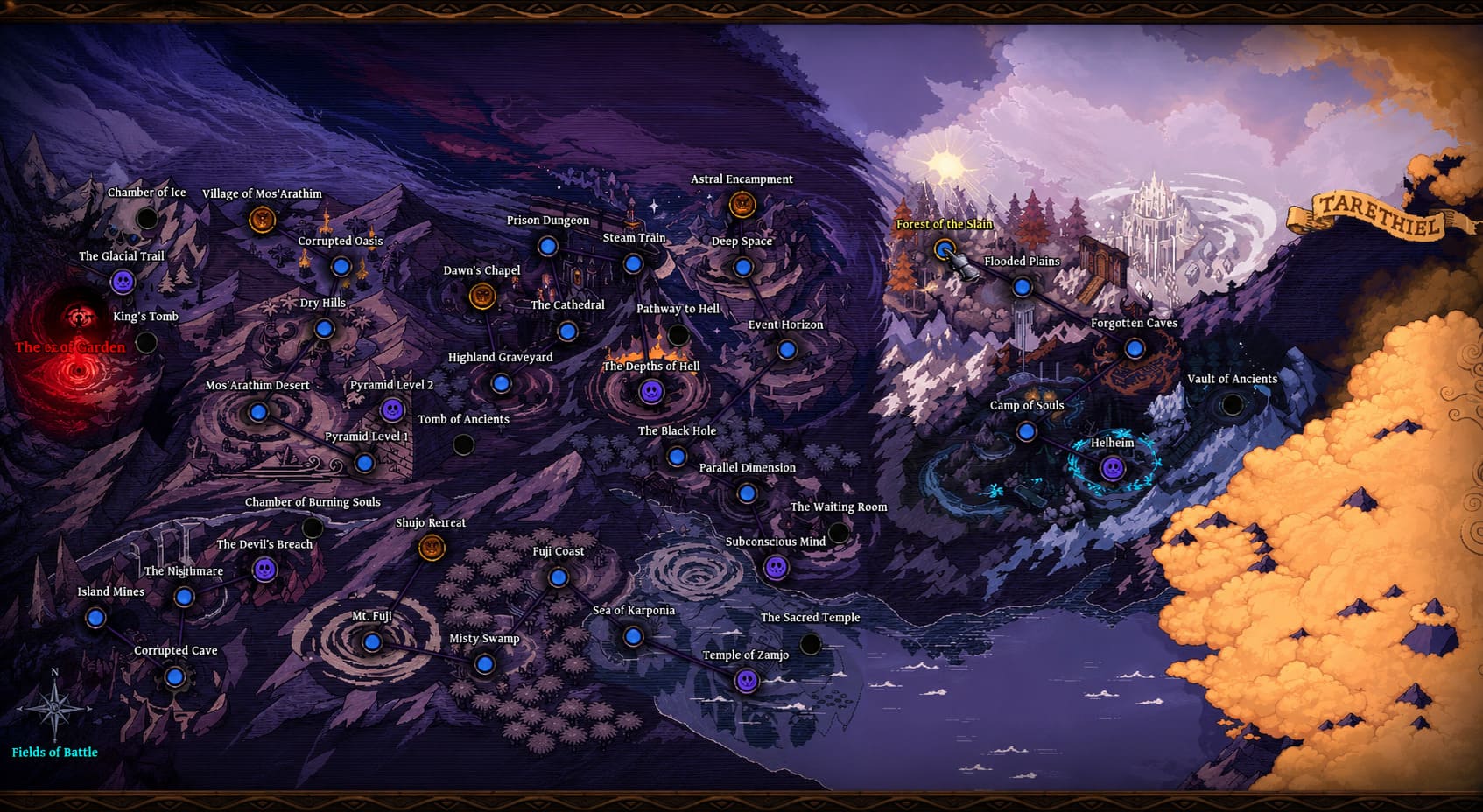
Fields of Battle sits between Outskirts of Inoya (Zone 1-1) and The Pumpkin Patch (Zone 1-3), with the entrance to Pumpkin Cellar also nearby.

That location alone makes it convenient. You aren’t spending half your farming session just reaching the farming location.
But the real reason the map works so well is its layout.
1. Open Terrain Makes AoE Builds Shine
This is probably my favorite thing about Fields of Battle.
There is room to move.
That sounds incredibly basic, but in Hero Siege it matters a lot. Some dungeon layouts can turn a strong build into a panic simulator because enemies surround you from multiple directions while ranged mobs attack from somewhere you can’t even see.
Fields of Battle is much more comfortable.
You can run around large groups, gather enemies into a manageable pack, drop your AoE skills and keep moving. Characters with strong screen-wide attacks can turn enormous groups of monsters into a pile of XP almost instantly.
The open terrain also makes kiting much easier.
If your defensive stats aren’t great yet, that’s a massive advantage.
2. The Map Is Extremely Convenient to Reset
Early farming isn’t supposed to be complicated.
If I’m spending more time setting up a farming run than actually killing monsters, something has gone wrong.
Fields of Battle is close enough to town that resetting an unfavorable map is painless. You can return to Inoya, reset the instance, take the waypoint and start again.
That means you can be selective.
If the map gives you poor monster density and none of the mechanics you’re looking for, there is no reason to stubbornly clear every corner.
3. You Don’t Need Perfect Gear
This is where Fields of Battle really earns its place in an early Hero Siege farming route.
You don’t need a fully optimized endgame character.
Basic gear with decent stats, some Rubies or Sapphires and a functional AoE build can already perform well here. That makes the map particularly useful immediately after finishing the campaign or while making the difficult jump from Nightmare into Hell.
Think of it as a power-building zone rather than an endgame destination.
What Should You Actually Kill?
You don’t need to memorize every monster in the zone, but understanding what you’re dealing with helps.
| Enemy | Main Threat | Best Approach |
|---|---|---|
| Undead Raiders | Slow melee pressure | Group and AoE |
| Bony Deadshots | Ranged damage | Circle and pull together |
| Devouring Worms | Sudden surrounding | Keep moving |
| Maggots | Fast swarm pressure | Avoid standing still |
| Da Bling / Goblins | Easy to miss loot | Check minimap frequently |
The basic undead enemies are actually great farming targets because they naturally gather while chasing you.
Bony Deadshots deserve a little more attention. In a cramped dungeon, ranged enemies can be annoying because you may not even notice where the shots are coming from. In Fields of Battle, however, you usually have enough room to see them, reposition and bring them into your main damage area.
The worms and maggots are less dangerous individually, but they can become irritating when you stop moving.
And then there are the goblins.
Don’t ignore Da Bling.
Goblin encounters can provide valuable early resources, including gold and crafting-related rewards. The wide map makes them much easier to spot than they are in complicated dungeon layouts, so keep an eye on your minimap while you’re moving between packs.
Ether Tree: The Real Reason This Farm Gets Interesting
Once your character reaches the relevant Level 100+ progression in Season 10, the Ether Tree becomes a major part of how you approach farming.
The important thing to understand is that you don’t have enough Ether Points early on to activate everything you want.
That means specialization matters.
With the initial 9 Ether Points, I’d rather build around one strong farming mechanic than spread points across several mediocre bonuses.
There are two approaches that make the most sense for Fields of Battle.
Chaos Tower + Bloating Setup
If your character is strong enough to deal with sudden enemy waves, this is the setup I’d personally try first.
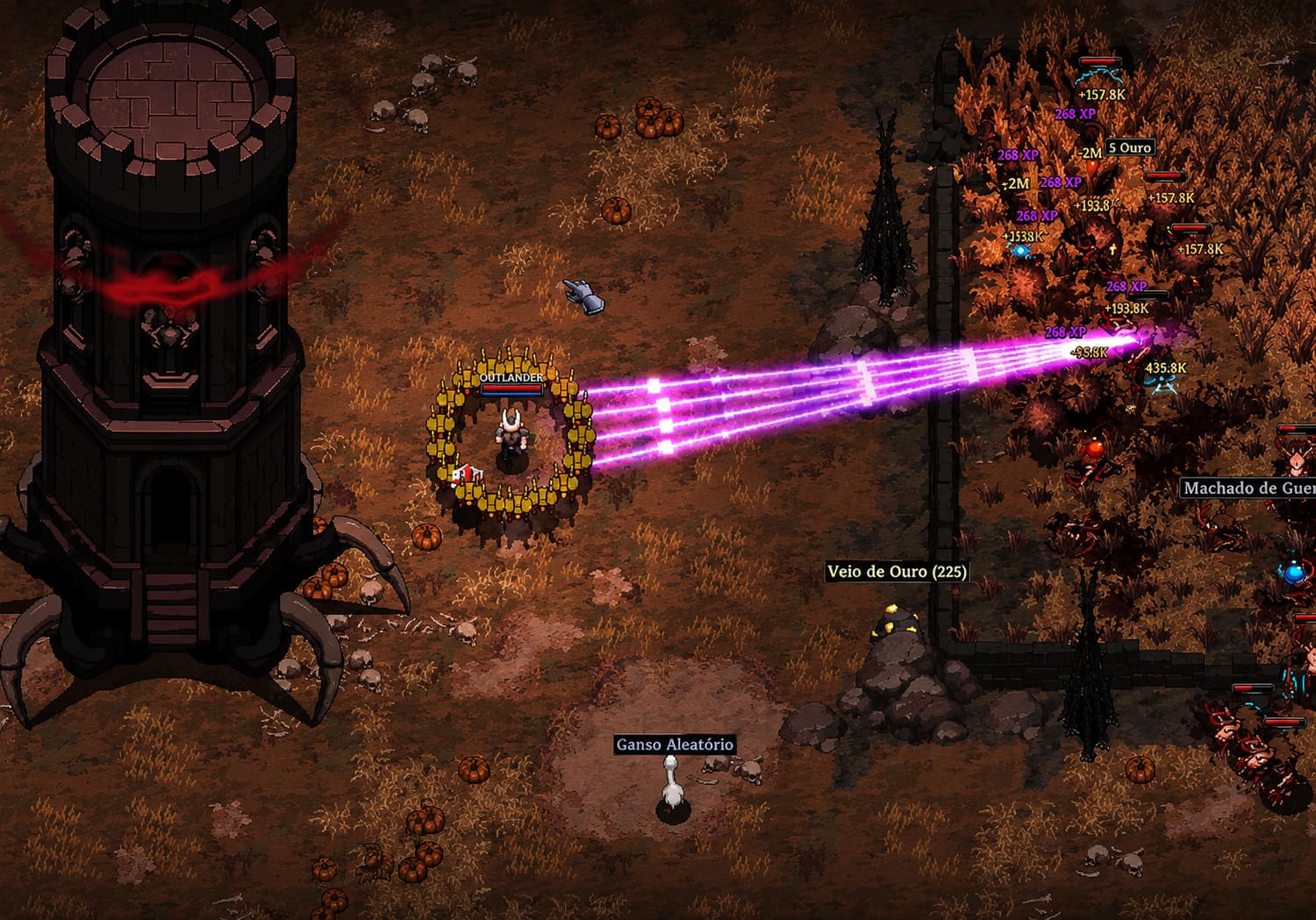
The idea is to improve the appearance of Chaos Towers and work toward the Bloating-related nodes, including branches such as Ready to Pop.
When the mechanic activates, you’re basically turning an ordinary farming run into an XP event.
Bloated enemies create enormous opportunities for additional XP when they are destroyed, producing clusters of purple XP pickups.
And this is where the open layout of Fields of Battle becomes particularly useful.
You have space to position yourself.
You aren’t forced into a tiny corridor.
You can kite the wave, stack enemies together and unload your AoE without constantly fighting the environment.
Mercenary Tip
If you’re playing a fragile build, consider using the Knight Mercenary.
A basic defensive setup combined with a point in Taunt can make a noticeable difference. Let the mercenary take some of the pressure while you focus on positioning and damage.
It isn’t glamorous, but honestly, early farming doesn’t need to be glamorous.
It needs to be efficient.
The Safer Alternative: World Pillars
Not every character is ready to handle Chaos Tower waves comfortably.
If your damage or defenses aren’t there yet, I’d rather use World Pillar-focused Ether Tree nodes.
The goal is to push the Pillar spawn chance as high as possible and use these events as a more controlled source of rewards.
World Pillars can provide a mixture of useful progression rewards, including Relics, Uniques and temporary stat bonuses.
For a weaker character, this can be the better choice.
You’re sacrificing some of the explosive potential of the Bloating strategy for a farming loop that feels more predictable.
And when you’re under-geared, predictable is good.
My Favorite Fields of Battle Farming Loop
This is where I think many players overcomplicate things.
You don’t need to completely clear the map.
You need to maximize kills per minute.
Step 1: Start With the Outer Areas
When entering Fields of Battle, don’t immediately run toward the middle and start killing the first monsters you see.
I prefer checking the outer sections first.
Look for dense groups, shrines, special mechanics and anything interesting on the minimap.
There can also be shrine opportunities in the map, including the possibility of a Ball Shrine turning into a more valuable Chaos Shrine setup.
You don’t need to obsess over this, but it is worth keeping an eye out.
Step 2: Follow Density, Not Completion
This is probably the biggest mistake I see players make when farming.
They see three skeletons standing alone and think:
“I have to kill those.”
No.
Move on.
If a pack contains only a couple of enemies, killing them may technically give you XP, but the seconds you’re wasting traveling, casting and picking up loot could have been spent killing a much larger group.
Farm density, not completion percentage.
Step 3: Keep Loot Pickup Fast
Hero Siege has a very convenient pickup system that can make farming much smoother.
Use the F key to pick up nearby or targeted loot while moving through the map.
The important part isn’t simply knowing the shortcut. It’s maintaining momentum.
Kill.
Move.
Pick up.
Kill again.
You don’t want to stop for every tiny item that drops.
Your goal is to keep the character moving while collecting valuable rewards.
Step 4: Reset Aggressively
This is the part that separates a casual clear from an actual farming strategy.
If you’ve spent around 30–45 seconds exploring and the map isn’t giving you anything useful—no good density, no Chaos Tower, no Pillar, no interesting event—consider resetting.
Go back to town, reset the instance and start again.
You aren’t trying to prove that you can clear Fields of Battle.
You’re trying to turn your limited playtime into the highest possible XP and gold return.
Best Early Builds for Fields of Battle
The map strongly favors builds with mobility + AoE + low gear requirements.
Here are the options I’d look at first.
Stormweaver
The Stormweaver is almost tailor-made for this kind of environment.
With the Stormcloud setup, you can spread lightning through large groups while constantly repositioning.
The wide-open map gives the build plenty of room to work, and you don’t need a ridiculous collection of high-end gear to start farming effectively.
If you run into a tougher elite or boss-like target, having a more focused single-target option available can also save you from turning a simple encounter into a five-minute fight.
Amazon
The Amazon is another excellent choice, particularly if you’re prioritizing speed.
Spearnage provides a strong balance between clearing groups and dealing with tougher individual enemies.
Thunder Fury can absolutely destroy packs, but I like Spearnage for an early farming character because it doesn’t feel as specialized.
You can clear trash quickly and still have enough single-target pressure for stronger enemies and event objectives.
Pyromancer / Marauder Fire Builds
Fire builds are especially comfortable on open maps.
You can drop persistent damage zones, drag enemies through them and keep running.
That makes them very forgiving when your character isn’t particularly tanky.
Early gear with bonuses such as +1 to All Skills or Fire Skill Damage can make these builds noticeably stronger. Items like Doomsaw, Elementalist’s Silk Shroud and Runemaster Mantle can serve as useful stepping stones depending on what you find.
I’d also consider filling suitable sockets with Rubies if you’re building around Fire Skill Damage.
Hero Siege ASUS ROG Ally Controller Layout: 2026 Optimization Guide
When Should You Stop Farming Fields of Battle?
This is important.
Fields of Battle is an early progression farm, not a place where you should spend your entire season.
Once you’ve accumulated a comfortable amount of Hero Levels and your defensive stats are no longer embarrassing, start moving forward.
A rough milestone of Hero Level 30–50 can be a reasonable point to consider expanding your route, depending on your build and gear.
From there, you can start mixing in locations such as:
- Pumpkin Cellar
- Misty Swamp
- Steam Train
- Other target-farming locations suited to your character
The exact moment you move on depends heavily on your build.
If you’re clearing Fields of Battle in seconds but struggling elsewhere, keep farming until you can make the transition comfortably.
If the map has become slow and you’re already overgeared for it, leave.
There is no prize for staying in Act 1 forever.
Final Thoughts
I genuinely like Fields of Battle because it represents something that gets overlooked in seasonal ARPGs: efficiency doesn’t always require an endgame map.
Sometimes the best farm is simply the place where your character can kill large groups quickly, survive without constantly drinking potions, pick up useful loot and restart the run in seconds.
That’s exactly what this zone offers.
The key is not to treat it like a normal campaign map.
Don’t full-clear it. Don’t chase every lonely skeleton. Don’t spend minutes on bad layouts.
Instead, build your run around density, Ether Tree events, quick movement and aggressive resets.
If you’re using Chaos Towers and Bloating mechanics, focus on turning those events into massive XP bursts. If your character isn’t ready for that, Pillars offer a safer alternative. Keep your mercenary useful, use your pickup key while moving and don’t be afraid to abandon a terrible map.
For me, that’s the biggest lesson of the Fields of Battle farm:
The goal isn’t to finish the map. The goal is to make the next minute more valuable than the last one.
Do that consistently, and your fresh Season 10 character can go from struggling through Nightmare to comfortably farming Hell much faster than you’d expect.
And once your gear and Hero Levels finally catch up, it’s time to leave the fields behind and start looking for bigger prey.