Does Lootbound Have Multiplayer Co-Op? Full 2026 Game Guide & Review
There’s one question I kept seeing pop up around Lootbound before and after launch: Can you actually play it with a friend?
And honestly, I completely understand why people keep asking. Everything about the game seems designed to invite that question. You build a party, rescue companions, juggle their equipment, and watch a group of fantasy characters fight together through dangerous procedural encounters. At first glance, it looks like the kind of tactical roguelite that would be absolutely perfect for co-op.
Unfortunately, that isn’t how Lootbound works.
Lootbound is a single-player game. There is no multiplayer co-op, online multiplayer, or local couch co-op in the launch version.
That might sound disappointing, especially if you were hoping to tackle its dark fantasy world with a friend. But after spending time looking at what actually makes Lootbound tick, I don’t think the lack of multiplayer is necessarily a deal-breaker. In fact, the game’s companion and inventory systems make much more sense once you stop thinking of those characters as potential co-op teammates and start treating them as pieces of one giant tactical puzzle.
Here’s what you need to know before buying.
Does Lootbound Have Co-Op Multiplayer?
The short answer is no.
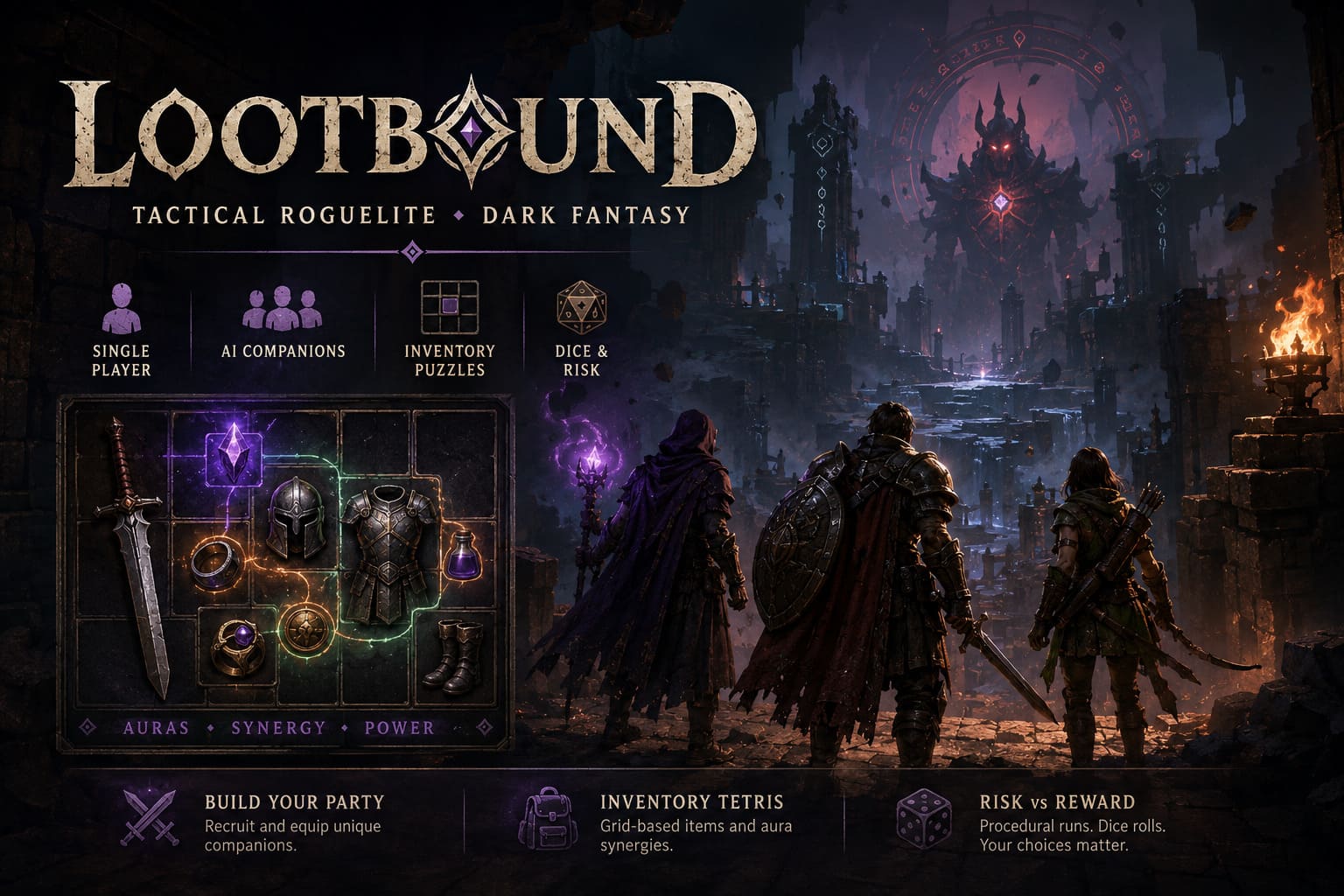
Lootbound was built as a single-player tactical roguelite, and the launch version doesn’t include an online multiplayer mode. There is also no split-screen or local co-op option.
| Feature | Lootbound At Launch |
|---|---|
| Online Co-Op | No |
| Local Co-Op | No |
| Multiplayer PvP | No |
| Solo Campaign | Yes |
| AI Companions | Yes |
| Party-Based Gameplay | Yes |
This distinction is important because Lootbound absolutely looks like a multiplayer party game in places.
You can assemble a team of different characters, equip them individually, and watch them fight together. If you came into the game expecting something closer to a cooperative dungeon crawler, I wouldn’t blame you for assuming that each companion could eventually be handed over to another player.
They can’t.
You control the main character, while your recruited companions are handled by the game’s AI.
And that changes the entire way you approach the game.
Why So Many Players Thought Lootbound Had Co-Op
I think this confusion comes down to presentation.
The trailers and screenshots show groups of fantasy heroes moving and fighting together. You’ve got different classes and personalities filling different roles, from magical damage dealers to defensive characters and support-oriented companions.
That visual language is practically screaming party-based co-op.
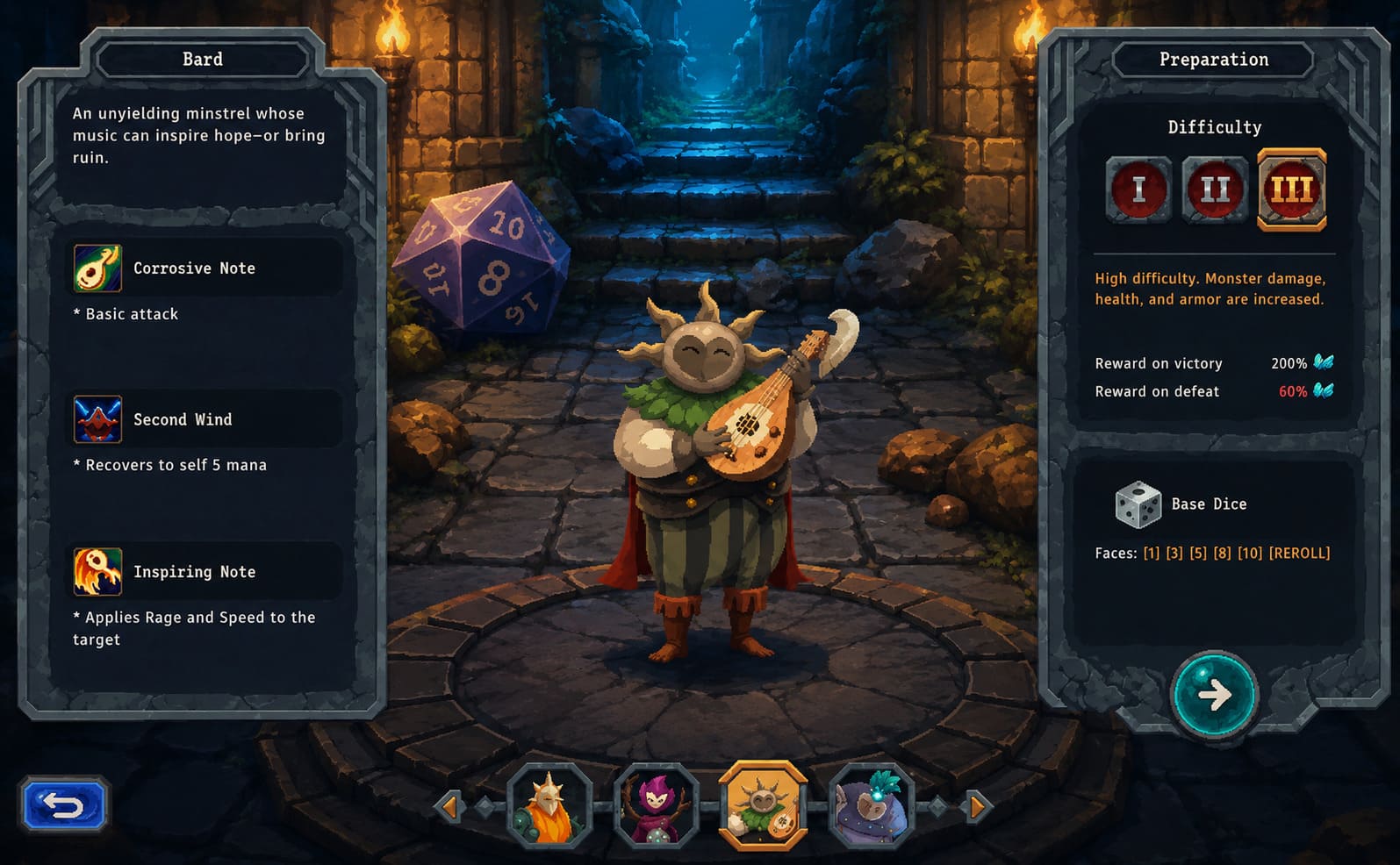
Then there’s the terminology surrounding the game. You’re constantly thinking about your party, improving individual characters, finding equipment for them, and creating combinations between their abilities.
For fans of games like Divinity-style RPGs, dungeon crawlers, or traditional tabletop adventures, it is easy to make the mental jump from:
“I’m managing a party of heroes.”
to:
“My friends can probably control those heroes.”
But Lootbound deliberately stops at the first idea.
And, personally, I think that’s one of the more interesting things about it.
How the Companion System Actually Works
Lootbound starts you off relatively simply: one hero, one run, and a whole lot of dangerous decisions.
As you progress through the procedural map, you encounter opportunities to recruit additional characters. Eventually, your expedition can grow into a small team of up to three characters.
The important part is that these companions aren’t second-player characters.
They have their own equipment, abilities, statistics, and combat behavior, but their actions are governed by AI.
That means you aren’t spending every combat encounter manually selecting an action for every member of the team. Instead, your job becomes much broader.
You’re the person responsible for making sure the entire machine is properly assembled.
- You choose who joins the party.
- You decide what everyone wears.
- You organize their inventories.
- You build around their strengths.
And then you have to trust your companions to actually do their jobs once combat begins.
That last part can occasionally be nerve-racking.
The AI Is Part of the Strategy
The companion AI is designed to react according to character roles and combat situations. Support characters can respond to injured allies, defensive characters can absorb pressure, and offensive companions can prioritize threats.
It isn’t perfect, though.
That’s actually one of the areas where I think the community discussion around Lootbound becomes interesting. Some companions can feel considerably more useful than others depending on your build and circumstances. A powerful magical character can sometimes feel incredibly valuable, while a defensive or support-focused companion may appear underwhelming until the right situation comes along.
But I wouldn’t necessarily call this a flaw.
Part of Lootbound’s appeal is figuring out how to build a party that compensates for the weaknesses of its AI.
You aren’t just creating a powerful character. You’re creating a system that needs to function without constant micromanagement.
Lootbound’s Real Hook: Inventory Tetris
If the absence of co-op is making you hesitate, this is the part I would pay attention to.
Because Lootbound’s inventory system is surprisingly addictive.
The game uses a grid-based inventory where items occupy physical space. Instead of throwing everything into an endless list, you have to actually think about where things go.
A sword might occupy several spaces.
A piece of armor may have an awkward shape.
Smaller items can be rotated and squeezed into gaps.
And suddenly you’re spending several minutes rearranging your backpack because you found one excellent item that refuses to fit anywhere sensible.
It is inventory management taken to the level of an actual puzzle.
If you’ve ever enjoyed organizing a Resident Evil-style inventory or squeezing every last useful item into a limited Diablo-style stash, you’ll probably understand the appeal immediately.
But Lootbound takes the idea one step further with its aura system.
Inventory Auras Make Every Item Placement Matter
Certain valuable items don’t simply provide their own statistics.
They influence nearby inventory spaces.
For example, a rare item might generate an offensive aura that boosts equipment positioned beside it. Another piece of gear could provide defensive benefits to objects placed in specific adjacent cells.
This creates some genuinely satisfying little optimization puzzles.
You might find an incredible weapon, only to realize that placing it in the obvious location wastes the aura surrounding it.
So you move it.
Then you move a ring.
Then the ring affects another item.
Suddenly half your inventory has been rearranged.
I’ve always liked mechanics where something as simple as moving an object two squares can completely change a build, and Lootbound leans into that idea hard.
The especially clever part is that your companions have their own inventories.
So you’re not solving one puzzle.
You’re solving several interconnected equipment puzzles while trying to make the whole party stronger.
That’s where the game starts feeling less like a conventional RPG and more like a tactical management game wearing a dark fantasy costume.
Is Combat Too Limited Without Manual Party Control?
This is probably the biggest potential weakness for players coming from traditional tactical RPGs.
If you want to manually control every character, Lootbound may frustrate you.
You can’t simply tell your healer to move here, your tank to taunt that enemy, and your mage to cast a specific spell at precisely the right target every single turn.
Instead, you prepare the party beforehand and then rely on its behavior during combat.
Personally, I think that makes the preparation phase much more important.
Your decisions outside combat aren’t just preparation for the interesting part. They are a huge part of the interesting part.
Choosing the right companion, arranging their equipment, exploiting aura bonuses, and balancing your resources can be just as satisfying as making a perfect tactical move on the battlefield.
If you want complete tactical control, though, this design is worth understanding before you buy.
The Roguelite Structure Adds Another Layer
Lootbound isn’t simply an inventory simulator with fantasy characters attached.
Its runs are built around procedural paths, branching encounters, combat rooms, events, rewards, and risk-versus-reward decisions.
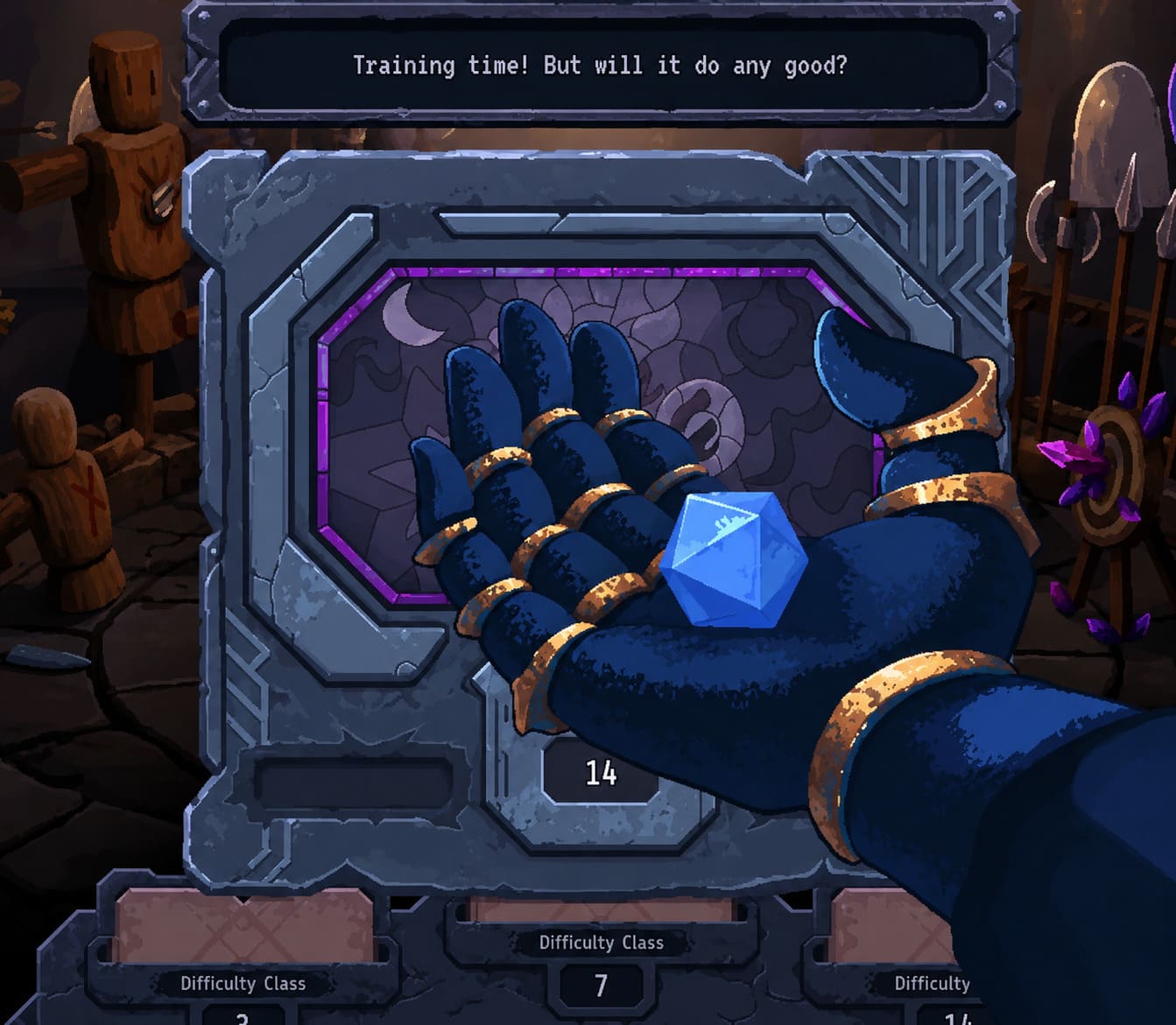
Some encounters even use dice-roll mechanics that feel deliberately inspired by tabletop RPGs.
You can push your luck for a better reward, but the bigger prize usually comes with a tougher check.
That creates some wonderfully uncomfortable decisions.
Do you take the safe reward?
Or do you gamble your run because the potential upgrade is too tempting?
I’ve always thought roguelites are at their best when the game makes you want to take the dangerous option, and Lootbound seems to understand that psychology pretty well.
The Final Boss Is Built From Your Decisions
One of the coolest ideas in Lootbound is the way the final Guardian can change depending on what you encounter throughout a run.
After defeating major sub-bosses, you can choose between different components. Those choices aren’t just cosmetic rewards. They influence the eventual final enemy, including aspects such as its appearance, elemental properties, and attack patterns.
So the game effectively asks you to help construct the nightmare waiting at the end.
That’s a neat touch because it makes each run feel more personal.
You aren’t simply walking through a randomly generated dungeon toward the same boss every time.
Your earlier decisions can influence what you’re eventually forced to fight.
Will Lootbound Get Co-Op in the Future?
This is where I would be careful about expectations.
There is always a temptation to say, “The developers could add it later,” especially with modern games receiving years of post-launch updates.
Technically, sure. Anything is possible.
But adding multiplayer to Lootbound wouldn’t be a tiny feature patch.
The game is built around a specific single-player structure involving AI companions, inventory management, combat decisions, progression, and synchronized tactical systems. Turning those AI-controlled companions into characters controlled by human players would require substantial changes to the game’s design and networking architecture.
At the moment, there’s no reason to buy Lootbound expecting a future co-op mode.
If ArtDock eventually announces one, great. But I wouldn’t make a purchase decision based on that possibility.
Is Lootbound Worth Buying? Honest 2026 Review & Gameplay Analysis
So, Is Lootbound Worth Playing Without Multiplayer?
For me, this is the more interesting question.
If you’re specifically looking for a cooperative fantasy RPG to play with friends, Lootbound isn’t that game.
But if you enjoy:
- Deep inventory optimization
- Tactical roguelite progression
- Party-building and companion synergies
- Dark fantasy aesthetics
- Risk-versus-reward decisions
- Build crafting and resource management
then the lack of multiplayer becomes much less important.
What initially looks like a party-based co-op system is actually the game’s central single-player challenge: you are responsible for the entire party.
And honestly, I think that works surprisingly well.
There’s something satisfying about finding a piece of equipment, realizing exactly where it belongs, rebuilding an entire inventory around it, and then watching your carefully constructed team perform better because of that one decision.
Lootbound isn’t trying to be a cooperative dungeon crawler.
It’s trying to make you feel like the person sitting behind the entire expedition, constantly adjusting the gears of a complicated machine.
Final Verdict
Does Lootbound have multiplayer co-op? No.
There is no online co-op, local multiplayer, or traditional multiplayer party system at launch. The companions you recruit are controlled by AI, while you directly control your main hero.
But I wouldn’t write the game off because of that.
In my opinion, Lootbound is much more interesting when you treat it as a tactical puzzle about building an entire party rather than controlling a single character. Its inventory grids, aura bonuses, roguelite decisions, companion combinations, and evolving final boss give it a personality that goes beyond simply being another fantasy roguelite.
If your dream is to sit in Discord with three friends and argue over which wizard should open the next chest, you’ll have to look elsewhere.
If you’re the kind of player who can spend twenty minutes reorganizing an inventory because you know there’s a perfect arrangement hiding somewhere, though, Lootbound might be dangerously easy to lose an evening to.
And yes, I mean that as a compliment.