Akatori Combat Guide: Master Parry Windows, Dodge Timings, and Air Combos
Akatori doesn’t waste your time pretending to be an easy action-platformer. Within the first couple of serious encounters, it becomes obvious that simply mashing the attack button isn’t going to get you very far. Contrast Games built a combat system that rewards patience, timing, and confidence far more than raw aggression. And honestly? That’s exactly what makes every victory feel satisfying.
After spending countless hours experimenting with enemy patterns, testing defensive options, and replaying difficult encounters just to shave seconds off boss fights, one thing became crystal clear: Akatori is a defensive game disguised as an offensive one.
Every stylish combo, every massive launcher, and every flashy aerial juggle begins with surviving the opponent’s attack first. Once that clicks, the entire combat system suddenly opens up.
If you’re struggling with difficult enemies, missing parries, or wondering why bosses refuse to stagger, this guide explains the mechanics that actually matter.
Why Defense Is the Real Damage Dealer
Many action games encourage constant aggression. Akatori goes in the opposite direction.
Mako may carry a mystical staff empowered by the legendary red bird spirit, but basic attacks alone rarely interrupt dangerous enemies. Larger monsters, elite soldiers, and bosses possess impressive poise, allowing them to continue attacking even while taking hits.
That changes the entire rhythm of combat.
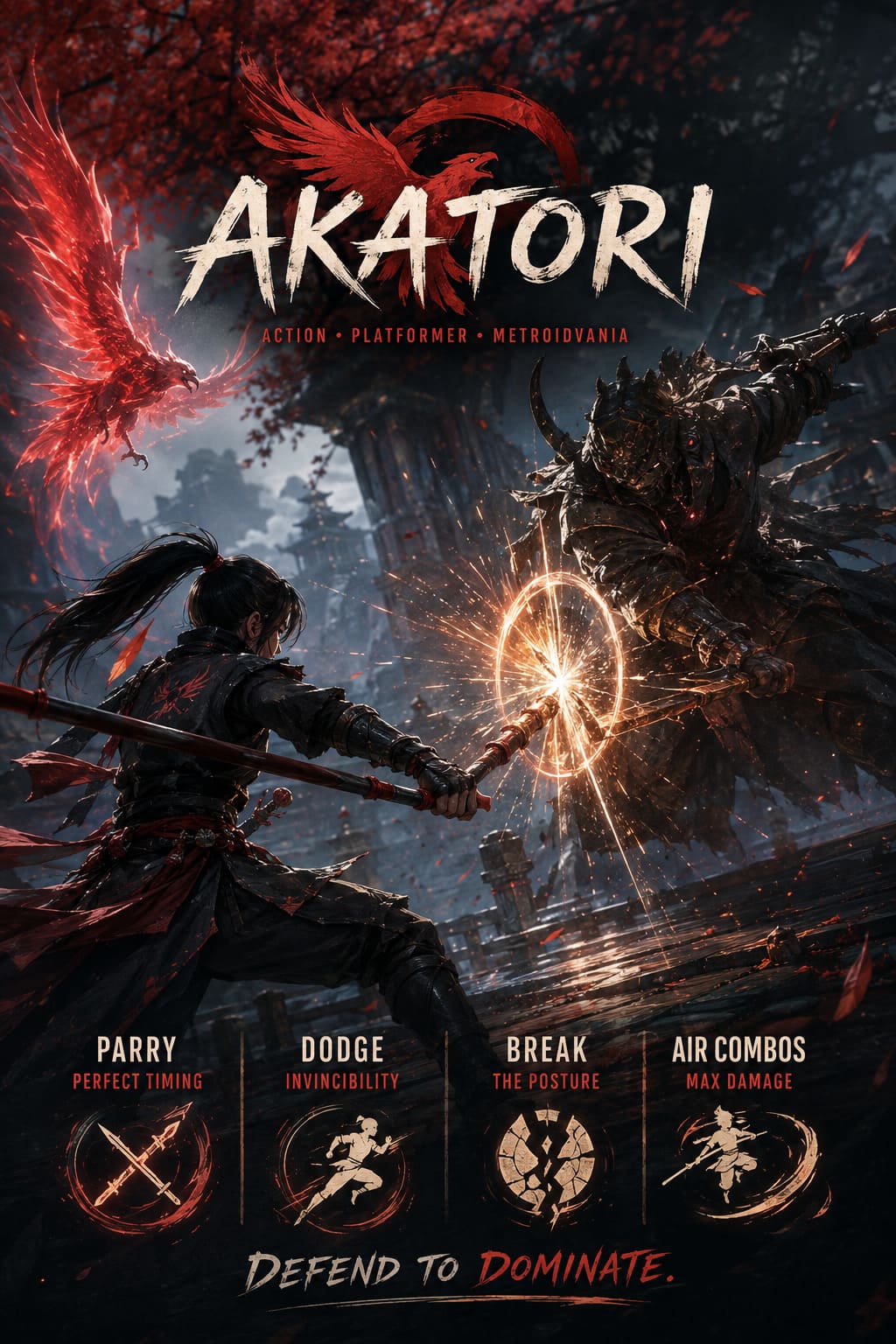
Instead of forcing openings through brute force, you’re expected to create openings through perfect defense.
Once you understand this philosophy, encounters become dramatically smoother.
Your overall combat flow should look something like this:
| Combat Phase | Goal |
|---|---|
| Observe | Learn attack animations. |
| Defend | Parry or dodge at the correct moment. |
| Break Posture | Remove enemy stability. |
| Launch | Send enemies into the air. |
| Air Combo | Maximize damage while they’re helpless. |
| Finish | Slam enemies back to the ground. |
Trying to skip the defensive step usually ends with Mako eating a full combo instead.
Staff Parry: High Risk, Incredible Reward
The parry system is arguably the heart of Akatori’s combat.
Landing one feels amazing.
Missing one feels… considerably less amazing.
Unlike traditional blocking systems where holding a button keeps you safe, Akatori demands deliberate timing. Every successful parry completely shuts down incoming damage while immediately giving Mako an offensive advantage.
A perfect parry provides several huge benefits:
- Negates incoming damage completely.
- Deals posture damage to the attacker.
- Interrupts enemy momentum.
- Allows immediate combo cancel into offensive attacks.
- Creates launch opportunities.
Against elite enemies, this mechanic becomes almost mandatory.
Without posture damage, many opponents simply refuse to stop attacking.
Understanding the Parry Window
Based on extensive community testing and frame analysis, Akatori’s active parry timing sits at roughly 12 to 14 frames on a stable 60 FPS setup.
That’s only around 200 milliseconds.
It sounds intimidating on paper, but visually it’s much easier than staring at frame numbers.
The biggest mistake new players make is watching Mako.
Don’t.
Watch the enemy instead.
Every dangerous attack follows two clear stages.
Phase One: Preparation
Enemies pull their weapon back.
Large monsters crouch.
Elite guards twist their shoulders.
Some bosses even flash visual indicators before striking.
Ignore the temptation to parry here.
They’re still winding up.
Phase Two: Commitment
This is the important moment.
As soon as the weapon actually begins moving toward Mako, hit the parry input.
That’s your cue.
Successful timing produces an unmistakable metallic impact sound accompanied by a bright orange-white flash. After seeing it a few times, your muscle memory starts recognizing the timing naturally.
Don’t Spam the Parry Button
One hidden mechanic catches a lot of players off guard.
Repeated panic inputs actually punish you.
Every consecutive failed parry attempt reduces the effectiveness of the next one.
By the third frantic button press, your active parry window becomes so tiny that landing it consistently borders on impossible.
That means disciplined timing always beats nervous button mashing.
If you’re unsure whether an attack is about to land…
Wait.
A late parry has a chance.
Three panic presses almost never do.
Directional Dodge Is Your Safety Net
Parrying may produce bigger rewards, but dodging is often the smarter choice while learning unfamiliar encounters.
The directional dodge offers generous invulnerability during its opening animation.
Community testing suggests roughly 18 to 20 i-frames activate immediately after initiating the movement.
Those invincibility frames let Mako phase through attacks, projectiles, and dangerous melee swings.
The catch?
The protection disappears before the animation fully finishes.
If you dodge too early, you’ll recover directly inside the enemy’s hitbox and absorb the full attack anyway.
Timing still matters.
Just not quite as brutally as parrying.
Always Dodge Through Attacks
One habit completely transformed my own gameplay.
I stopped rolling away.
Rolling backward feels safe.
Most of the time, it actually isn’t.
Sweeping attacks usually cover enough distance to catch retreating players during recovery.
Instead, dodge directly through linear attacks whenever possible.
Your invulnerability carries Mako safely through the strike, leaving her standing behind the enemy where they’re significantly less dangerous.
This positioning immediately creates opportunities for:
- Fast punish combos.
- Launch attacks.
- Charged staff strikes.
- Safer aerial follow-ups.
It feels risky initially.
After a few successful attempts, you’ll never want to roll backward again.
Surviving Crowded Battles
Groups are often deadlier than bosses.
The biggest threat isn’t necessarily the strongest enemy.
It’s losing track of everything happening around you.
When melee enemies pressure you while ranged opponents throw projectiles from off-screen, tunnel vision becomes fatal.
A few habits dramatically improve survival:
- Keep every active enemy on one side whenever possible.
- Use air dodges to avoid projectile clusters.
- Don’t overcommit to lengthy ground combos.
- Eliminate ranged attackers whenever a safe opening appears.
Positioning wins more fights than damage does.
Combat Feels Like a Rhythm Game
This comparison sounded strange until I experienced it firsthand.
Veteran players often describe Akatori as a rhythm game wearing an action game’s clothing.
They’re right.
Enemy attack chains follow consistent tempos.
Take an early elite guard.
Its combo often looks like this:
Swing… pause… swing… immediate third strike.
After hearing and seeing this sequence enough times, your hands naturally begin matching that rhythm.
Instead of reacting with panic, you’re simply following the beat.
Bosses become surprisingly manageable once their attack cadence clicks.
Some encounters almost feel musical.
Turning Defense Into Massive Damage
Blocking an attack isn’t the goal.
It’s only the beginning.
Real damage comes from converting defensive success into extended aerial offense.
Enemies become dramatically more vulnerable after losing posture.
Once launched, many dangerous opponents remain suspended long enough for devastating juggle combinations.
A reliable offensive sequence looks like this:
| Combo Step | Action |
|---|---|
| Perfect Parry | Stop the incoming attack. |
| Staff Launcher | Break posture and send enemy airborne. |
| Triple Air Combo | Maintain juggle pressure. |
| Air Dash | Stay close after knockback. |
| Downward Slam | Finish with area damage. |
This entire sequence deals substantially more damage than repeatedly attacking grounded enemies.
Better yet, it keeps dangerous opponents from fighting back.
Respect Animation Recovery
Greed kills more Akatori runs than difficulty ever will.
Heavy finishers look fantastic.
Landing one at the wrong moment usually means eating a boss combo immediately afterward.
Several powerful staff attacks lock Mako into recovery animations that cannot be canceled.
That means no emergency dodge.
No panic parry.
No escape.
If you recognize a boss beginning its next attack during your combo, you’ve already committed.
Early in difficult encounters, I strongly recommend limiting yourself to short punish windows.
Two quick hits.
Reset.
Wait.
Repeat.
Long combos should only happen after successful posture breaks.
Akatori Gameplay Walkthrough Part 1: Full Game Guide, Tips, and Strategies (2026)
Small Habits That Instantly Improve Your Gameplay
Instead of memorizing every boss individually, build better universal habits.
- Watch enemies, not your character.
- Parry commitment, not preparation.
- Dodge through attacks instead of away from them.
- Don’t spam defensive buttons.
- Keep ranged enemies under control.
- Stay patient after every successful punish.
These adjustments seem minor individually.
Together, they completely transform the way Akatori feels.
Akatori PC System Requirements & Full Controller Support Layout Guide (2026)
Final Thoughts
Akatori rewards discipline in a way very few modern action-platformers do. Every mechanic feeds into the next, creating a satisfying combat loop where patience leads to opportunity, opportunity leads to launchers, and launchers explode into stylish aerial combos that feel earned rather than automatic.
What impressed me most wasn’t the difficulty itself. It was how fair the system feels once you stop fighting against it. Missed parries are almost always your fault. Greedy attacks get punished exactly as they should. Successful defensive reads immediately swing momentum back in your favor, making every encounter feel like a duel instead of a damage race.
Once you begin recognizing enemy rhythms instead of simply reacting to them, Akatori changes completely. Bosses that once seemed overwhelming become controlled, calculated fights, and even crowded encounters start feeling manageable.
Master the parry timing, trust your dodge invincibility frames, resist the urge to panic, and turn every successful defense into an airborne assault. That’s where Akatori’s combat truly shines—and it’s also where the game becomes incredibly hard to put down.