Akatori Gameplay Walkthrough Part 1: Full Game Guide, Tips, and Strategies (2026)
When I first launched Akatori, I expected another enjoyable indie Metroidvania with pretty pixel art and the usual checklist of upgrades, hidden passages, and difficult bosses. After a few hours, I realized I had underestimated it.
This isn’t one of those games that constantly points you toward the next objective. Instead, it trusts you to experiment, get lost, fail a few jumps, and eventually discover clever shortcuts on your own. That design philosophy won’t appeal to everyone, but for players who love exploration, it’s exactly what makes Akatori memorable.
The combination of staff-based movement, dimensional traversal, and beautifully crafted environments immediately reminded me why this genre remains one of my favorites. Every new ability feels meaningful because the world has been carefully built around it.
If you’re starting your adventure and wondering whether you’re missing secrets—or simply struggling with the opening boss—this guide covers everything I wish someone had told me before I began.
Why the Opening Hours Feel Different
Many modern games spend several hours slowly introducing mechanics before allowing players any real freedom.
Akatori takes a different approach.
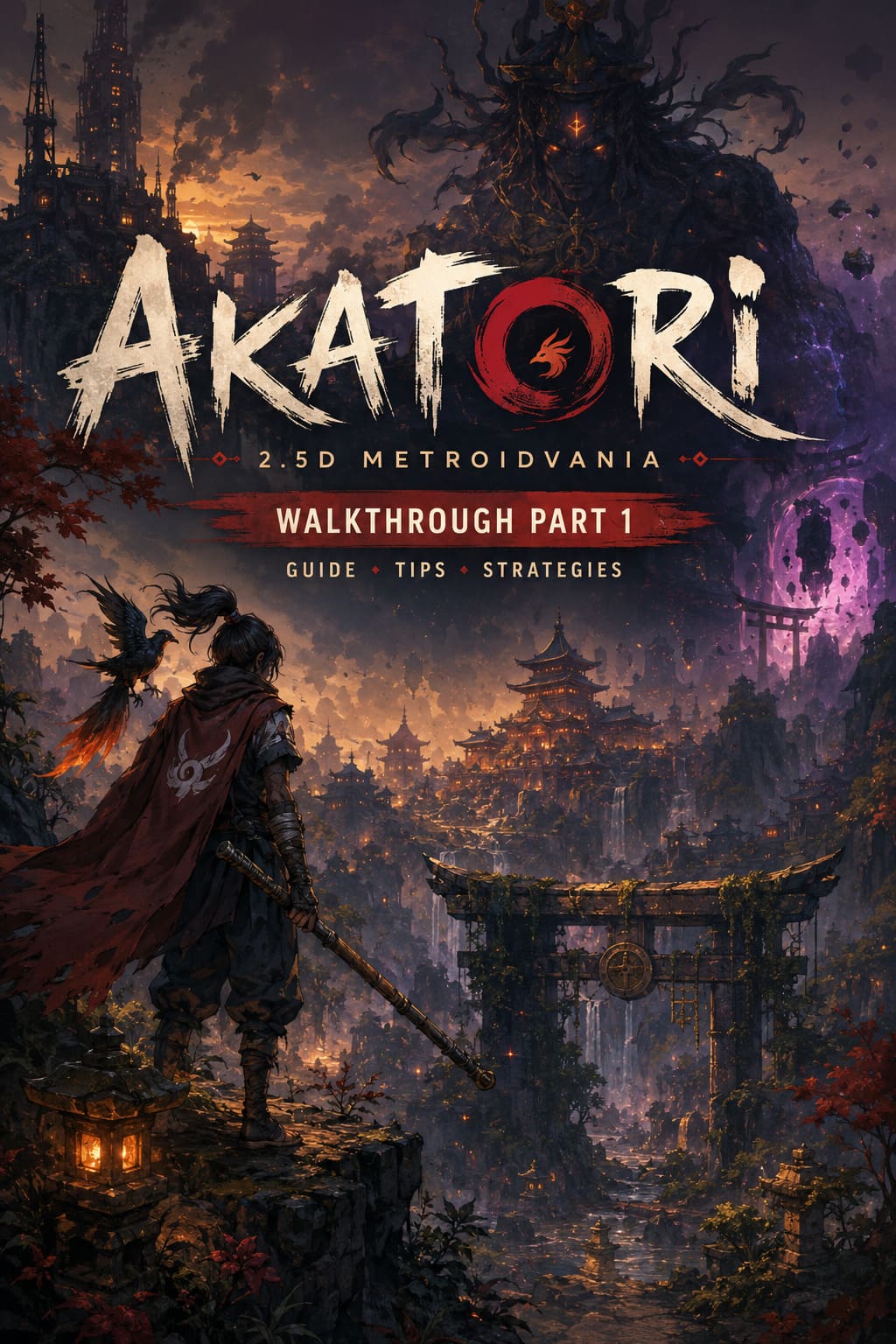
Within the first hour you’re already encouraged to:
- Experiment with movement.
- Learn enemy attack patterns.
- Search for hidden pathways.
- Remember inaccessible locations for later.
- Practice advanced platforming.
That freedom can feel overwhelming at first, but it quickly becomes one of the game’s biggest strengths.
Rather than following objective markers every minute, I found myself constantly asking, “What happens if I jump over there?”
More often than not, the answer was treasure.
Learning Mako’s Combat Early
The staff is much more than a weapon.
It becomes your movement tool, defensive option, puzzle solver, and eventually one of the most satisfying traversal mechanics I’ve used in a 2D platformer recently.
Your Basic Attack Chain
Light attacks are incredibly quick.
They’re perfect for:
- Clearing weaker enemies
- Interrupting fast creatures
- Building stagger quickly
Heavy attacks are slower but rewarding.
They’re especially useful against larger opponents that refuse to flinch under normal hits.
One mistake I made early was relying only on heavy swings. That simply leaves you exposed. Mixing both attack types creates a much smoother combat rhythm.
Staff Bounce Is More Important Than You Think
If you’ve played games like Hollow Knight, you’ll immediately recognize what Akatori expects from you.
Downward attacks aren’t just offensive.

They’re part of movement.
You’ll bounce from:
- Certain enemies
- Hazardous spikes
- Floating objects
- Environmental obstacles
At first it feels awkward.
A few minutes later you’ll wonder how you ever played without it.
Some hidden collectibles practically require mastering this mechanic before you ever unlock future mobility upgrades.
Never Forget Your Dash
The dodge roll saved me more times than I can count.
It offers brief invulnerability frames, meaning proper timing matters much more than panic rolling.
Against regular enemies you can often play aggressively.
Bosses are another story.
Learning exactly when to dash instead of where to dash makes a massive difference.
The Dual-World System Is Brilliant
One mechanic instantly separates Akatori from many other Metroidvanias.
The shifting dimensions.
Without spoiling later sections, the early game introduces subtle hints that two overlapping realities exist.
Sometimes you’ll discover:
- Blocked corridors
- Strange glowing symbols
- Platforms that shouldn’t exist
- Walls behaving differently
Whenever something feels suspicious, chances are the alternate dimension is involved somehow.
Instead of assuming you’ve reached a dead end, start paying attention to environmental clues.
The game rarely wastes your time.
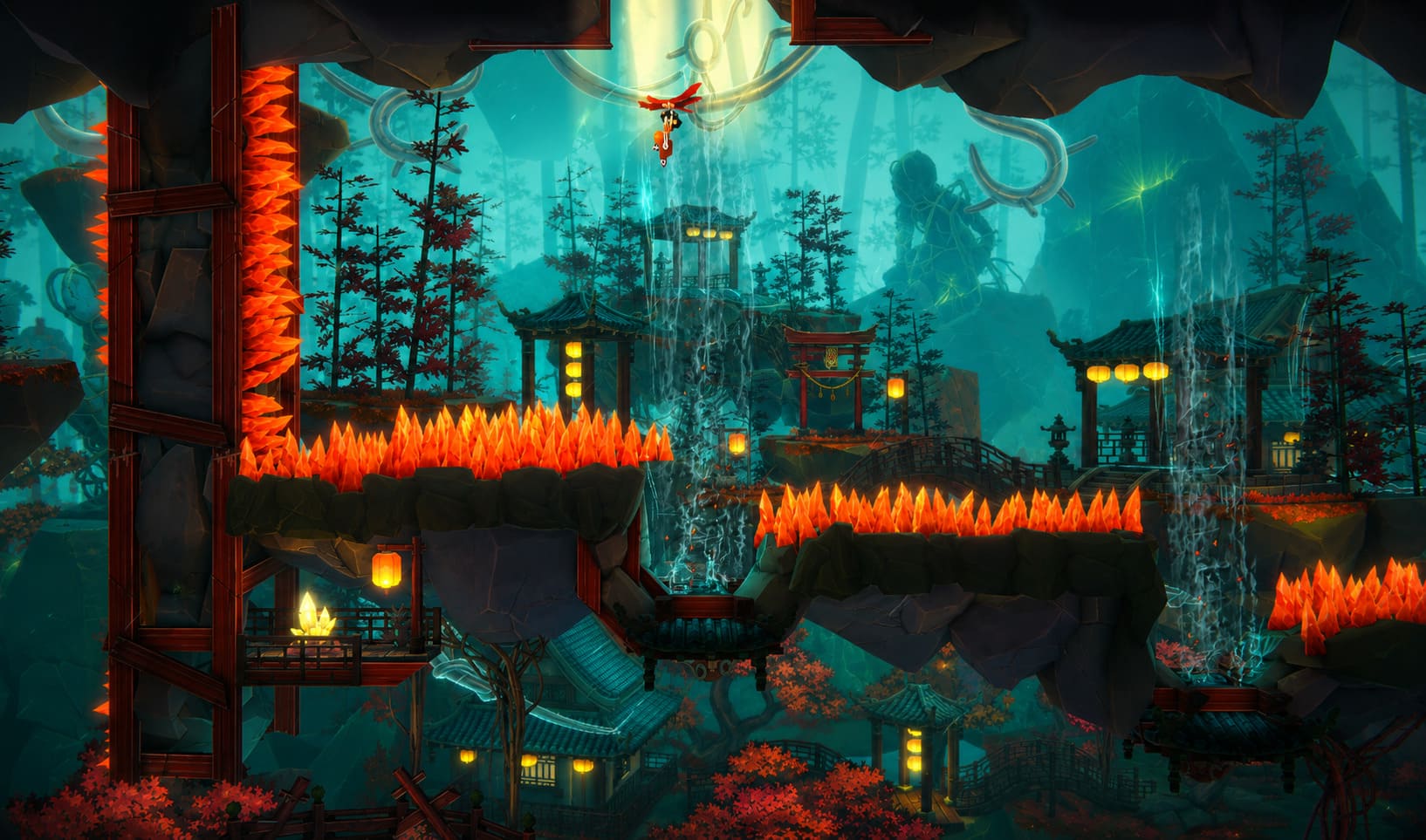
Exploring the Whispering Woods
The opening forest serves as both tutorial and test.
Everything teaches you something.
Stone lanterns naturally guide exploration without feeling intrusive.
Background details subtly warn about danger.
Enemy placement introduces new mechanics one at a time.
Rather than rushing toward the next checkpoint, I strongly recommend slowing down.
Every side path has the potential to reward curiosity.
Break every fragile object you encounter.
The amount of currency and healing items hidden inside containers surprised me throughout the opening hours.
Meeting Your Bird Companion
One of my favorite early moments arrives when you rescue the mysterious bird trapped inside an ancient cage.
The encounter isn’t especially difficult.
Three enemy waves appear.
Clear them.
Free the bird.
Everything changes afterward.
The reward is your first major mobility upgrade:
The horizontal air dash.
Suddenly areas that looked impossible become reachable.
This is classic Metroidvania design done correctly.
Instead of simply opening one door, the new ability completely changes how you view previous locations.
I immediately backtracked and found multiple hidden collectibles I’d completely missed.
Hidden Relics Worth Finding Early
Exploration pays off almost immediately.
Here are the upgrades I believe every player should grab before moving on.
| Relic | Why It Matters | Personal Rating |
|---|---|---|
| Ragged Cape | Slightly increases dash invulnerability. | ★★★★★ |
| Curative Prayer Bead | Helps increase maximum health later. | ★★★★★ |
| Mossy Boot | Improves movement across uneven terrain. | ★★★★☆ |
None of these items feel mandatory.
However, together they noticeably smooth out the early difficulty curve.
Especially the extra dash protection.
It saved me countless mistakes during the first boss.
Solving the Great Gate
Eventually your progress stops at an enormous ancient gate.
This puzzle initially looks intimidating.
It’s actually fairly straightforward once you realize both mechanisms are separated vertically.
Upper Section
You’ll need your new aerial dash.
Expect:
- Crumbling platforms
- Falling ceiling hazards
- Narrow landing spots
Take your time.
The platforms give you enough opportunity if you don’t rush every jump.
Lower Chamber
The flooded cave ended up being more difficult for me.
The floating logs constantly tempt you into jumping too early.
Wait.
Watch the water.
Then move.
Trying to speed through usually results in falling into the toxic water repeatedly.
Once both switches activate, the enormous gate finally opens.
That moment feels incredibly satisfying because you’ve actually earned it.
First Boss Review: The Corrupted Warden
Every good Metroidvania needs an early boss that teaches fundamental mechanics.
Akatori absolutely succeeds here.
The Corrupted Warden doesn’t rely on cheap difficulty.
Instead, every attack clearly communicates what is about to happen.
If you get hit, it’s usually because you became impatient.
Phase One
The opening phase focuses on timing.
The Ground Slam creates a traveling shockwave.
Instead of retreating, jump over it and immediately counterattack from above.
The Shield Charge looks terrifying the first time.
Don’t panic.
Dash through the boss rather than away from it.
Once I realized that, the attack became one of the safest opportunities for free damage.
Phase Two
Below half health, everything speeds up.
Amber corruption begins covering parts of the arena.
This dramatically limits your safe positioning.
The falling debris attack seems random initially.
It isn’t.
Watch the floor carefully.
Shadows reveal where rocks will land.
The most dangerous move is actually the Double Swipe.
My biggest mistake was attacking after the first swing.
Don’t.
Wait until the second animation finishes before committing to a combo.
Patience wins this fight.
Akatori PC System Requirements & Full Controller Support Layout Guide (2026)
Beginner Advice I Wish Someone Had Given Me
After finishing the opening chapters, these became my personal rules.
- Always mark unexplored locations on your map. Future upgrades open far more shortcuts than you expect.
- Invest in weapon damage before defensive upgrades. Faster fights naturally reduce incoming damage.
- Learn enemy stagger mechanics. Finishing attacks often restore valuable health.
- Don’t ignore vertical exploration. Some of the best collectibles are hidden above obvious paths.
- Return to earlier areas after unlocking movement abilities. You’ll be surprised how many secrets were hiding in plain sight.
Akatori Day 1 Patch Notes, Updates, and Nintendo Switch 2 Release Year Delay Explained
Quick Reference Table
| Feature | Recommendation |
|---|---|
| Difficulty | Moderate but fair |
| Exploration | Extremely rewarding |
| Boss Design | Skill-based rather than unfair |
| Combat | Fast and responsive |
| Platforming | Requires precision |
| Replay Value | High thanks to hidden upgrades |
Final Thoughts
After spending several hours exploring Akatori’s opening regions, I came away genuinely impressed.
The game respects the player’s intelligence.
It doesn’t overwhelm you with tutorials or constant objective markers, and it isn’t afraid to let you wander into optional areas simply because you’re curious. That’s something I wish more modern action-platformers embraced.
The first few hours also establish an excellent gameplay loop. Explore every corner, unlock a new ability, remember places you couldn’t reach before, then return stronger and uncover even more secrets. It’s an addictive formula, but Akatori executes it with confidence thanks to its polished movement and rewarding level design.
The Corrupted Warden is also exactly the kind of first boss I like to see. Tough enough to force you into learning the combat system, yet fair enough that every defeat feels like a lesson rather than bad luck.
If I had one piece of advice for newcomers, it would simply be this: don’t rush. Akatori hides some of its best rewards behind careful observation instead of obvious quest markers. Break suspicious walls, revisit older rooms after unlocking new traversal skills, and don’t be afraid to experiment with your staff in ways the tutorial never explicitly explains.
Overall, the opening chapter left me excited to see what comes next. If the later regions continue building on these mechanics—especially the dual-world exploration system—Akatori has every chance to become one of the standout indie Metroidvanias of 2026. For fans of exploration-heavy adventures, this is definitely a journey worth taking from the very beginning.