Mistfall Hunter Roadmap 2026: Season 1 Updates, Class Changes, and Future Balance Fixes
When I first jumped into Mistfall Hunter, I expected another extraction game wearing a fantasy skin. Instead, I found something that sits comfortably between a hardcore extraction RPG and a Soulslike adventure. It combines deliberate melee combat with high-risk exploration, creating moments where every fight matters because one mistake can wipe out everything you’ve collected. That constant pressure is what kept pulling me back for another run.
That doesn’t mean the launch was flawless. Like many players, I dealt with stuttering, occasional server hiccups, and balance issues that became obvious after only a handful of PvP encounters. Even so, after spending more time with the game and following Bellring Games’ developer updates, I came away feeling much more optimistic. The studio isn’t pretending everything is perfect. Instead, it has openly acknowledged the community’s biggest complaints and has already started rolling out meaningful improvements.
Here’s my perspective on the Mistfall Hunter Season 1 roadmap, what’s already changed, what still needs work, and why I think this game has the potential to become one of the most interesting fantasy extraction titles on the market.
A Different Kind of Extraction Experience
Extraction shooters have exploded in popularity over the past few years, but Mistfall Hunter takes the formula in a completely different direction.
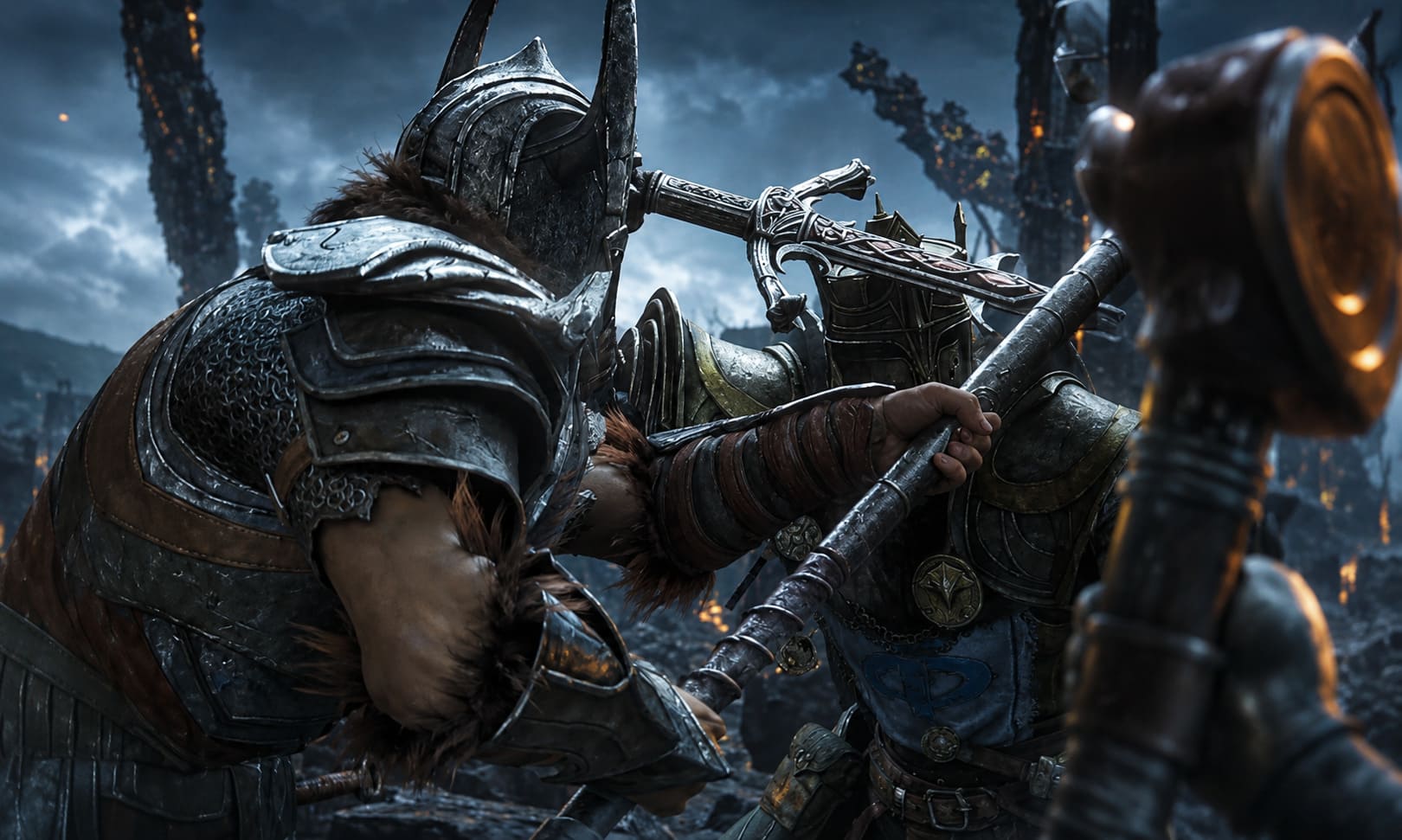
Rather than relying on firearms and twitch reflexes, every battle revolves around stamina management, positioning, dodging, blocking, and carefully timed attacks. Combat feels slower than traditional extraction games, but every weapon swing carries real weight, making victories feel earned rather than accidental.
The world itself deserves plenty of praise. Weavereach isn’t just another gloomy fantasy kingdom filled with monsters. The spreading Gyldenmist constantly reminds you that civilization has collapsed, and every expedition feels dangerous before another player even enters the picture. The atmosphere does an excellent job of making every journey feel tense.
One mechanic I especially appreciate is the extraction system.
Instead of sprinting toward a permanent extraction point, players must locate a wandering creature known as the Returner Woodling. Defeating it grants a Soul of Return, which is then used to create an extraction portal. That small design decision changes the pacing of every match because no two escapes happen exactly the same way.
Sometimes you’ll find the Woodling within minutes.
Sometimes another squad reaches it first.
Sometimes you’re forced into one final fight before you can escape with your loot.
Those unpredictable moments create memorable stories that many extraction games struggle to deliver.
Launch Was Exciting… But Also Frustrating
As much as I enjoy the core gameplay, launch week wasn’t exactly smooth.
Performance quickly became the biggest topic across nearly every discussion forum.
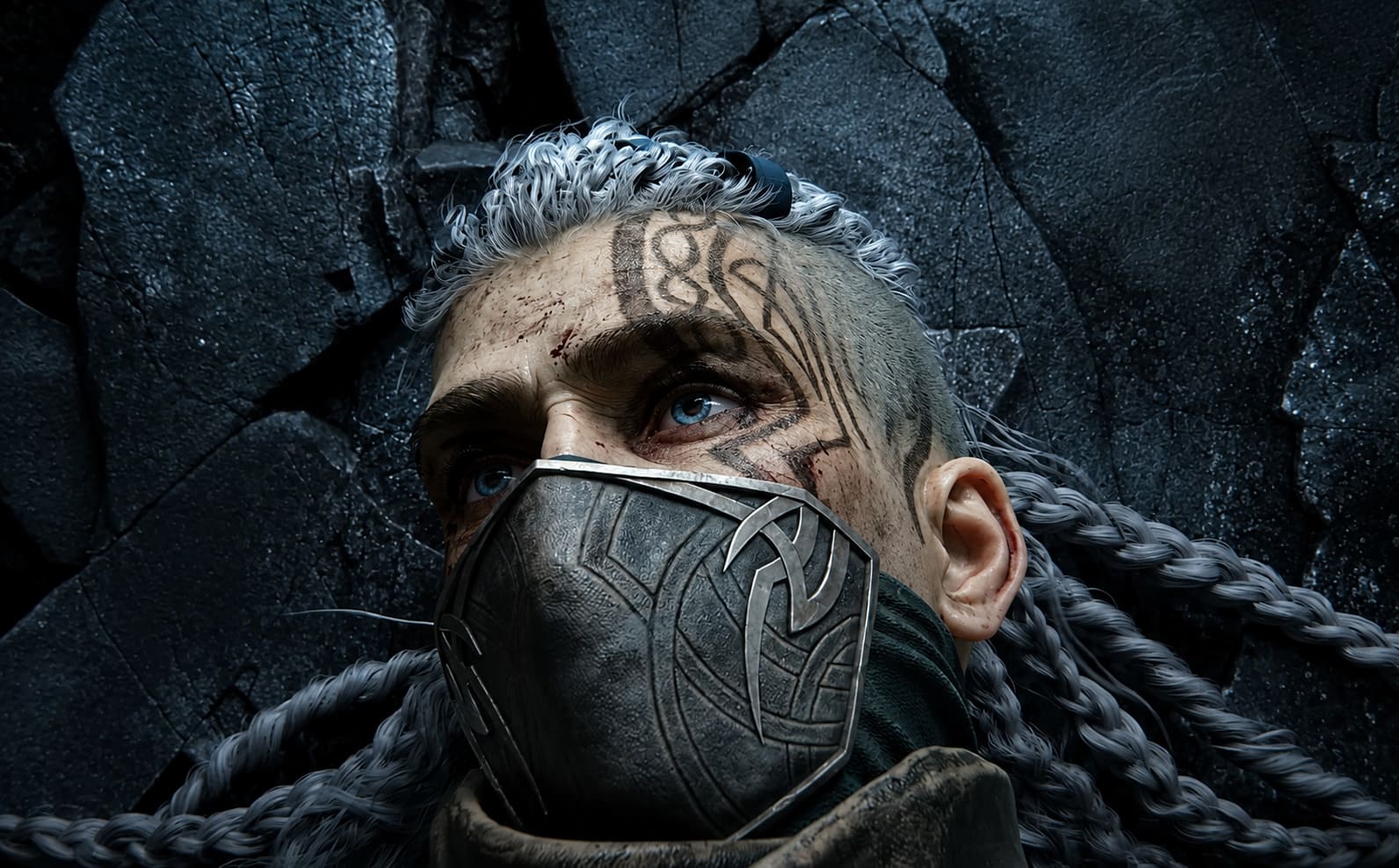
Many players experienced technical problems that included:
- Shader compilation stutters
- Noticeable frame drops during larger encounters
- Rubberbanding caused by server latency
- Regional matchmaking limitations
- High ping for players outside supported regions
Those issues often overshadowed what is actually a very satisfying combat system. Steam reviews reflected that frustration, with many players praising the gameplay while criticizing technical stability.
The encouraging part is how quickly Bellring Games responded.
Rather than staying silent for weeks, the developers acknowledged community concerns almost immediately, published a roadmap, and began releasing optimization patches designed to improve the overall experience.
Community Feedback Clearly Influenced Season 1
One thing I genuinely appreciate is that Bellring Games didn’t focus solely on fixing bugs. The developers also examined how players were approaching the game and where frustration appeared most often.
Several concerns consistently appeared across Reddit, YouTube, Discord, and community forums.
| Community Concern | Why It Matters |
|---|---|
| Server Stability | Latency made PvP encounters feel inconsistent. |
| Class Balance | Several ranged classes quickly became dominant. |
| Duo Matchmaking | Two-player groups were forced into trio lobbies. |
| Performance | Frame stuttering reduced combat consistency. |
| Regional Servers | Players in unsupported regions experienced high ping. |
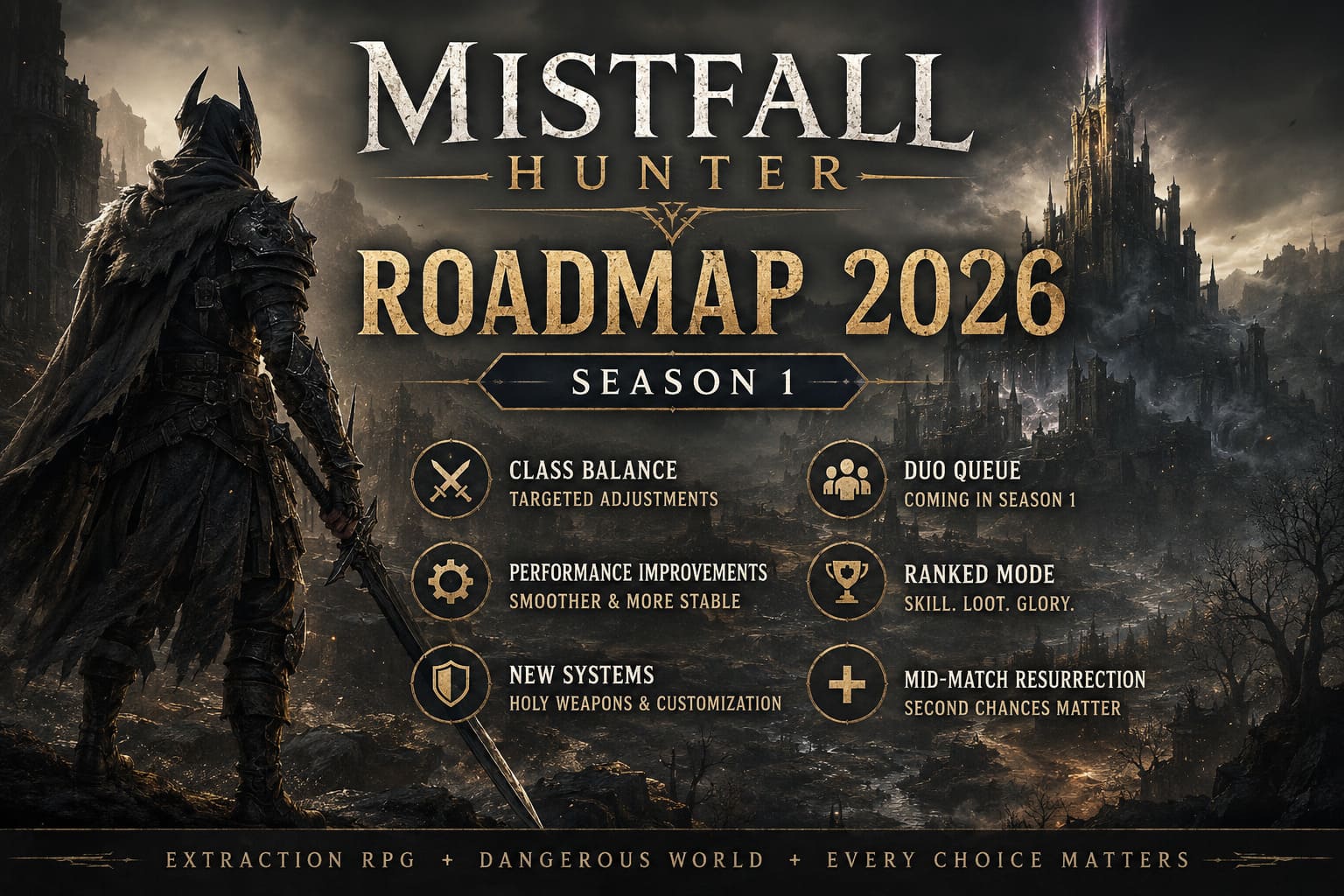
The good news is that nearly every major complaint appears somewhere within the current Season 1 roadmap, which suggests the developers are paying close attention to community feedback.
Performance Improvements Were the Right Priority
If combat is the heart of Mistfall Hunter, then performance is its foundation.
Even the most exciting boss battle becomes frustrating if frame pacing constantly breaks immersion.
The first wave of Season 1 updates focuses less on dramatically increasing FPS and more on making gameplay consistently smooth across longer sessions.
Optimization improvements include:
- Improved shader pre-loading
- Network interpolation improvements
- Reduced hitching during combat
- Better hardware utilization on mid-range PCs
- General stability improvements across platforms
These updates may not double your frame rate overnight, but they significantly improve how the game feels during real combat. Personally, I’d always take stable frame pacing over slightly higher benchmark numbers with constant stutters.
Season 1 Class Balance Changes Feel Well Thought Out
Balancing a PvPvE game is never easy because every adjustment affects both PvE progression and competitive PvP.
Several classes clearly outperformed the rest during launch, but Bellring Games avoided making drastic, reactionary nerfs.
Instead, most adjustments feel measured and focused.
Withered Knight Receives Smart Tweaks
The Withered Knight immediately became one of the most interesting frontline classes thanks to its impressive reach.
However, its polearm allowed players to pressure opponents from surprisingly safe distances.
Season 1 addresses this with several targeted adjustments.
- Reduced turning speed during heavy thrust attacks
- Higher damage rewards for accurate spear strikes
- Lower energy costs for Charged Dash
- Improved damage scaling on primary combos
Instead of simply weakening the class, these changes reward mechanical precision while preventing overly safe gameplay.
Greatsword Players Finally Get Some Love
The Greatsword has also received several welcome improvements.
Rather than relying purely on raw damage, defensive play now feels much more rewarding.
- Earlier access to Parry talents
- Longer defensive timing windows
- Improved combo flow
- More consistent follow-up opportunities after charges
As someone who naturally gravitates toward slower melee weapons, I think these adjustments make Greatsword builds much more enjoyable without pushing them into overpowered territory.
Ranged Builds Lose Some of Their Dominance
Ranged combat isn’t disappearing, nor should it.
It simply shouldn’t control every engagement.
Stealth and ranged-focused classes had become extremely popular among experienced PvP players because of their mobility and burst potential.
Season 1 reduces several of those advantages while simultaneously improving support-oriented classes.
Support casters now enjoy:
- Faster spell casting
- Better accuracy
- Improved reliability during team fights
These adjustments encourage healthier class diversity instead of forcing everyone toward the same meta.
New Systems Could Keep Players Invested Longer
Balance updates are important, but long-term progression is equally important for an extraction RPG.
Fortunately, Season 1 introduces several new systems that should significantly increase build variety.
Holy Weapons
This is easily one of the most exciting additions.
Rather than acting as simple stat upgrades, Holy Weapons actually modify how abilities function, opening the door to entirely new playstyles without requiring brand-new classes every season.
Expanded Gear Customization
Legendary equipment now offers deeper customization through sockets and affixes.
Players can experiment with builds focused on:
- Critical damage
- Defensive resistance
- Cooldown reduction
- Support-oriented bonuses
- Hybrid melee and magic combinations
I always enjoy RPGs that encourage experimentation instead of funneling every player toward a single optimal build.
Combat Bag Makes Re-Gearing Faster
This might sound like a minor feature, but I actually think it’s one of the smartest additions in the roadmap.
After losing a difficult extraction, nobody enjoys spending ten minutes rebuilding an inventory from scratch.
The new Combat Bag automatically equips preset backup equipment, allowing players to jump back into matchmaking almost immediately.
It’s a quality-of-life feature that simply respects players’ time.
Mid-Match Resurrection Adds More Strategy
Another welcome addition is the new resurrection mechanic for PvE deaths.
If a teammate dies to monsters rather than another player, the rest of the squad can recover their soul within a limited window and revive them during the same match.
Importantly, PvP deaths still carry the traditional extraction penalty, preserving the tension that defines the genre while reducing frustration from accidental PvE mistakes.
Ranked Play Could Become Season 1’s Biggest Attraction
Competitive players finally have something meaningful to look forward to.
The upcoming Ranked mode won’t simply reward farming easy enemies.
Instead, progression will depend on accomplishments like:
- Successful extractions
- Elite enemy eliminations
- Regional objectives
- High-value loot acquisition
Eventually, players will need to move into higher-risk maps to continue climbing the rankings, preventing endless farming of beginner content.
That’s a healthier competitive structure than many extraction games currently offer.
The Monetization Strategy Looks Encouraging
One concern many players had before launch involved monetization.
Thankfully, Bellring Games has repeatedly emphasized that character strength won’t be sold through microtransactions.
Legendary equipment, progression, and powerful upgrades must all be earned through gameplay.
Current monetization remains focused on cosmetics and optional Deluxe bonuses rather than pay-to-win mechanics.
If that philosophy continues into future seasons, it should help build long-term trust within the community.
How Many Dudes PC Optimization Guide: Fix Lag, Stuttering, and Low FPS on Low End Systems
My Overall Thoughts After Following the Roadmap
I’m not ready to call Mistfall Hunter the next giant multiplayer success just yet.
There are still several areas I’d like to see improved.
- Additional regional servers
- Dedicated duo matchmaking
- Further optimization patches
- More endgame activities
- Continued balance updates
What encourages me most isn’t that every problem has already been solved.
It’s that Bellring Games appears willing to listen, react quickly, and improve the game instead of ignoring community concerns.
That doesn’t guarantee long-term success, but it’s certainly a positive sign.
Final Verdict
After spending considerable time with Mistfall Hunter and carefully following the Season 1 roadmap, I genuinely believe the game has a strong foundation. Its deliberate combat, rewarding progression, and unique extraction mechanics already help it stand apart from many competitors. While launch performance issues and balance problems slowed its momentum, the first major updates demonstrate that Bellring Games is committed to refining the experience rather than defending obvious shortcomings.
There’s still plenty of work ahead, particularly regarding matchmaking, server coverage, and long-term content, but the overall direction feels encouraging. If future updates continue expanding build diversity, polishing technical performance, and listening to community feedback, I can easily see Mistfall Hunter growing into one of the standout fantasy PvPvE games over the next few years.
For now, I’d say it’s absolutely worth keeping on your radar. Even today, when everything comes together, Mistfall Hunter delivers some genuinely unforgettable moments—and each new update seems to move it one step closer to becoming the game many players hoped it would be at launch.