Soulbound: Online 3-Player Co-Op Matchmaking Guide (2026 EA Release)
After spending years playing everything from classic MMORPGs to hardcore roguelites and co-op action games, I have seen plenty of developers struggle with one important question: how many players should a multiplayer experience actually support? Bigger is not always better. Sometimes a smaller team size creates more interesting decisions, better communication, and much stronger gameplay moments. That is exactly the direction Soulbound: Online appears to be taking with its dedicated 3-player co-op matchmaking system.
Developed by SpiderWare, Soulbound: Online is preparing for its Steam Early Access release on July 21, 2026, and the project has already attracted serious attention from the indie gaming community. With more than 120,000 Steam wishlists and a large number of players testing early browser and Discord versions, the game has built a reputation as one of the more unusual upcoming MMORPG experiments. Instead of chasing massive MMO raids with dozens of players, Soulbound focuses on tight three-person teams, fast combat, and high-risk dungeon runs.
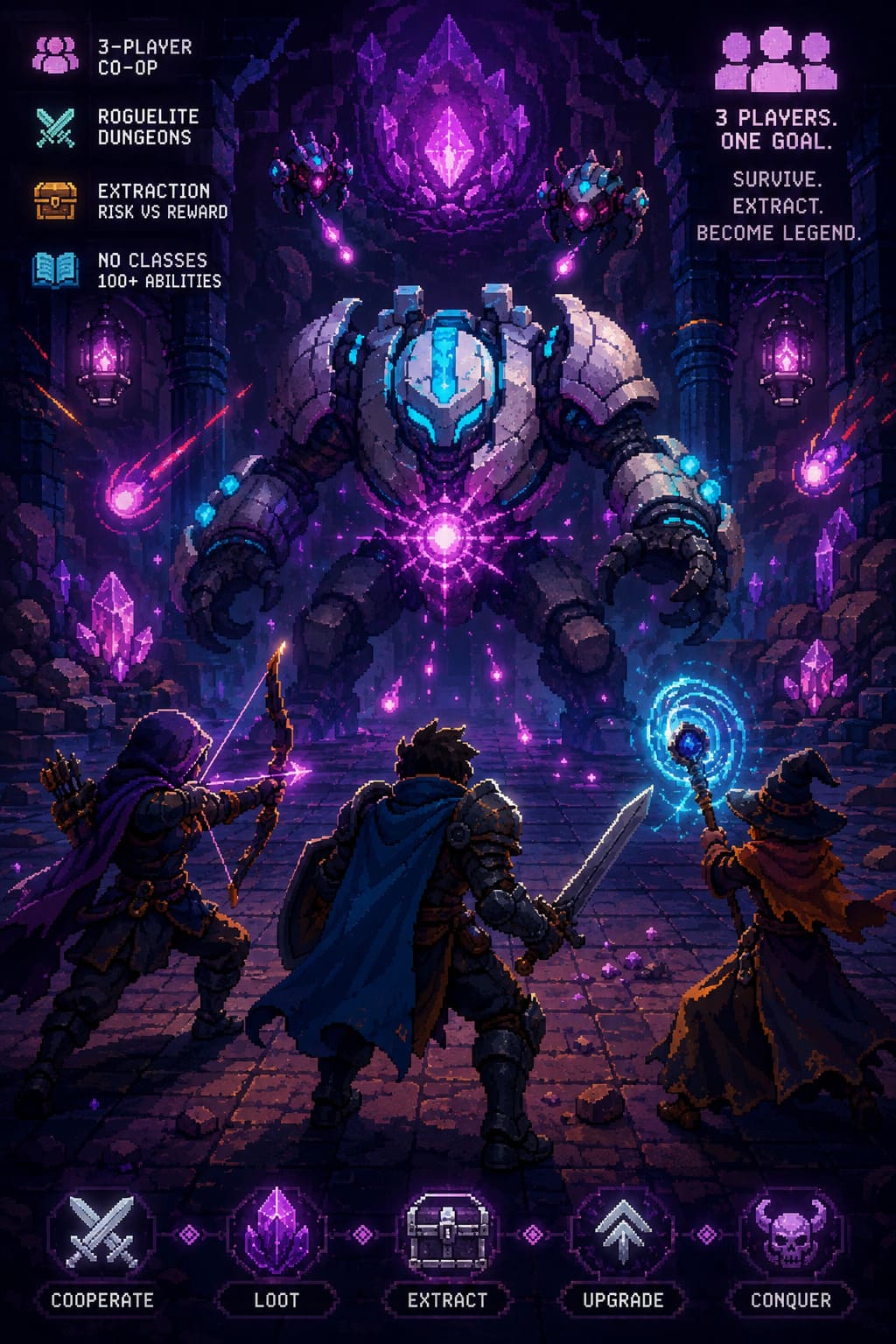
The concept immediately caught my attention because it combines several genres that usually work well together: pixel-art MMORPG progression, bullet-heaven combat, extraction mechanics, and roguelite dungeon design. It is a strange combination on paper, but after seeing similar systems succeed in games like Vampire Survivors-style action titles and cooperative dungeon crawlers, I can understand why this formula has potential.
Soulbound Online 2026: How to Trigger and Master Procedural Boss Phases
How Soulbound: Online 3-Player Co-Op Actually Works
Soulbound: Online is built around two completely different gameplay spaces. The first is a peaceful persistent overworld where players can socialize, gather resources, craft equipment, manage personal bases, and participate in the player economy. There are no constant monster attacks here, which creates a relaxing MMO-style hub where players prepare for their next adventure.
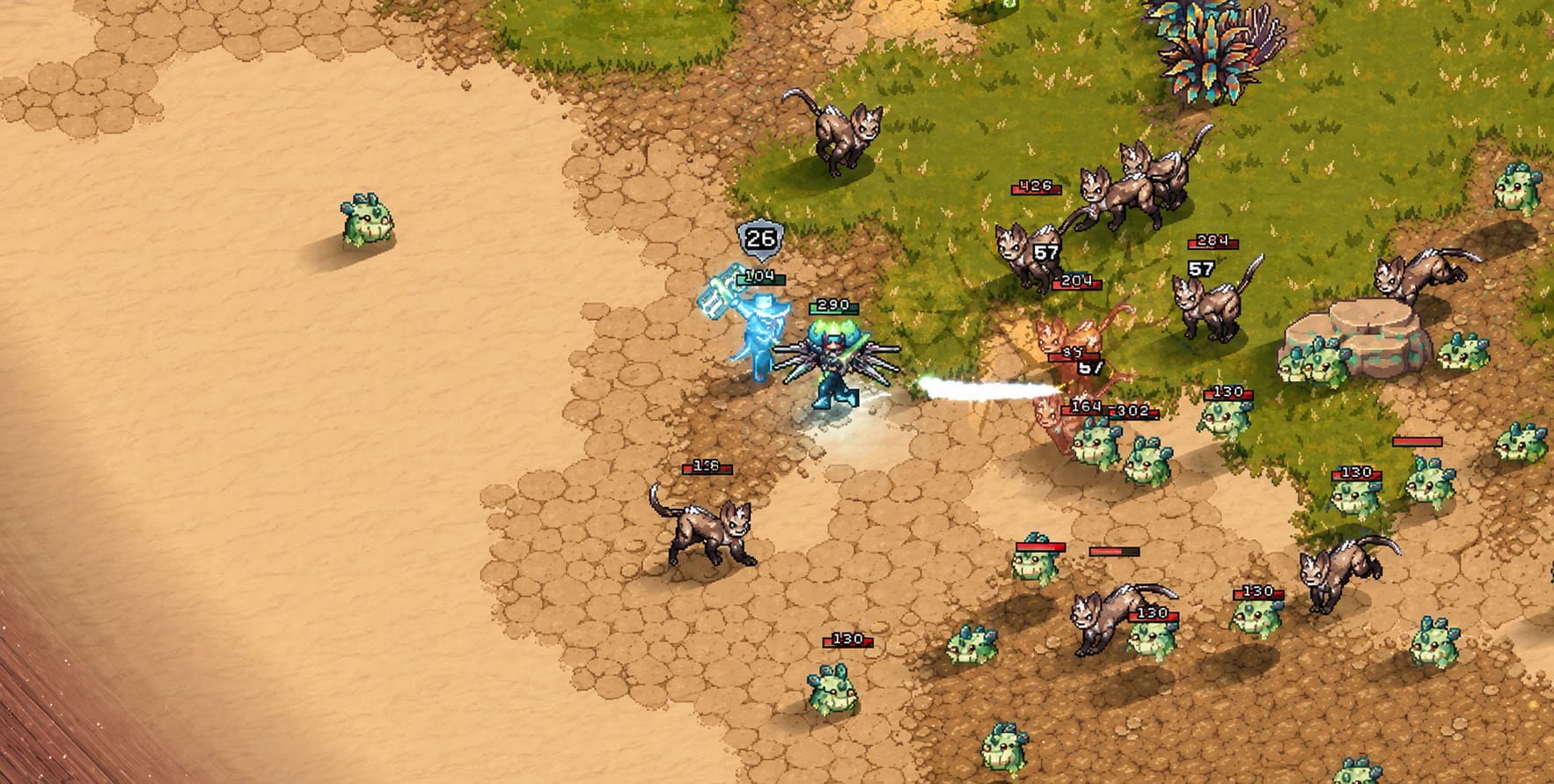
The second part is where the real action begins: instanced combat zones designed around cooperative teamwork. These dungeons are where players fight waves of enemies, collect temporary upgrades, defeat powerful bosses, and attempt to extract valuable rewards. While solo play is possible, the game clearly pushes players toward coordinated three-person groups.
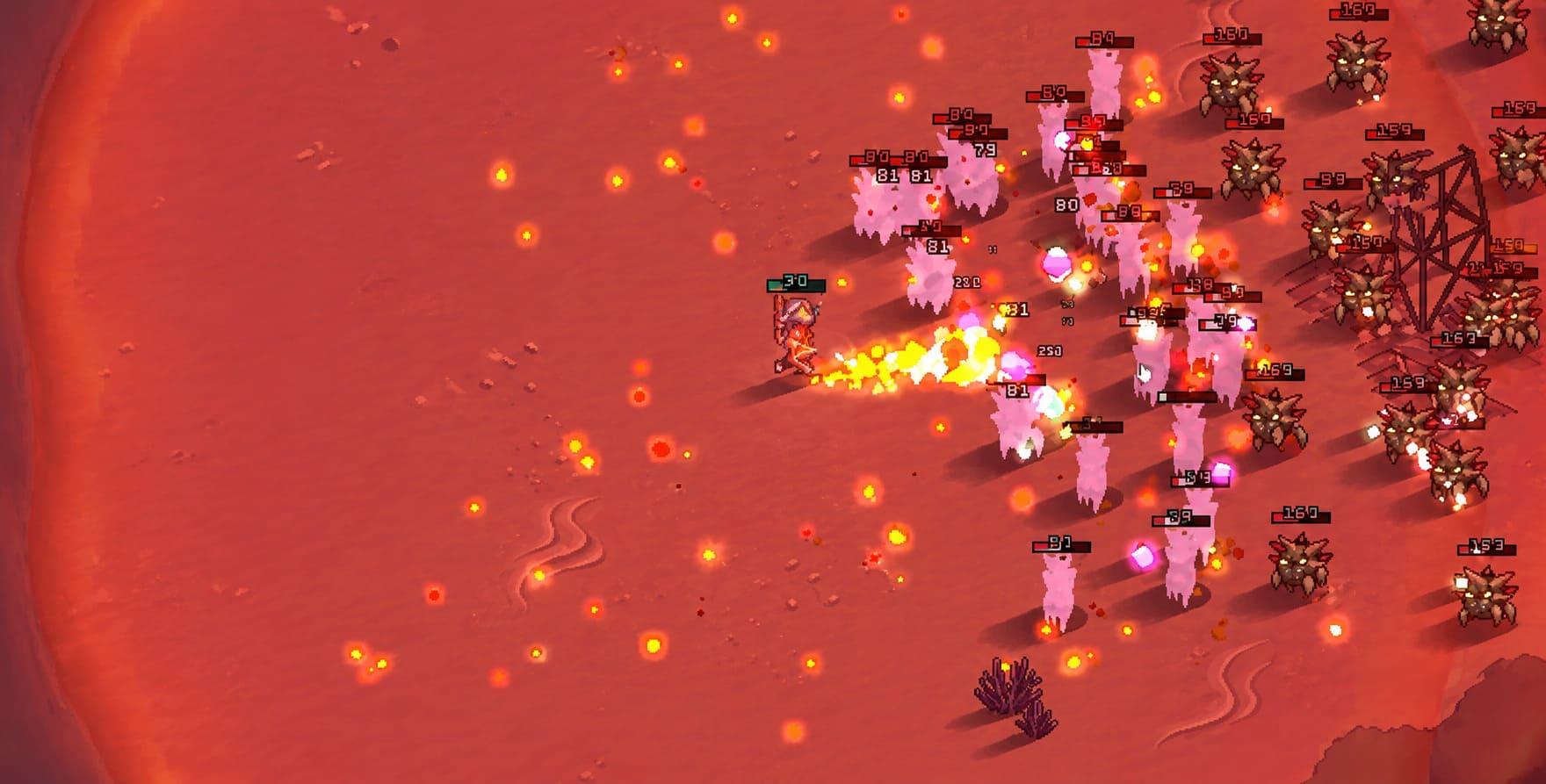
The decision to limit teams to three players is actually one of the smartest design choices in my opinion. Many online games become chaotic when too many players are throwing abilities everywhere. In a bullet-hell combat system, adding ten or twenty players would quickly turn every fight into a visual mess where nobody understands what is happening.
A three-player party creates a much cleaner combat environment. Every movement matters, every ability has a purpose, and every teammate has a direct impact on whether the group survives.
Why the Three-Player Limit Makes Combat Better
Unlike traditional MMORPGs that often use four-player parties or massive raid groups, Soulbound: Online creates encounters specifically balanced around a trio. This allows developers to design enemy patterns, boss mechanics, and dungeon layouts with much more precision.
When entering a dungeon with three players, enemies become stronger. Their health pools increase, attack patterns become more aggressive, and bosses gain additional mechanics designed to challenge coordinated groups.
From my experience with multiplayer games, this type of scaling usually works better than simply increasing enemy health. The best co-op games do not just make enemies into damage sponges. They force players to change their strategy.
In Soulbound: Online, a successful team cannot simply have three players running around independently. Players need to combine their builds, control enemy waves, create openings for damage, and react quickly when something goes wrong.
- Better combat visibility: Three players keep bullet patterns readable instead of creating screen chaos.
- Stronger teamwork: Every player has an important role during difficult encounters.
- More meaningful builds: Character choices directly influence team survival.
- Faster matchmaking: Finding two additional players is easier than building larger raid groups.
No Fixed Classes: Building Your Own Role
One of the most interesting parts of Soulbound: Online is its approach to character progression. The game does not force players into traditional MMORPG roles like Warrior, Mage, or Healer. Instead, your playstyle is created through weapons, abilities, and relic choices.
This system reminds me of older RPGs where experimentation mattered more than following a single meta build. Players can create traditional roles, but they can also build something completely different.
For example, one player might create a defensive frontline character that protects teammates. Another might focus on healing abilities and support effects. A third player could create a glass-cannon damage build designed to eliminate bosses quickly.
| Feature | Details |
|---|---|
| Ability Paths | More than 100 different customization options |
| Relic System | Over 200 upgradeable relic trees |
| Weapons | Multiple weapon types supporting different playstyles |
| Respec System | Instant build changes before dungeon runs |
The instant respec feature is especially useful for matchmaking. Imagine joining a random group and discovering that everyone picked a damage build with no defensive options. Instead of abandoning the run, players can adjust their setups before entering the dungeon.
That small quality-of-life decision could make random matchmaking much more enjoyable.
Soulbound Dungeon Matchmaking Flow Explained
The matchmaking process is designed to remove unnecessary waiting. Players can create private groups with friends, invite guild members, or use automatic matchmaking to find available teammates.
Once the three-player team is ready, the group enters a procedurally generated dungeon. Each run follows a familiar but addictive structure:
- Starting Phase: The team enters a randomly generated dungeon environment.
- Combat Rooms: Players fight waves of enemies while avoiding dangerous projectile patterns.
- Resource Collection: The group collects crafting materials, temporary relics, and valuable loot.
- Boss Battle: The final encounter requires coordination, positioning, and careful timing.
- Extraction: Players return safely with their collected rewards.
The important thing is that every run feels like it has a purpose. You are not just clearing enemies for experience points. You are risking resources to improve your character, expand your crafting options, and prepare for harder challenges.
High-Risk Extraction Creates Real Tension
The biggest difference between Soulbound: Online and many casual co-op games is the punishment system. The game does not treat failure as a simple restart.
If your team gets defeated inside a dungeon, you can lose everything currently stored inside your inventory bag. That includes unprocessed materials, dungeon currency, and valuable loot collected during the run.
However, your permanent character progression remains safe. This creates a balance between risk and reward.
Personally, I think this system is one of the most interesting parts of the game. Modern multiplayer games often remove consequences because developers want everyone to progress constantly. But without risk, victories become less memorable.
When a three-player team survives a difficult dungeon with rare loot, that success feels earned. When a careless mistake causes a complete wipe, the failure actually matters.
This also prevents players from ignoring teamwork. A teammate who refuses to cooperate or constantly makes reckless decisions can damage the entire group.
From Dungeon Rewards to MMO Economy
The adventure does not end after completing a dungeon. Successful extraction sends players back into the peaceful MMO world where they can use their rewards.
Players can upgrade personal bases, craft weapons, create armor, produce valuable items, and participate in the player-driven economy.
The progression loop is simple but effective:
| Stage | Goal |
|---|---|
| Dungeon Runs | Collect rare resources and equipment |
| Extraction | Secure rewards safely |
| Crafting | Create stronger gear and upgrades |
| Higher Difficulty | Challenge tougher cooperative content |
This cycle is what keeps many RPG players invested. The next upgrade always feels within reach, but obtaining it requires effort.
Final Thoughts on Soulbound: Online Co-Op
Soulbound: Online is one of those indie projects that takes a risk by refusing to follow traditional MMO formulas. Instead of creating giant raids and endless systems, SpiderWare is focusing on something much more controlled: three players, intense combat, meaningful teamwork, and dangerous dungeon runs.
After playing many multiplayer RPGs over the years, I appreciate games that understand the value of smaller cooperative experiences. A great trio can create stronger memories than a random group of twenty players who barely communicate.
The Early Access launch will ultimately decide how well the servers, balance, and progression systems hold up, but the foundation looks promising. If SpiderWare continues improving the combat and keeps the matchmaking experience smooth, Soulbound: Online could become one of the most interesting co-op MMORPG releases of 2026.
For players who enjoy roguelites, action RPGs, and teamwork-focused adventures, this is definitely a game worth watching.