Geronimo VR Weapon Customization Guide: Best Attachments & Loadouts
If there’s one thing that immediately stood out to me after spending time in Geronimo VR, it’s that this isn’t a game where you simply throw the biggest scope and longest suppressor onto every rifle and expect better results. Every attachment actually changes how the weapon feels in your hands, and because this is VR, those differences become obvious within minutes.
Unlike many tactical shooters where attachments mostly adjust hidden statistics, Geronimo VR makes every modification affect your movement, weapon handling, and even how you approach rooms. A rifle that feels perfect outside can quickly become frustrating inside tight buildings, while a lightweight setup may dominate close quarters but struggle during longer engagements.
In this guide I’ll share the weapon setups that worked best for me, explain which attachments are actually worth using, and offer practical advice that helped me survive far more operations than my first disastrous attempts.
Why Weapon Customization Matters in Geronimo VR
One of my favorite parts of Geronimo VR is that the game rewards smart decisions instead of oversized builds.
Every attachment adds advantages, but almost every upgrade also introduces a compromise. That’s exactly what makes building weapons enjoyable.
Some of the biggest factors you’ll notice are:
- Weapon length affects how easily you clear corners.
- Overall weight changes how quickly you can transition between targets.
- Optic placement impacts how naturally you acquire your sight picture.
- Attachment combinations influence both comfort and efficiency during longer missions.
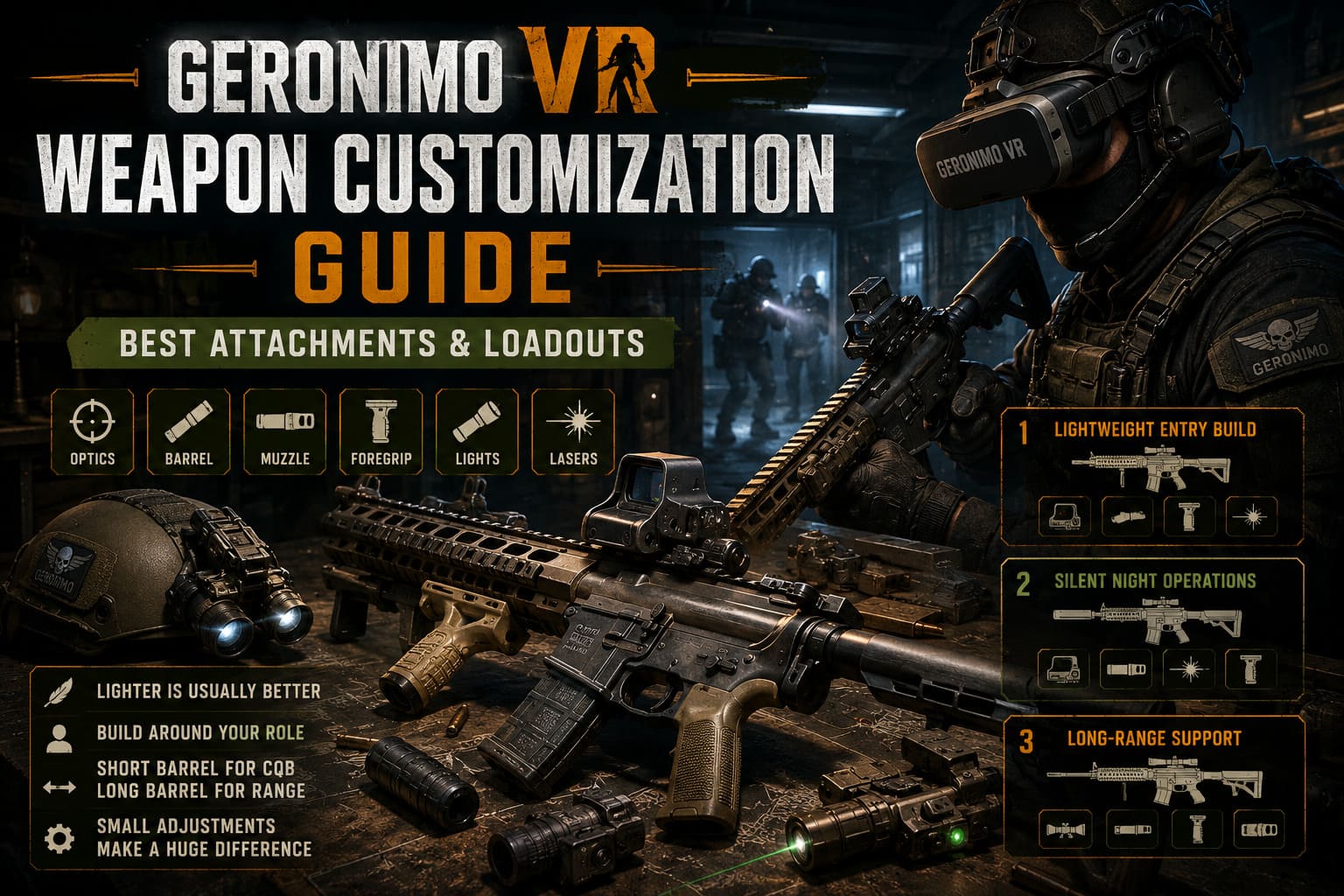
After experimenting with multiple builds, I eventually realized that “lighter is usually better” unless you’re specifically playing a long-range support role.
Build Around Your Role, Not Around Your Favorite Attachment
Many new players try to create one rifle that does everything.
I honestly don’t recommend it.
Instead, I found much better results by creating separate weapons for different mission types.
| Mission Type | Recommended Style | Main Priority |
|---|---|---|
| CQB Assault | Compact Carbine or SMG | Fast movement |
| Night Operations | Suppressed Carbine | Stealth |
| Outdoor Security | Assault Rifle | Accuracy |
| Long Hallways | DMR or LPVO Rifle | Precision |
| Team Entry | Lightweight Rifle | Quick target acquisition |
Trying to force one weapon into every role usually means it performs none of them particularly well.
My Favorite Optics
After trying nearly every sight available, I kept coming back to just a few.
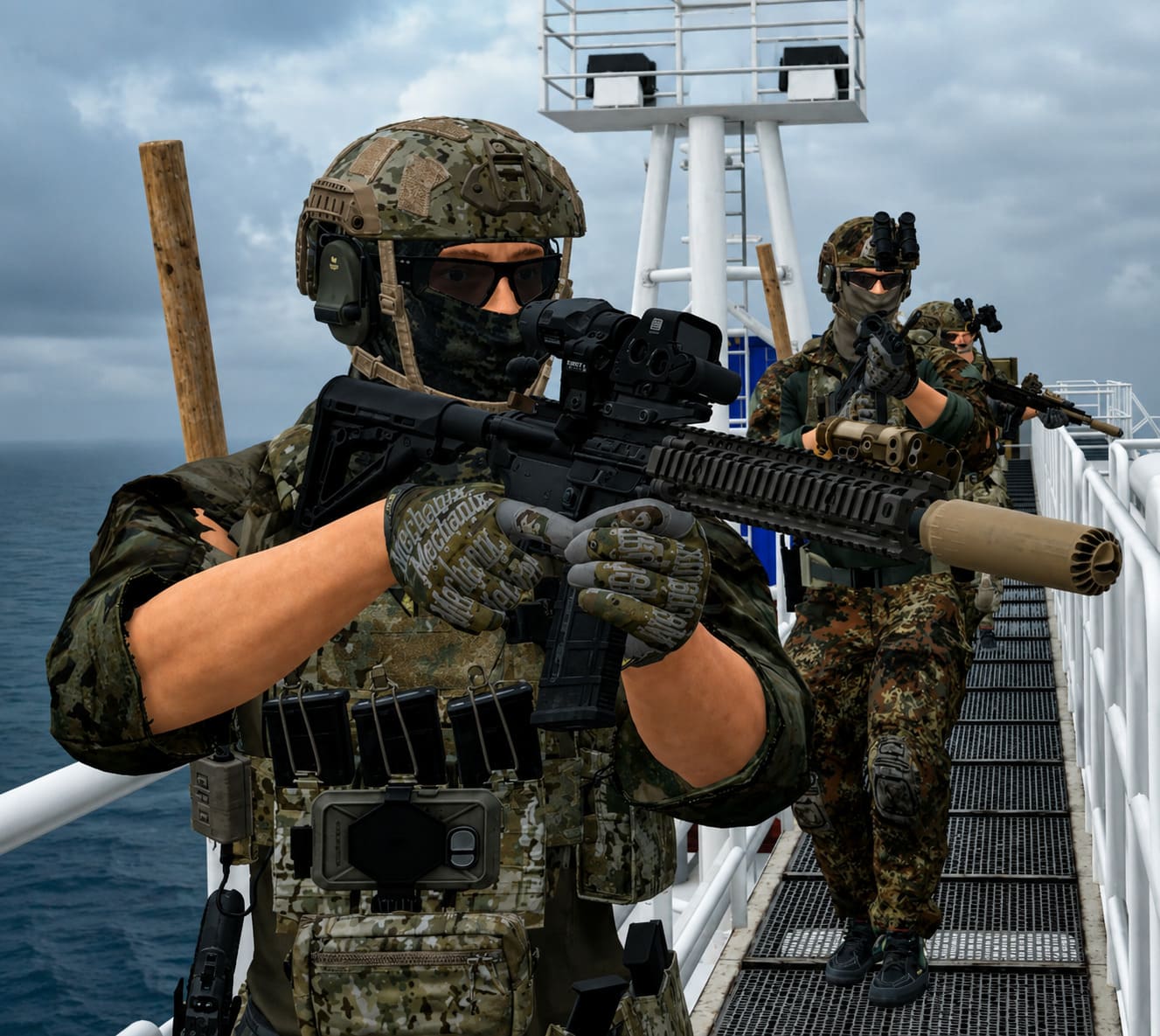
Holographic Sight
This became my default choice.
The viewing window feels open, target acquisition is extremely fast, and it’s forgiving during stressful room clearing. When multiple enemies suddenly appear, I spend less time searching for the reticle and more time firing accurately.
Best for:
- CQB
- Entry teams
- Fast-paced raids
Micro Red Dot
If I’m using a compact weapon, this is usually my second choice.
It barely adds weight, doesn’t clutter your vision, and works especially well when every ounce matters.
I particularly like pairing it with lightweight carbines during fast missions.
LPVO
The LPVO is incredibly versatile, but it’s definitely heavier.
If your squad expects longer sightlines or outdoor engagements, the extra weight is worth it. Otherwise, I usually leave it in the armory.
Barrel Length Is More Important Than Most Players Think
One mistake I made early on was assuming longer barrels were always better.
Technically they offer improved ballistic performance.
Practically?
They love hitting walls.
Inside narrow corridors I constantly found my rifle getting pushed off target because I simply didn’t have enough room to maneuver.
Now I choose based on mission type.
Short barrels
- Better indoors
- Faster handling
- Easier doorway clearing
Long barrels
- Better stability
- Stronger long-range performance
- Ideal for overwatch
If your team spends most missions inside buildings, I’d recommend choosing the shorter option almost every time.
Choosing the Right Muzzle Device
Muzzle attachments completely change how a weapon behaves.
Here’s how I generally rank them.
| Attachment | Strength | Weakness |
|---|---|---|
| Suppressor | Excellent stealth | Adds length and weight |
| Flash Hider | Compact and versatile | Doesn’t reduce sound |
| Compensator | Lowest recoil | Very loud |
For night missions, I almost always use a suppressor.
For standard CQB, I actually prefer the flash hider because it keeps the rifle shorter while still reducing flash.
The compensator shines when you’re expecting sustained firefights rather than stealth.
Which Foregrip Should You Use?
This surprised me more than anything else.
I expected the vertical grip to dominate every situation.
Instead, I found each grip serving a different purpose.
Vertical Foregrip
Excellent recoil control.
Ideal for players who fire longer bursts or enjoy automatic weapons.
Angled Grip
Probably my personal favorite.
The rifle feels more natural when transitioning between multiple targets, especially while clearing rooms with teammates.
Handstop
Simple.
Lightweight.
Very effective.
If you want to keep your weapon balanced without adding unnecessary bulk, the handstop is a surprisingly good option.
Lights and Lasers
These accessories become much more valuable once you start playing difficult missions.
Tactical Flashlight
A flashlight helps identify threats immediately inside dark rooms.
However, there’s an obvious downside.
Everyone else can also see exactly where you are.
Use it briefly rather than leaving it on continuously.
Visible Laser
This attachment helped improve my close-range accuracy far more than I expected.
When entering a room quickly, sometimes it’s faster to use the laser than to fully align your optic.
IR Laser
If you’re running night vision equipment, this is almost mandatory.
The invisible aiming point keeps your position concealed while maintaining fast target acquisition.
My Three Favorite Loadouts
1. Lightweight Entry Build
This is the setup I use most often.
Configuration
- Compact carbine
- Holographic sight
- Flash hider
- Angled grip
- Green visible laser
Why I Like It
Everything feels quick.
Doorways are easier.
Corners become less frustrating.
The rifle stays compact enough that I rarely fight against the environment instead of the enemy.
2. Silent Night Operations
Whenever stealth matters, this becomes my first choice.
Configuration
- Suppressed short carbine
- Micro red dot
- IR laser
- Angled foregrip
Why It Works
The shorter weapon offsets the suppressor’s added length.
Combined with night vision, this build allows smooth movement through dark structures while keeping unnecessary noise to a minimum.
3. Long-Range Support
Sometimes someone has to watch the team’s back.
This build excels in that role.
Configuration
- Full-length assault rifle
- LPVO
- Backup red dot
- Compensator
- Vertical grip
Best Use
- Outdoor compounds
- Hallway security
- Covering advancing teammates
It’s definitely heavier than my preferred builds, but the additional stability makes longer engagements much easier.
Small Adjustments That Make a Huge Difference
Something I rarely see people discuss is optic positioning.
Instead of immediately accepting the default placement, spend a minute adjusting it.
Raise the rifle naturally.
Lower it again.
Repeat several times.
Eventually you’ll find a position where the reticle appears exactly where your eyes expect it.
That tiny adjustment makes aiming feel dramatically smoother.
I also recommend practicing with your finished build before jumping into serious missions.
Run drills.
Clear the same room repeatedly.
Walk close to walls.
Learn exactly when your rifle begins colliding with the environment.
Knowing those limits beforehand prevents a lot of unnecessary mistakes later.
How to Fix EA App Launch Error for EA SPORTS College Football 27 on Steam (Complete Guide)
Final Thoughts
Geronimo VR has one of the most satisfying weapon customization systems I’ve experienced in a VR tactical shooter because every decision actually matters. Bigger isn’t always better, heavier isn’t automatically stronger, and the “best” attachment often depends entirely on what your squad is trying to accomplish.
After dozens of hours experimenting with different combinations, I’ve found that balanced, lightweight builds consistently outperform overloaded rifles packed with every accessory available. A weapon that comes up naturally, clears tight spaces comfortably, and lets you engage targets without fighting its weight is usually the one that keeps you alive.
Don’t be afraid to build multiple rifles for different scenarios. A dedicated CQB setup, a stealth-focused night build, and a reliable support rifle will cover nearly every mission the game throws at you—and once you find combinations that feel natural in VR, your weapon starts feeling less like a piece of equipment and more like an extension of your own movements.