Backyard Baseball 2026: Backyard Derby Guide & Leaderboard Tips
The return of Backyard Baseball 2026 feels like one of those rare gaming moments that instantly transports you back to childhood while still delivering something fresh enough to keep you glued to the screen. I grew up launching impossible home runs with the Backyard Kids, and after spending dozens of hours with the new release, one thing has become crystal clear: Backyard Derby isn’t just a fun side activity. It’s easily the most addictive competitive mode in the entire game.
I’ve seen plenty of players underestimate it during their first few sessions. They assume it’s just another casual home run contest. Then they notice the online rankings, start chasing bigger numbers, and suddenly they’re restarting runs for hours because one missed swing destroyed a perfect multiplier.
If your goal is climbing the worldwide leaderboard instead of simply participating, you need more than strong hitters. You need consistency, timing, patience, and a surprisingly deep understanding of how the scoring system rewards every swing.
Let’s break down everything that actually matters.
Backyard Derby Isn’t About Luck
Unlike traditional Home Run Derby rules where outs determine your attempts, Backyard Derby completely changes the formula.
Everything revolves around time management.
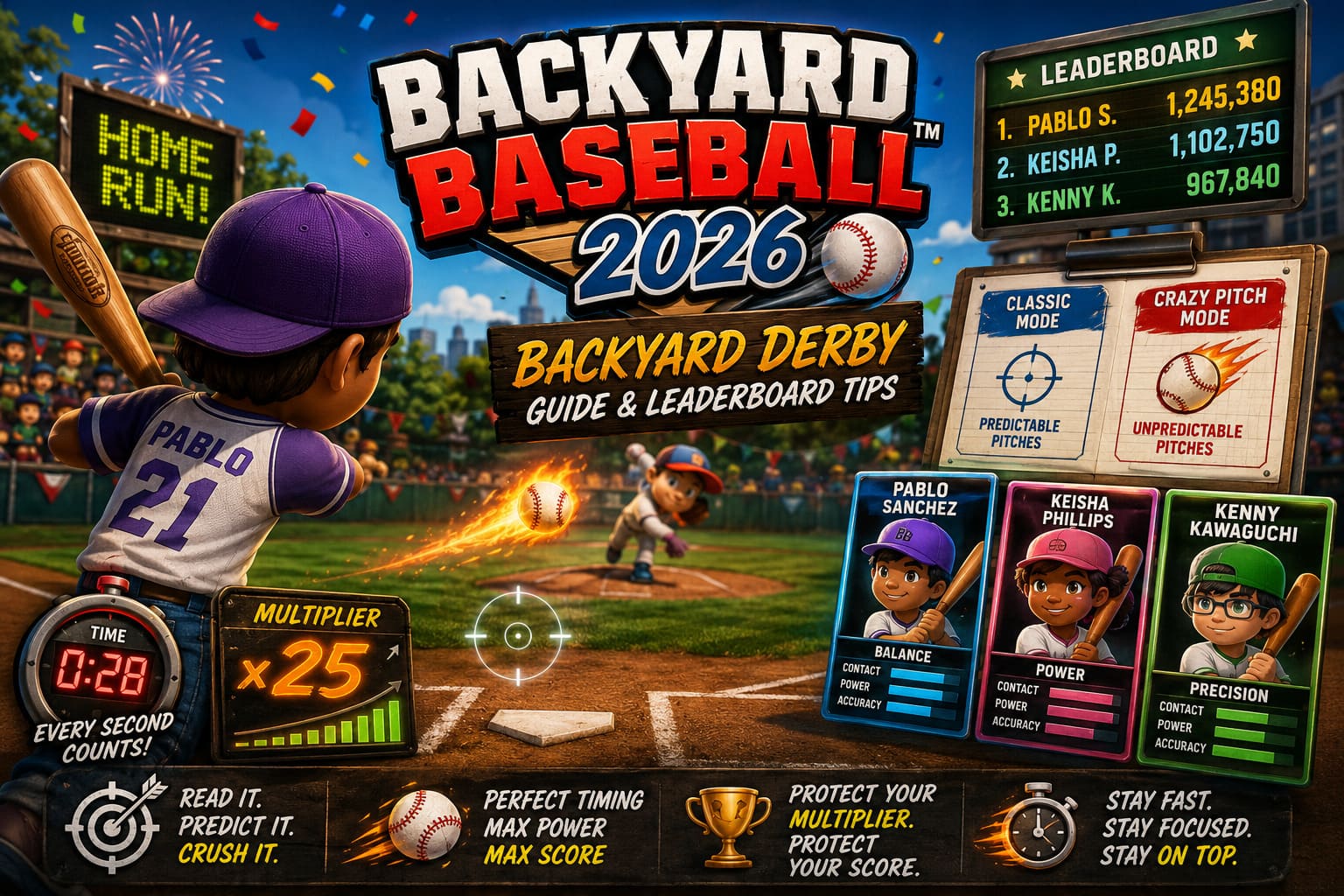
The countdown never stops, meaning every second matters. Every hesitation costs valuable opportunities, and every successful swing pushes your score dramatically higher.
Your total score depends on several factors working together:
- Home run distance
- Perfect contact timing
- Active score multiplier
- Number of successful consecutive homers
Missing the baseball doesn’t simply waste one pitch.
It destroys momentum.
A weak ground ball, a lazy popup, or a complete whiff immediately resets your multiplier, which is exactly why experienced players often outperform newcomers by tens of thousands of points despite hitting a similar number of home runs.
That multiplier is where the leaderboard is really won.
Two Derby Modes That Feel Completely Different
One feature I genuinely appreciate is that Backyard Derby doesn’t become repetitive after a handful of matches.
Instead, the developers created two distinct experiences.
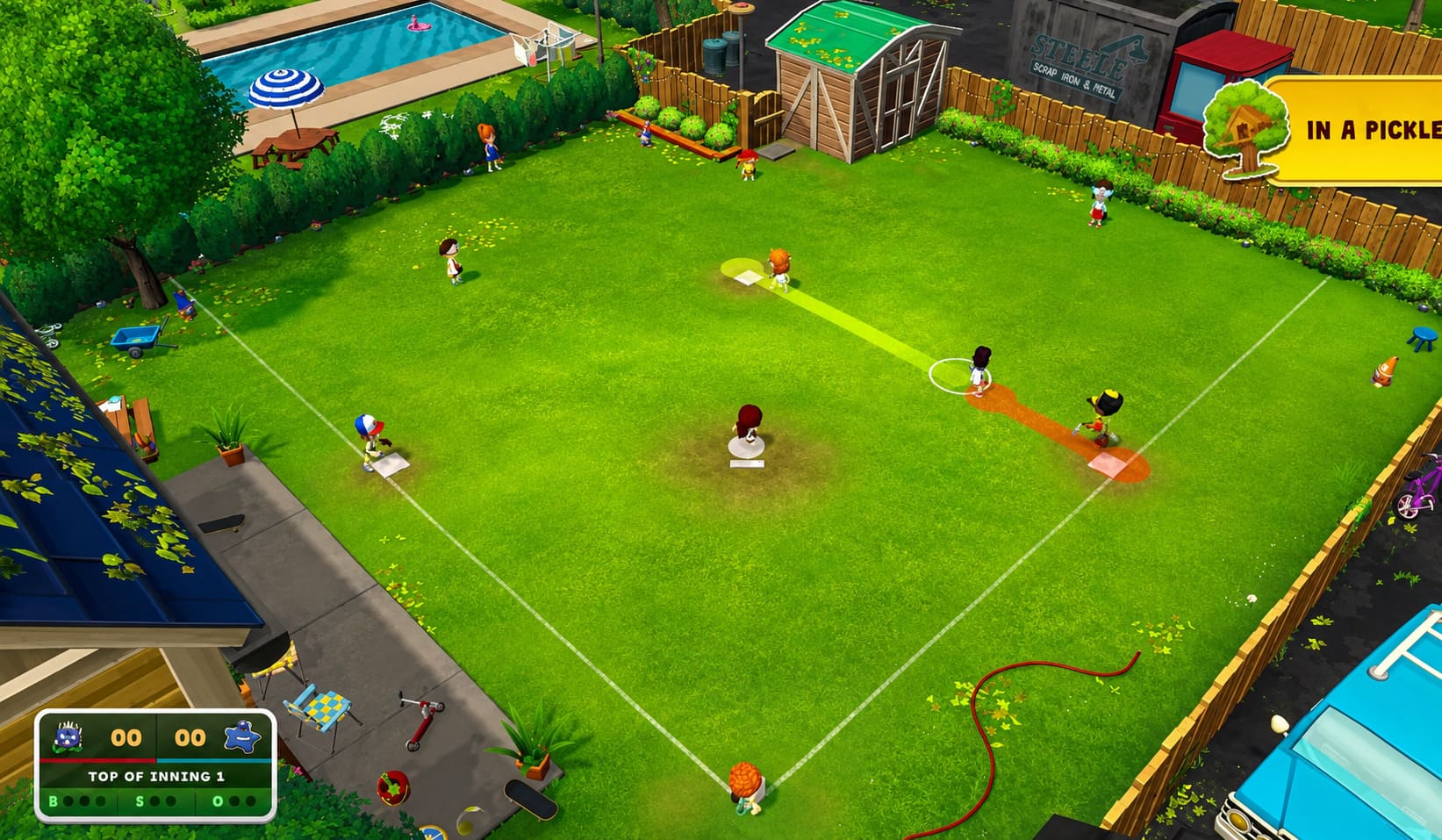
| Mode | Difficulty | Best For | Biggest Challenge |
|---|---|---|---|
| Classic Mode | Medium | Learning mechanics | Perfect timing |
| Crazy Pitch Mode | Hard | Experienced players | Reading unpredictable pitches |
Classic Mode
Classic Mode feels familiar from older Backyard Baseball titles.
Pitch locations remain relatively predictable, allowing players to build rhythm over time. If you’re still learning batting mechanics or trying to improve consistency, this is absolutely the place to practice.
The challenge isn’t reading impossible movement.
It’s becoming mechanically perfect.
Every swing should become muscle memory.
Crazy Pitch Mode
This mode is where things become wonderfully chaotic.
- Fireballs
- Wild breaking pitches
- Completely unexpected movement
- Spitballs
Some pitches almost seem designed to make you panic.
Crazy Pitch Mode constantly tests reaction speed instead of memorization. After enough practice you’ll begin recognizing pitch behavior almost immediately after the ball leaves the pitcher’s hand.
Once that happens, your scores increase dramatically.
The Best Players for Backyard Derby
Backyard Baseball has always featured memorable personalities, but not every kid is equally effective inside Derby Mode.
After extensive community testing and my own runs, these three consistently stand above the rest.
| Character | Biggest Strength | Best Use |
|---|---|---|
| Pablo Sanchez | Elite contact and power balance | Overall best choice |
| Keisha Phillips | Incredible home run distance | Maximum point potential |
| Kenny Kawaguchi | Excellent precision | Crazy Pitch consistency |
Pablo Sanchez
Some legends never fade.
Pablo remains the complete package.
His swing animation feels incredibly natural, his contact window is forgiving, and his power is more than enough to launch baseballs deep into the stands repeatedly.
More importantly, Pablo allows players to maintain long multiplier streaks because he rarely feels awkward or inconsistent.
If you’re chasing your very first leaderboard-worthy score, Pablo is still the safest option.
Keisha Phillips
Distance equals points.
Keisha absolutely crushes baseballs.
When everything connects perfectly, she produces some of the biggest home runs available in the game.
Her timing window demands slightly more precision than Pablo’s, but once mastered, the reward is obvious.
Several of my highest single-hit scores came while using Keisha.
Kenny Kawaguchi
Kenny surprises a lot of people.
He’s traditionally remembered for pitching, yet Backyard Derby gives him an extremely compact swing that works beautifully against unpredictable pitches.
His smaller strike zone allows experienced players to react later without sacrificing accuracy.
Crazy Pitch Mode feels significantly more manageable with Kenny.
Learn to Read Every Pitch Immediately
One mistake I constantly see from newer players is reacting too late.
They wait until the baseball reaches the plate before adjusting their cursor.
By then it’s already over.
The updated batting system rewards anticipation far more than reaction.
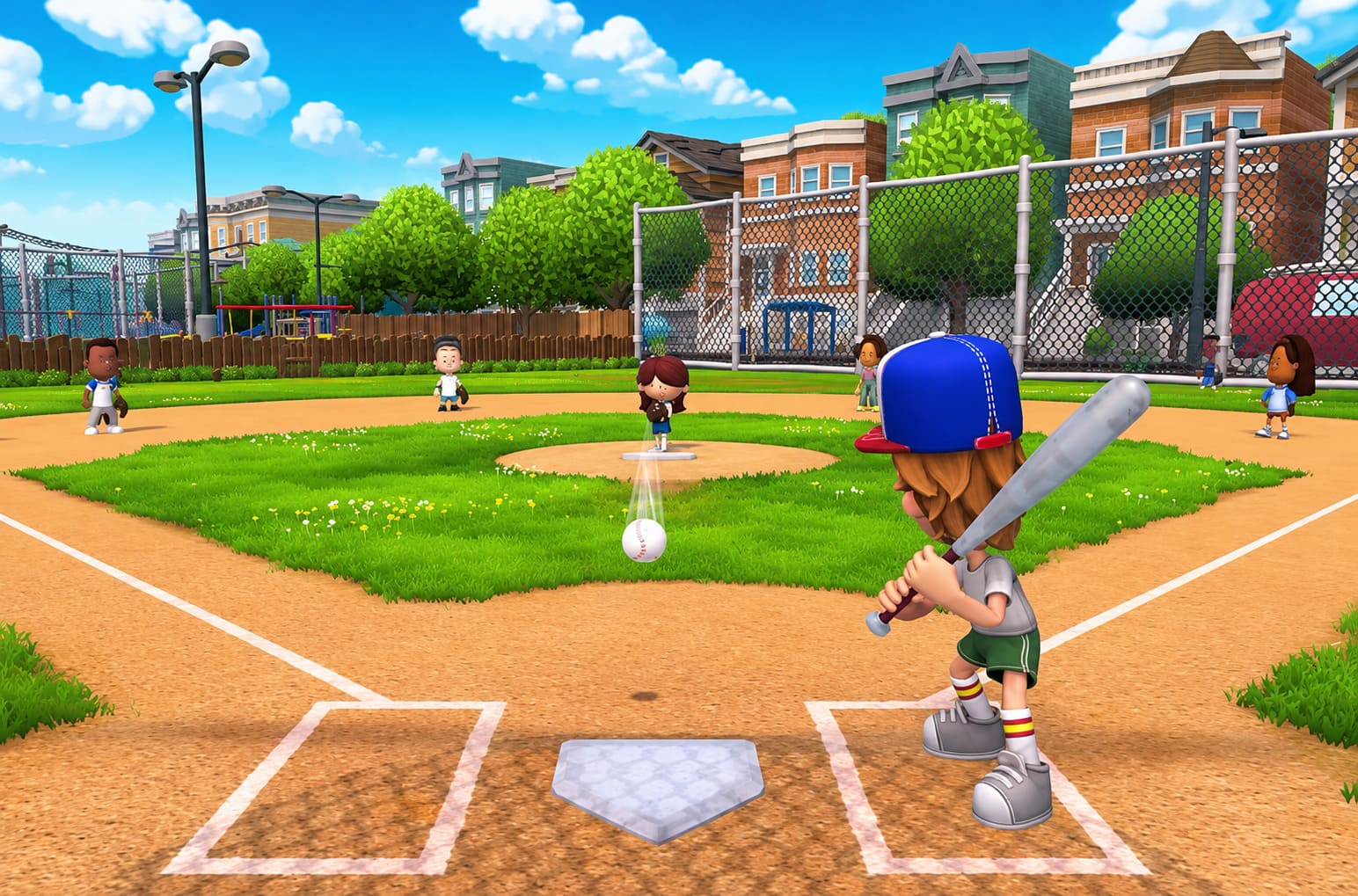
Instead of following the ball during the entire flight, begin identifying its path almost instantly after release.
Watch the first movement.
Notice the break.
Predict where it will finish.
Then smoothly guide your aiming reticle toward that location instead of chasing it.
That tiny mental adjustment completely transformed my consistency.
Timing Is Everything
People love talking about power ratings.
Personally, I think timing matters even more.
A perfectly timed swing can turn an ordinary pitch into a towering blast that disappears beyond the fences.
Swing a fraction too early?
You’ll often pull the ball awkwardly.
Swing late?
Expect shallow fly balls or harmless line drives.
Backyard Baseball 2026 includes surprisingly satisfying visual and audio feedback.
The crack of the bat immediately tells you whether you connected cleanly.
Pay attention to those sounds.
Your ears become just as valuable as your eyes after enough practice.
Never Sacrifice Your Multiplier
This is probably the biggest difference between average players and leaderboard regulars.
The multiplier isn’t just another bonus.
It’s the entire scoring system.
Imagine hitting ten consecutive home runs.
Now imagine losing the multiplier because you desperately swung at a terrible pitch.
Those lost bonus points usually outweigh the value of one extra swing.
Sometimes the smartest decision is doing absolutely nothing.
If the pitch looks impossible to square up during Crazy Pitch Mode, letting it pass can actually preserve your run.
That feels strange initially.
Later, it becomes second nature.
Speed Between Swings Matters More Than You Think
Most people naturally watch their home runs fly into the distance.
I get it.
They’re satisfying.
But leaderboard players don’t have that luxury.
Every celebration costs precious seconds.
Reset your cursor immediately.
Prepare for the next pitch.
Ignore the fireworks.
Ignore the crowd.
The clock never waits.
Across an entire session, those saved moments often translate into several additional swings, which can mean thousands of extra points.
Batting Practice Is More Valuable Than Most Players Realize
I honestly spent far more time in Batting Practice than I expected.
Not because it’s exciting.
Because it works.
Enable randomized pitches.
Practice without worrying about scores.
Experiment with different hitters.
Learn exactly how each batting animation feels.
Simple stadium backgrounds also help eliminate visual distractions, allowing you to focus entirely on pitch movement.
When you finally return to Backyard Derby, everything feels noticeably slower.
That’s exactly what you want.
Small Adjustments That Produce Huge Scores
You don’t always need dramatic improvements.
Sometimes tiny optimizations make the biggest difference.
- Keep your cursor moving smoothly instead of making sudden corrections.
- Learn your chosen hitter instead of constantly switching characters.
- Watch the pitcher rather than the baseball during the release animation.
- Stay calm after mistakes instead of rushing the following swings.
- Practice Crazy Pitch Mode regularly, even if it feels frustrating at first.
Consistency beats randomness every single time.
Backyard Baseball 2026 Unlock Guide: How to Get All 30 Backyard Kids and Secret Legends
Why Backyard Derby Is So Addictive
What surprised me most wasn’t the gameplay itself.
It was the mentality the mode creates.
Every run feels like “one more attempt.”
Maybe you’ll extend the multiplier.
Maybe you’ll finally break your personal record.
Maybe this is the run where everything clicks.
Before long you’ve spent another hour chasing numbers without realizing it.
That’s exactly why Backyard Derby works.
It transforms a simple batting challenge into a competitive loop where every improvement feels earned.
Whether you’re revisiting Backyard Baseball for nostalgia or discovering the series for the first time, Derby Mode easily becomes one of the strongest reasons to keep coming back.
Backyard Baseball 2026 Online Multiplayer Setup Guide: Mega Cat Studios
Final Verdict
Backyard Baseball 2026 successfully captures the spirit that made the original games unforgettable while introducing a modern competitive hook that feels surprisingly rewarding. Backyard Derby isn’t about randomly smashing baseballs over the fence—it’s about precision, rhythm, smart decision-making, and maintaining relentless consistency under pressure.
Choose a batter that fits your playstyle, master pitch recognition, protect your multiplier like it’s your most valuable asset, and never waste time admiring your own home runs. The players dominating the global leaderboard aren’t necessarily hitting farther than everyone else—they’re simply making fewer mistakes.
If you’re willing to invest the practice, refine your timing, and learn every subtle mechanic the mode offers, there’s absolutely no reason your name can’t climb alongside the best sluggers in Backyard Baseball 2026. Once that first truly massive score appears on the leaderboard, you’ll understand why so many players keep saying, “Just one more run.”