Moonlight Peaks Crafting & Farm Helpers Guide
When I first jumped into Moonlight Peaks, I expected another relaxing farming simulator with darker colors and a few spooky decorations. Instead, I found something that feels surprisingly fresh. The biggest difference isn’t simply that you’re a vampire—it’s that the entire rhythm of the game flips the traditional farming formula upside down.
You don’t wake up with the sunrise to water tomatoes. Your day begins when everyone else is going to sleep.
From 6 PM until 6 AM, every minute matters. Whether you’re mining for rare ores, growing supernatural crops, brewing magical potions, or building an army of automated helpers, the game constantly rewards efficient planning. After dozens of nights experimenting with different layouts and production chains, I realized one thing: the players who become rich aren’t the ones farming harder—they’re the ones automating smarter.
This guide isn’t just another recipe list. It’s my personal breakdown of every important crafting station and Farm Helper, along with the strategies I wish I had known much earlier.
Why Automation Matters More Than Farming
Unlike many cozy farming games where machines simply save a few seconds, automation in Moonlight Peaks becomes the core of your entire economy.
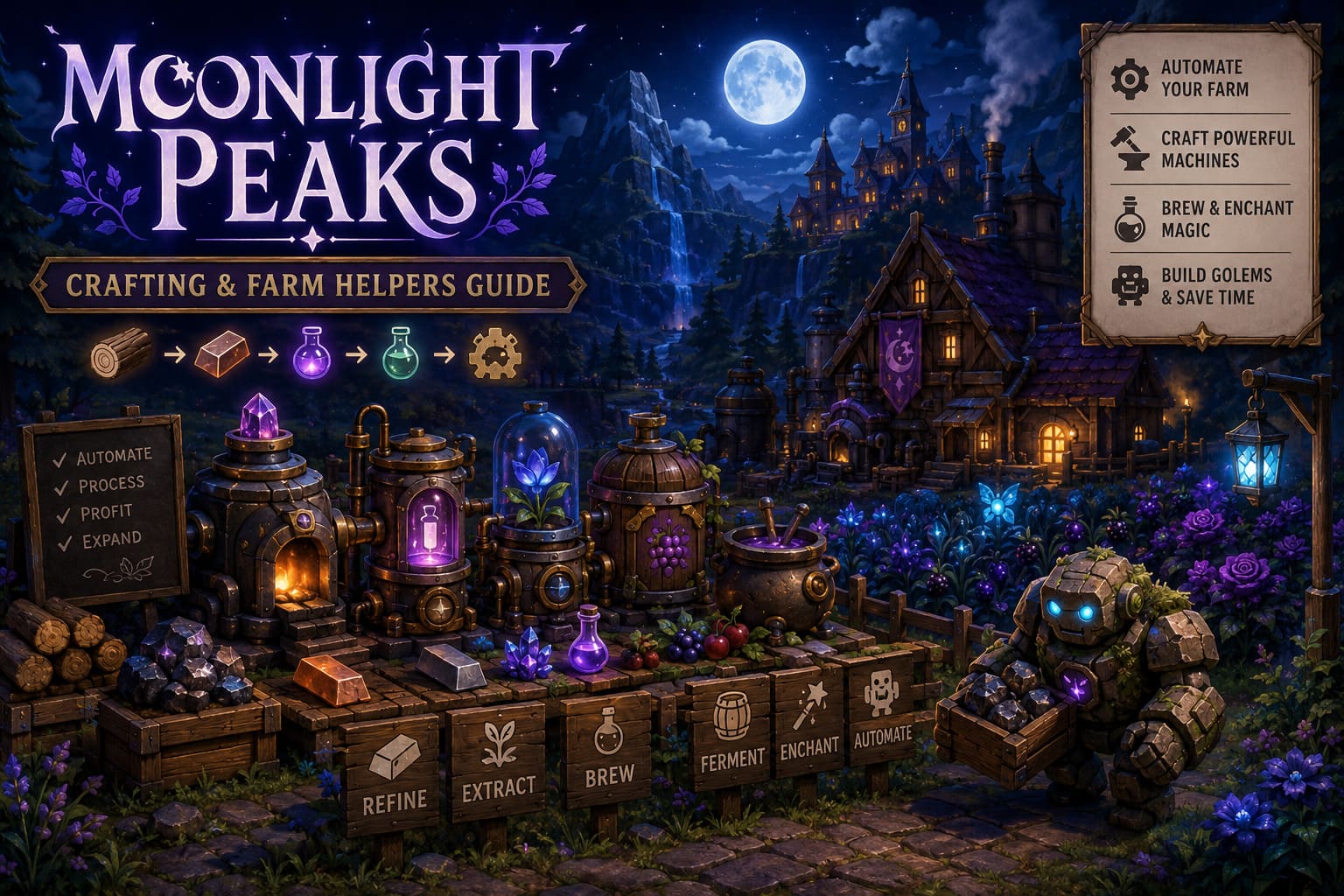
Your playable nights are relatively short, which means wasting time walking across the farm or manually crafting every material quickly becomes expensive. Once several processing machines are running simultaneously, your farm almost starts feeling alive on its own.
The biggest lesson I learned?
Never sell raw resources if you can process them first.
Almost every resource becomes significantly more valuable after one or two production steps.
For example:
| Raw Material | Better Processing | Final Purpose |
|---|---|---|
| Deadwood Logs | Wooden Planks | Construction & machines |
| Copper Ore | Copper Bars | Upgrades & crafting |
| Iron Ore | Iron Bars | Advanced machinery |
| Blood Cherries | Vampire Nectar | High-value artisan goods |
| Moonflowers | Night Essence | Magical crafting |
That simple production chain eventually becomes the foundation of everything else.
The Workbench Is More Important Than It Looks
Most players treat the Workbench like the standard beginner crafting table before moving on.
I think that’s a mistake.
The Workbench quietly stays relevant throughout almost the entire game because almost every advanced machine still depends on components crafted there first.
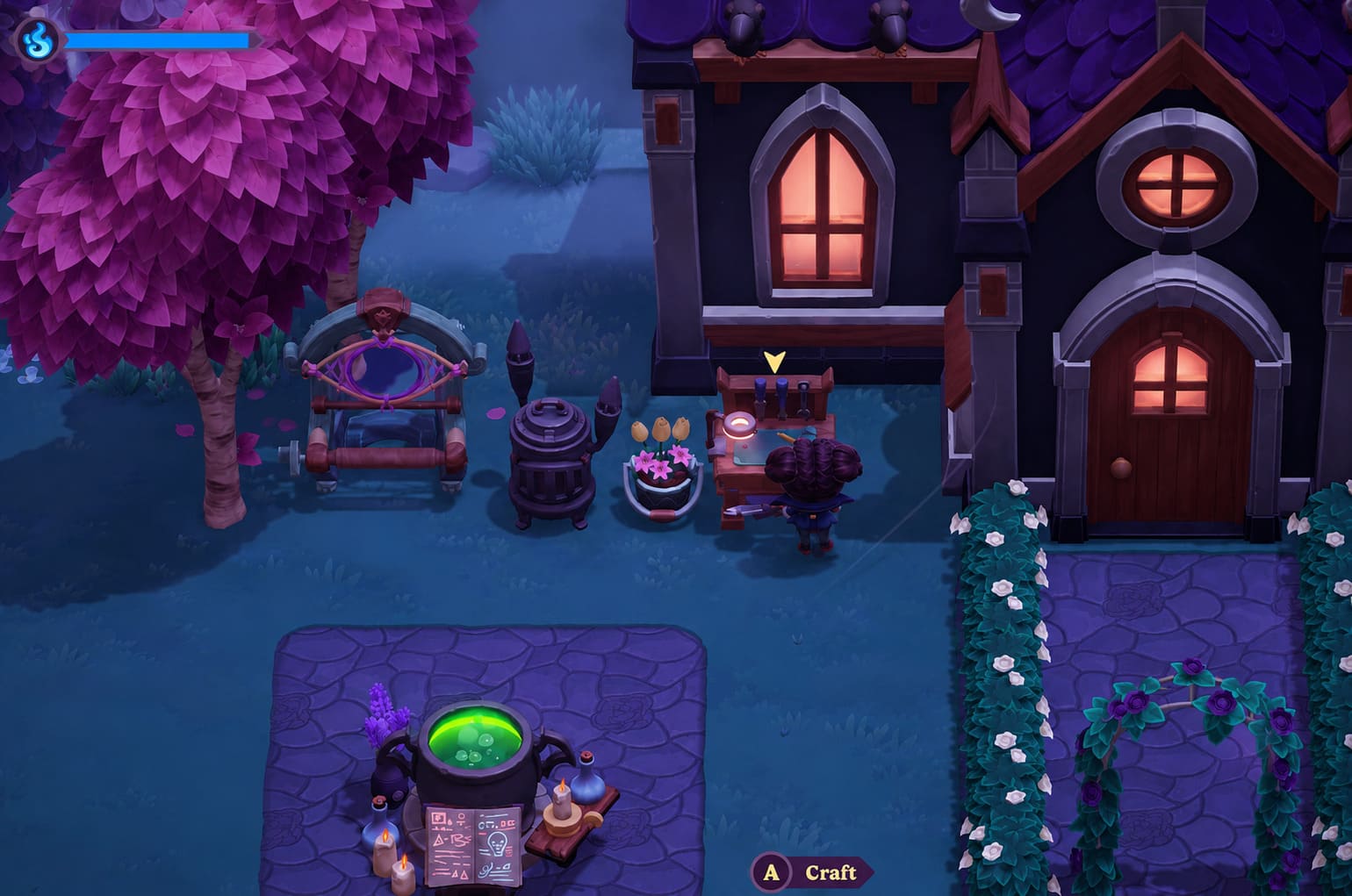
Some of the most useful recipes include:
- Wooden Planks from Deadwood Logs
- Stone Bricks for stronger construction
- Copper Nails
- Iron Fasteners
- Storage Chests
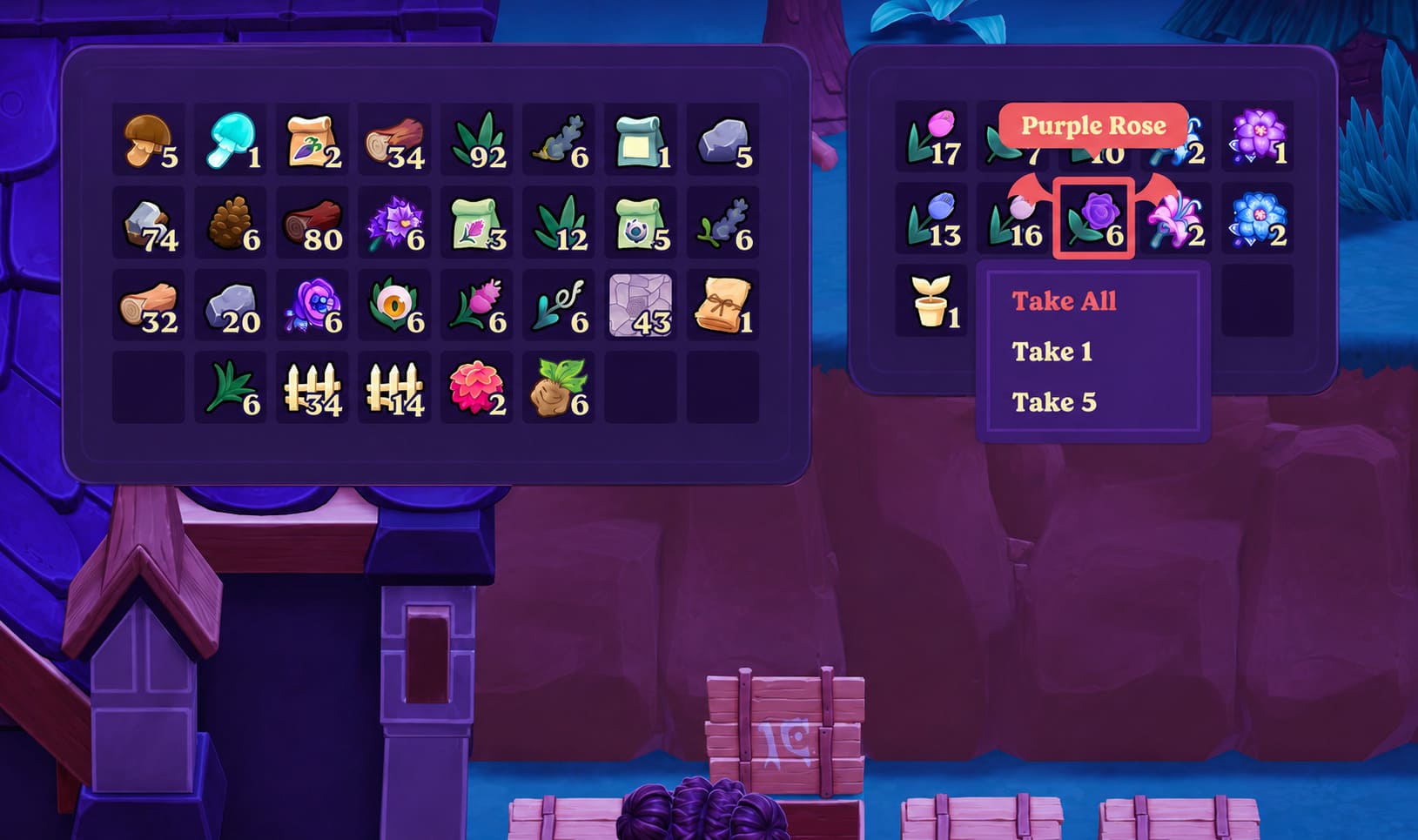
One feature I absolutely appreciate is the shared storage integration. Instead of constantly opening five different chests looking for materials, crafting automatically pulls ingredients from your connected inventory.
It’s one of those quality-of-life systems that doesn’t sound exciting on paper but feels amazing after playing for several hours.
Arcane Smelter: The Machine You’ll Visit Every Night
Mining quickly becomes addictive in Moonlight Peaks.
Unfortunately, raw ore doesn’t accomplish much until it reaches the Arcane Smelter.
Here’s a simplified overview.
| Ore | Required Materials | Processing Time | Output |
|---|---|---|---|
| Copper Ore | Ore + Coal Fragment | 30 min | Copper Bar |
| Iron Ore | Ore + Coal Fragments | 1 hour | Iron Bar |
| Silver Ore | Ore + Night Essence | 2 hours | Silver Bar |
| Gold Ore | Ore + Night Essence | 3 hours | Gold Bar |
| Iron Bars + Obsidian | Additional rare materials | 5 hours | Shadowsteel Bar |
Shadowsteel deserves special attention.
By the time you can consistently produce it, the game starts opening its strongest machines and late-game automation systems. I personally stopped worrying about money shortly after building a reliable Shadowsteel production line.
My Favorite Machine: The Seed Extractor
I honestly underestimated this machine.
At first I kept purchasing seeds from merchants because it felt easier.
Huge mistake.
The Seed Extractor quietly becomes one of the best investments in the game.
Insert a mature supernatural crop and receive multiple seeds back.
Supported crops include:
- Midnight Rose
- Ghost Pepper
- Shadow Berry
The processing time isn’t especially long, and after several harvests you’ll notice your dependence on merchants almost disappears.
That means more profit staying in your pocket.
Potion Brewing Feels Surprisingly Useful
Some farming games include potions that barely matter.
Moonlight Peaks actually makes them worthwhile.
The Potion Cauldron produces helpful consumables like:
| Potion | Ingredients | Effect |
|---|---|---|
| Stamina Elixir | Glow Shrooms, Night Essence, Water | Longer mining sessions |
| Speed Brew | Shadow Berries, Swift Tail, Water | Faster movement |
The Speed Brew became part of my nightly routine.
Those few extra seconds saved while running between machines, mines, and crop fields really add up over dozens of nights.
Essence Extraction Powers the Entire Magical Economy
The Essence Extractor is basically the magical equivalent of an oil refinery.
Without it, many advanced recipes simply stop existing.
Two important production paths are available:
| Input | Output |
|---|---|
| Moonflowers | Night Essence |
| Fire Lilies | Flame Essence |
Night Essence especially becomes a bottleneck later in the game.
If I could restart my save, I’d build multiple Essence Extractors much earlier than I actually did.
Waiting for essence production quickly becomes frustrating once larger crafting projects begin.
Fermentation Is Where the Big Money Starts
This machine completely changed how I sold crops.
Instead of shipping raw fruit, the Fermentation Barrel transforms harvests into premium artisan beverages.
Some notable recipes include:
- Vampire Nectar
- Midnight Cider
The downside?
They’re slow.
A full batch requires 12 in-game hours, meaning planning becomes important.
The upside is obvious once you compare selling prices.
High-quality beverages consistently outperform their raw ingredients, making fermentation one of the safest long-term investments.
Spellweaver Altar Makes Farming Feel Magical
This is probably my favorite “fantasy” feature in the game.
Rather than manually performing repetitive chores, the Spellweaver Altar creates magical spell tokens.
Examples include:
| Spell | Main Purpose |
|---|---|
| Mass Water Spell | Waters large crop areas instantly |
| Harvest Blast | Collects mature crops in bulk |
It’s difficult to overstate how satisfying these feel.
Large crop fields that once required constant attention suddenly become manageable with a single spell.
That shift makes expanding your farm feel exciting instead of overwhelming.
The Golem Fabricator Is the Ultimate Endgame Reward
Eventually, you’ll unlock the machine that genuinely transforms your farm into an automated estate.
The Golem Fabricator creates autonomous helpers capable of handling repetitive chores.
Available variants include:
- Mining Golem
- Foraging Golem
These little workers clear stones, remove weeds, and collect dropped resources while you focus elsewhere.
Watching several golems patrol the property almost feels like reaching a completely different stage of the game.
They’re expensive.
Very expensive.
But they’re worth every Shadowsteel Bar.
Echoes of Aincrad Sentry Golem Boss Guide: How to Beat the First Major Threat
Machine Reference Table
| Machine | Main Function | Typical Processing Time |
|---|---|---|
| Workbench | Basic crafting | Instant |
| Arcane Smelter | Metal refinement | 30 min–5 hrs |
| Seed Extractor | Seed duplication | 45 min |
| Potion Cauldron | Potion brewing | 1 hr |
| Essence Extractor | Magical essence | 2 hrs |
| Fermentation Barrel | Artisan beverages | 12 hrs |
| Spellweaver Altar | Spell creation | 3 hrs |
| Golem Fabricator | Automated helpers | 24 hrs |
Practical Tips That Made My Farm More Efficient
After experimenting with several farm layouts, a few habits consistently produced better results.
- Keep machines close together. Walking wastes more time than most players realize. A compact production district beside your main storage dramatically improves efficiency.
- Avoid selling raw resources. Almost everything becomes more profitable after processing.
- Build duplicate machines. One smelter feels enough early on, but later you’ll wish you had several running simultaneously.
- Start producing magical essences early. You’ll eventually need much more than expected.
- Automate before expanding. Adding more crop fields without enough processing machines usually creates bottlenecks rather than increasing profits.
Final Thoughts
What surprised me most about Moonlight Peaks is how naturally automation fits into its gothic atmosphere.
Instead of feeling industrial or mechanical, every machine somehow complements the supernatural setting. Smelters glow with magical energy, cauldrons bubble with mysterious brews, and enchanted golems wander your property while the moon hangs overhead. It’s a refreshing twist on the familiar farming simulator formula.
If I had to point to one reason the game stands out from other cozy farming titles, it would be its sense of progression. Early on, you’re chopping deadwood by hand and counting every ore you mine. Dozens of nights later, your estate runs like a carefully orchestrated machine, with production lines feeding into one another, magical essences powering advanced crafting, and loyal golems handling the repetitive work while you focus on exploration or building new projects.
For newcomers, my biggest recommendation is simple: invest in infrastructure before chasing profit. The temptation to sell every valuable crop or shiny ore is strong, but patience pays off. Turn logs into planks, ores into bars, flowers into essences, and harvests into artisan products. Every extra processing step makes your economy stronger, and eventually you’ll reach a point where Evernight coins stop being a problem altogether.
Moonlight Peaks isn’t just about growing strange crops under the moonlight—it’s about designing a self-sustaining supernatural workshop where every machine has a purpose and every night feels productive. Once all your crafting stations, Farm Helpers, and production chains begin working together, the game reveals its real strength. That’s the moment when your humble vampire homestead evolves into one of the most efficient—and satisfying—farms the genre has to offer.