Guns of Eschaton Multiplayer PvP Mode: The Ultimate Breakdown of This Occult Soulslike FPS
The announcement of Guns of Eschaton has sparked a rare kind of excitement that you usually only see when a genre tries to reinvent itself from the ground up. Developed by Eschatology Entertainment and published by 4Divinity, the game is being described as the first true “Soulslike FPS,” which already sets expectations dangerously high. From what has been shown so far, it isn’t just another dark shooter with moody aesthetics—it’s trying to rebuild the rules of gunplay entirely. Having spent years jumping between competitive shooters, extraction games, and Soulslike titles, it’s hard not to see why this project stands out immediately.
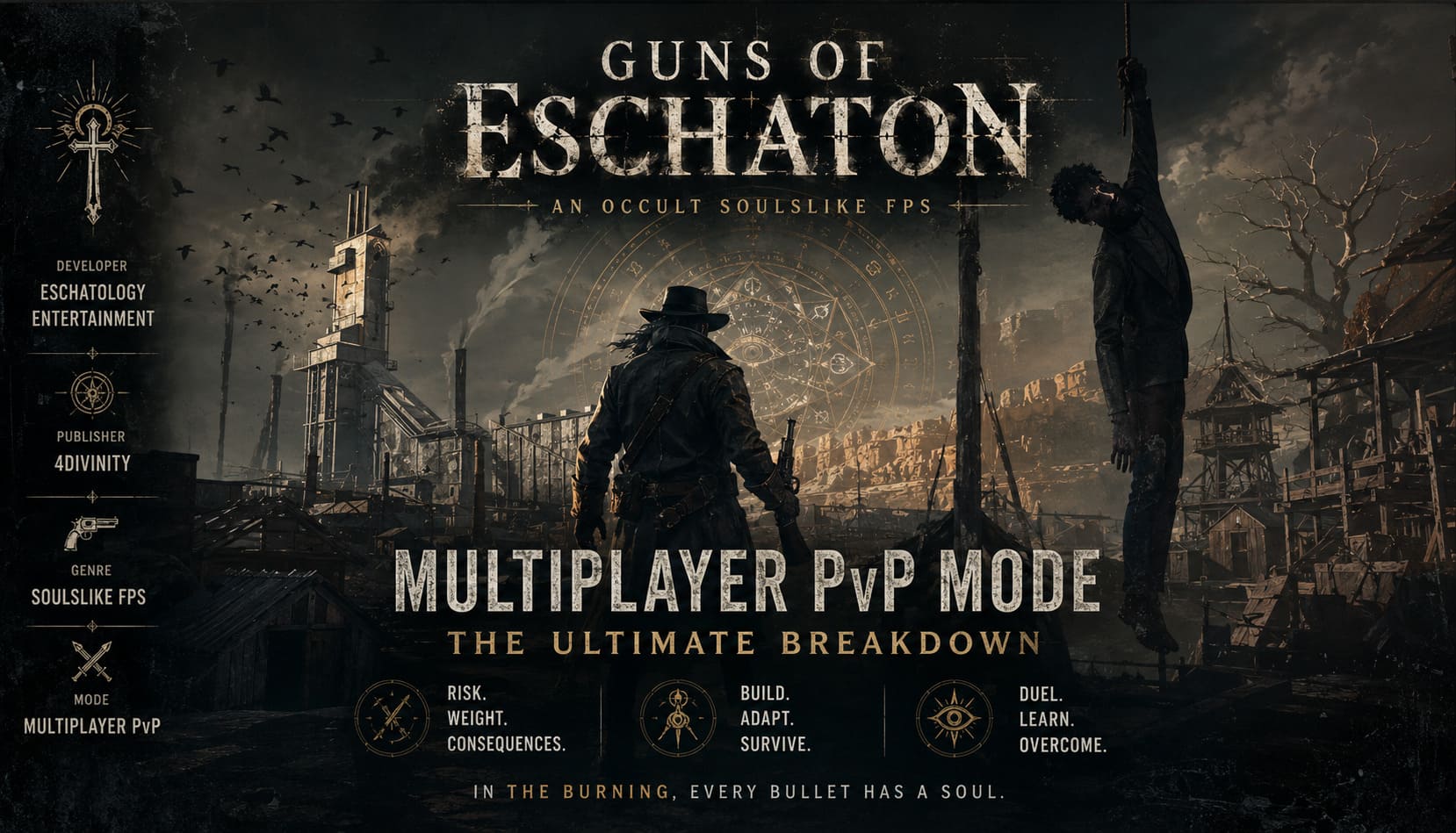
What really pushes the conversation forward, though, is the multiplayer PvP component. Instead of treating PvP as an optional side mode, Guns of Eschaton appears to weave it directly into its core identity. The result is a system that doesn’t just reward aim, but punishes carelessness in a way that feels closer to dueling in Dark Souls than anything in traditional FPS design. That alone makes it one of the most interesting upcoming competitive shooters in recent memory.
Guns of Eschaton vs Hunt Showdown: 5 Striking Similarities You Cannot Ignore
A PvP Philosophy Built on Weight, Risk, and Consequences
Unlike most fast-paced shooters where movement speed and reflexes dominate, Guns of Eschaton seems to deliberately slow the tempo down. Every encounter is framed around consequence rather than repetition. Based on available developer notes and trailer analysis, each bullet carries weight—not just mechanically, but tactically and emotionally.
In practice, this means PvP fights aren’t about spraying and repositioning endlessly. Instead, players must manage stamina, reload timing, and positioning with almost surgical precision. A missed shot doesn’t just cost damage; it can fully expose your tactical weakness. From my perspective as someone used to arena shooters, this shift feels closer to a duel than a firefight, and that alone will divide players quickly.
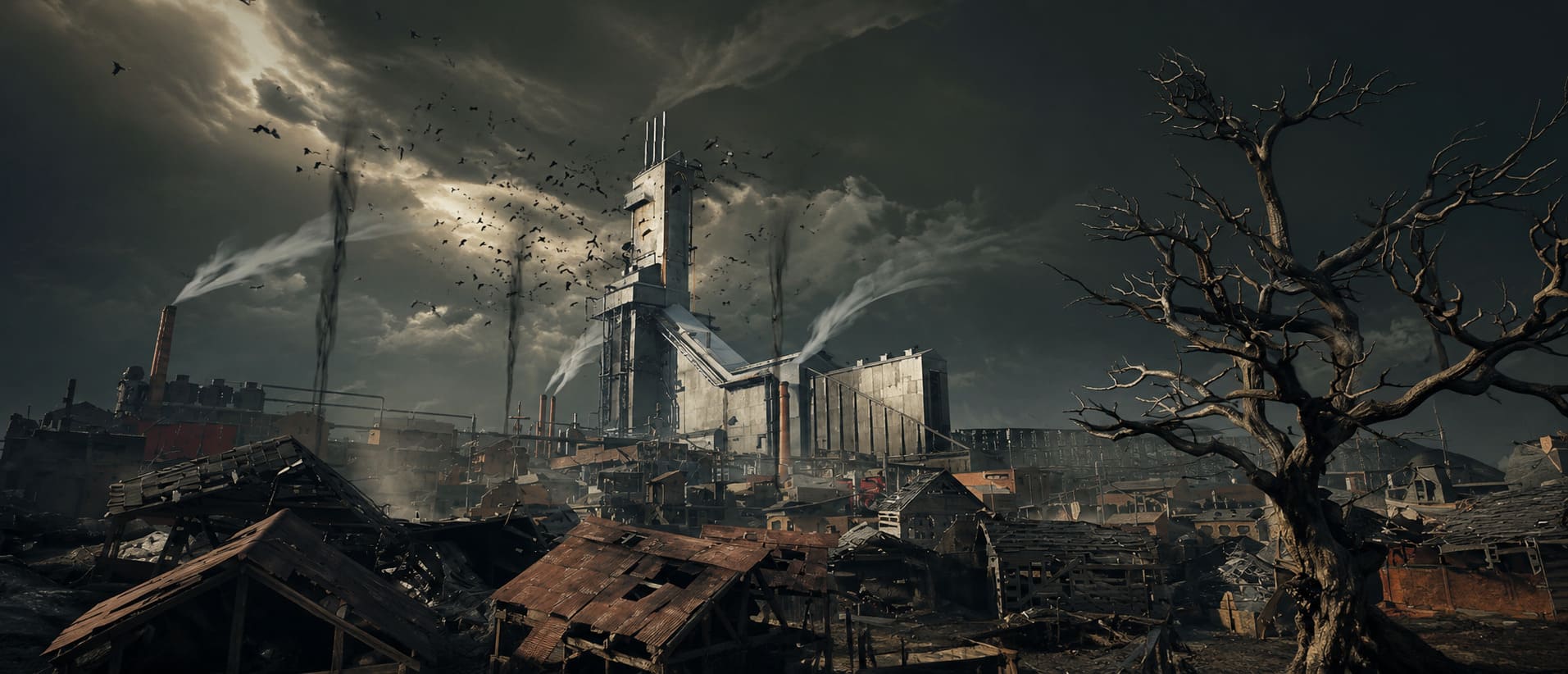
The game’s setting, known as The Burning, reinforces this design philosophy. It’s not a battlefield built for chaos—it’s built for tension. Every encounter feels like both players are waiting for the other to commit a mistake rather than racing to outgun each other.
Invasions or Arenas? The Community Debate
One of the biggest unanswered questions revolves around how PvP is actually structured. The community is heavily split between two interpretations: a Soulslike-style invasion system or a more traditional arena setup. The official descriptions hint at both possibilities, which has only fueled speculation further.
A lot of players believe the game will feature organic invasions, where players can enter another person’s campaign and disrupt their progress. This would mirror systems seen in Elden Ring or Dark Souls, where unpredictability is part of the tension. Imagine carefully progressing through an occult frontier only to be hunted by another player using knowledge of the environment against you.
At the same time, there’s strong evidence pointing toward structured PvP arenas as well. These would allow for controlled, balanced duels where builds can be tested fairly without environmental interference. Given how deep the customization system appears to be, it would actually make sense for the developers to include both formats.
PvP Structure Comparison
| PvP Type | Structure | Player Experience |
|---|---|---|
| Invasion System | Organic campaign entry | Unpredictable, high tension, survival-focused |
| Arena Duels | Controlled matchmaking zones | Competitive, balanced, build-testing focused |
A hybrid system would likely be the most logical outcome, combining unpredictability with structured competition.
Buildcrafting and the Importance of Preparation
Where Guns of Eschaton really starts to separate itself from standard FPS design is in its buildcrafting system. This is not a game where you simply pick a loadout and jump into matches. Your preparation defines your success just as much as your mechanical skill.
Weapons reportedly include more than 20 historically inspired firearms, each with unpredictable behavior. Some may misfire under stress, while others require strict rhythm-based handling. That alone introduces a layer of uncertainty most shooters completely avoid.
Players will also need to consider custom ammunition types, occult progression paths, and armor configurations. These systems are not cosmetic—they directly affect damage, survivability, and mobility in combat.
- Custom Ammunition – alters damage profiles and combat tempo
- Sacramental Skill Paths – occult abilities that reshape combat rules
- Armor and Talismans – affect stamina, weight, and survivability
Defensive Play: Timing Over Reflex
One of the most surprising design choices is how defense is handled. Instead of relying on traditional cover-based mechanics or movement spam, Guns of Eschaton introduces timing-based systems such as parries, micro-dashes, and precision dodges.
In PvP, this creates a very different mindset. A perfectly timed parry can completely reverse the flow of combat, turning defense into an aggressive counterplay tool rather than a passive survival option. It shifts the focus from pure reaction speed to anticipation and reading opponent behavior.
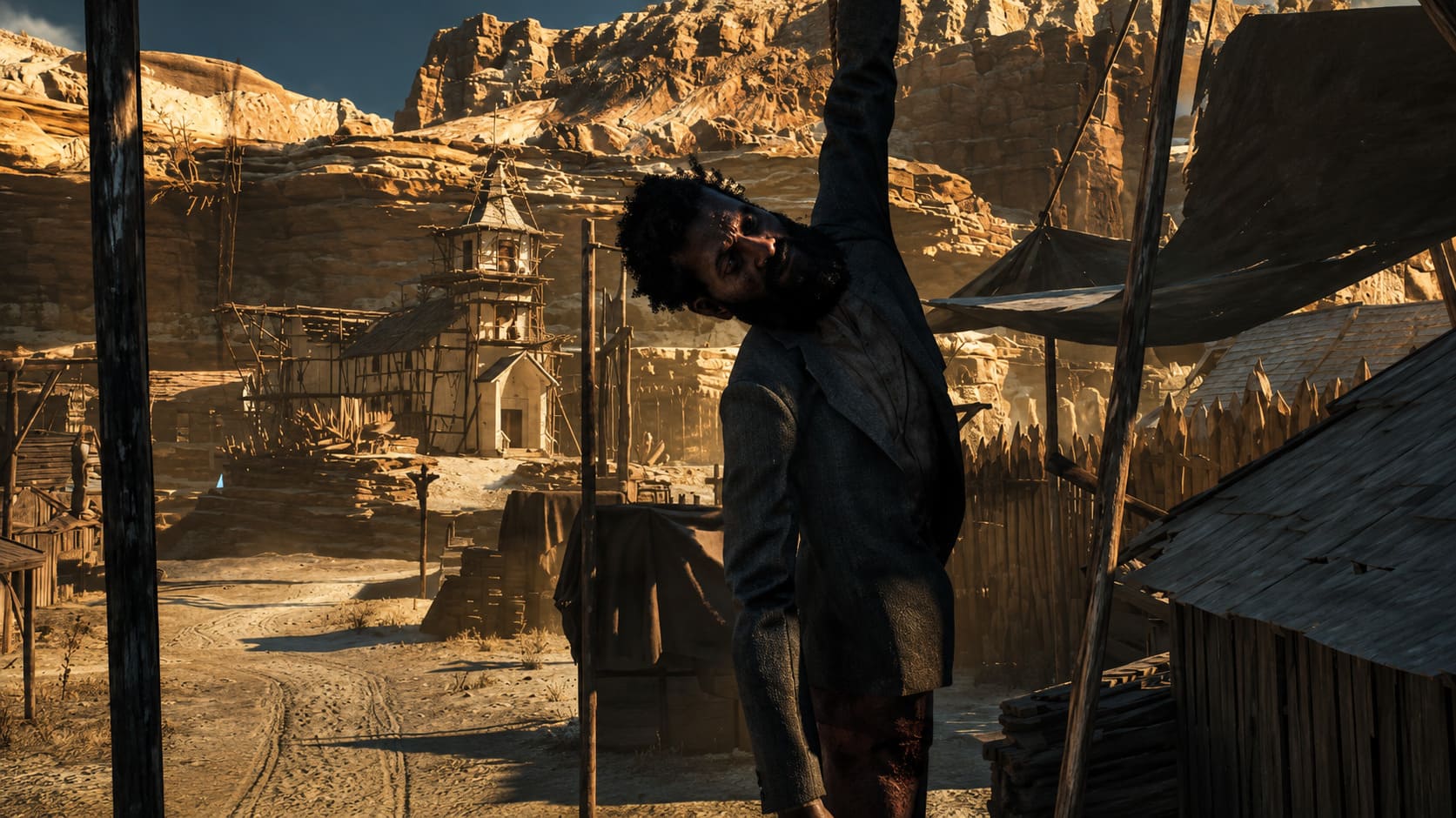
There is also mention of a lore-driven system known as the Cherokee Codex, which may play a role in identifying enemy weaknesses. If implemented in PvP, it could reward deep knowledge of builds and weapon interactions rather than raw mechanical execution alone.
Competitive Future and Final Thoughts
From everything currently known, Guns of Eschaton is shaping up to be less of a traditional shooter and more of a tactical dueling ecosystem. It asks players to slow down, think, and accept consequences instead of relying on repetition and speed. That alone positions it in a very unusual space between hardcore FPS games and Soulslike RPGs.
If the developers manage to balance its systems correctly, the PvP scene could evolve into something highly skill-dense and theory-driven. Instead of just aim training, players might spend time studying build interactions, ammunition effects, and defensive timing windows.
It’s still too early to say whether it will fully deliver on this vision, but the foundation is undeniably ambitious. And in a genre where innovation is often incremental rather than radical, that ambition is exactly what makes it worth watching.