Does Gothic Remake Have Quest Markers? Navigation and Immersion Explained!
There’s something fascinating happening around the upcoming Gothic Remake. Every time a new gameplay preview appears online, the same argument explodes across Reddit, Steam forums, and YouTube comments:
“Wait… there are really no quest markers?”
After spending years playing modern open-world RPGs packed with glowing arrows, mini-map trails, GPS compasses, and objective spam, I honestly forgot what it felt like to navigate a game world using memory and attention instead of UI overlays.
And the more I look into the direction Alkimia Interactive is taking, the more I think this decision might become the remake’s biggest strength.
Not because it’s nostalgic.
Not because “old games were harder.”
But because modern RPGs often train players to stop truly seeing the world.
Gothic Remake Collector’s Edition: PC Price & Pre-Order Guide
A World You Actually Need to Learn
Most modern RPGs are built around efficiency. Games like The Witcher 3, Cyberpunk 2077, or many recent Ubisoft titles constantly feed players information through icons and HUD systems. You rarely get lost because the game never allows you to.
The Gothic Remake appears to be doing the opposite.
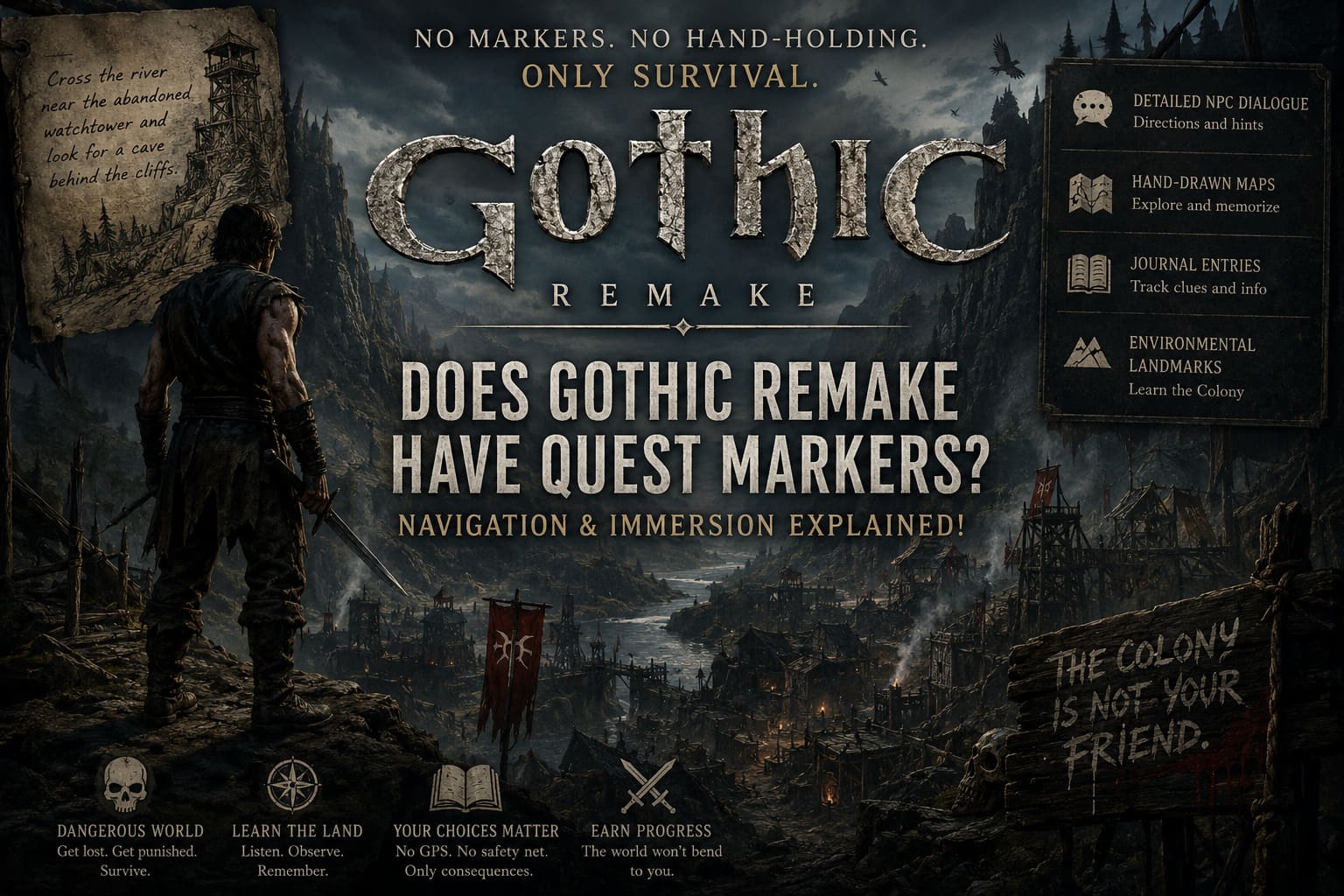
Instead of placing giant arrows over objectives, the game reportedly expects players to listen carefully to NPC dialogue, memorize roads and landmarks, read journal notes, and physically explore the Colony.
That sounds simple on paper, but in practice it changes the entire rhythm of gameplay.
In most modern RPGs, I often skip dialogue because I know the marker will guide me anyway. The conversation becomes background noise. But in classic Gothic design, dialogue is navigation. If an NPC says:
“Cross the river near the abandoned watchtower and look for a cave behind the cliffs.”
That information actually matters.
Suddenly you pay attention.
And honestly? I miss that feeling.
Gothic Remake Language System: How Speaking with Orcs Works!
Why Marker-Less Exploration Feels More Immersive
One thing I’ve noticed after playing dozens of open-world games over the years is that UI systems quietly reshape how you interact with environments.
- When a mini-map exists, your eyes drift toward the corner of the screen instead of the world itself.
- When a glowing path exists, you stop reading terrain.
- When objective markers exist, developers often stop designing memorable routes because players won’t need them anyway.
That’s why older RPGs felt strangely more personal despite having less technology.
In the original Gothic, I still remember certain roads, caves, forests, and camp entrances better than locations from some modern AAA games I finished only months ago. The reason is simple: I had to learn the world manually.
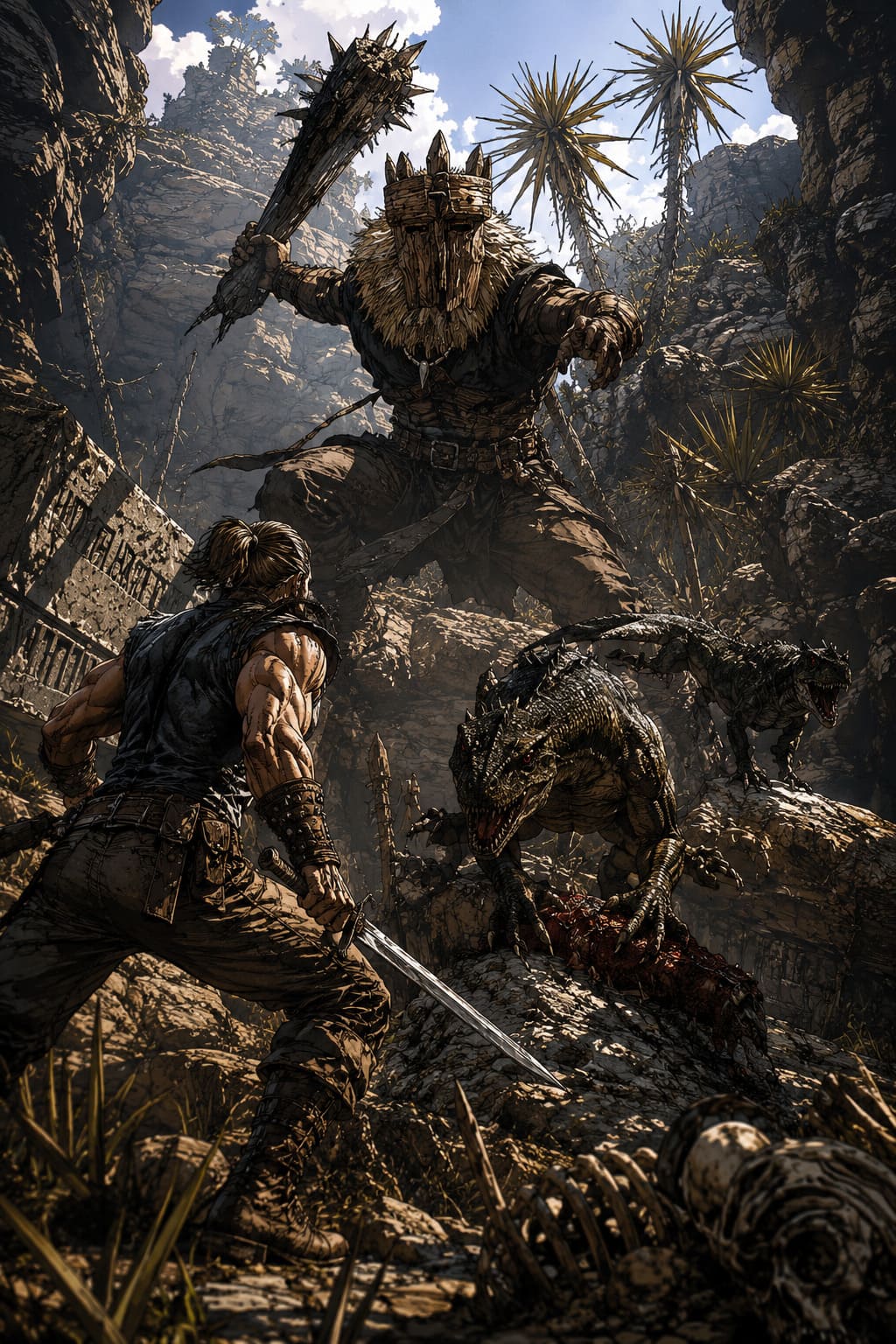
The Gothic Remake seems determined to preserve that philosophy.
Instead of relying on UI clutter, the game uses environmental awareness and old-school navigation systems that encourage immersion over convenience.
| System | Purpose |
|---|---|
| Detailed NPC Dialogue | Gives natural directions and contextual hints |
| Hand-Drawn Maps | Encourages exploration and memorization |
| Journal Entries | Tracks important clues and conversations |
| Environmental Landmarks | Helps players recognize geography naturally |
This design philosophy creates a slower but far more atmospheric experience.
And honestly, that atmosphere is the entire identity of Gothic.
The Colony Was Never Supposed to Feel Comfortable
A lot of modern discussions about accessibility miss one important detail: the Colony in Gothic is supposed to feel hostile.
You are not a chosen hero with magical GPS powers. You are a prisoner thrown into a brutal magical mining camp full of criminals, scavengers, swamps, sects, and monsters waiting to kill you.
Getting lost fits the setting.
Wandering into the wrong forest and realizing enemies can destroy you in seconds fits the setting too.
That tension is what gave the original game its unique personality. You felt vulnerable almost constantly, especially early on.
If the remake suddenly covered the screen with icons, detection systems, highlighted routes, and cinematic objective tracking, a huge part of that identity would disappear.
Modern Players Will Probably Be Divided
I can already predict the reactions once the game launches.
Some Players Will Absolutely Love It
Fans of immersive RPGs, especially older PC RPGs, will probably appreciate the lack of hand-holding. There’s a satisfaction that comes from finally understanding a dangerous game world through your own exploration.
Finding a hidden cave feels rewarding when you discovered it instead of following a yellow marker.
Other Players May Hate It
And honestly, I understand that side too.
Not everyone has endless free time anymore. After work or university, some players just want progression without spending forty minutes searching for one NPC hut hidden near a riverbank.
Modern game design evolved for a reason: convenience works.
That’s why the debate around optional markers keeps appearing online.
Should Gothic Remake Include an Optional Marker Toggle?
This is where things become complicated.
Part of me understands why some players want optional quest markers. Accessibility settings are common today, and many people simply don’t enjoy getting lost.
But there’s also a strong argument against adding them.
Once developers know players can rely on markers, quest writing often changes subconsciously. Directions become shorter. Environmental clues become less important. World layout becomes less readable because the UI solves navigation automatically.
Over time, exploration stops being a gameplay mechanic and becomes a formality between objectives.
That’s exactly what Gothic is trying to avoid.
Personally, I think Alkimia Interactive is making the right decision by staying committed to the original design philosophy, even if it risks alienating part of the audience.
Not every RPG needs to follow the same formula.
The Bigger World Creates New Challenges
One thing that genuinely surprised me is how much larger the remake appears to be compared to the 2001 original.
Reports suggest expanded camps, more vertical exploration, additional side quests, larger faction systems, and roughly 20–25% more content overall.
Normally, bigger worlds create bigger navigation problems. Many studios solve this by adding more markers and automated tracking systems.
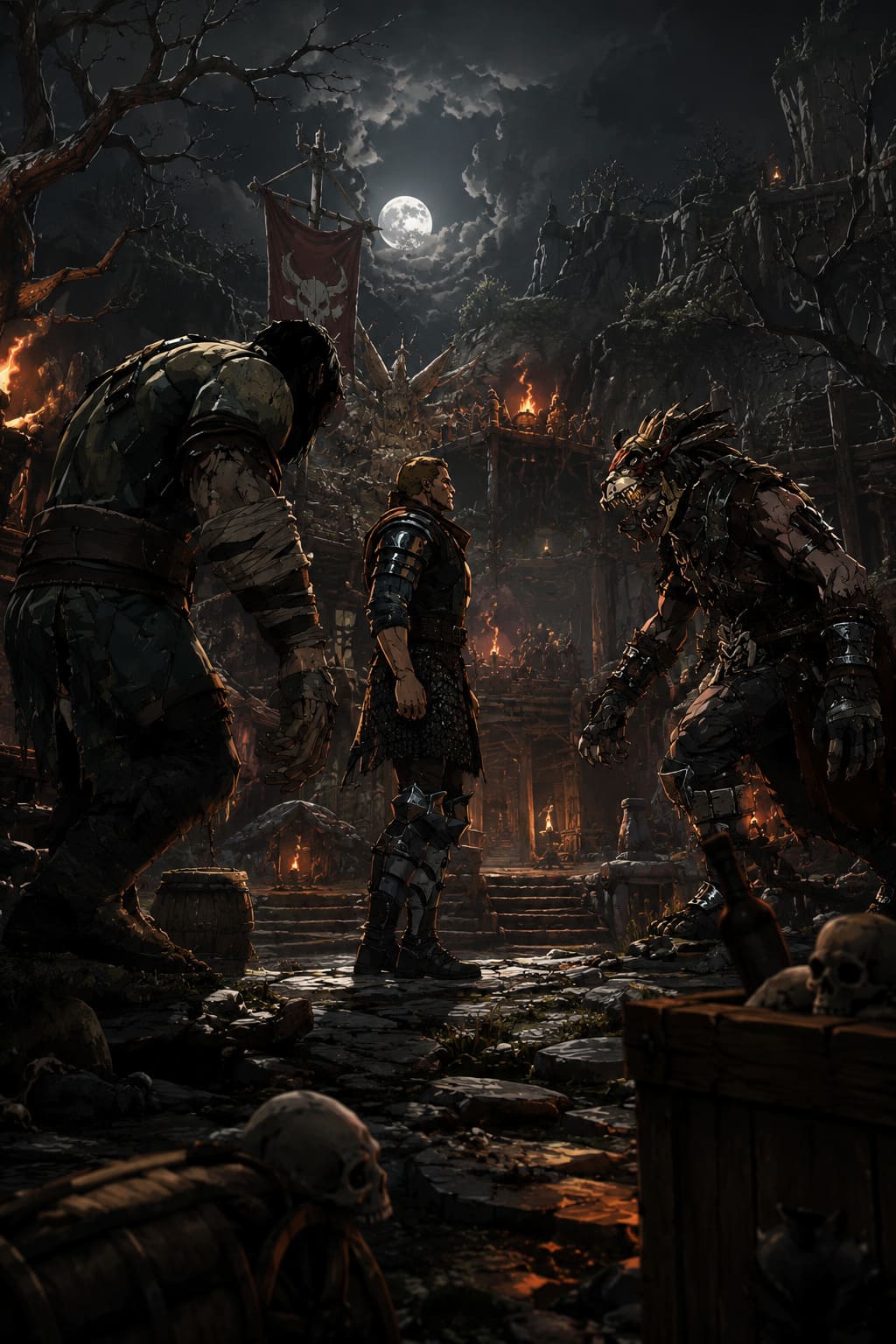
Instead, the Gothic Remake reportedly doubles down on environmental readability.
That means recognizable rock formations, distinctive architecture, unique lighting zones, NPC daily routines, and memorable geography.
If executed correctly, this could make the world feel incredibly believable.
If executed poorly, players may become frustrated fast.
That’s the real challenge facing the remake.
What Makes Gothic Different From Most Modern RPGs
After replaying countless RPGs over the years, I’ve realized something important:
Many open worlds are huge, but very few feel mentally memorable.
You complete objectives, clear icons, and move on.
Gothic was different because exploration demanded concentration. The game respected your intelligence enough to let you fail, wander, and learn naturally.
That design isn’t for everyone.
But it creates stories players remember for decades.
I still remember accidentally entering dangerous areas too early in the original game and panicking while trying to escape creatures far beyond my level. Those moments weren’t scripted cinematic events — they happened because the world didn’t protect me from my own decisions.
Modern RPGs rarely allow that kind of raw unpredictability anymore.
Why Gothic Remake Could Stand Out in 2026
Ironically, the very features that may frustrate some players are also the features that could make the Gothic Remake feel refreshing in today’s gaming landscape.
Many AAA open-world games now feel designed around efficiency metrics. Huge maps are often overloaded with repetitive activities, map icons, collectible systems, and constant visual stimulation.
After a while, exploration starts feeling mechanical instead of emotional.
The Gothic Remake appears to be chasing something entirely different: immersion through uncertainty.
That means:
- No artificial GPS-style navigation
- No endless objective spam
- No overdesigned cinematic guidance systems
- No treating the player like they are incapable of observation
Instead, the game wants players to slow down and absorb the environment.
And honestly, I think modern RPGs lost some magic when they stopped trusting players to think for themselves.
Final Thoughts
The Gothic Remake feels like a direct rebellion against modern open-world design trends.
No overloaded map.
No endless checklist icons.
No magical navigation arrow doing the thinking for you.
And honestly, I’m glad.
After years of heavily guided RPG experiences, the idea of entering a world that expects me to listen carefully, observe landmarks, and genuinely learn its geography sounds refreshing again.
Will some players find it frustrating? Absolutely.
Will others call it outdated? Probably.
But if Alkimia Interactive successfully captures the oppressive atmosphere, dangerous exploration, and immersive navigation of the original Gothic, this remake could become something surprisingly rare in modern gaming:
A world that feels like a real place instead of a theme park map covered in objectives.