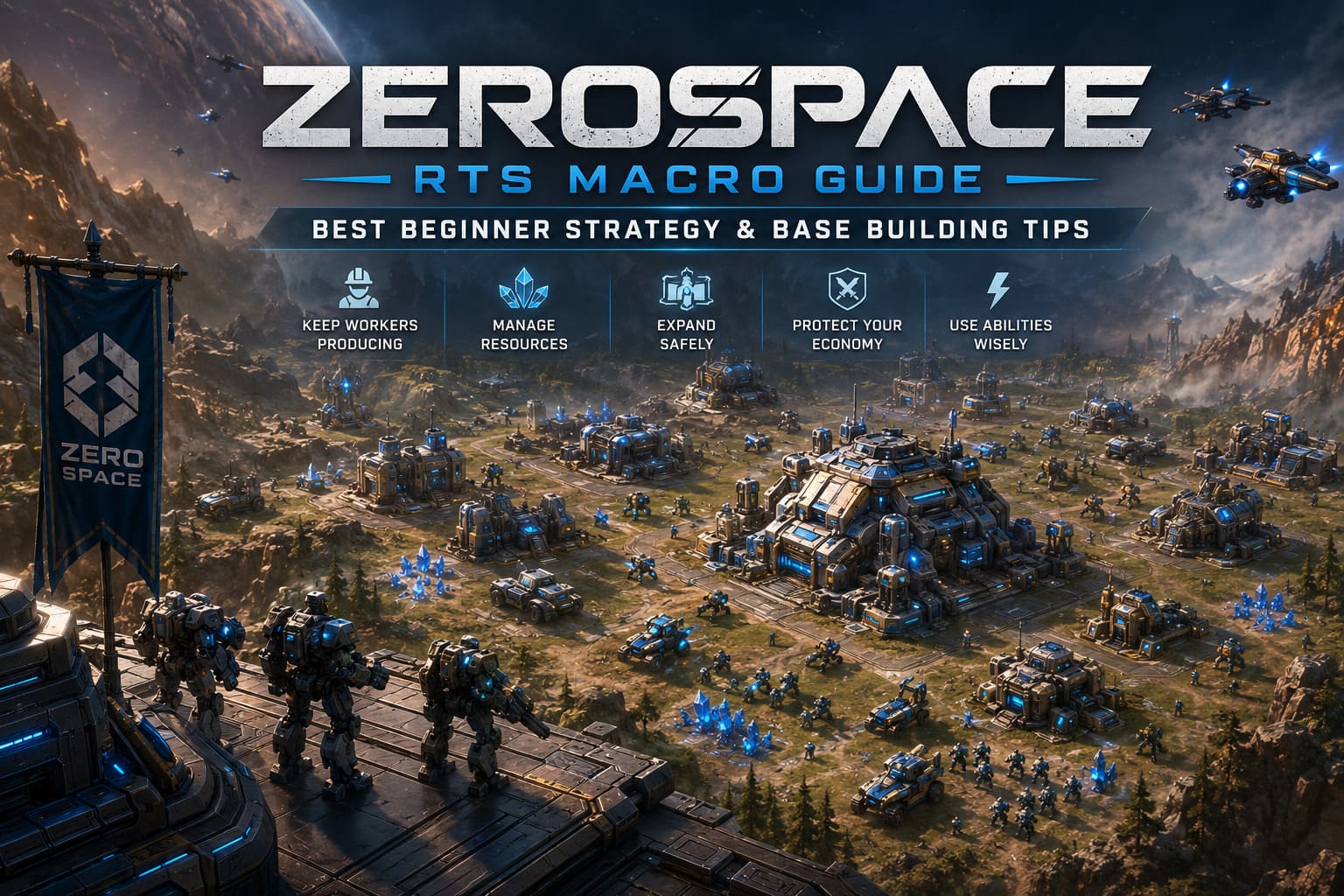
ZeroSpace RTS Macro Guide: Best Beginner Strategy and Base Building Tips
When I first jumped into ZeroSpace, I expected another sci-fi RTS that would mostly reward lightning-fast clicks and perfect unit control. After several matches, I realized I was completely wrong.
The players beating me weren’t necessarily controlling every fight better—they simply had more bases, more income, more production, and more units. Every battle I won felt temporary because another army showed up moments later.
That’s when it clicked.
ZeroSpace rewards smart macro play far more than flashy micro in the early and mid game. If your economy is healthy, mistakes become survivable. If your economy falls behind, even incredible army control often isn’t enough.
This guide isn’t about memorizing one specific build order. Instead, it’s about the habits that helped me improve consistently and enjoy the game much more. Whether you’re completely new to RTS games or coming from StarCraft, Warcraft, or Age of Empires, these macro fundamentals will make every match feel smoother.
Why Macro Is More Important Than Fancy Unit Control
Every RTS player loves watching perfectly controlled battles.
Landing abilities, flanking enemy forces, and saving damaged units always looks impressive.
The reality, however, is much less glamorous.
A player producing 30% more units throughout the match usually wins regardless of who controlled individual fights better.
ZeroSpace reinforces this philosophy through its streamlined production system. Since the interface removes much of the unnecessary busywork, your decisions become far more important than endless menu clicking.
That means your focus should always be on questions like:
- Should I expand now?
- Do I need another production building?
- Am I floating too many resources?
- Can I safely tech up?
Answering those correctly wins far more games than trying to perform impossible hero plays.
Pick a Faction With a Plan
One feature I immediately loved is the combination of a primary faction and a supporting mercenary faction.
Instead of choosing a single race, you’re effectively creating your own army composition before the game even begins.
This flexibility is fantastic—but it also creates a trap for beginners.
Many players pick units simply because they look cool.
A better approach is to think about what your economy can realistically support.

| Playstyle | Macro Focus | Risk |
|---|---|---|
| Heavy frontline armies | Earlier expansions and steady production | Lower |
| Tech-focused compositions | Earlier gas investment | Medium |
| Elite expensive units | Careful resource management | High |
| Swarm armies | Constant production cycles | Medium |
My advice is simple:
Keep your first few faction combinations straightforward. Learning the economy is difficult enough without trying to manage an extremely specialized army.
Your Economy Should Never Stop Working
The biggest lesson ZeroSpace taught me is surprisingly boring.
Workers win games.
Every second your command structure isn’t producing workers during the early game, you’re slowly falling behind.
A healthy economy creates everything else:
- More military units
- Faster upgrades
- Stronger expansions
- Better recovery after losing battles
Whenever I lose a match, one of the first things I check is worker count.
More often than not, I simply stopped making workers far too early.
Learn What Every Resource Is Really For
ZeroSpace’s economy isn’t complicated once you stop thinking of resources as numbers.
Each one has a specific purpose.
Standard Resources
This is your everyday income.
You’ll spend most of it on:
- Workers
- Basic combat units
- Production structures
- Expansion buildings
One mistake I constantly made early on was saving thousands of minerals “just in case.”
That money sitting in your bank is doing absolutely nothing.
If you’re rich but your army is small, you’re actually losing value every second.
Tech Resources
This resource controls your progression into stronger units and advanced technology.
It’s tempting to rush these upgrades immediately.
Don’t.
I’ve lost plenty of games because I invested everything into expensive technology while my opponent simply attacked with a massive basic army.
Having powerful units later doesn’t matter if you never survive long enough to build them.
Top-Bar Energy
This resource is easy to ignore.
Don’t ignore it.
Faction abilities, emergency defensive tools, and support powers can completely change the outcome of important engagements.
Get into the habit of glancing at your energy whenever you’re checking your economy.
Unused abilities are wasted opportunities.
Create a Simple Macro Routine
Instead of constantly wondering what to do next, I eventually developed a small checklist that repeats throughout every game.
Every 15–20 seconds I ask myself four questions.
- Am I still producing workers? If not, why?
- Am I spending my resources? Large resource banks usually mean I’m missing production facilities.
- Is another expansion needed soon? Waiting until resources dry up is already too late.
- Is my army protecting my economy? Expansions without protection rarely survive for long.
Repeating this routine dramatically reduced the number of games I lost because I simply forgot about my base.
Expanding at the Right Time Matters More Than Expanding Fast
Many beginners hear “expand early” and take it too literally.
Expanding isn’t automatically good.
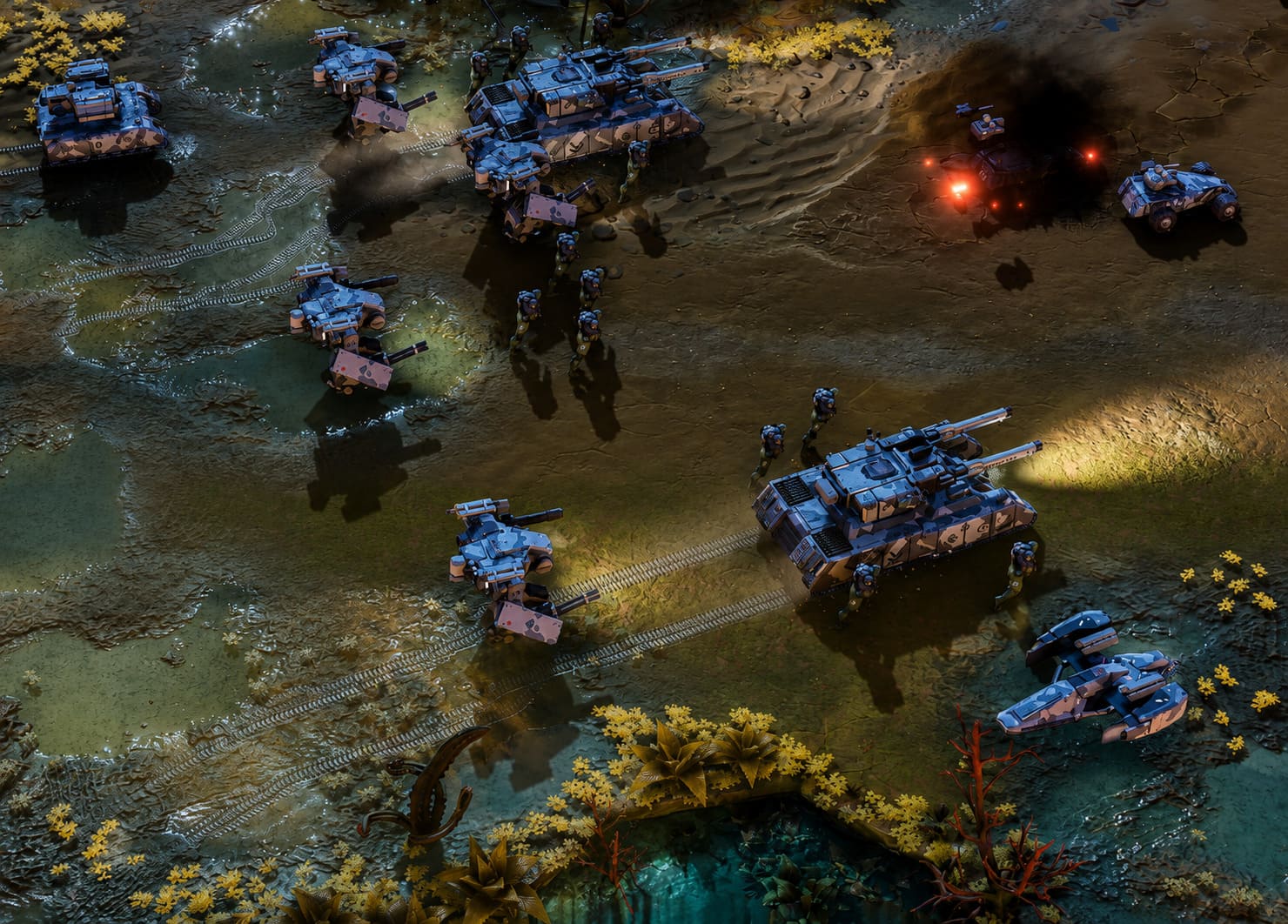
Expanding safely is.
I usually look for one of these situations:
- I forced my opponent to retreat.
- My standing army can defend multiple locations.
- I have map vision around the expansion.
- Nearby neutral threats have already been cleared.
If none of those conditions are true, dropping another base often becomes an expensive donation to the enemy.
A destroyed expansion costs much more than delaying it by thirty seconds.
Neutral Objectives Are Part of Your Economy
One thing I appreciate about ZeroSpace is that map control isn’t only about vision.
Neutral camps actually matter.
Clearing them provides useful rewards that accelerate your entire game plan.
Instead of leaving your army idle between attacks, send smaller forces to secure these objectives whenever it’s safe.
Those extra resources and hero experience gradually create an advantage that snowballs throughout the match.
Players who stay inside their base for ten minutes usually fall behind without even realizing it.
Production Hotkeys Are a Game Changer
This is honestly one of my favorite quality-of-life features.
Grouping production structures together completely changes how smooth the game feels.
During large battles, I no longer need to drag the camera back home every few seconds.
Instead, I simply:
- Press my production control group.
- Queue fresh units.
- Return to controlling the battle.
It sounds like a small improvement, but after dozens of matches it saves an incredible amount of attention.
The fewer seconds your production sits idle, the stronger your economy becomes over time.
Don’t Rush Expensive Technology Every Match
Everyone wants giant late-game war machines.
They’re fun.
They’re satisfying.
They’re also one of the easiest ways to lose.
A common beginner mindset looks like this:
“If I reach Tier 3 first, I’ll automatically win.”
Unfortunately, experienced opponents recognize greedy tech immediately.
Instead of trying to match your technology, they’ll simply attack while you’re spending all your resources on upgrades instead of combat units.
A healthier progression usually looks like this:
| Game Stage | Main Priority |
|---|---|
| Early Game | Workers and economy |
| Early Mid Game | Stable army production |
| Mid Game | Expansions and upgrades |
| Late Mid Game | Advanced technology |
| Late Game | Elite units and full production |
Notice that expensive technology comes relatively late.
There’s a reason for that.
You need an economy capable of supporting it.
ZeroSpace Early Access Roadmap 2026: Kickstarter Alpha Rewards Guide
Common Beginner Mistakes I See Constantly
Even after improving, I still occasionally catch myself making these errors.
- Floating resources. If your bank keeps growing, build something.
- Stopping worker production too early. Economies don’t magically maintain themselves.
- Ignoring map control. The player collecting neutral objectives gains free value.
- Overbuilding technology. Strong buildings don’t defend themselves.
- Forgetting production during battles. Winning one fight isn’t enough if your opponent has been rebuilding the entire time.
Final Thoughts
After spending a lot of time with ZeroSpace, I genuinely think its macro system is one of its strongest features.
It keeps the strategic depth RTS fans love while removing much of the repetitive interface management that older games demanded.
Ironically, that makes every economic decision feel even more meaningful.
If there’s one takeaway from this guide, it’s this:
Spend your resources, keep workers producing, expand with purpose, and never let your production stop.
You don’t need professional-level mechanics to climb the ladder.
A disciplined economy consistently beats flashy plays that aren’t backed by solid macro.
Once those habits become automatic, you’ll notice something interesting: battles become easier because you’re almost always fighting with the bigger, stronger army.
And in ZeroSpace, that’s often the biggest advantage you can have.