Wilderdark Corruption & Evolution Guide: Survival Meta for the 2026 Apex Update
I’ve played a lot of survival horror games over the years, but Wilderdark hits differently.
It’s not just about staying alive on a hostile island full of mutated creatures—it’s about deciding what kind of survivor you want to become.
One of the most fascinating systems I’ve encountered is the Dark Corruption status. At first, I treated it like something to avoid at all costs.
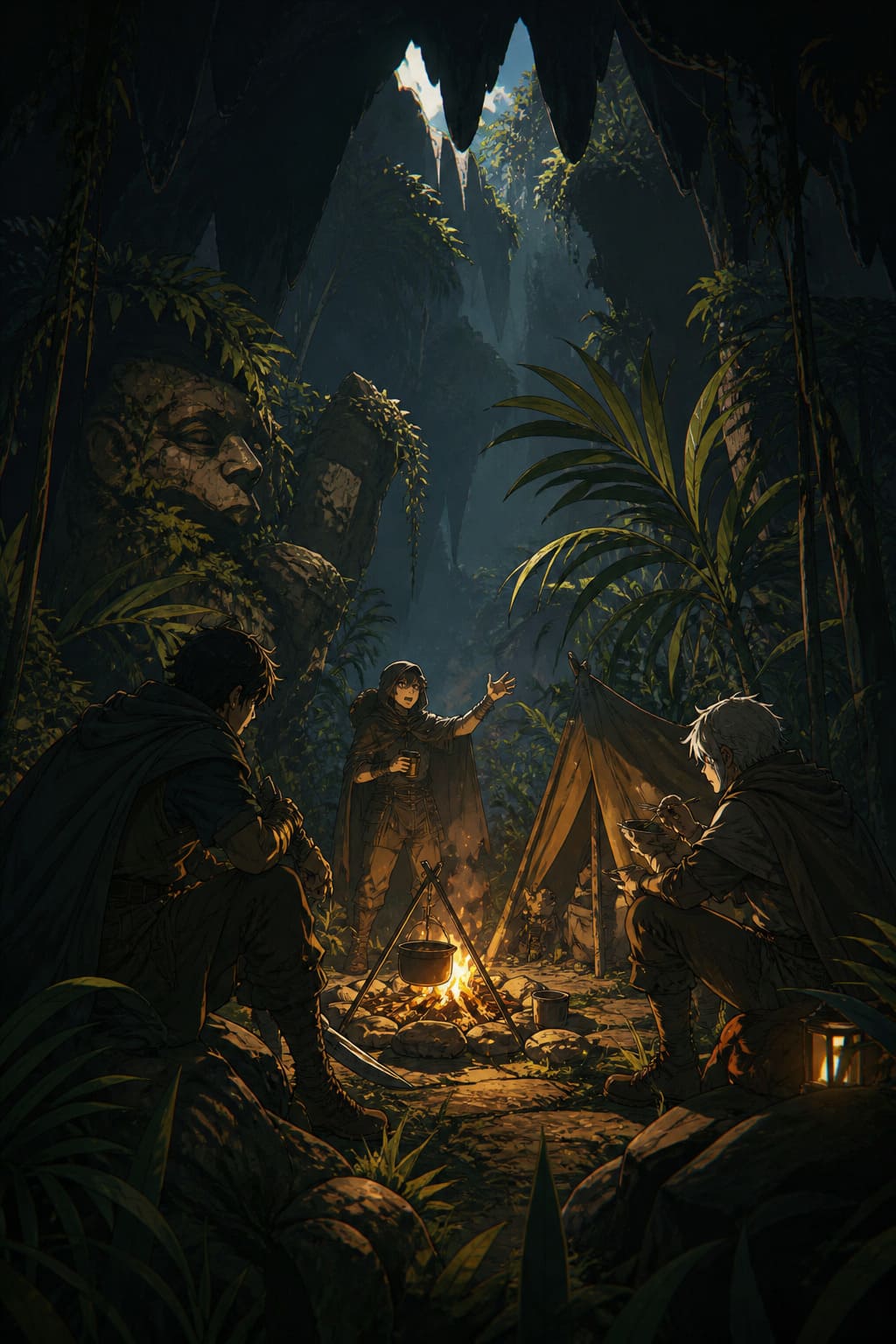
But after a few playthroughs, I realized this system isn’t just punishment—it’s a playstyle shift.
And honestly, it’s one of the most interesting mechanics in the game.
The War of the Worlds: Siberia Lore & Survival Guide: All Collectibles & Hidden Tips
What Dark Corruption Actually Feels Like in Gameplay
Mechanically, Dark Corruption is a progressive status effect caused by exposure to the island’s parasitic ecosystem. But that description doesn’t really capture the experience.
At low levels, it starts subtly. You get slight audio distortions, visual glitches around the screen edges, and occasional input hesitation, as if your character is thinking differently.
At higher levels, things escalate. The HUD becomes unstable, enemy silhouettes become easier to detect, and your character begins to feel less like something you fully control.
Why Players Actually Want to Get Corrupted
At first, it feels counterintuitive to intentionally seek corruption. But once you understand the benefits, it starts to make sense.
Dark Corruption unlocks a set of powerful advantages:
- Enhanced Survival Perception: detect movement and heat signatures through obstacles.
- Combat Aggression Boost: increased melee effectiveness and stamina recovery.
- Restricted Zone Access: entry into high-risk, high-reward contaminated areas.
- Corruption Skill Path: unlock abilities like Shadow Dash and Parasitic Mend.
It effectively transforms your entire gameplay identity.
How to Actually Get Dark Corruption
Corruption is not random—it’s built through intentional exposure loops.
Step 1: Find Infection Hotspots
Look for caves, swamps, and abandoned research facilities. These areas usually have distorted audio, bioluminescent growths, and unnatural environmental sounds.
Step 2: Choose Exposure Methods
You can increase corruption in several ways:
- Direct interaction with parasite nests for fast corruption gain.
- Consuming corrupted flora for slow but stable progression.
- Combat exposure through mutated creatures and environmental hazards.
Each method creates a different rhythm of progression.
Step 3: Managing the Corruption Curve
Corruption increases in hostile environments and slowly decreases in purified zones. This creates a constant push-and-pull between safety and power.
The game essentially forces you to choose between stability and evolution.
Threshold Events: The Real Turning Point
At 25%, 50%, and 75% corruption, Threshold Events occur. These are not simple cutscenes but survival sequences involving hallucinations, distorted perception, and mental interference.
Completing them locks in progression and unlocks new abilities in the corruption skill tree.
The Trade-Off: Power Always Has a Cost
Dark Corruption is powerful, but it comes with serious drawbacks.
- Reduced Maximum Health: increased damage vulnerability.
- Increased Aggro: predators track corrupted players more aggressively.
- Loss of Control Events: temporary character autonomy loss at high levels.
- Permanent Death Risk: full corruption can end runs in hardcore mode.
The system constantly reminds you that power is never free.
My Personal Experience: Why I Kept Going Back
At first, I avoided corruption entirely. It felt like the game was punishing experimentation. But over time, I realized it was actually offering a different identity path.
There was a point where I stopped trying to “cleanse” corruption and started building around it instead. That’s when the game changed completely for me.
It stopped being survival horror in the traditional sense and became a transformation system disguised as one.
Advanced Strategy: The 74% Meta Build
Players eventually discovered that maintaining around 70–75% corruption provides the best balance between power and control.
- High combat bonuses without full instability
- Access to most corrupted abilities
- Retention of standard gear usability
Some players use stabilization items found in late-game zones to maintain this threshold during difficult encounters.
Quick Comparison Table: Pure vs Corrupted Playstyle
| Aspect | Pure Survivor | Dark Corrupted |
|---|---|---|
| Survival Style | Defensive | Aggressive |
| Exploration | Safe zones only | Expanded access |
| Combat | Ranged tactical focus | Close-range dominance |
| Risk Level | Low | High |
| Control Stability | Full control | Partial loss possible |
Is Dark Corruption Worth It?
If you just want a safe survival experience, you can ignore corruption completely. But if you enjoy experimenting with systems that fundamentally alter gameplay, then it becomes one of the most interesting mechanics in Wilderdark.
It’s not just a debuff or a buff—it’s a transformation layer that reshapes how you interact with the world.
Some of my most memorable moments in the game didn’t come from surviving cleanly, but from embracing the instability and letting the corruption guide the experience.
Wilderdark 2026 Apex Evolution Update: Predator Intelligence, Corruption Forms & Survival Meta Explained
Wilderdark 2026 Apex Evolution Update: A Living Island That Doesn’t Want You Alive
I’ve spent a lot of time in survival games, but Wilderdark in its 2026 “Apex Evolution” update feels like the first time the game world actually started thinking back. Not just reacting—adapting. And honestly, it’s both impressive and slightly terrifying in the best way a survival game can be.
This update doesn’t just add content. It changes how you approach every single encounter on the island. Predators evolve. Your character mutates. Even familiar strategies from earlier versions now feel dangerously outdated.
If you thought you understood Wilderdark before, this update basically resets the rules.
The Biggest Shift: Predators That Learn From You
The standout feature of the 2026 update is the new AI evolution system. Enemies don’t just scale in difficulty anymore—they respond to your behavior over time.
That means if you rely too much on a single tactic, the island starts countering you.
What actually changed in gameplay: predators now adapt to repeated player behavior, group coordination between different species is smarter, environmental awareness is significantly improved, and “safe zones” are no longer truly safe.
It’s the kind of system that makes you stop trusting your habits.
Apex Predator Evolution Types (What You’ll Actually Face)
Instead of just stronger enemies, Wilderdark now throws adaptive predator archetypes at you. These feel less like “upgrades” and more like the island experimenting with how to kill you efficiently.
Ghost Raptors (Adaptive Camouflage Hunters)
These are probably the most frustrating early encounters after the update. They don’t just hide in foliage—they actively blend into it. You might literally walk past one and only notice it when it decides you’re already dinner.
Best counterplay includes thermal detection tools, listening for movement cues instead of visuals, and avoiding predictable patrol routes.
Pack Intelligence Network
This is where the game stops being fair. Smaller creatures act as information nodes. If one sees you, bigger predators don’t need to search—they already know.
It feels less like fighting animals and more like fighting a distributed surveillance system.
What works now is prioritizing early elimination of scouting creatures, avoiding prolonged fights in open terrain, and constant relocation instead of holding ground.
Adaptive Resistance Predators
This system punishes repetition in a very direct way. If you keep using the same damage type, predators eventually adapt and become resistant to it.
You can’t brute-force the island anymore.
Corruption System: You Are Becoming Something Else
One of the most unsettling parts of this update is how player corruption has evolved into full transformation paths instead of just stat modifiers.
This isn’t just buff or debuff—it’s identity change.
Corrupted Forms Overview
These transformation paths define how you interact with the entire game world. Each one completely shifts your playstyle.
| Form | Playstyle | Strength | Weakness |
|---|---|---|---|
| Stalker Form | Stealth / mobility | Fast, silent, lethal positioning | Weak defense, limited gear |
| Behemoth Form | Tank / brute force | High durability, AoE control | Slow, resource-heavy |
| Harbinger Form | Risk / chaos control | Area poison, enemy conversion | Constant HP drain |
Stalker Form (40–60% Corruption)
This is the most assassin-like evolution. Movement becomes quiet, smooth, and almost unnatural. You’re encouraged to stop fighting fair and start hunting like a shadow.
It feels like a different game entirely, encourages aggressive stealth gameplay, and has extremely satisfying ambush mechanics. But the trade-off is severe—you lose access to heavy equipment entirely.
Behemoth Form (75–90% Corruption)
This is where things go full monster. You stop dodging and start absorbing punishment. Every fight becomes about positioning and timing rather than avoidance.
The downside is brutal: you’re slow and consume resources at an alarming rate. Still, nothing feels quite as powerful as walking through predators that previously forced you to run.
Harbinger Form (95% Corruption)
This form is dangerous in a way that feels almost psychological. You are constantly losing health while gaining control over chaos mechanics.
You can temporarily convert weaker enemies into allies, but the tension never stops. One mistake leads to permanent loss.
It’s the closest the game gets to becoming the infection itself.
The Heart of the Hive: New Endgame Zone
This biome is endgame survival distilled into one environment. You don’t explore it—you endure it.
Requirements include high corruption or a specialized bio-suit, constant environmental pressure, and dense enemy ecosystems. The reward is Ecto-Cores, a progression currency for high-tier mutations.
It feels less like a dungeon and more like stepping into the island’s nervous system.
Community Meta: The “Leashed Monster” Strategy
Players have already optimized around the new systems with a squad-based approach called the “Leashed Monster” meta.
A typical composition includes one Behemoth tank, two ranged damage dealers, and one support cleanser maintaining corruption stability.
It’s a perfect example of how the game now enforces identity roles instead of generic builds.
What Makes This Update Work So Well
Instead of increasing numbers, Wilderdark increases intelligence. The island doesn’t just scale—it reacts.
Exploration becomes risk assessment, combat becomes pattern management, and progression becomes identity trade-offs.
It’s not about surviving longer anymore—it’s about deciding what kind of creature you are willing to become.
Final Thoughts: A Survival Game That Evolves With You
Wilderdark 2026 doesn’t feel like a typical expansion. It feels like the island finally stopped being a backdrop and became a system.
Sometimes fair, sometimes brutal, always watching.
The real question it leaves behind isn’t how you win—it’s what you are willing to become to keep playing.