Wand & Order: How to Sort Tarot Decks (Ultimate Tidy Up Guide)
There is something strangely satisfying about Wand & Order: Tidy Up the Magic Shop!. I’ve played quite a few organization and cozy simulation games over the years, and the best ones understand that cleaning is not really about cleaning. It is about creating a system, learning how the game thinks, and eventually reaching that wonderful moment when a room that looked completely hopeless suddenly starts making sense. The Archives are probably the best example of this idea, because the sheer number of papers, cards, decks, and magical objects can make the room look like a disaster at first.
The tarot cards are where things become particularly interesting. Unlike simple objects that can usually be recognized immediately, the Archives require you to pay attention to suits, card numbers, court ranks, and visual themes. A card that looks almost identical to another card can still belong somewhere completely different. After spending enough time with these kinds of games, I’ve learned that trying to work randomly is usually the fastest way to become frustrated. In Wand & Order, a little preparation makes the entire process considerably smoother.
How Many Players Is Wand and Order? Max Player Count and Co-op Details Explained
Why the Archives Can Be So Difficult
The Archives are not difficult because the individual cards are complicated. The problem is that the game throws a huge amount of information at you at once. There are piles of loose cards, complete tarot decks, documents, boxes, and other magical clutter competing for your attention. When you first walk into the room, it is very tempting to grab whatever is closest and start filling empty spaces, but that approach quickly creates unnecessary mistakes.
The important thing to understand is that Wand & Order rewards accurate organization rather than simply putting things somewhere that looks reasonable. Correct placement produces positive visual feedback, while an incorrect location can interrupt your progress and affect your multiplier. Once I stopped treating the Archives like a conventional storage room and started treating them like a sorting puzzle, the whole area became much easier to manage.
Understanding the Tarot Categories
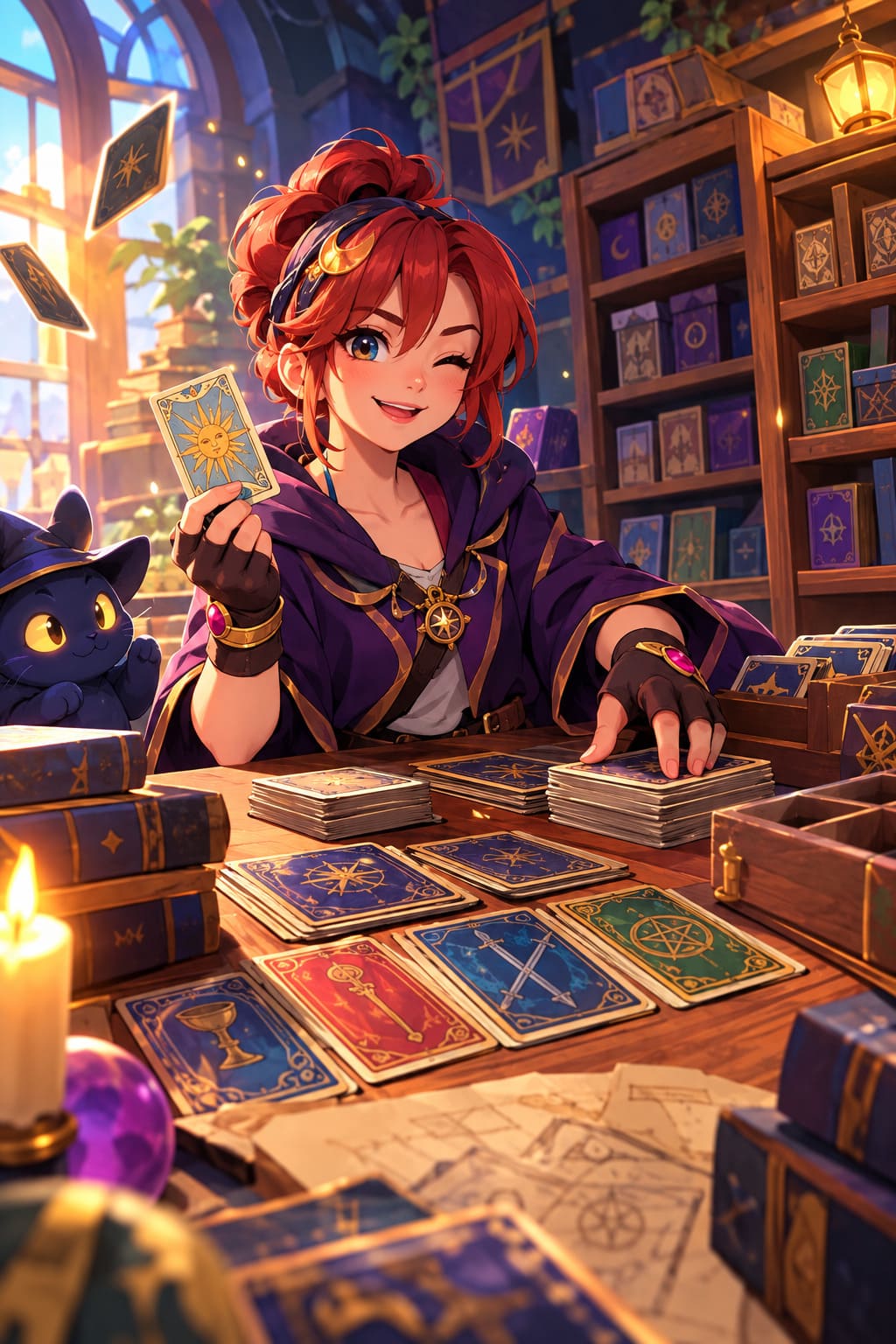
Before moving a single card, it helps to understand what you are actually sorting. The tarot collection is divided into the familiar four Minor Arcana suits, along with the Major Arcana. On top of that, the game can introduce different visual editions, which means two cards with the same basic identity may still need to be separated according to their particular presentation.
| Category | What to Look For | Basic Organization |
|---|---|---|
| Major Arcana | Named trump cards and numbered symbols | Sequential order |
| Cups | Cup imagery and suit markings | Ace to 10, then Court Cards |
| Wands | Wand imagery and suit markings | Ace to 10, then Court Cards |
| Swords | Sword imagery and suit markings | Ace to 10, then Court Cards |
| Pentacles | Pentacle imagery and suit markings | Ace to 10, then Court Cards |
The four Minor Arcana suits are Cups, Wands, Swords, and Pentacles. Each follows its own sequence, so separating the suits before worrying about their exact numerical order saves a surprising amount of time. The Major Arcana are different because they form their own sequence, beginning with The Fool and continuing through The World.
Use Visual Clues Instead of Guessing
One of my biggest pieces of advice for the Archives is simple: look before you place. The room itself gives you useful visual information, and the sorting furniture provides clues about where different categories belong. When a correct item reaches the appropriate area, the game gives you visual feedback, so you can use those reactions to confirm that your interpretation is correct rather than relying entirely on memory.
This becomes especially useful when dealing with cards that belong to different artistic sets. The artwork, borders, symbols, and overall presentation can help distinguish one group from another. If two cards have the same suit and number but look noticeably different, don’t immediately assume they are interchangeable. In a game built around precise organization, those small visual differences are often there for a reason.
The Most Useful Sorting Spells
Manually picking up every card is possible, but I would not recommend turning the Archives into a marathon of individual item collection. The game’s magical tools exist for exactly this reason. If you have shop points available, investing in the abilities that reduce unnecessary movement can make the room dramatically more manageable.
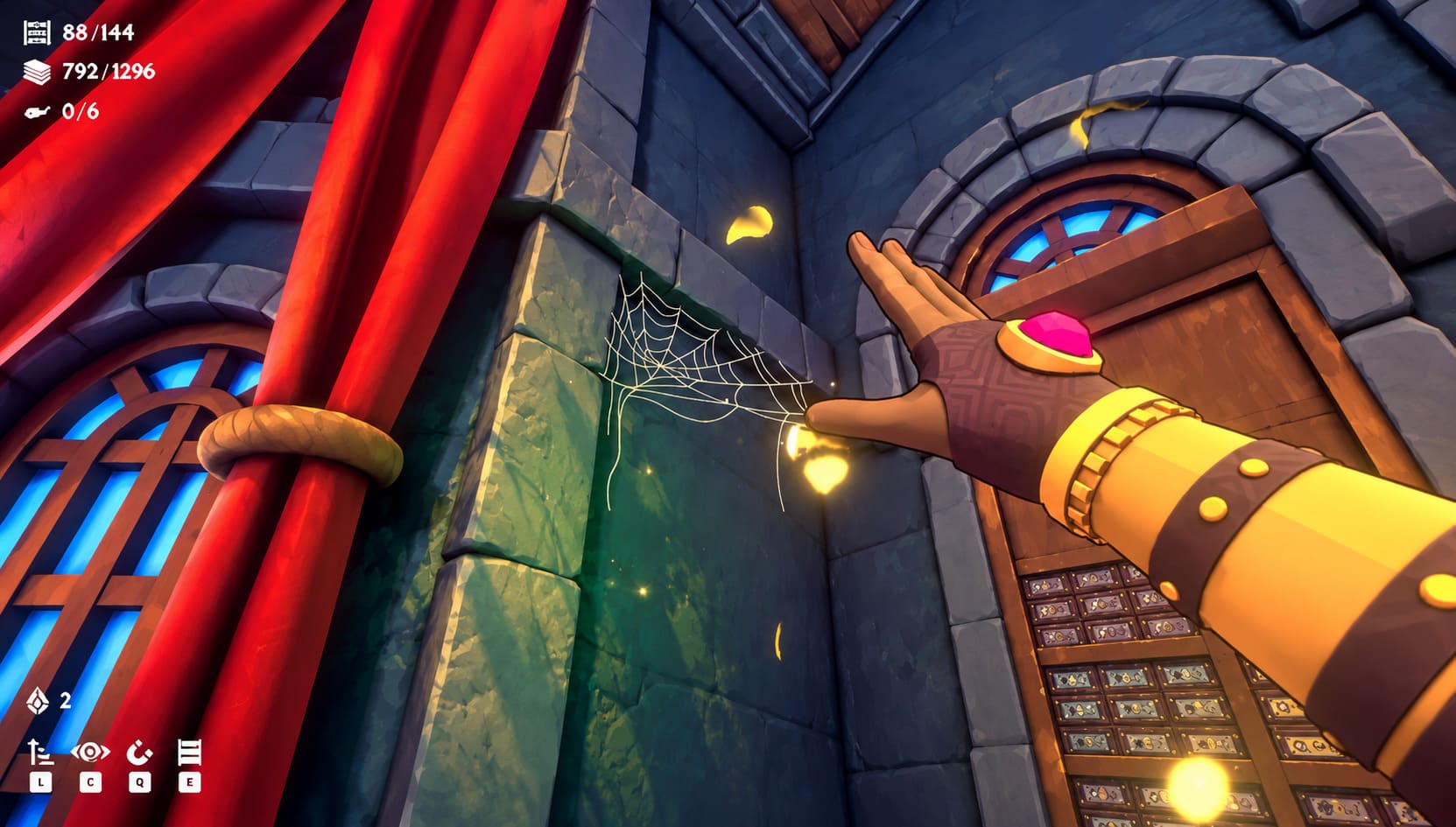
Alchemical Vision
Alchemical Vision is particularly useful when the floor is covered with dozens of visually similar objects. Instead of staring at every card and trying to identify it individually, the spell helps highlight matching items in your field of view. This turns an overwhelming pile into something much easier to scan.
Magnetic Vacuum
The Magnetic Vacuum is arguably one of the biggest time-savers when dealing with scattered cards. Rather than walking back and forth for every individual item, you can gather groups of relevant objects and bring them together. I especially like using this after choosing a single suit to work on, because it keeps the sorting process focused instead of creating several mixed piles.
Auto-Place
Once you have collected a suitable group of cards, Auto-Place can take much of the repetitive work out of the final stage. It is most effective when you already understand the destination system rather than using it blindly. Think of it as the finishing tool for an organized workflow, not a replacement for understanding how the Archives are structured.
My Recommended Tarot Sorting Workflow
If you’re aiming for a clean Archives run rather than simply getting the room finished, I recommend working in stages. The biggest mistake is trying to solve the entire room simultaneously. I’ve made that mistake in plenty of organization games, and it usually results in a bigger mess than the one I started with.
1. Create Some Working Space
Start by dealing with the objects that are physically blocking your movement. Move larger pieces of clutter and anything that prevents you from comfortably walking between the shelves and sorting area. You don’t need to completely clean the room before touching a tarot card, but you want enough open floor space that your movement isn’t constantly interrupted.
Once you have a reasonable workspace, focus your attention on the cards. Don’t immediately grab everything you see. Instead, choose one category and begin building a dedicated pile for it. For example, if you decide to start with Pentacles, collect the Pentacles you can easily identify and keep them together.
2. Separate Major and Minor Arcana
Next, pull the Major Arcana away from the four Minor Arcana suits. The Major cards are generally recognizable through their distinctive names, illustrations, and numbering. The important thing here is not to mix them into the ordinary suit piles, because they follow a completely different organizational sequence.
Once separated, arrange the Major Arcana in order. The Fool occupies the beginning of the sequence, followed by the remaining cards until you reach The World. Taking a moment to establish this sequence before putting the cards away is much safer than trying to reconstruct it while interacting with the storage furniture.
3. Sort Each Minor Arcana Suit
After the Major Arcana are out of the way, work through the four Minor Arcana suits individually. Keep Cups with Cups, Wands with Wands, Swords with Swords, and Pentacles with Pentacles. Then arrange each group from Ace through 10, followed by the court cards.
The court-card sequence is another place where rushing can cause problems. Keep Page, Knight, Queen, and King in their intended order. It might seem obvious, but when you’re looking at a pile of nearly identical cards after several minutes of sorting, it’s surprisingly easy to lose track of where you are.
Don’t Ignore Different Tarot Editions
This is probably the detail I would pay the most attention to if you’re struggling with apparently identical cards. Wand & Order can make organization more complicated by presenting different visual styles or editions. A card can have the correct suit and number while still belonging to a different thematic group.
Look closely at the card borders, artwork, symbols, and overall visual treatment. If one group has a distinctly Gothic appearance while another has a celestial or alchemical presentation, keep those groups separated until you know exactly how the game wants them arranged. It takes slightly longer at the beginning, but it saves far more time than repeatedly testing questionable placements.
How to Avoid Breaking Your Combo
If you’re trying to maximize your score, accuracy becomes more important than speed. A fast player who repeatedly makes incorrect placements can end up spending more time recovering from mistakes than a slower player who checks each group first. Personally, I prefer a rhythm of identify, collect, group, verify, place.
Pay attention to the game’s feedback after each placement. A successful placement should give you a positive visual confirmation, while an incorrect one should immediately tell you that something is wrong. If you receive negative feedback, stop and reassess the group instead of continuing to throw cards into nearby slots.
Sorting Tarot Cards in Co-Op
The Archives become much more interesting when several players are working together. With multiple people moving around the same room, however, organization becomes just as important between players as it is between cards. If everyone grabs random objects, you can easily end up with four people creating four different temporary piles.
A role-based system works much better. One player can concentrate on gathering scattered cards, while others focus on specific suits or the Major Arcana. This way, everyone has a clear job and there is much less unnecessary movement.
| Role | Main Responsibility |
|---|---|
| Gatherer | Collect scattered tarot cards and bring them to the sorting area |
| Suit Specialist | Organize assigned Minor Arcana suits |
| Arcana Specialist | Handle the Major Arcana sequence |
| Archive Helper | Deal with remaining clutter and support other players |
Communication matters more than people might expect. Before someone starts moving a particular pile, simply saying which suit they are handling can prevent another player from picking up the same cards. The Archives are much less chaotic when everyone treats the room as one shared sorting project instead of four individual cleanup missions.
Common Tarot Sorting Mistakes
There are a few habits that repeatedly make this room harder than it needs to be. The first is sorting by proximity instead of category. Just because a card is physically close to a cabinet does not mean it belongs there. The second is mixing Major and Minor Arcana because the cards look similar from a distance.
- Don’t rush placements simply because an empty slot is nearby.
- Don’t mix different suits while building temporary piles.
- Don’t ignore artwork and border differences between editions.
- Don’t let several co-op players work on the same category without communicating.
Another common mistake is spending too much time trying to clean the entire room before establishing your tarot system. The Archives are easier when you create order progressively. You don’t need perfection immediately; you need a repeatable process that steadily reduces the amount of chaos around you.
Final Thoughts on the Wand & Order Archives
The tarot section initially looks like one of those tasks that was designed to test your patience, but once you understand its structure, it becomes one of the more satisfying parts of Wand & Order: Tidy Up the Magic Shop!. The trick is to stop thinking about individual cards and start thinking about categories, sequences, and visual patterns. Once those three ideas click, the room becomes much less intimidating.
My preferred approach is to clear enough space to move comfortably, separate the Major Arcana, build four Minor Arcana suit piles, check the visual editions, and only then start filling the archive storage. The magic spells can dramatically accelerate the process, especially when collection and placement are combined instead of used independently. It may sound slower than simply grabbing whatever card is closest, but in practice it produces a much cleaner and more consistent run.
If you’re chasing a high Archives rating, the real goal isn’t simply speed. It’s controlled speed. Learn the visual language of the cards, establish your sorting categories before placing anything, and let the game’s feedback confirm your decisions. Once you get into that rhythm, the enormous pile of magical paperwork stops looking like chaos and starts looking like a puzzle with a very satisfying solution.