Titanic Escape Simulator Review 2026: Is It Worth Buying?
There are some games that immediately make you curious because of their premise, and Titanic Escape Simulator is absolutely one of them. A first-person game set aboard the RMS Titanic already sounds like something I would want to try, but combining that setting with a murder investigation, environmental puzzles, stealth, and a desperate survival sequence after the iceberg collision is a pretty wild idea.
I have to admit, though, I approached this one with some hesitation.
The game’s early promotional material caused plenty of discussion online, with players questioning whether some of the screenshots and trailers relied too heavily on generative AI. That is not exactly the kind of controversy you want surrounding a historical game before launch. At the same time, the actual concept behind Titanic Escape Simulator is far more interesting than the marketing drama suggests.
So, is it worth buying?
My short answer is: potentially, but I would not rush to pay full price. There is a genuinely good survival game buried inside this project, but it also has enough rough edges that I can understand why some players will struggle to recommend it.
A Titanic Game With a Surprisingly Dark Premise
What immediately separates Titanic Escape Simulator from a typical Titanic-themed experience is that you are not simply walking around the ship admiring the scenery.
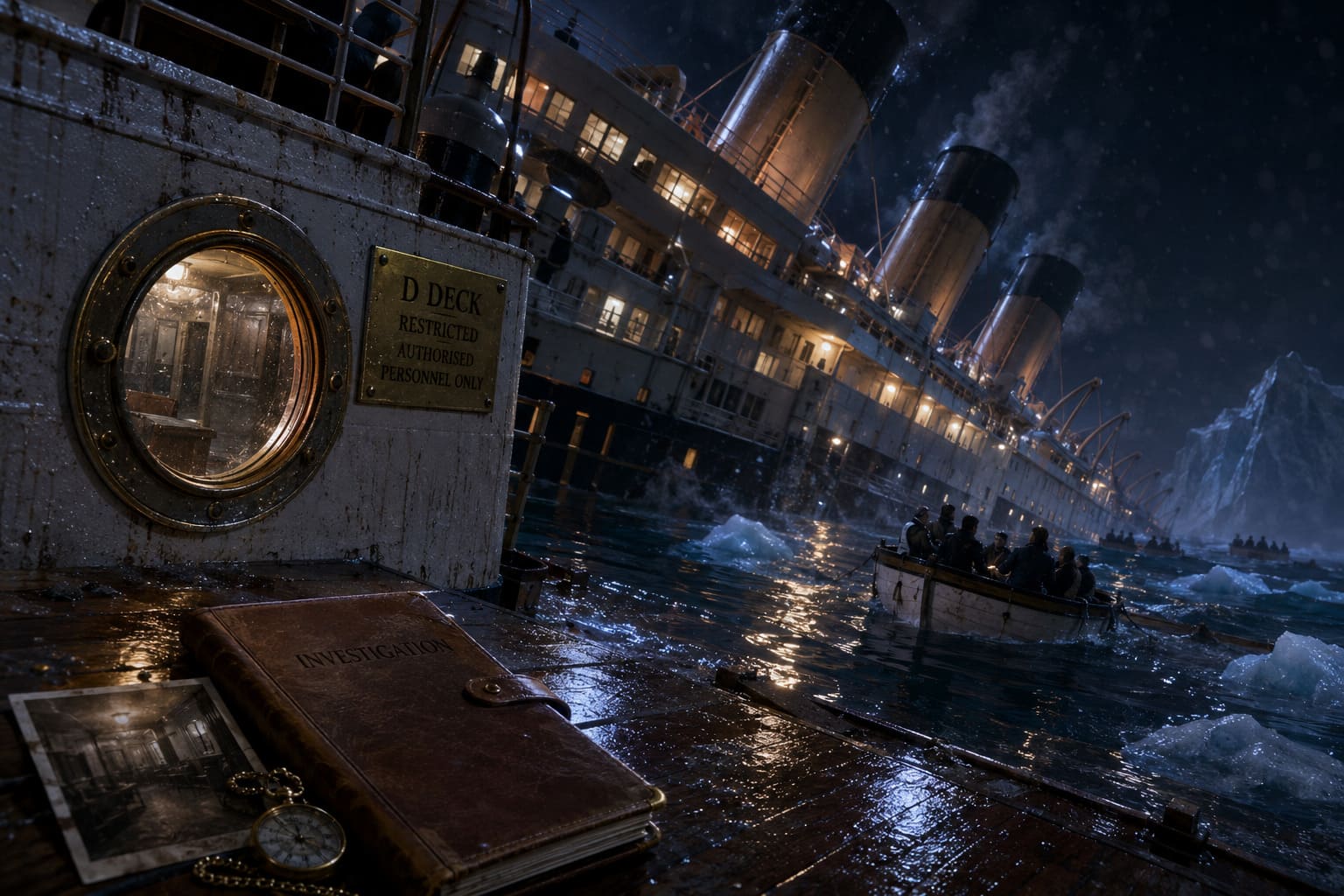
You play as a private investigator who boards the Titanic in April 1912 while investigating a mysterious murder conspiracy. The ship is still alive at this point. Passengers are enjoying their meals, crew members are working, and the famous interiors are still filled with the atmosphere of a luxury ocean liner.
That makes the first section feel almost like a detective adventure.
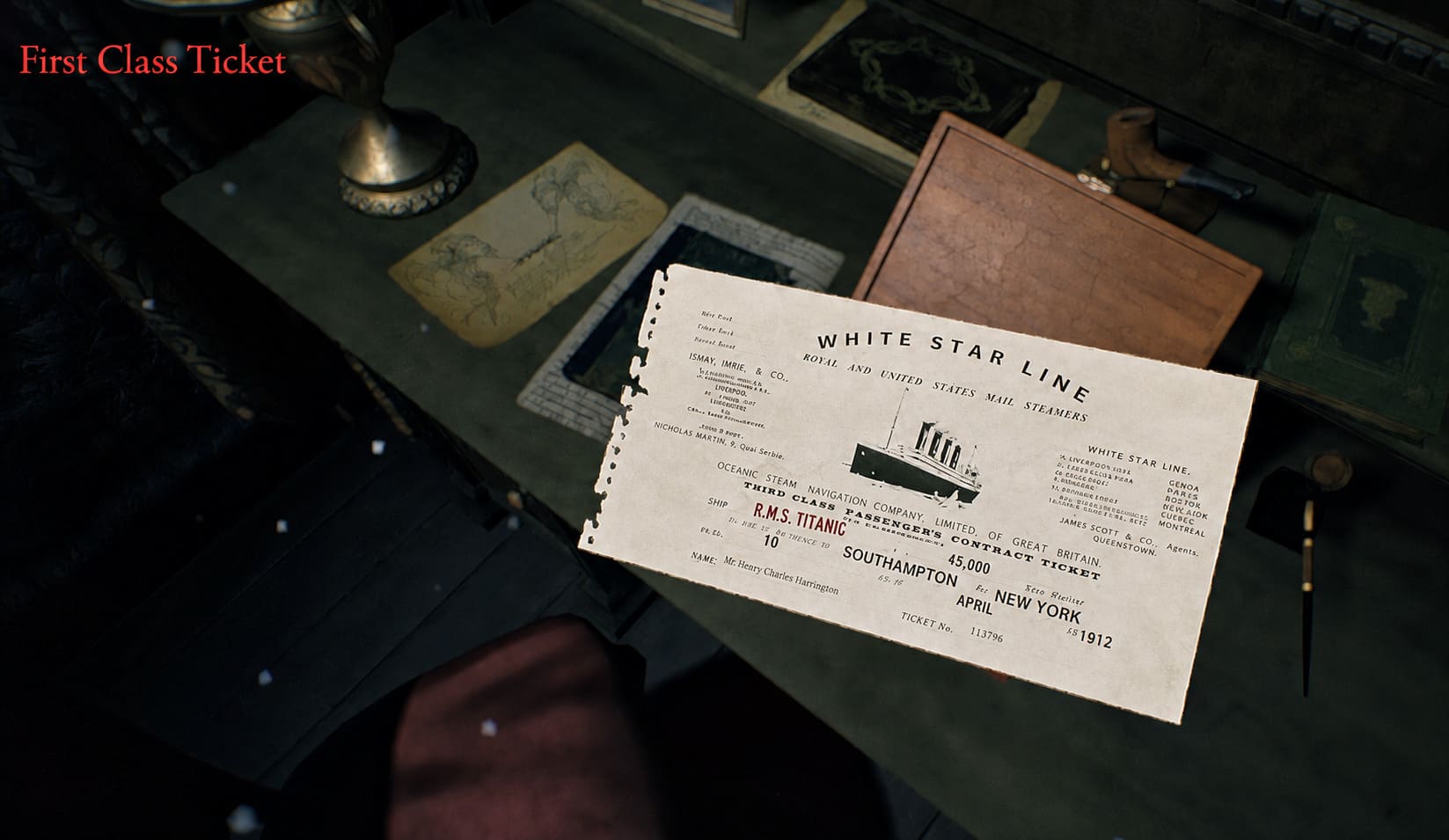
You investigate cabins, search for evidence, talk to passengers and crew, discover suspicious clues, and gradually uncover information about the conspiracy. Some areas of the ship are restricted, so you also have to figure out how to reach places you are not supposed to.
And then everything changes.
The iceberg hits.
Suddenly, the slow investigation becomes a fight for survival.
That contrast is probably the game’s strongest idea.
Two Games in One
Titanic Escape Simulator essentially divides its gameplay into two very different experiences.
| Gameplay Phase | Main Focus | Overall Feel |
|---|---|---|
| Investigation | Evidence, dialogue, exploration | Slow and mysterious |
| Puzzle Sections | Tools, locks, environmental clues | Methodical |
| Stealth | Restricted areas and avoiding guards | Tense |
| Sinking | Flooding, hazards, navigation | Chaotic |
| Survival | Stamina, cold, escape routes | Frantic |
| Endgame | Choices and multiple endings | Dramatic |
The first half gives you time to learn the ship and understand what is happening. The second half takes away that comfort almost completely.
I actually like this structure quite a lot.
There is something effective about spending time learning the layout of the Titanic only to have that knowledge suddenly become a survival tool. A corridor you explored earlier might later be flooded. A staircase that seemed completely ordinary can become inaccessible. A familiar room can turn into a death trap.
That is much more interesting to me than simply making the entire game a scripted Titanic disaster from beginning to end.
Exploring the Titanic Is One of the Biggest Attractions
Let’s be honest: part of the appeal here is simply being able to explore the Titanic from a first-person perspective.
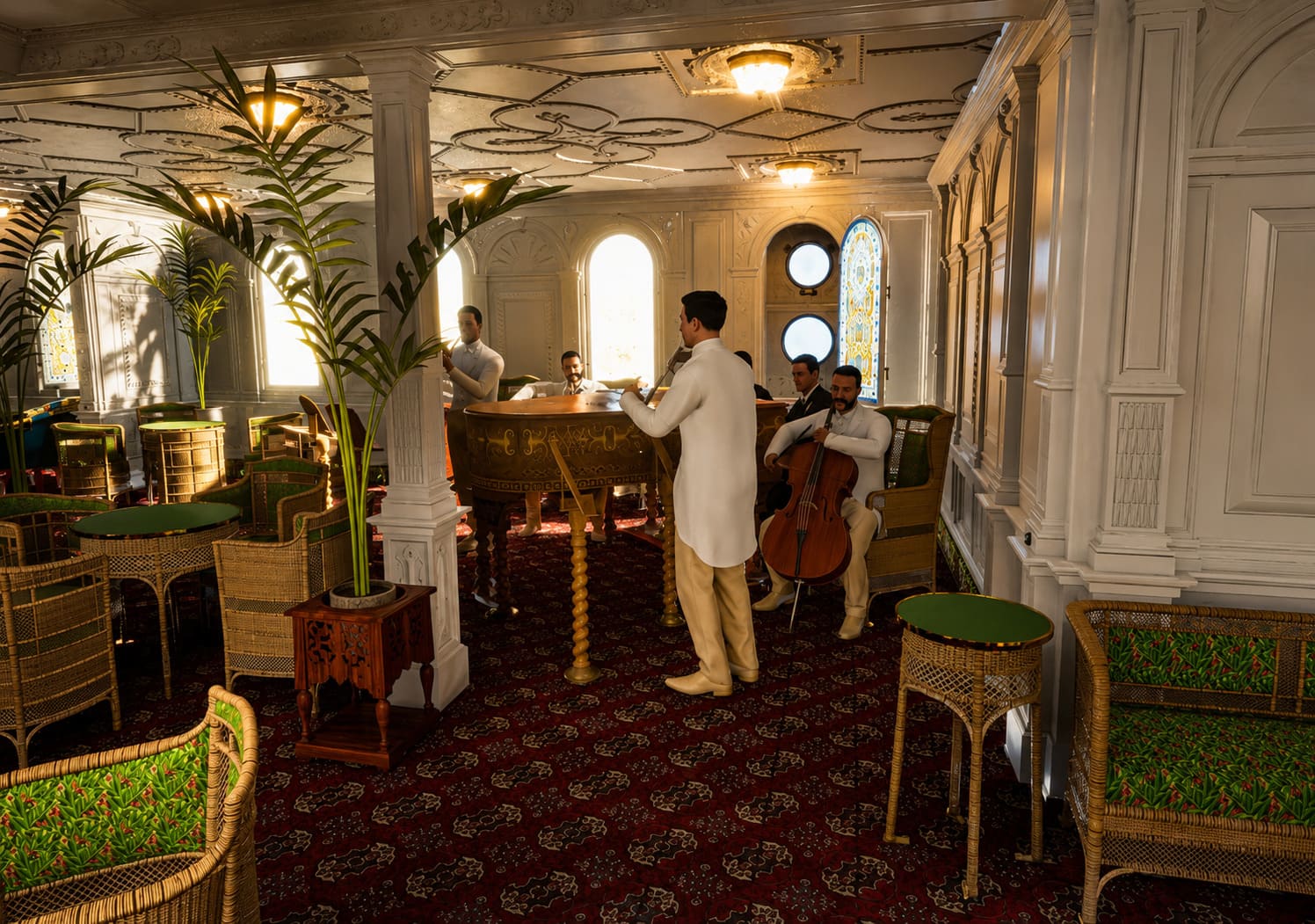
The game attempts to recreate recognizable areas of the ship, from luxurious first-class spaces to more functional sections such as crew areas, cargo spaces, and engine rooms.
The contrast between these locations is important.
The elegant public areas give you the feeling of being inside one of the most famous ships in history, while the service corridors and lower sections make the vessel feel much larger and more complicated.
And once the sinking begins, that same complexity becomes frightening.
Knowing where you are does not necessarily mean knowing where you can escape.
That is where the game’s level design has the potential to shine.
The Sinking Sequence Is the Real Test
The most interesting part of Titanic Escape Simulator is easily the disaster itself.
The developers have built the sinking section around changing environmental conditions. Water gradually takes over sections of the ship, paths become unavailable, doors can become blocked, and the ship’s changing structure forces you to reconsider your route.
This is where the game stops feeling like a traditional detective adventure.
You are no longer searching for the perfect clue.
You are looking for a way out.
The flooding mechanics also create some genuinely stressful situations. Entering cold water is dangerous, while darkness and structural hazards make navigation increasingly difficult. You cannot simply sprint through everything without consequences because stamina and cold management become important parts of staying alive.
I like survival systems when they support the atmosphere instead of existing purely to make the game harder, and this approach makes sense here.
The problem is that some of these mechanics can also become frustrating.
If the camera movement, darkness, flooding, stamina limitations, and environmental obstacles all hit you at once, the experience can occasionally feel less like survival horror and more like trial and error.
The AI Controversy Is Hard to Ignore
This is probably the elephant in the room.
Titanic Escape Simulator gained attention before release because some promotional materials were accused of looking heavily AI-generated. Players pointed out strange character hands, questionable architectural details, unusual objects, and historical inaccuracies.
And honestly, I understand why people reacted strongly.
When you make a game based on a real historical event, visual accuracy matters. Players are naturally going to notice when something looks physically impossible or obviously out of place.
The frustrating thing is that the controversy can distract from the actual game.
There is clearly a playable project here. The problem is that the visual quality does not always feel consistent. Some environments can look surprisingly detailed, while character animation, textures, lighting, or object placement can suddenly remind you that this is a relatively rough indie production.
For me, that is less concerning than whether the game is fun.
And thankfully, there are some genuinely fun ideas here.
What I Like About Titanic Escape Simulator
The biggest strength is the concept.
A detective mystery turning into a Titanic survival horror game is a fantastic premise.
The game also benefits from an atmosphere that does not need cheap jump scares to create tension. The sound of a damaged ship, dark corridors, rising water, tilted floors, and limited escape options can do plenty of the work.
I also appreciate the attempt to include characters inspired by real historical passengers. That gives certain interactions more emotional weight than they would have in a completely fictional setting.
The possibility of multiple endings is another welcome addition. If your decisions determine who you help, which route you take, and whether you prioritize survival or your investigation, there is a reason to return after finishing the story.
The Biggest Positives:
- Excellent high-concept premise combining mystery and survival horror.
- Atmospheric Titanic setting with a wide variety of explorable areas.
- Dynamic flooding and environmental hazards create changing escape routes.
- Multiple endings and moral decisions add replay value.
- Strong tension during the sinking sequence when everything starts going wrong.
Where the Game Needs More Polish
Unfortunately, Titanic Escape Simulator is not a flawless experience.
The biggest issue is polish.
Character animations can feel stiff, conversations are not always convincing, and environmental clipping can occasionally break immersion. None of these problems automatically ruin a game, but they become much more noticeable when the game is trying to sell itself as a serious historical experience.
The survival mechanics can also be inconsistent.
There is a fine line between making a player feel desperate and simply making them confused. If the flooding is too fast, visibility is too poor, and stamina disappears too quickly, players may die without feeling that they made an interesting mistake.
There is also the question of tone.
The sinking of the Titanic is one of the most famous maritime tragedies in history, with more than 1,500 people losing their lives. Turning that event into the backdrop for a murder mystery and survival horror game is inherently controversial.
Personally, I don’t think games should avoid historical tragedies altogether. But the writing needs to treat the setting with enough seriousness that the disaster does not feel like a theme-park attraction.
Is Titanic Escape Simulator Worth Buying?
This is where I land after looking at the overall package.
Titanic Escape Simulator is not a game I would recommend blindly.
If you are a fan of puzzle adventures, escape-room games, survival horror, or historical exploration, there is a lot here that could appeal to you. The combination of investigation and disaster survival is unusual enough to make the game stand out.
But if you are buying it because you expect a technically impressive, historically meticulous Titanic simulation, I would lower those expectations.
The rough visuals, uneven animation, questionable promotional history, and occasional gameplay frustrations make it difficult to call this a must-buy.
For me, a Steam sale is the sweet spot.
At a reduced price, the game’s unusual concept becomes much easier to recommend. You can forgive some awkward animations when the central idea is this interesting, especially if the sinking sequence delivers the tension promised by the premise.
If you’re completely undecided, watching some spoiler-free gameplay before purchasing is probably the smartest move.
STALKER 2 Micro Stutter Fix Guide: Intel 14th & 15th Gen Performance Guide
Final Verdict
Titanic Escape Simulator is a flawed but genuinely interesting survival adventure.
What I like most is that it is not simply another Titanic walking simulator. The investigation gives you a reason to explore the ship, while the sinking transforms everything you learned into part of a frantic escape puzzle.
The game absolutely has problems. Its visual inconsistency is difficult to ignore, the AI controversy has understandably damaged player confidence, and some survival mechanics may test your patience more than your survival skills.
But beneath all of that, there is a game with a surprisingly strong identity.
The moment the iceberg hits is where Titanic Escape Simulator finally proves why its strange combination of genres exists. The quiet detective work disappears, the ship starts changing around you, water blocks familiar routes, and suddenly every second matters.
That is the part I would want more of.
My Rating: 7/10
Worth Buying? Yes, but preferably on sale.
Best For: Survival horror fans, puzzle enthusiasts, Titanic/history fans, and players who enjoy experimental indie games.
Skip It If: You want AAA-level graphics, perfect historical accuracy, or extremely polished survival mechanics.
At full price, I would hesitate. At a good discount, though, Titanic Escape Simulator could be one of those messy little indie games that you remember long after finishing it.