The Left Behind 4-Player Co-Op Guide: Multiplayer Setup, Crossplay Status, and Survival Gameplay Strategy (2026)
When I first loaded into The Left Behind, I expected another survival game where everyone would sprint off in different directions, grab random loot, and somehow survive through pure luck. That illusion lasted about fifteen minutes.
Our first few sessions were disasters.
One teammate disappeared across the map looking for weapons, someone forgot to bring medical supplies back to base, another player accidentally attracted half the infected population with a shotgun blast, and before midnight arrived we were already watching the death screen.
After spending dozens of hours experimenting with different team compositions, reading community discussions, and adjusting our strategy after every failed run, one thing became obvious:
The Left Behind isn’t really about killing zombies. It’s about managing four people under constant pressure.
If your group learns to work as a single unit instead of four individual survivors, the game becomes dramatically more rewarding. Here’s the approach that completely changed how our squad plays.
Why Four Players Feels Like the “Real” Way to Play
Solo is tense.
Duo is manageable.
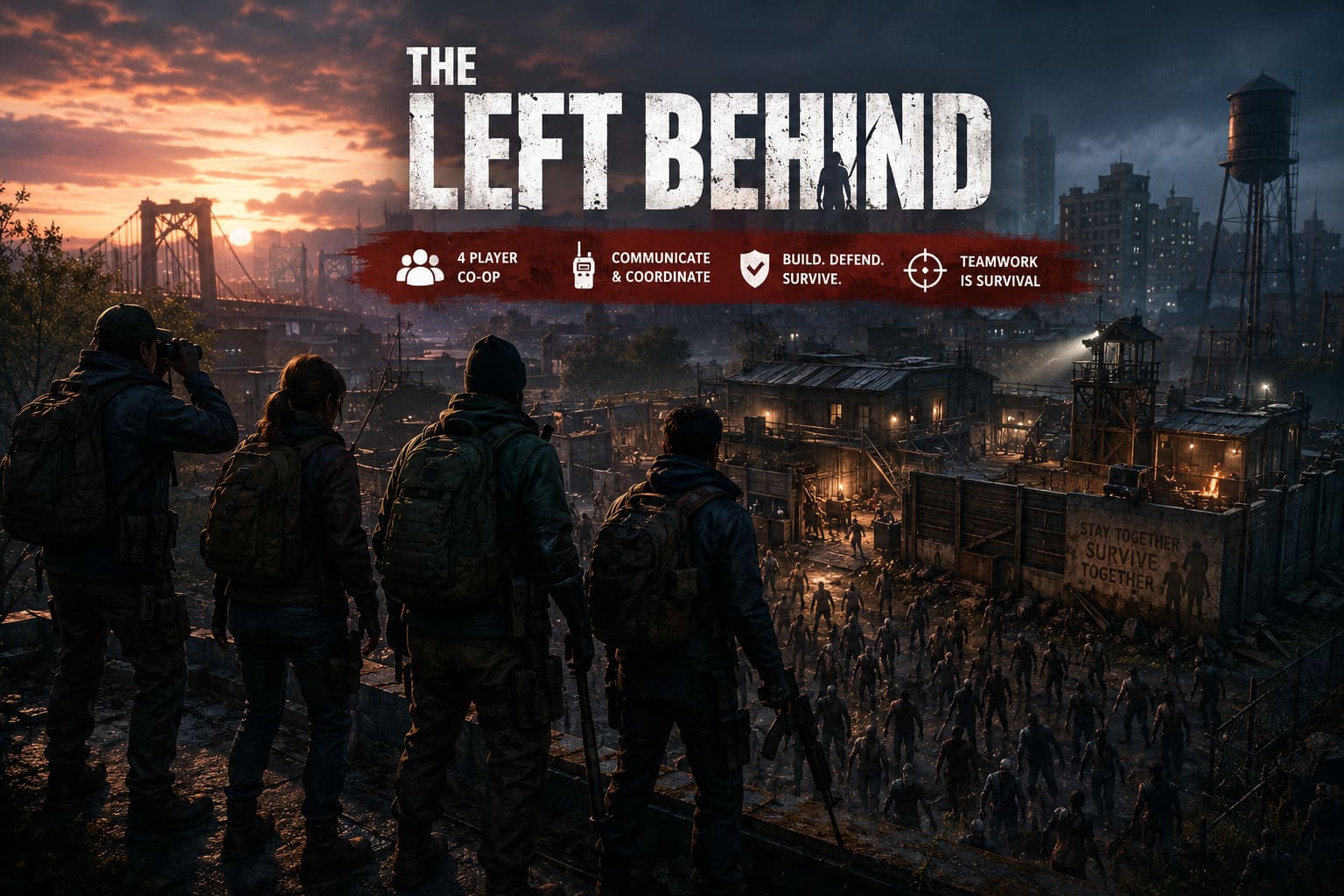
But four-player co-op is where the game truly shines.
The developers clearly designed many systems around teamwork. Enemy density increases, resources become more contested, and every decision suddenly affects the entire squad rather than just yourself.
That also means mistakes become much more expensive.
Instead of trying to become the hero, everyone needs to contribute something unique.
Setting Up Your Lobby the Right Way
Before discussing survival strategies, make sure your session itself is stable.
One of the biggest frustrations we’ve experienced wasn’t zombies—it was connection issues caused by different game versions or an unstable host.
Our checklist now looks like this:
| Setting | Recommendation | Why It Matters |
|---|---|---|
| Host | Best internet connection | Reduces lag during large hordes |
| Privacy | Friends Only or Invite Only | Keeps communication organized |
| Game Version | Everyone updated | Prevents failed connections |
| Voice Chat | Discord or similar | More reliable during intense fights |
| FPS Target | Stable 60 FPS | Better aiming and smoother movement |
A stable lobby saves far more frustration than increasing graphics settings ever will.
Communication Wins More Games Than Weapons
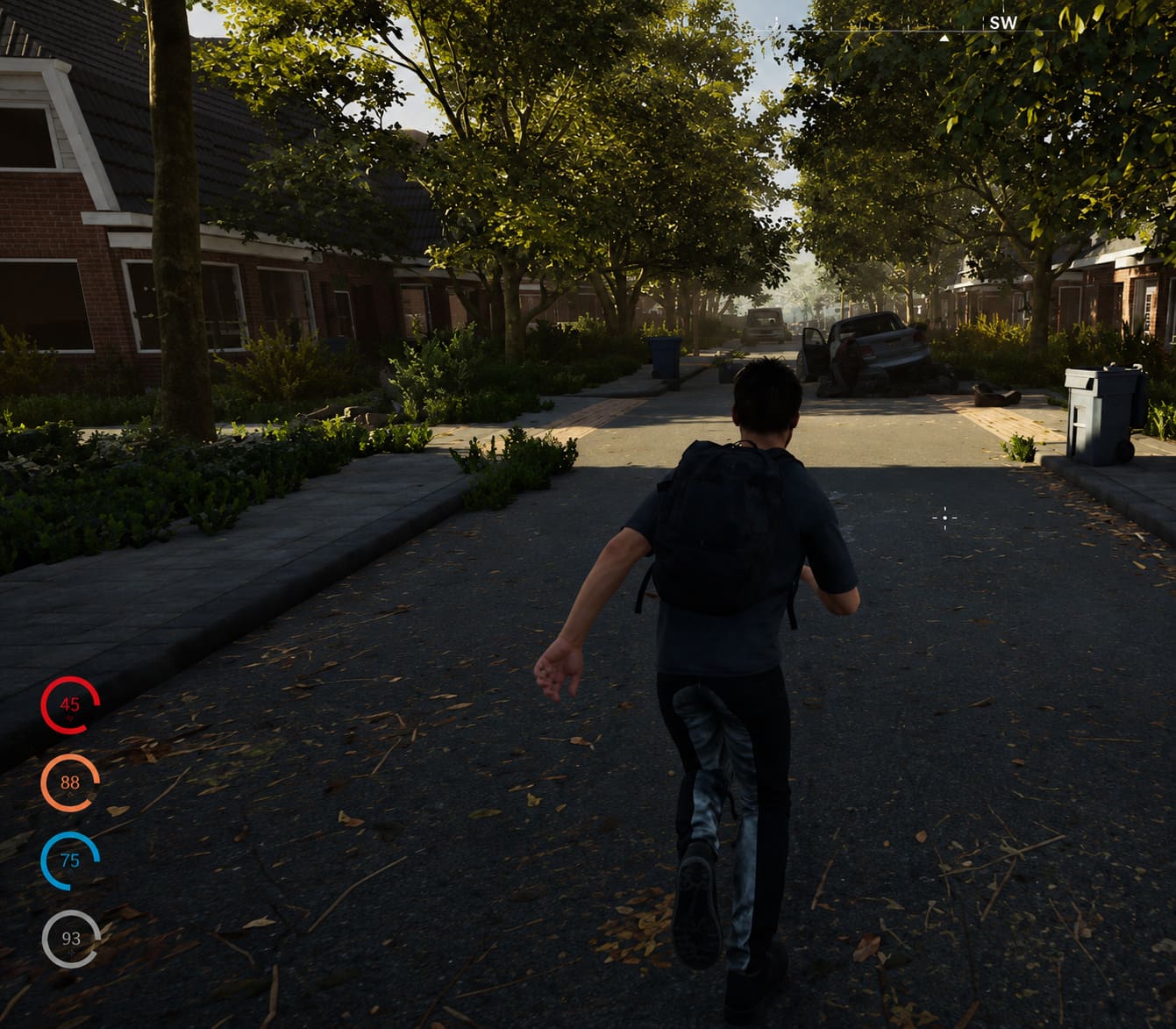
One thing I underestimated early on was how important communication becomes after sunset.
During daylight everyone naturally spreads out while searching buildings.
At night, every second counts.
Instead of constant chatter, our group keeps communication simple.
- Left stairs.
- Special infected behind.
- Need ammo.
- Healing.
- Moving upstairs.
Short callouts reduce confusion dramatically.
Nobody needs a detailed explanation while twenty infected are breaking through a doorway.
Give Everyone a Job
The biggest improvement our team made was assigning permanent responsibilities.
Not because the game forces you to.
Because it removes hesitation.
1. Scout
The Scout moves quickly through new locations and identifies valuable buildings before everyone commits.
Main priorities:
- Medical supplies
- Food
- Water
- Crafting materials
The Scout shouldn’t waste inventory space on unnecessary loot.
2. Frontline Fighter
Someone always has to stand between the infected and the rest of the squad.
Heavy melee weapons, shotguns, and crowd control tools fit this role perfectly.
The Frontliner isn’t chasing kills.
Their real job is creating space for everyone else.
3. Marksman
The sniper or rifle player often saves runs without anyone noticing.
Instead of focusing on common infected, eliminate:
- Dangerous special enemies
- Fast attackers
- High-priority targets
- Threats approaching from unexpected angles
Removing one elite enemy is usually more valuable than killing twenty regular infected.
4. Quartermaster
This role sounds boring until supplies start running low.
The Quartermaster tracks:
- Shared ammunition
- Healing items
- Water
- Food
- Repair materials
They’re also usually the fastest player to revive teammates because they’re already watching everyone’s health.
Don’t Waste Daylight
Daytime is your investment period.
Night is when that investment pays off.
One mistake many new groups make is wandering without a plan.
Instead, decide on one objective before leaving your shelter.
- Industrial buildings for equipment.
- Residential homes for food.
- Medical facilities for healing supplies.
- Schools for useful loot.
- Warehouses for crafting resources.
Completing one location thoroughly is almost always better than visiting five different places halfway.
Never Split Into Four Directions
I’ve seen this happen countless times.
Everyone says, “We’ll cover more ground.”
What actually happens is one player gets trapped, another runs out of stamina, someone else can’t reach the revive, and the entire run collapses.
Our rule is simple:
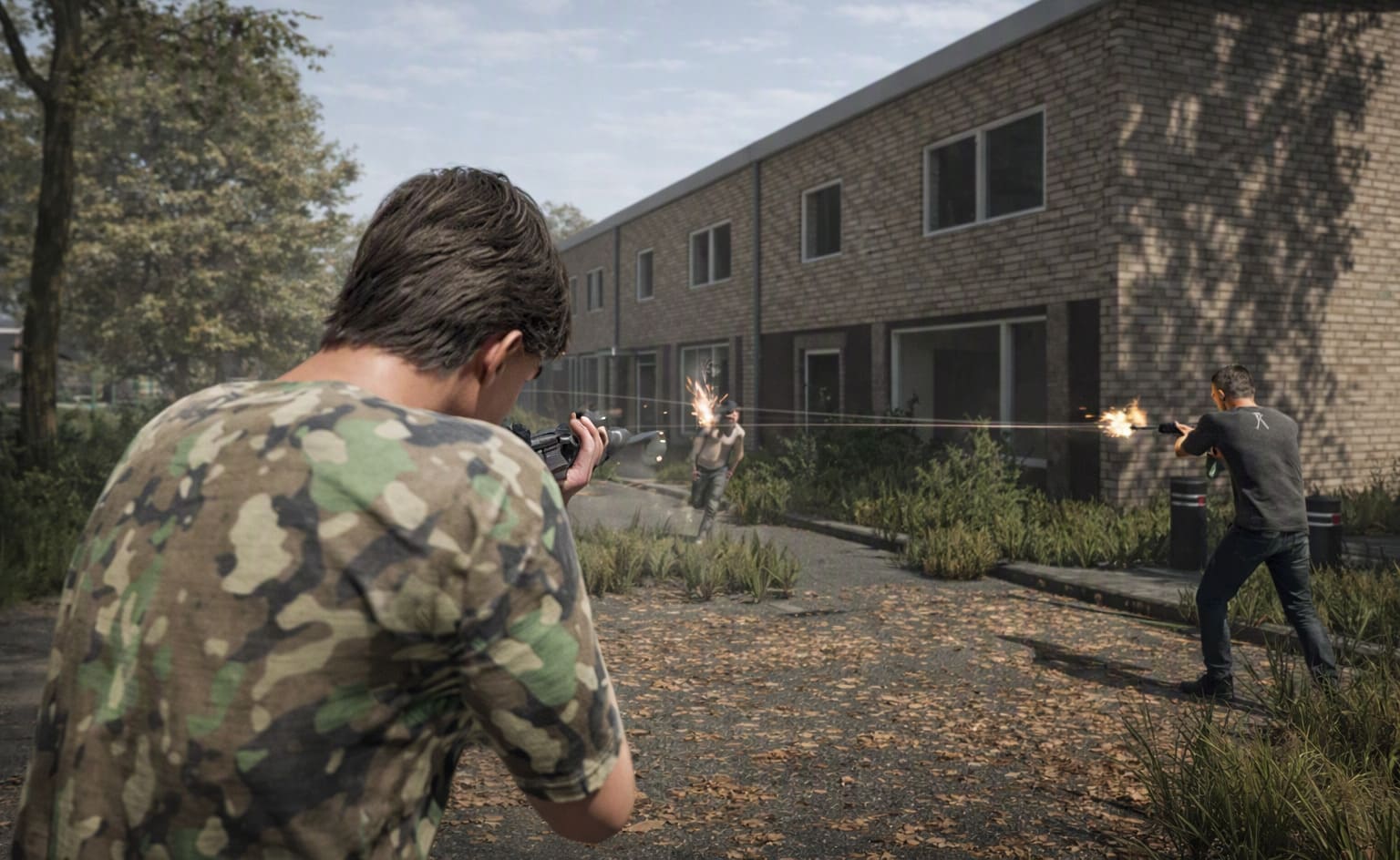
Always move as two pairs.
One pair clears interiors.
The second pair watches entrances, rooftops, and possible escape routes.
This formation dramatically reduces unnecessary deaths.
Build Defenses That Force Enemies Into Bad Decisions
The best bases aren’t necessarily the strongest.
They’re the easiest to defend.
Whenever possible we prioritize buildings with limited entrances, narrow hallways, staircases, second floors, and clear sightlines.
The infected AI naturally funnels toward obvious paths.
Good positioning lets four players defeat enemies that would overwhelm a poorly positioned team.
Sometimes relocating to a better building is smarter than endlessly reinforcing a weak one.
Noise Is Another Enemy
One mechanic I appreciate about The Left Behind is how much sound matters.
Loud weapons feel powerful.
They’re also invitations.
Early at night we almost exclusively rely on quieter options whenever possible.
Saving loud firearms for emergencies often means facing one manageable wave instead of three overlapping ones.
That small habit alone noticeably improved our survival rate.
Watch Your Survival Stats
The action can become so intense that it’s easy to ignore your basic needs.
Unfortunately, the game doesn’t.
Running low on food or water slowly creates problems that become obvious only during emergencies.
- Reduced stamina.
- Slower movement.
- Poor recovery.
Our group has developed a routine where every few minutes someone simply asks:
Everyone good on food and water?
It sounds almost too simple.
It works.
Endless Wave Mode Is an Entirely Different Challenge
After finishing the campaign, Endless Wave became our favorite mode.
It strips away the comfortable rhythm of daytime exploration and throws constant pressure at your team.
Unlike story mode, every decision has immediate consequences.
Open New Areas Early
Many groups stay inside the starting room far too long.
Unlocking new sections gives you:
- Better weapons.
- Additional escape routes.
- Stronger defensive positions.
- More resources.
The sooner your team expands, the more options you have later.
Rotate Instead of Making Last Stands
Holding one position forever feels heroic.
It usually ends badly.
When elite infected begin overwhelming your location, rotate together.
Never let one teammate stay behind trying to earn “just a few more kills.”
Coordinated movement keeps everyone alive far longer.
Think About Score Multipliers
If you’re chasing leaderboard positions rather than simple survival, efficiency matters.
Large coordinated eliminations often outperform scattered individual kills.
Stacking enemy groups before using explosives or powerful abilities can produce much stronger score chains.
Timing becomes almost as important as accuracy.
Small Habits That Quietly Increase Your Survival Rate
These aren’t flashy strategies, but they’ve consistently helped our squad.
- Close unnecessary doors behind you.
- Share ammunition before someone asks.
- Mark useful supplies immediately.
- Learn one reliable escape route from every major building.
- Don’t carry duplicate utility items unless necessary.
- Revive first, loot second.
None of these tips are revolutionary on their own.
Combined, they’re often the difference between surviving until sunrise or restarting another run.
The Left Behind Crafting Guide: Basic Recipes & How to Unlock New Areas (2026)
Final Thoughts
What surprised me most about The Left Behind wasn’t the horror or even the infected.
It was how naturally the game encourages teamwork without constantly telling you what to do.
Every failed night teaches something new.
Maybe your base had too many entrances.
Maybe the team spent too much time looting.
Maybe everyone carried weapons while nobody carried enough medical supplies.
Those lessons gradually transform four random players into an organized survival squad.
That’s what keeps bringing me back.
There are prettier survival games, and there are certainly easier ones, but few titles make successful cooperation feel this satisfying. When your team survives an overwhelming midnight assault because everyone performed their role perfectly, it feels earned—not scripted.
If you’re jumping into The Left Behind with friends this year, don’t focus on finding the strongest weapon first. Focus on building good habits, communicating clearly, and trusting your teammates. The gear will come naturally. Surviving the later nights, however, depends almost entirely on how well your squad works together when everything starts going wrong.