Tears of Metal Combat Guide: Beginner Tips and Strategies for Paper Cult’s Roguelike
When I first jumped into Tears of Metal, I expected another hack-and-slash game where mashing attack buttons would carry me through the opening hours. It only took a couple of failed runs to realize that Paper Cult built something much deeper. On the surface, you’re carving through waves of enemies with oversized weapons and leading a squad of Scottish warriors into battle. Underneath that, though, there’s a surprisingly tactical roguelike where positioning, timing, and long-term decisions matter just as much as raw aggression.
What surprised me the most wasn’t the combat itself—it was how attached I became to my battalion. Losing your own character is frustrating, but watching experienced soldiers disappear permanently because of a careless mistake hurts even more. That changes the way you approach every encounter.
If you’re just starting your journey, here are the lessons I wish someone had shared before my first expedition.
Don’t Treat It Like a Traditional Hack-and-Slash
The biggest mistake new players make is assuming every fight should be approached the same way.
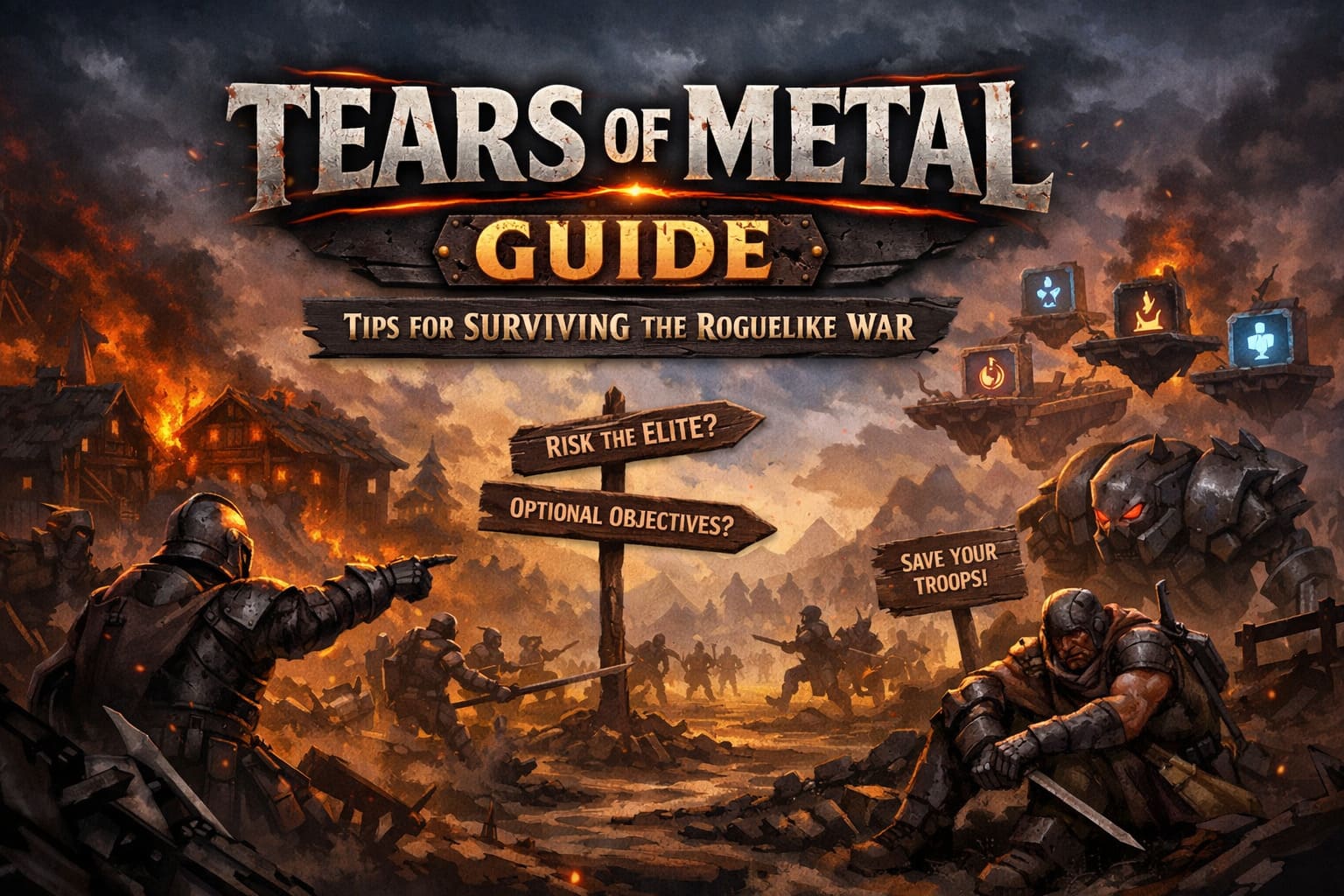
Unlike many action games where you simply clear one arena after another, every run in Tears of Metal constantly asks you to make decisions. Should you chase optional objectives? Do you risk another elite encounter? Is it worth pushing forward when half your battalion is already injured?
That’s what gives each run its personality.
Instead of sprinting directly toward every enemy group, slow down for a second and read the battlefield. The game rewards patience much more often than reckless aggression.
Your Battalion Is More Valuable Than You Think
One mechanic that immediately separates Tears of Metal from most roguelikes is your AI-controlled army.
At first I viewed them as background support. After several runs, I realized they’re actually your strongest resource.
A healthy battalion can:
- Keep dangerous enemies occupied.
- Interrupt ranged attackers.
- Create openings for your heavy attacks.
- Absorb pressure that would otherwise overwhelm you.
The problem?
Unlike your hero, veteran soldiers don’t always come back.
Because of that, every battle becomes a balancing act between personal survival and protecting your troops.
Sometimes retreating for a few seconds is a far smarter decision than trying to finish an enemy immediately.
Learn One Combat Rotation Before Experimenting
The combat system feels incredibly satisfying once you stop improvising every fight.
A simple rotation works surprisingly well through much of the early game:
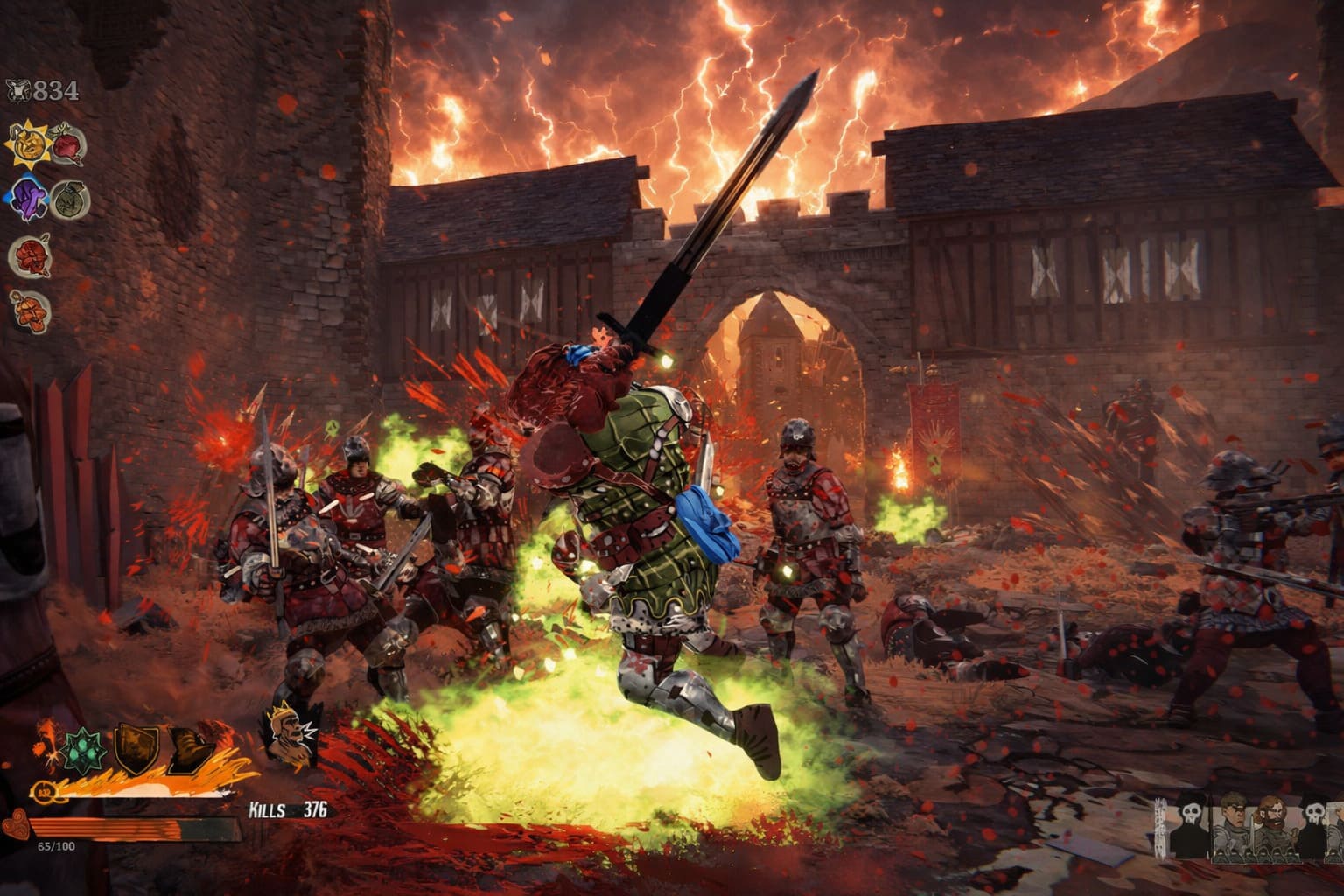
- Open with a heavy strike to stagger shields.
- Chain several quick attacks.
- Dash before enemies surround you.
- Reposition.
- Trigger your area ability once multiple enemies collapse together.
It sounds basic, but consistency matters far more than flashy combos.
One habit I had to break was finishing every heavy animation. Many elite enemies punish long attack recoveries, especially once archers begin firing from the edges of the battlefield.
If something dangerous is winding up an attack, cancel your aggression and move.
Survival always generates more damage than greed.
Movement Wins More Battles Than Damage
After dozens of encounters, I honestly think movement is stronger than most early upgrades.
Standing still almost always ends badly.
Enemy groups naturally surround you, ranged units constantly reposition, and larger opponents love attacking from awkward angles.
Your dash isn’t simply an escape tool.
Use it to:
- Slip behind shield users.
- Escape crowd control.
- Line enemies into sweeping attacks.
- Protect weakened soldiers.
- Avoid long recovery animations.
The battlefield becomes much easier once you think about positioning instead of damage numbers.
Practice Parries Early
I ignored the parry system during my first few runs.
That was a mistake.
Blocking can save your life, but a successful parry completely changes the pace of combat.
Well-timed defensive play can:
| Situation | Result |
|---|---|
| Basic infantry attacks | Quick stagger and breathing room. |
| Elite enemy swings | Massive counterattack opportunity. |
| Multiple attackers | Temporary crowd disruption. |
| Boss openings | Extra damage windows. |
The timing isn’t overly strict, which makes it worth practicing against weaker enemies before later bosses begin mixing faster attack patterns.
Landing consistent parries often feels stronger than finding another damage artifact.
Build Around One Idea
Roguelikes constantly tempt players with powerful-looking upgrades.
The trap is taking everything that appears rare.
I’ve ruined several promising runs simply because my build lacked focus.
Instead, decide early what your character wants to become.
Critical Build
Prioritize bonuses that improve critical chance, critical damage, attack speed, and momentum generation.
Elemental Build
Focus on one primary element rather than collecting random status effects.
Survivability Build
Increase maximum health, sustain, defensive bonuses, and healing whenever possible.
Specializing almost always produces stronger late-game runs than collecting unrelated legendary items.
Status Effects Become Stronger Later
Elemental effects don’t seem impressive during the opening stages.
Later on, they become some of the strongest mechanics available.
| Element | Best Use |
|---|---|
| Fire | Continuous boss damage. |
| Lightning | Clearing large enemy groups. |
| Ice | Slowing aggressive enemies and creating safer openings. |
Rather than mixing everything together, look for artifacts that multiply the effectiveness of whichever element you’ve already committed to.
The synergy becomes noticeable surprisingly quickly.
Your Village Isn’t Just Decoration
Between expeditions you’ll gradually rebuild your settlement.
It can be tempting to ignore the village and immediately launch another run.
Don’t.
Permanent progression is one of the biggest advantages you’ll earn.
Whenever resources are limited, I usually prioritize:
- New merchants.
- Blacksmith upgrades.
- Better starting equipment.
- Additional hero unlocks.
Every improvement makes future runs noticeably smoother.
Eventually you’ll reach the point where failed expeditions still feel productive because your settlement continues growing.
Try Every Hero
It’s easy to stick with the first character that clicks.
I almost did.
Eventually I started experimenting and discovered that different heroes completely change how combat feels.
Some reward aggressive frontline play.
Others emphasize mobility, crowd control, or ability-focused combat.
If progression suddenly feels difficult, don’t immediately assume your gear is the problem.
Sometimes another hero simply matches your preferred playstyle much better.
Co-Op Is More Than Just Extra Players
Playing with friends is where Tears of Metal really starts showing its strengths.
Enemy numbers increase, battles become far more chaotic, and teamwork suddenly matters.
A few habits dramatically improve multiplayer runs:
- Spread responsibilities instead of everyone chasing damage.
- Let one player focus on controlling enemy crowds.
- Save specialized artifacts for teammates who benefit most.
- Coordinate battalion commands whenever possible.
Good communication often matters more than individual mechanical skill.
Four coordinated players can clear encounters that feel almost impossible with four people playing independently.
Mistakes That End Most Beginner Runs
These are the errors I see most often—including several I kept repeating myself.
| Mistake | Better Approach |
|---|---|
| Chasing every elite enemy | Fight only when prepared. |
| Ignoring battalion health | Protect experienced soldiers. |
| Taking random artifacts | Build around one strategy. |
| Standing still during combos | Keep repositioning. |
| Forgetting defensive mechanics | Mix offense with blocks and parries. |
| Spending everything on damage | Balance offense and survivability. |
Avoiding these habits alone can dramatically improve your consistency.
Is Tears of Metal on Xbox Game Pass? Early Access Release Date, Gameplay, and Platforms Explained
Final Thoughts
What makes Tears of Metal stand out isn’t just its satisfying combat or the spectacle of leading a Scottish battalion through massive battles.
It’s the constant tension between short-term survival and long-term progression.
Every decision carries weight. Every soldier matters. Every artifact can completely reshape a run if it fits the strategy you’ve already built.
Personally, that’s what keeps bringing me back. Every failed expedition teaches something new, whether it’s discovering a stronger build path, learning better positioning, or simply realizing I pushed one encounter too aggressively.
If you’re struggling during your first few campaigns, don’t focus on finding the “perfect” build immediately. Learn enemy patterns, protect your battalion, commit to a clear upgrade path, and treat movement as your strongest weapon.
Once those habits become second nature, the game opens up in a way that feels incredibly rewarding. The battles become smoother, bosses feel less intimidating, and every successful run genuinely feels earned—which is exactly what a great roguelike should deliver.