STALKER 2 Exoskeleton Repair Guide: How to Fix Tier 3 Exo Suits Cheaply
If there is one thing in S.T.A.L.K.E.R. 2: Heart of Chornobyl that can make me hesitate before walking into a technician’s workshop, it is not a Bloodsucker, a Controller, or a field full of gravitational anomalies.
It is the repair bill.
The first time I started using a proper Tier 3 Exoskeleton, I thought I had finally solved one of the Zone’s biggest problems. Better protection, better carrying capacity, ridiculous late-game survivability. Then I came back to base with a damaged suit, looked at the repair price, and immediately started wondering whether I actually needed both legs.
That’s the strange thing about STALKER 2. Getting the Exoskeleton is only half the battle. Keeping it repaired can become a second economy game.
The good news is that you don’t have to throw tens of thousands of coupons at every technician visit. After spending far too much time thinking about durability, upgrades, artifacts, and where I was taking my gear, I’ve found that Tier 3 Exoskeleton maintenance becomes much more manageable once you stop treating repairs as an unavoidable expense.
Here’s how I approach it.
Why Tier 3 Exoskeleton Repairs Are So Expensive
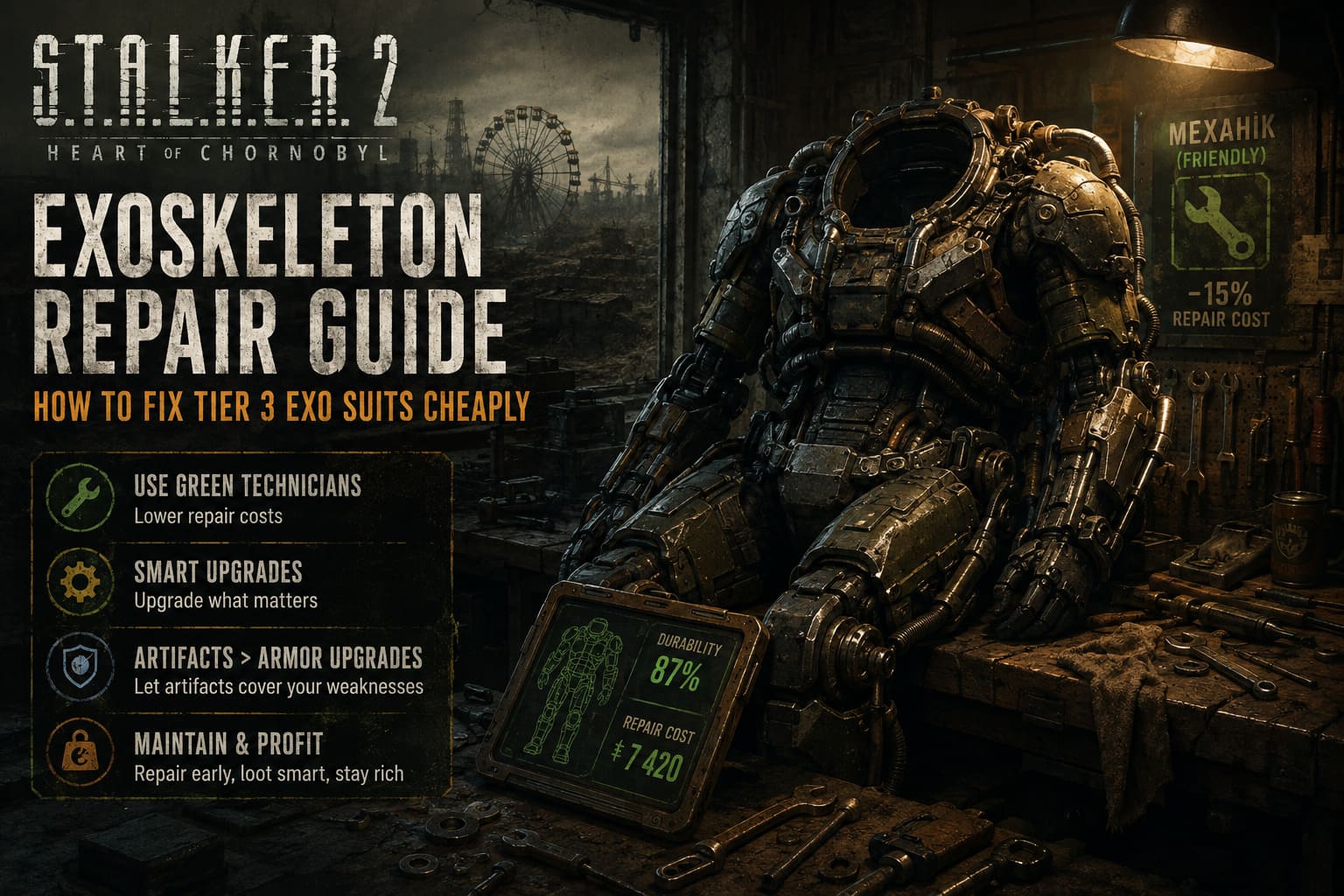
High-end suits such as the Diamond Exoskeleton, Liberty Exoskeleton, and other late-game Tier 3 armor pieces are expensive to repair because the game isn’t simply looking at the number displayed on your durability bar.
The repair calculation is influenced by several things, including:
- The suit’s base value
- How much durability has been lost
- The total value of installed upgrades
- Your relationship with the technician’s faction
That last part is particularly important.
And upgrades are the part that caught me off guard. When you’re standing at a technician’s screen with a pile of coupons and a big upgrade tree in front of you, it is very tempting to buy everything. I used to think that once I had paid for an upgrade, that money was gone and the decision was finished.
Not quite.
Installed upgrades can also increase the amount you pay when repairing the suit later.
So the “perfect” Exoskeleton with every available modification isn’t necessarily the most economical Exoskeleton.
A Simplified Way to Think About the Repair Formula
The community’s mechanical testing has produced a simplified repair model that looks roughly like this:
Repair Cost = (Wear × Base Suit Price / 1.9) + (Wear × Upgrade Cost × 0.1)
This isn’t something you need to calculate with a calculator every time you visit a technician. The important takeaway is much simpler:
More wear + a more expensive suit + more expensive upgrades = a nastier repair bill.
That’s why the smartest Exoskeleton build isn’t always the one with the longest upgrade list.
My First Rule: Find a Green Technician
This is probably the easiest money-saving trick in the entire system.
When you open your map, technicians are represented by wrench icons. Their relationship status can affect what you pay, and friendly technicians are the ones I look for when my armor is in bad shape.
A green technician is your friend.
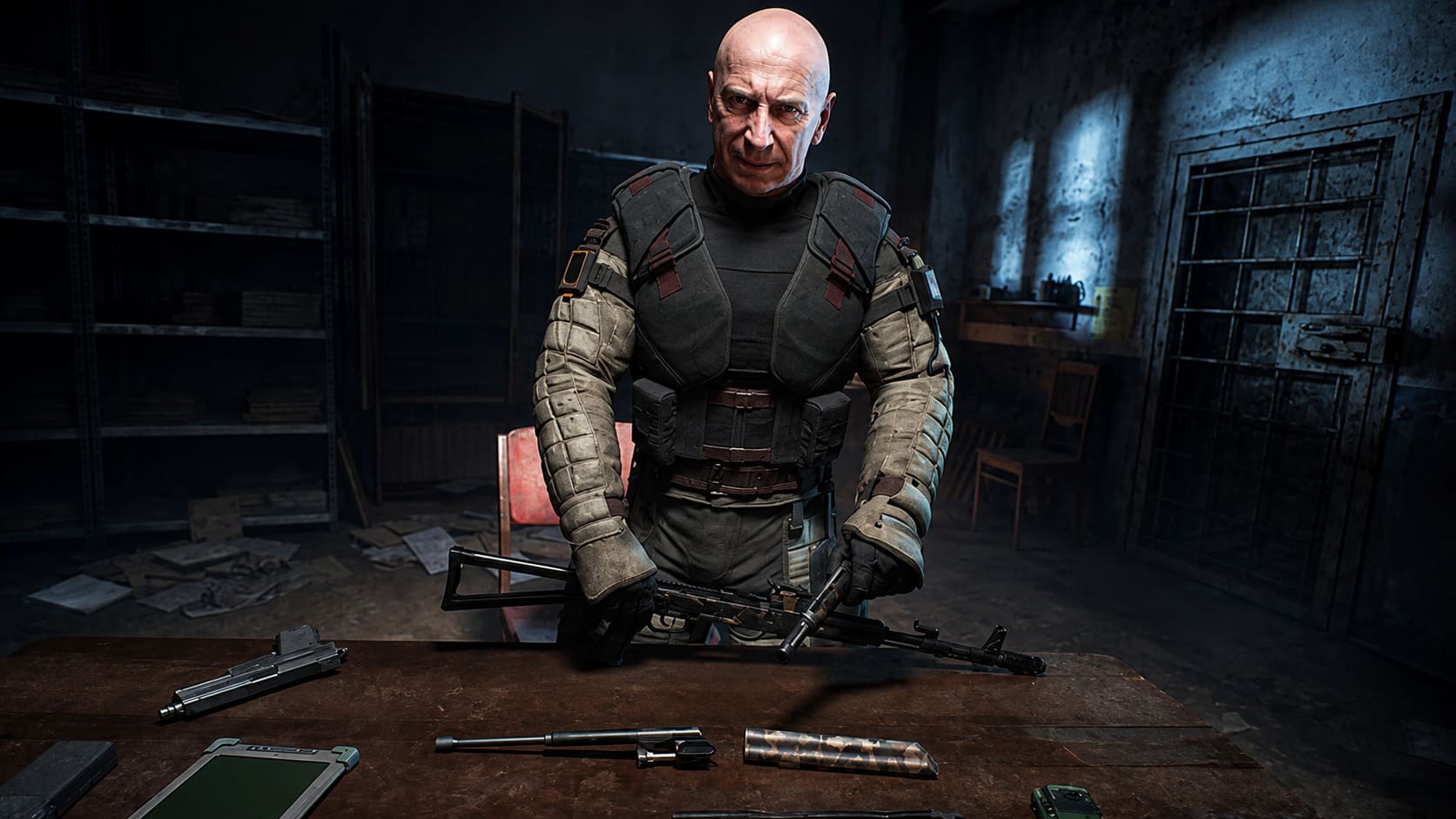
A neutral technician can charge substantially more, and when you’re repairing cheap early-game armor, that difference might barely register. With a heavily upgraded Tier 3 Exoskeleton, however, the extra cost becomes painful.
| Technician Status | What I Do | Why |
|---|---|---|
| Green | Use for major repairs | Best option for expensive gear |
| White/Neutral | Avoid when possible | Higher repair cost |
| Friendly Hub Technician | Prefer for late-game suits | Worth the trip for large repairs |
This is one of those mechanics that feels insignificant until you start dealing with five-digit repair bills.
If I’m sitting on a badly damaged Diamond Exoskeleton, I would rather spend a little time traveling to a friendly hub than casually hand a neutral mechanic another chunk of my savings.
Yaniv and Pripyat become particularly useful destinations once you’re operating in the late game, assuming you have access to friendly technicians there.
The Zone is dangerous enough. There is no reason to fight both mutants and an unfavorable repair price.
Don’t Turn Your Exoskeleton Into a Christmas Tree
This is where I think a lot of players make a mistake.
The upgrade menu practically encourages you to keep spending. You unlock something useful, you have enough coupons, so you buy it. Then another upgrade appears. Then another.
Eventually your Exoskeleton has every possible modification, and you have a suit that costs a fortune every time it gets damaged.
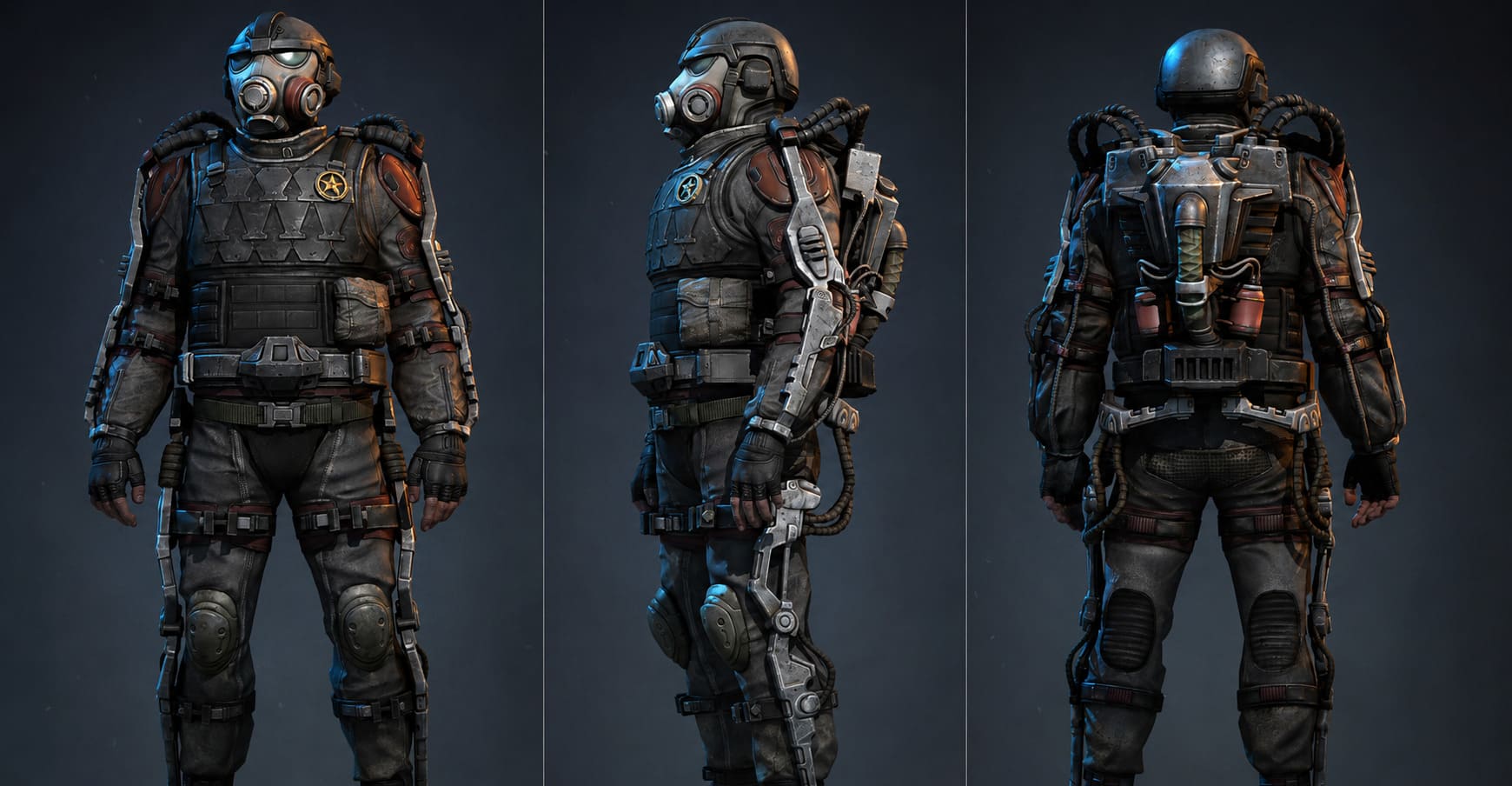
I prefer a leaner setup.
The first upgrades I’d consider are those that actually change how I use the armor. Wear resistance is especially attractive because reducing durability loss means reducing the number of times I need to visit a technician in the first place.
Carry-weight improvements can also make sense because one of the biggest reasons to wear an Exoskeleton is being able to haul an absurd amount of loot out of the Zone.
The upgrades I’m much more cautious about are the ones that simply duplicate protection I’m already getting from artifacts or another part of my equipment.
For example, if my artifact setup already gives me strong resistance against a particular environmental hazard, I’m not automatically going to dump more coupons into armor upgrades for the same purpose.
The goal isn’t to build the most upgraded suit possible.
The goal is to build the most useful suit for the way you actually play.
The Artifact Trick That Makes Exoskeletons Much More Interesting
This is where the whole repair discussion gets more interesting.
Artifacts can change the value equation of your armor because defensive stats don’t necessarily need to come entirely from your suit.
Physical protection is especially important because it has a practical upper ceiling. Once you are already approaching the maximum level of protection available through your equipment, stacking more of the same defensive stat can have diminishing value.
That’s where artifacts such as Compass become extremely useful.
Compass is one of those artifacts that can make you rethink your entire loadout. Instead of throwing every available upgrade into your Exoskeleton, you can use artifacts to supplement the protection you’re missing.
Other high-end artifacts can also become part of this strategy depending on your build and what you have available.
The basic idea is simple:
Don’t make your armor do a job that your artifacts can already handle.
This doesn’t mean artifacts magically turn a cheap suit into an identical replacement for a fully upgraded Tier 3 Exoskeleton. They don’t. But they can let you spend your coupons in smarter places and avoid upgrading defensive branches that aren’t giving you much practical benefit.
I Wouldn’t Wear the Exoskeleton Everywhere
This sounds obvious, but it took me a while to actually start doing it.
If I’m going artifact hunting in an anomaly field, I don’t automatically wear my most expensive combat armor.
Why would I?
If the area is going to chew through durability anyway, I’m effectively turning my best armor into an environmental damage sponge. Sometimes the better choice is a specialized scientific suit or another cheaper piece of equipment that can handle the situation without creating a gigantic repair bill afterward.
The SSP-100M Sircaa, for example, can be a much more sensible choice for certain anomaly-focused excursions.
My rule is basically:
Wear the right suit for the job, not the most expensive suit you own.
Going into a mutant-heavy combat zone? Bring the Exoskeleton.
Exploring an anomaly field specifically for artifacts? Consider something specialized.
Walking around an area where you’re barely expecting combat? There is no prize for wearing your most expensive armor every second of the game.
Don’t Wait Until the Armor Is Falling Apart
Another habit I changed was waiting too long to repair.
There is a temptation to squeeze every last percentage point out of expensive equipment because nobody likes paying a repair bill. But letting your armor deteriorate too far can create a different problem.
Once your equipment is heavily worn, its effectiveness can suffer, and you’re also walking around with a giant repair expense waiting for you.
I prefer preventative maintenance.
If my Exoskeleton starts getting into the 85–90% durability range, that’s when I start thinking about a repair trip, especially if I’m heading into an area where I know I’ll be taking a lot of damage.
It might feel wasteful to repair armor before it looks completely destroyed.
In practice, I find it much easier to manage smaller maintenance costs than one horrifying end-of-expedition bill.
The Best Repair Strategy Is Not Taking Damage
This sounds like the most obvious advice imaginable, but in STALKER 2 it matters.
Your armor loses durability because you’re doing dangerous Zone things. That means every avoidable fight is potentially another repair expense.
I don’t mean that you should play like a pacifist. That’s not really the STALKER experience.
But I have become much more selective about fights.
If I can sneak around a group of enemies, I often do. If I don’t need to investigate a dangerous anomaly on the way to my objective, I leave it alone. If a mutant isn’t guarding anything valuable, sometimes it simply isn’t worth the ammunition, medical supplies, and armor durability.
The cheapest repair is the repair you never need.
That’s especially true with an expensive Tier 3 suit.
Turn Your Exoskeleton Into a Loot-Making Machine
There is another side to this equation: making enough money that repairs stop being scary.
One of the biggest advantages of an Exoskeleton is its carrying capacity. If I’m going out with expensive armor, I want to take advantage of that.
Late-game human enemies can provide excellent weapons to sell, particularly when you’re already traveling through areas with high-tier equipment.
Instead of returning to base with only artifacts and a few random consumables, I’ll often strip useful weapons from enemies when the weight and condition make the trip worthwhile.
Gauss rifles, high-end assault rifles, and other valuable firearms can turn an expedition into a serious coupon run.
Ragman in Rostok is one of the traders I like to use when I’m unloading valuable equipment.
The trick is not to pick up literally everything.
That’s another trap.
Your Exoskeleton gives you a huge amount of carrying capacity, but that doesn’t mean every rusty shotgun suddenly became a valuable investment. Be selective. Grab the expensive stuff. Leave the junk.
STALKER 2 Scar Lore Ending Explained: What Happened to the Clear Sky Protagonist?
My Cheap Tier 3 Maintenance Routine
After experimenting with different approaches, this is the routine I’d recommend to anyone who feels like their Exoskeleton is permanently connected to a technician’s repair bench.
- Use a green technician whenever possible.
- Repair before durability gets dangerously low.
- Prioritize wear resistance and practical utility upgrades.
- Don’t automatically purchase every upgrade.
- Use artifacts to fill defensive gaps instead of duplicating expensive armor upgrades.
- Take specialized suits into anomaly-heavy areas when appropriate.
- Use the Exoskeleton’s carrying capacity to bring valuable loot home.
It sounds simple, but these habits make a surprisingly large difference over a long playthrough.
STALKER 2 Faction War Guide: How to Trigger and Master the Dynamic Territory Warfare System
The Real Trick Is Thinking Like a STALKER
The biggest lesson here isn’t really about the repair formula.
It’s about how you approach the Zone.
When I first started using high-end armor, I treated the Exoskeleton like a permanent upgrade to my character. Once I had it, I wanted to wear it everywhere, upgrade everything, and squeeze every possible stat out of it.
That approach gets expensive fast.
Now I treat my Tier 3 Exoskeleton as a specialized piece of equipment. I bring it when I expect serious combat. I don’t waste its durability on pointless fights. I don’t cover every upgrade branch just because I can. And when it needs maintenance, I take it to somebody who isn’t going to charge me a fortune.
That’s much closer to how I think STALKER is meant to be played anyway.
The Zone doesn’t reward having the most expensive gear.
It rewards knowing when to use it.
And once you stop treating your Exoskeleton as something that must be worn constantly, those terrifying repair bills become much easier to control.
Best approach: keep your upgrades focused, maintain good faction relations with technicians, use artifacts intelligently, and make your Exoskeleton earn its keep by carrying valuable loot home.
That way, your Tier 3 armor remains a powerful survival tool instead of becoming the most expensive piece of dead weight in your inventory.