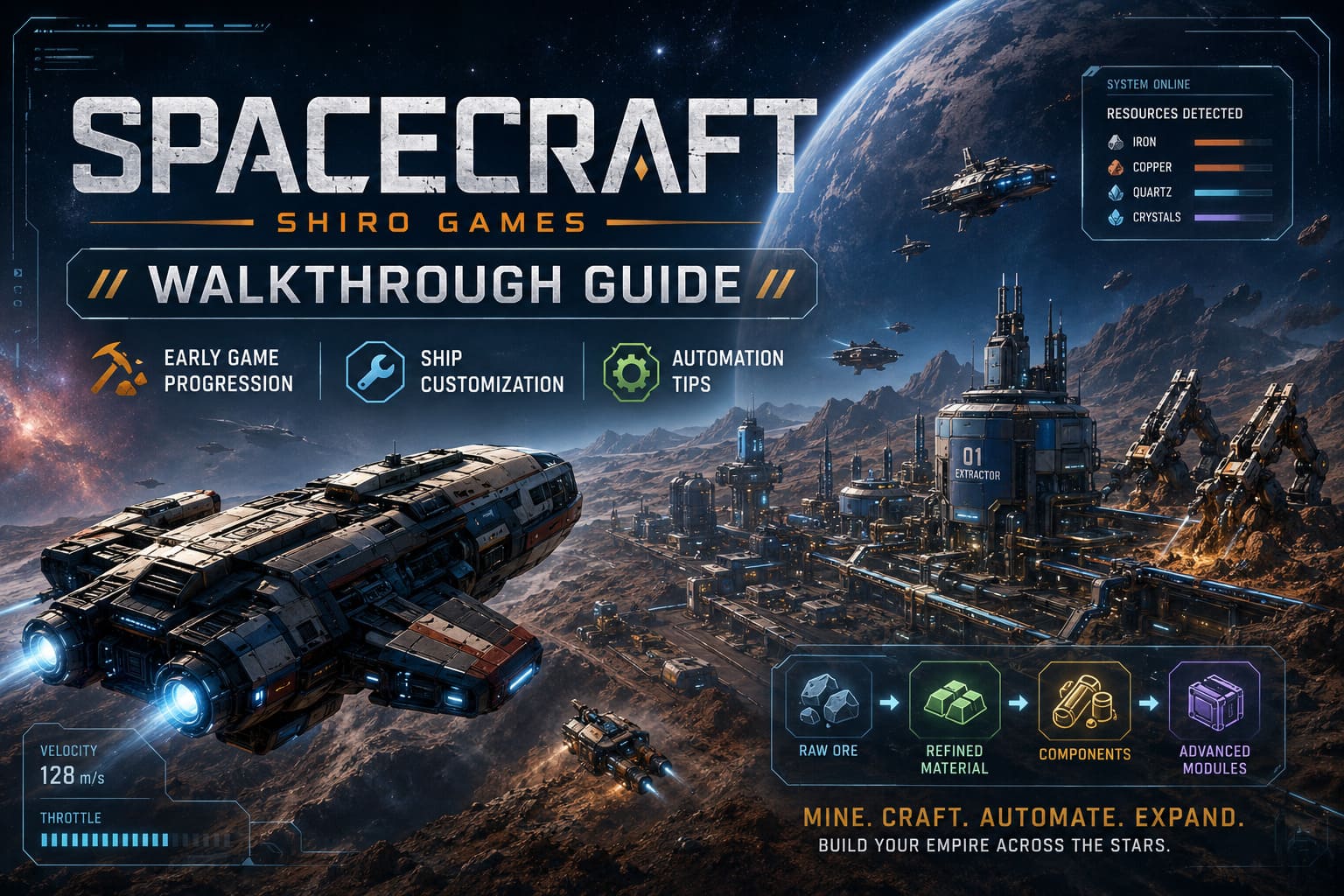
SpaceCraft Shiro Games Walkthrough Guide: Early Game Progression, Ship Customization, and Automation Tips
When I first launched SpaceCraft, I expected another survival sandbox with some spaceship building on the side. Instead, I found myself completely absorbed in a game that feels like a fascinating mix of industrial automation, exploration, and large-scale space engineering.
Developed by Shiro Games, the studio behind successful strategy titles such as Northgard and Wartales, SpaceCraft takes a bold step into the MMO sandbox genre. The game drops players into a massive persistent galaxy where survival is only the beginning. Mining resources, designing ships, creating automated production chains, and expanding across planets eventually become the core of the experience.
After spending many hours learning the systems, making mistakes, rebuilding ships, and optimizing production routes, I’ve gathered the most important lessons every new player should know.
First Impressions: A Universe That Doesn’t Hold Your Hand
One thing becomes obvious almost immediately: SpaceCraft isn’t interested in guiding players through every mechanic. The game presents a huge galaxy and expects you to figure things out.
You begin as a stranded convict with an outdated starter vessel and very limited resources. Your first objective seems simple enough—complete contracts and gather materials—but every activity eventually feeds into larger progression systems.
What makes the experience interesting is how every action feels connected:
- Mining unlocks crafting opportunities.
- Crafting unlocks better ship modules.
- Better ships increase efficiency.
- Efficiency leads to automation.
- Automation allows expansion into multiple systems.
This progression loop is surprisingly addictive.
Understanding Flight Before You Crash
One of the biggest mistakes new players make is treating SpaceCraft like an arcade space shooter.
The flight model rewards patience.
Your ship carries momentum, meaning it won’t instantly stop when you release movement controls. During my first few hours, I repeatedly slammed into docking structures because I forgot to reduce thrust.
A few habits helped me tremendously:
| Flight Tip | Why It Matters |
|---|---|
| Reduce throttle early | Prevents high-speed collisions |
| Approach stations slowly | Makes docking much easier |
| Watch velocity indicators | Momentum can surprise you |
| Use boosters selectively | Conserves resources |
| Plan turns ahead | Heavy ships respond slowly |
Learning proper momentum management early saves both time and repair costs.
My Recommended Early-Game Progression Path
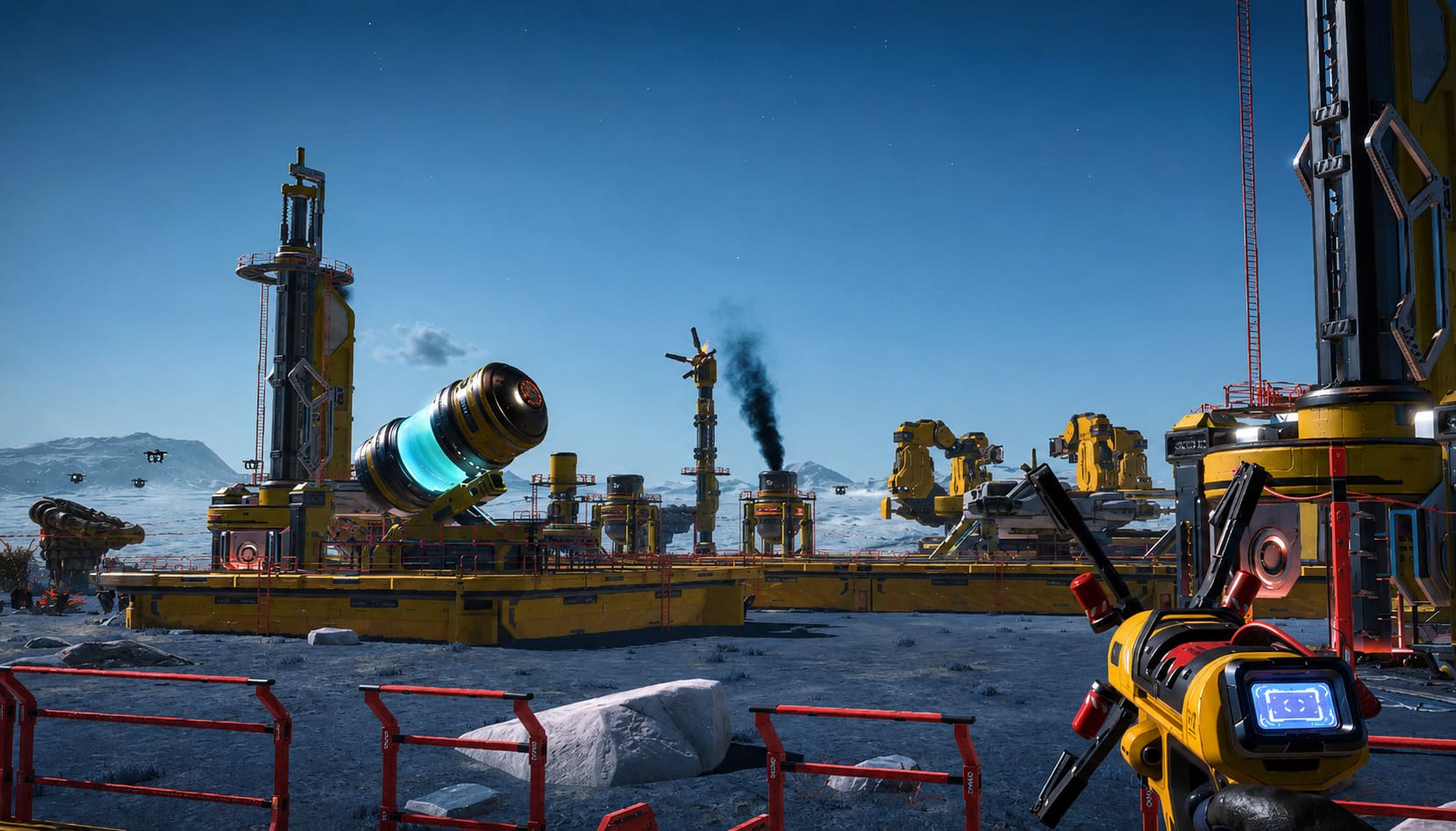
The opening missions serve as an introduction to exploration, scanning, and resource gathering.
Rather than rushing through objectives, I recommend using the tutorial phase to familiarize yourself with planetary navigation.
Explore Every Scan Target
When visiting your first planet, you’ll encounter various resource signatures and points of interest.
Many players only scan the objects required for mission completion.
That’s a mistake.
Additional scans contribute valuable knowledge progression and often reveal materials you’ll need later. Every extra discovery reduces future grinding.
Focus on Core Resources
During the first several hours, I concentrated almost entirely on gathering:
- Iron
- Copper
- Quartz
- Basic crystalline materials
These resources become essential for multiple crafting recipes and technology unlocks.
Stockpiling them early significantly reduces future bottlenecks.
The First Real Roadblock: Technology Progression
The moment that catches most beginners off guard is the first major permit unlock.
Suddenly, simple mining isn’t enough.
You need refined components.
You need manufactured parts.
And most importantly, you need to understand the production chain.
Instead of selling every resource you gather, start processing materials immediately.
For example:
Raw Ore → Refined Material → Components → Advanced Modules
This production philosophy becomes the foundation of the entire game.
The sooner players embrace manufacturing, the smoother progression feels.
Why Ship Design Is More Important Than Mining
Many newcomers assume their character is the primary source of progression.
In reality, your ship is your character.
Every modification directly affects performance.
Every module changes how efficiently you operate.
Every upgrade influences your future income.
This design philosophy creates an incredible amount of freedom.
Essential Ship Components
Regardless of your preferred playstyle, every vessel requires:
| Module | Purpose |
|---|---|
| Command Module | Controls the ship and crew |
| Engine Module | Provides propulsion |
| Cargo Storage | Expands carrying capacity |
| Utility Hardpoints | Supports mining and scanning tools |
| Defensive Systems | Protects valuable cargo |
Everything beyond these fundamentals depends on your goals.
Balancing Weight Matters More Than You Think
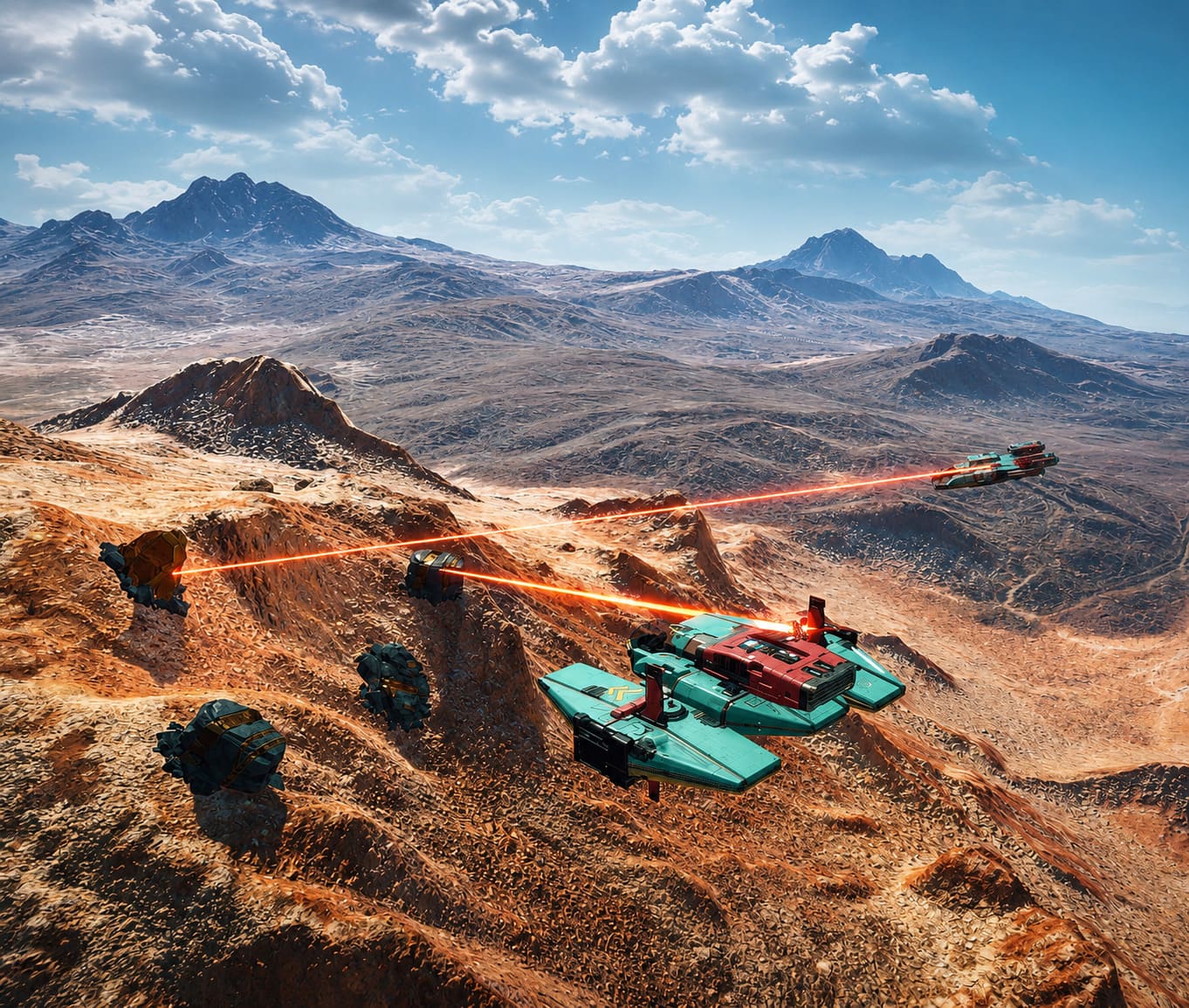
One lesson I learned the hard way involved weight distribution.
My first custom mining vessel looked fantastic.
Unfortunately, I attached most storage modules to one side.
The result?
Terrible handling.
Long turns.
Awkward movement.
Constant correction while flying.
A balanced ship performs dramatically better than an asymmetrical one.
Whenever possible:
- Place cargo evenly.
- Mirror heavy modules.
- Keep engines aligned.
- Avoid oversized expansions early.
A smaller, balanced ship often outperforms a larger, poorly designed vessel.
Hardpoints: The Secret to Efficiency
Hardpoints may look like simple attachment slots, but they’re among the most important mechanics in the game.
Choosing the right equipment dramatically changes productivity.
Early Game Recommendations
For beginners, I strongly suggest prioritizing:
- Mining Lasers
- Resource Scanners
- Cargo Enhancements
Combat equipment can wait.
The early game revolves around gathering materials and establishing financial stability.
Once pirate encounters become more common, you can gradually shift toward defensive upgrades.
The Moment SpaceCraft Truly Opens Up
For me, the game transformed completely when I built my first automated outpost.
Up until that point, I was manually mining everything.
That approach quickly becomes inefficient.
Resource demands increase dramatically as technology tiers advance.
Automation isn’t optional.
It’s essential.
Building Your First Automated Mining Operation
Creating a successful outpost requires three core systems.
Resource Extraction
Find a planet with strong resource concentrations.
Deploy extractors directly onto valuable deposits.
The better the deposit quality, the greater your long-term production potential.
Reliable Power Generation
Every industrial structure needs energy.
Depending on planetary conditions, you’ll likely rely on:
- Solar arrays
- Wind generators
- Advanced power infrastructure
Without stable power, production simply stops.
Storage and Logistics
Raw resources need somewhere to go.
Connect extractors to storage containers and transport systems.
This may seem simple initially, but efficient logistics eventually become one of the deepest aspects of the game.
Why Logistics Becomes the Real Endgame
At first, mining feels like the primary objective.
Later, you realize transportation is the true challenge.
Once multiple planets begin producing materials simultaneously, managing flow becomes far more important than extraction itself.
This is where logistics drones and cargo freighters shine.
A properly configured transport network can:
- Move resources automatically.
- Supply factories.
- Deliver refined goods.
- Support expansion across star systems.
Watching dozens of automated routes function together is incredibly satisfying.
It’s also where SpaceCraft starts to resemble large-scale factory games more than traditional MMOs.
Solo vs Cooperative Play
After experimenting with both approaches, I can confidently say that SpaceCraft supports each style surprisingly well.
Playing Solo
Advantages include:
- Full control over decisions.
- Flexible progression pace.
- Complete ownership of production chains.
The downside is obvious: everything takes longer.
Playing With Friends
Corporations unlock major benefits:
- Shared research progress.
- Combined resource pools.
- Larger industrial projects.
- Faster expansion.
Players who enjoy collaborative sandbox experiences will likely get the most out of corporation gameplay.
Witchspire Wildroots Coven Guide: Herbalism Skills and Leveling Strategy
My Biggest Beginner Mistakes
If I were starting over today, I’d avoid these common errors:
- Selling every raw material.
- Ignoring scanning opportunities.
- Building oversized ships too early.
- Neglecting automation.
- Poor weight distribution.
- Delaying logistics development.
Correcting these mistakes dramatically accelerated my progression.
Final Thoughts
SpaceCraft is one of the most ambitious Early Access sandbox games I’ve played in recent years. It successfully combines spaceship engineering, resource management, exploration, automation, and MMO progression into a single experience.
The early hours can feel overwhelming, but players who stick with it will discover an incredibly rewarding gameplay loop. What begins as simple mining gradually evolves into designing massive fleets, operating automated planetary industries, and managing interstellar supply chains.
If you’re a fan of games like Satisfactory, Factorio, Space Engineers, or EVE Online, there’s a good chance SpaceCraft will hook you for hundreds of hours.
My advice is simple: don’t rush. Learn the systems, build efficiently, automate as soon as possible, and remember that every successful space empire starts with a single mining laser and a very small ship.