Space Haven Hyperdrive Guide: How to Build, Power, and Jump Your Spaceship
If there’s one moment in Space Haven that completely changes the game, it’s the first successful hyperjump. Up until that point, you’re basically surviving in a flying scrapyard — praying your oxygen holds, hoping pirates ignore you, and wondering why your crew keeps having mental breakdowns beside the toilet.
Then suddenly, you unlock the stars.
I’ve spent way too many hours rebuilding ships, fixing broken power grids, and watching my crew get smashed against walls because I forgot seats before a jump. So this guide isn’t just another technical breakdown of how hyperdrives work. This is the stuff I genuinely wish someone had explained before I wasted half a campaign learning it the hard way.
If you’re trying to build a stable long-term ship in Space Haven, understanding the hyperdrive system is absolutely essential.
Why Hyperdrives Are More Important Than Most New Players Realize
At first, it feels like the hyperdrive is just your “travel engine.” It isn’t.
Your hyperdrive basically determines:
- How large your ship can become
- How much cargo you can carry
- Whether you survive pirate ambushes
- How efficient your fuel economy will be
- Whether your crew lives or dies during emergency escapes
The first big mistake many players make is building a massive ship before understanding mass limits. Space Haven punishes oversized designs brutally. You can easily create a beautiful ship that literally cannot jump.
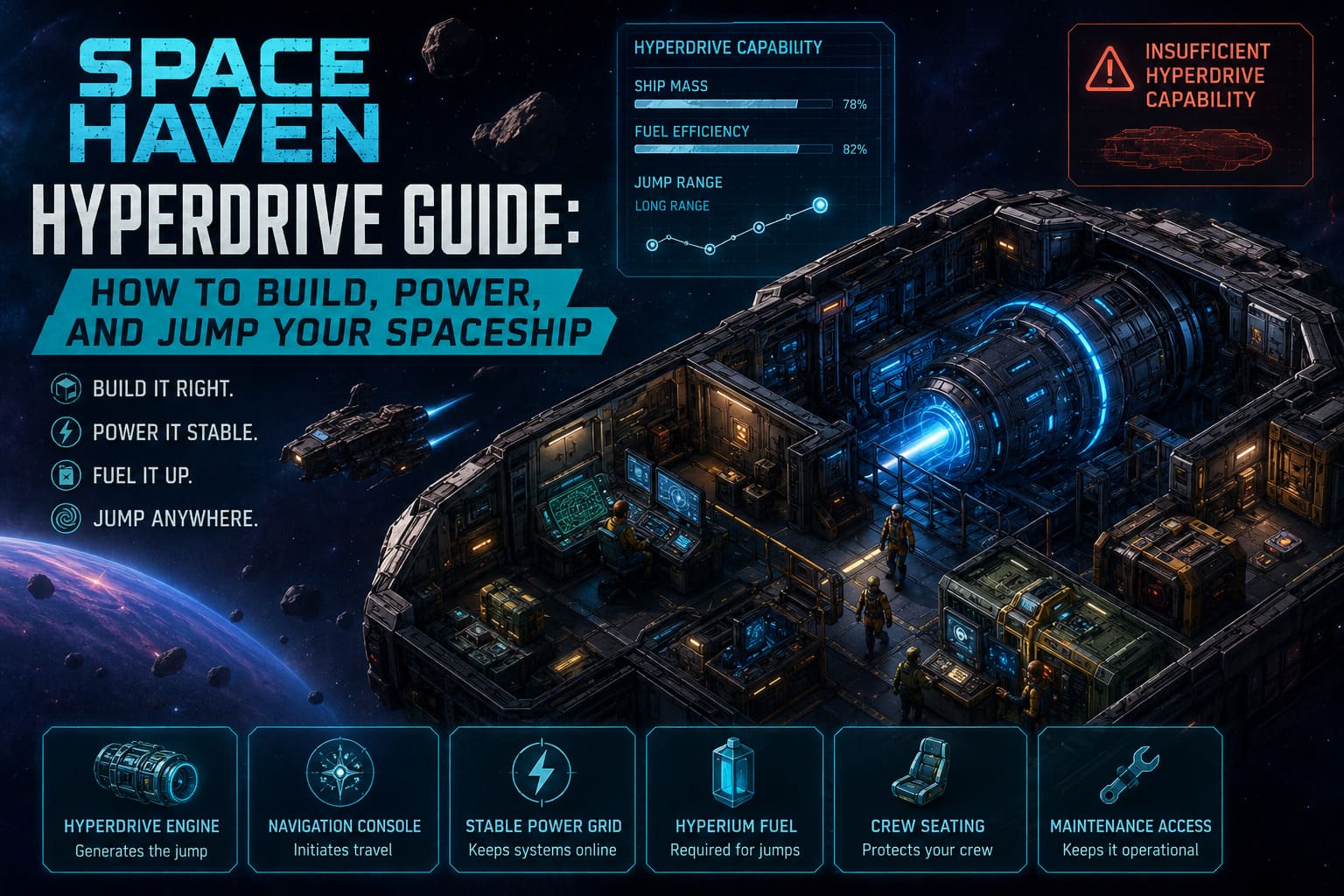
And when that warning pops up — “Insufficient Hyperdrive Capability” — it usually means you engineered yourself into a disaster.
The Biggest Hyperdrive Lesson: Smaller Ships Are Better Early Game
I know the temptation. Everyone wants a giant battleship immediately.
Don’t.
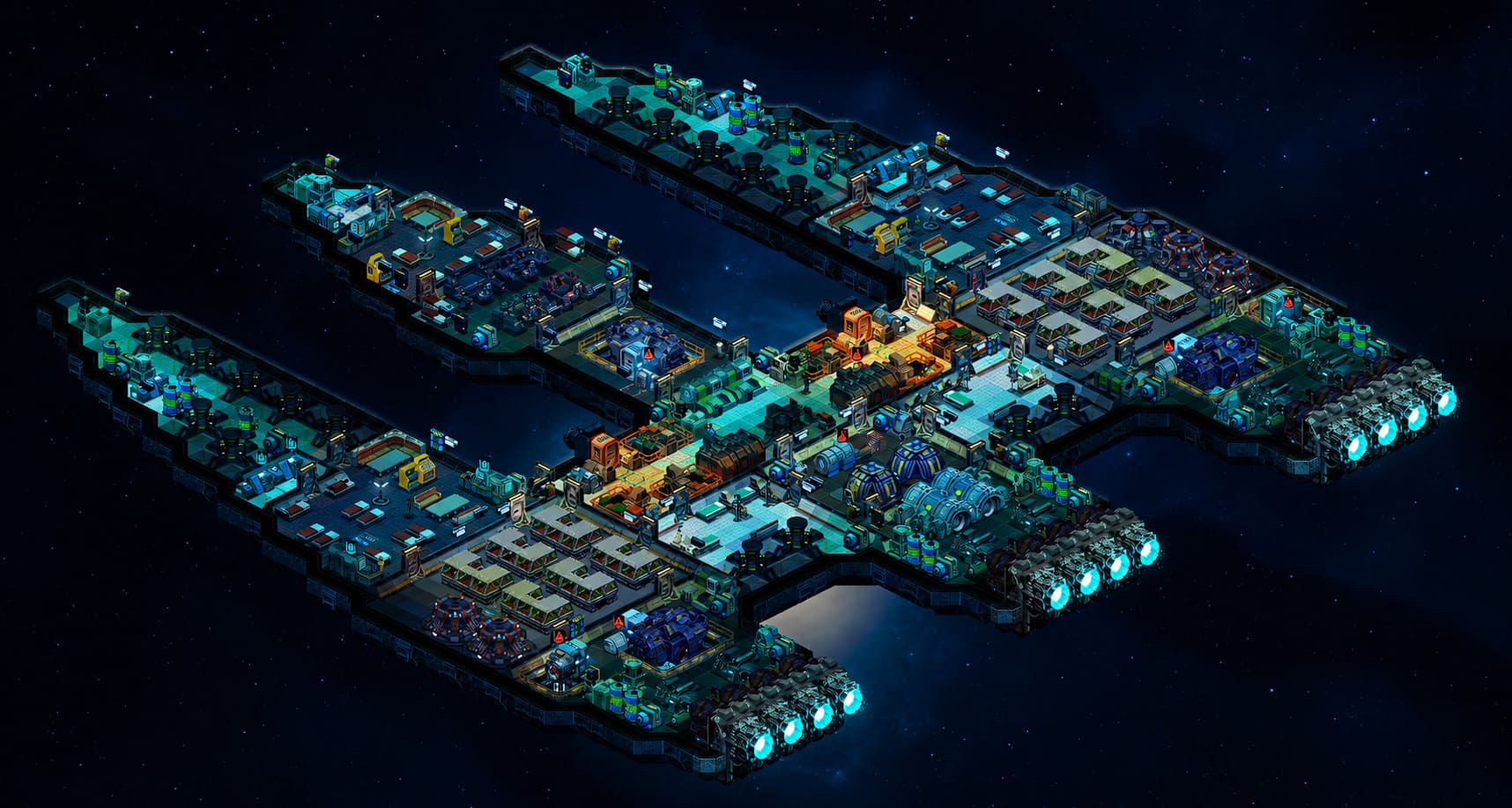
In my experience, compact ships outperform oversized designs for most of the early and mid game. Smaller ships:
- Consume less fuel
- Require fewer hyperdrives
- Charge jumps faster
- Are easier to defend
- Need fewer crew members
- Suffer less from power instability
A lean, efficient ship will survive much longer than an overbuilt “space mansion.”
One thing veteran players rarely mention is how much walking distance matters in Space Haven. Huge ships kill efficiency. Your crew wastes half their lives moving supplies between storage, reactors, and engines.
That becomes painfully obvious during emergencies.
What You Actually Need Before Building a Hyperdrive
A lot of guides oversimplify this part. The hyperdrive itself is only one piece of the system.
Here’s the real checklist you need:
| System | Why It Matters |
|---|---|
| Hyperdrive Engine | Generates the actual jump |
| Navigation Console | Allows a pilot to initiate travel |
| Stable Power Grid | Prevents total electrical collapse |
| Hyperium Fuel | Required for every jump |
| Crew Seating | Prevents injuries during warp |
| Maintenance Access | Keeps the drive operational |
Ignore even one of these, and your ship will eventually fail at the worst possible moment.
Space Haven Beginner’s Guide: Ship Layout & Survival Tips (2026 Edition)
Researching Hyperdrive Technology Efficiently
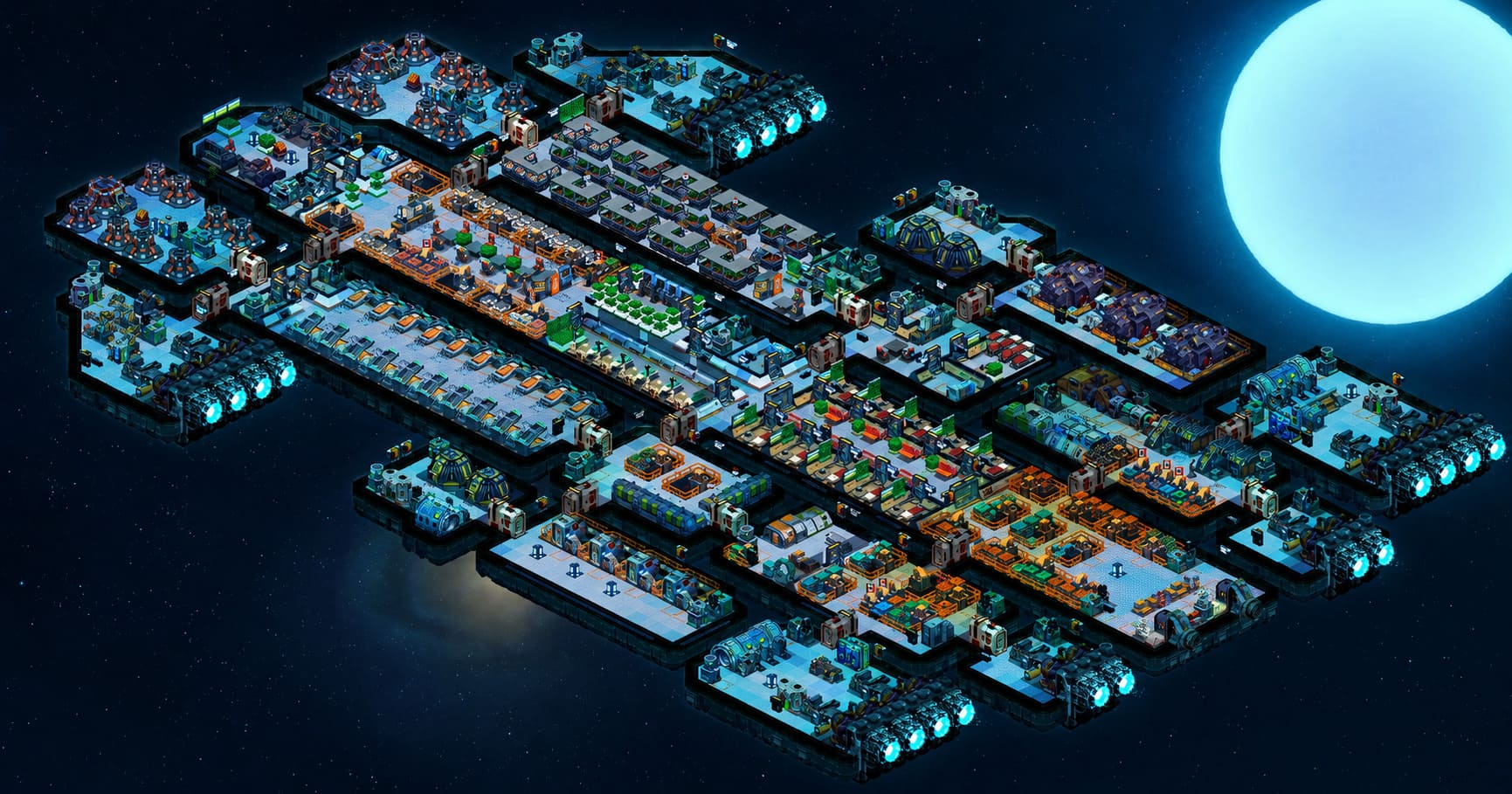
If you start without advanced technology unlocked, research progression can feel slow.
What worked best for me:
- Rush research benches early
- Prioritize electronics production
- Assign at least one dedicated researcher
- Avoid splitting research across too many tech trees
I used to waste research points grabbing random comfort upgrades before propulsion tech. Huge mistake.
Getting hyperdrive access early massively improves survival because you stop depending on dying asteroid sectors for resources.
Best Hyperdrive Placement Strategy
This is where I strongly disagree with a lot of “perfect ship layout” videos online.
Some players place hyperdrives directly near the center core of the ship. Personally, I hate this setup.
Hyperdrives are:
- Loud
- Ugly
- Dangerous
- Constantly requiring maintenance
Putting them beside crew quarters destroys comfort ratings.
My Preferred Layout
I always build:
- Crew quarters near the center
- Industrial systems toward the rear
- Hyperdrives inside isolated engine rooms
- Double walls around engine sections
- Separate oxygen zones if possible
This layout dramatically reduces stress penalties and also improves survivability during combat.
Pirates LOVE targeting exposed systems.
Power Grid Problems Almost Everyone Encounters
The first time your hyperdrive charges, you’ll probably think the game bugged out.
Lights flicker. Oxygen shuts down. Grow beds lose power. Your heaters stop working.
That’s because hyperdrives consume absurd amounts of energy during charge cycles.
What Finally Solved It For Me
I stopped connecting hyperdrives to the main power chain.
Instead:
- Dedicated batteries
- Short power routes
- Separate engine grid
- Backup generators
This completely stabilized my ship.
One underrated trick is building energy storage directly beside the drive room. The shorter the route, the smoother the charging behavior feels.
Hyperium Fuel Management Is More Annoying Than It Looks
Fuel logistics become a hidden problem later in the game.
At first, one stack of Hyperium feels like plenty.
Then suddenly:
- You’re jumping constantly
- Mining expeditions take longer
- Trade routes expand
- Multiple drives consume fuel rapidly
And you realize your crew spends more time hauling fuel than actually surviving.
My Personal Fuel Rule
I always keep:
- Emergency reserve fuel
- A dedicated Hyperium storage room
- Fuel storage directly beside the engine room
- Extra processed logs before long expeditions
Trust me — running out of fuel in a hostile sector is one of the worst situations in Space Haven.
Especially when pirates appear immediately after arrival.
The Most Common Hyperdrive Errors (And What They Really Mean)
“Insufficient Hyperdrive Capability”
Usually caused by:
- Excess hull expansion
- Too much cargo
- Heavy industrial modules
- Large storage sections
The easiest fix is often NOT adding another drive.
Sometimes deleting unnecessary walls, reducing storage, or slimming your ship saves enormous amounts of mass.
“No Path to Navigation Console”
This one drove me insane early on.
Most commonly caused by:
- Blocked hallways
- Locked doors
- Debris after combat
- Bad furniture placement
I now keep bridge access routes extremely clean for this reason alone.
“Drive Lacks Fuel”
Half the time, the issue isn’t fuel itself.
It’s logistics priorities.
Your crew may simply refuse to haul fuel because:
- Mining has higher priority
- Construction jobs are stacked
- Logistics tasks are too low
I recommend always having at least one crew member heavily focused on logistics.
Combat Escapes: The Real Purpose of Hyperdrives
Honestly, this is where hyperdrives become truly important.
In harder difficulties, winning every fight isn’t realistic.
Sometimes survival means:
- Charging the drive mid-battle
- Tanking damage long enough to escape
- Keeping the bridge alive for 30 more seconds
I’ve had runs saved entirely because my backup hyperdrive survived after the primary engine room got destroyed.
Since then, I almost always build redundancy into larger ships.
My Favorite Mid-Game Ship Design Philosophy
After dozens of failed runs, I settled into a consistent strategy:
I prioritize:
- Compact layouts
- Short walking paths
- Redundant systems
- Protected engine rooms
- Separate industrial zones
- Expandable hull architecture
I avoid:
- Giant open corridors
- Overdecorated interiors
- Massive cargo obsession
- Centralized vulnerable systems
- Oversized reactors early game
Space Haven rewards efficiency far more than aesthetics.
At least until you become rich enough to build a true capital ship.
Hyperdrive Upgrades Are More Valuable Than Players Think
A lot of players ignore advanced hyperdrive research because the bonuses look small on paper.
That’s a mistake.
Fuel efficiency upgrades become incredibly powerful over long campaigns.
Reducing Hyperium consumption means:
- Longer exploration chains
- Fewer mining stops
- More profitable trade routes
- Safer expeditions
- Faster expansion
In large galaxy seeds, efficient drives honestly feel game-changing.
Final Thoughts After Hundreds of Hours in Space Haven
What I love most about Space Haven is that ship design feels personal. Every failure teaches you something.
You remember:
- The jump where everyone broke their legs because there weren’t enough seats
- The reactor meltdown caused by one overloaded grid
- The pirate raid that destroyed your only navigation console
- The fuel shortage that stranded your crew
And eventually, you stop building random ships and start engineering real survival machines.
That’s when the game becomes incredible.
The hyperdrive isn’t just a travel mechanic — it’s the heart of your entire ship design philosophy. Once you truly understand how power, fuel, mass, crew routing, and emergency planning connect together, Space Haven transforms from chaos into one of the most rewarding sci-fi colony simulators ever made.