Quarantine Zombies Base Defense Upgrade Priority: Ultimate Guide for Stones Games’ 2026 Hit
If there is one thing I appreciate in survival games, it is when every upgrade actually matters. Too many titles throw dozens of buildings and weapons at you, but only a handful make any real difference. Quarantine Zombies surprised me because every dollar you spend can either make your life easier or completely ruin an otherwise promising run. After playing through multiple campaigns, experimenting with different upgrade paths, and intentionally making bad decisions just to see what would happen, I came away with one clear conclusion: this game rewards planning far more than raw shooting skills.
The mix of checkpoint management and frantic zombie defense creates constant pressure. During the day you’re checking frightened civilians, searching for hidden weapons, spotting signs of infection, and trying to avoid costly mistakes. At night everything changes, and suddenly the same base you’ve been quietly managing turns into the front line against hundreds of infected. That balance is exactly why upgrade priorities matter so much.
Quarantine Zombies How to Detect Infected Symptoms in Stones Games’ Prologue
Why Upgrade Order Is More Important Than Better Weapons
One mistake I made during my first campaign was spending nearly all my early money on combat gear. It felt logical at the time because zombie attacks looked intimidating. The problem was that my checkpoint became painfully slow.
Poor screening meant fewer processed survivors, lower daily income, and frequent mistakes. Missing infected civilians or contraband quickly drained my budget. Ironically, the expensive shotgun I had purchased early couldn’t compensate for the lack of cash flowing into the camp.
In my opinion, Quarantine Zombies is really an economy management game disguised as a zombie shooter. Once I started treating it that way, every run became significantly smoother.
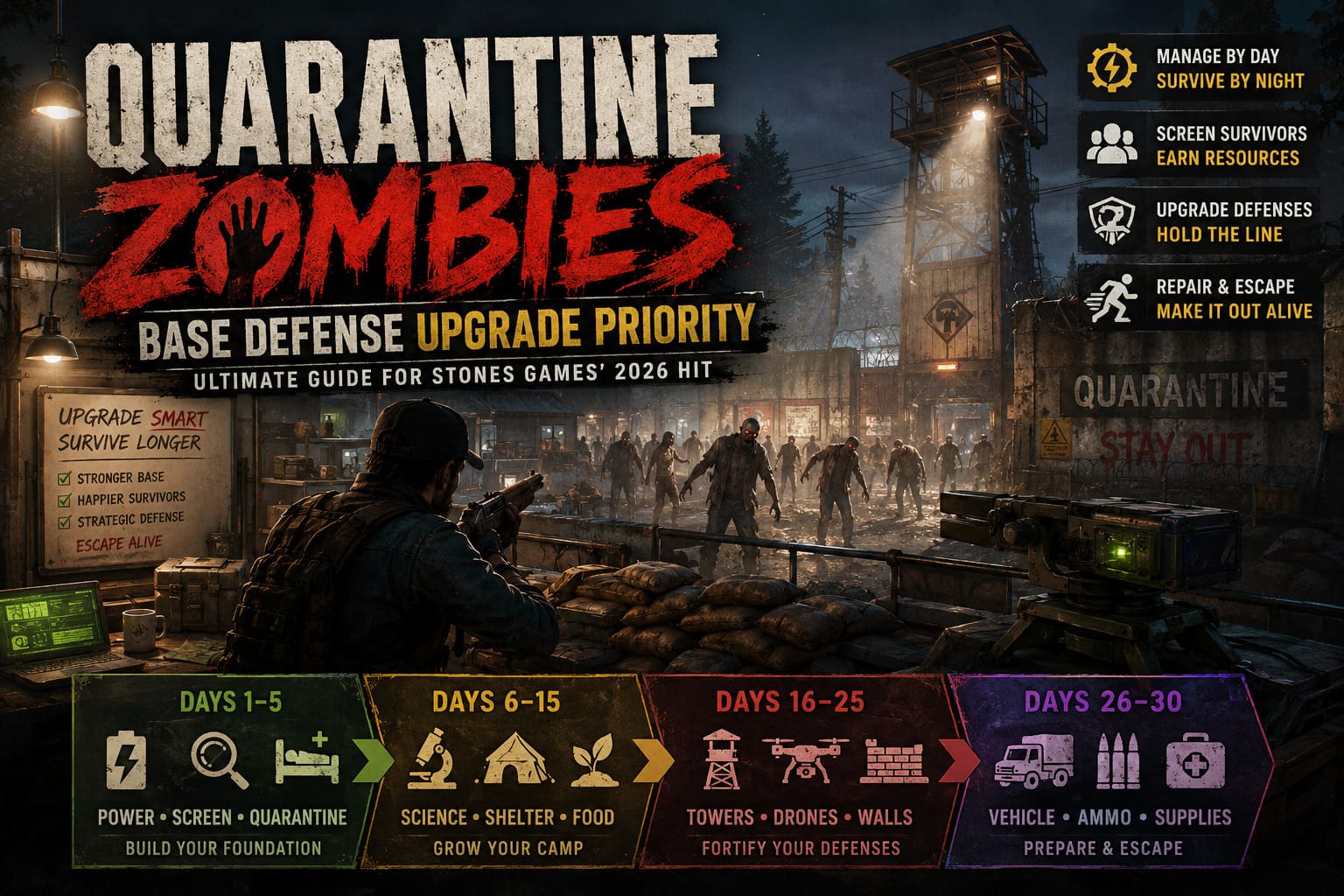
Early Game Priorities (Days 1–5)
The opening days determine whether your campaign snowballs into success or constant recovery from mistakes.
Upgrade the Generator First
Power outages become surprisingly frustrating if ignored. Every important electronic system depends on a stable power supply, and interruptions waste valuable time that could be spent processing survivors.
I always invest in:
- Generator Tier 1
- Fuel Tank capacity
- Reliable power management
Increasing fuel storage doesn’t sound exciting, but having fewer interruptions throughout the day makes your entire checkpoint operate more efficiently.
Improve Screening Equipment
Money comes from processing people quickly.
The Metal Detector and early scanners dramatically reduce the amount of manual work required. They also provide useful hints about suspicious behavior or hidden infections before situations become dangerous.
Instead of staring at paperwork for several extra minutes every day, you’ll move survivors through the checkpoint much faster while making fewer expensive mistakes.
Expand the Quarantine Area
This upgrade became one of my favorites after several failed campaigns.
Not every coughing civilian deserves immediate execution, and letting everyone inside is obviously a disaster. Having extra quarantine beds gives you time to observe suspicious survivors before making permanent decisions.
That flexibility saves both money and morale.
Mid-Game Progression (Days 6–15)
Around the second week the difficulty starts increasing noticeably. More infected appear, symptoms become harder to identify, and managing the growing camp becomes just as important as fighting zombies.
Invest in the Science Lab
If I had to recommend only one mid-game upgrade, this would be it.
The Science Lab unlocks advanced diagnostic tools that remove much of the guesswork from identifying infected civilians. Instead of relying only on visual symptoms, you gain access to proper testing methods that improve accuracy considerably.
The diagnostic Syringe is especially valuable because it instantly confirms infection, preventing costly mistakes during busy days.
Increase Shelter Capacity
Military evacuation quotas become harder to meet if your camp simply lacks space.
Upgrading refugee tents allows you to accommodate more healthy survivors while keeping camp morale stable. Happy survivors create fewer internal problems, and successful evacuation waves provide excellent financial rewards that help fund later defensive upgrades.
Don’t Ignore Food Production
Food rarely feels urgent until shortages begin.
Once the survivor population grows, poor food production creates a chain reaction:
| Upgrade | Why It Matters | Personal Priority |
|---|---|---|
| Hydroponics | Stable food production | Very High |
| Refugee Tents | Higher survivor capacity | High |
| Science Lab | Faster infection detection | Essential |
When healthy survivors start getting sick because of hunger, valuable medical resources become overloaded, making the entire base less efficient.
Late-Game Defense (Days 16–25)
By the third week, Quarantine Zombies stops feeling like a management simulator and fully embraces its survival horror side. Zombie attacks become larger, faster, and significantly more dangerous.
Guard Towers Are Worth Every Dollar
At first I underestimated automated guards because their aim wasn’t particularly impressive.
However, after several upgrades their effectiveness increases dramatically. Reduced cooldowns and improved damage allow them to eliminate weaker infected before they reach your walls.
That frees you to focus on tougher enemies instead of wasting ammunition on basic runners.
Upgrade Defense Drones
Defense drones completely changed how I approached late-game sieges.
Instead of desperately running between multiple breaches, upgraded drones provide consistent suppressive fire that keeps large groups under control. Battery upgrades and additional ammunition deliver far more value than purchasing several expensive weapon attachments.
Whenever resources are limited, I choose stronger drones first.
Strengthen Base Defenses
Walls won’t win battles on their own, but they buy something even more valuable: time.
Every extra second allows automated defenses to eliminate additional infected before they enter the compound.
The combination of upgraded walls, guard towers, and drones creates a defensive network that’s much stronger than relying entirely on personal shooting skills.
Optional Upgrade: The Inspection Hammer
The community seems divided on this one, and I understand why.
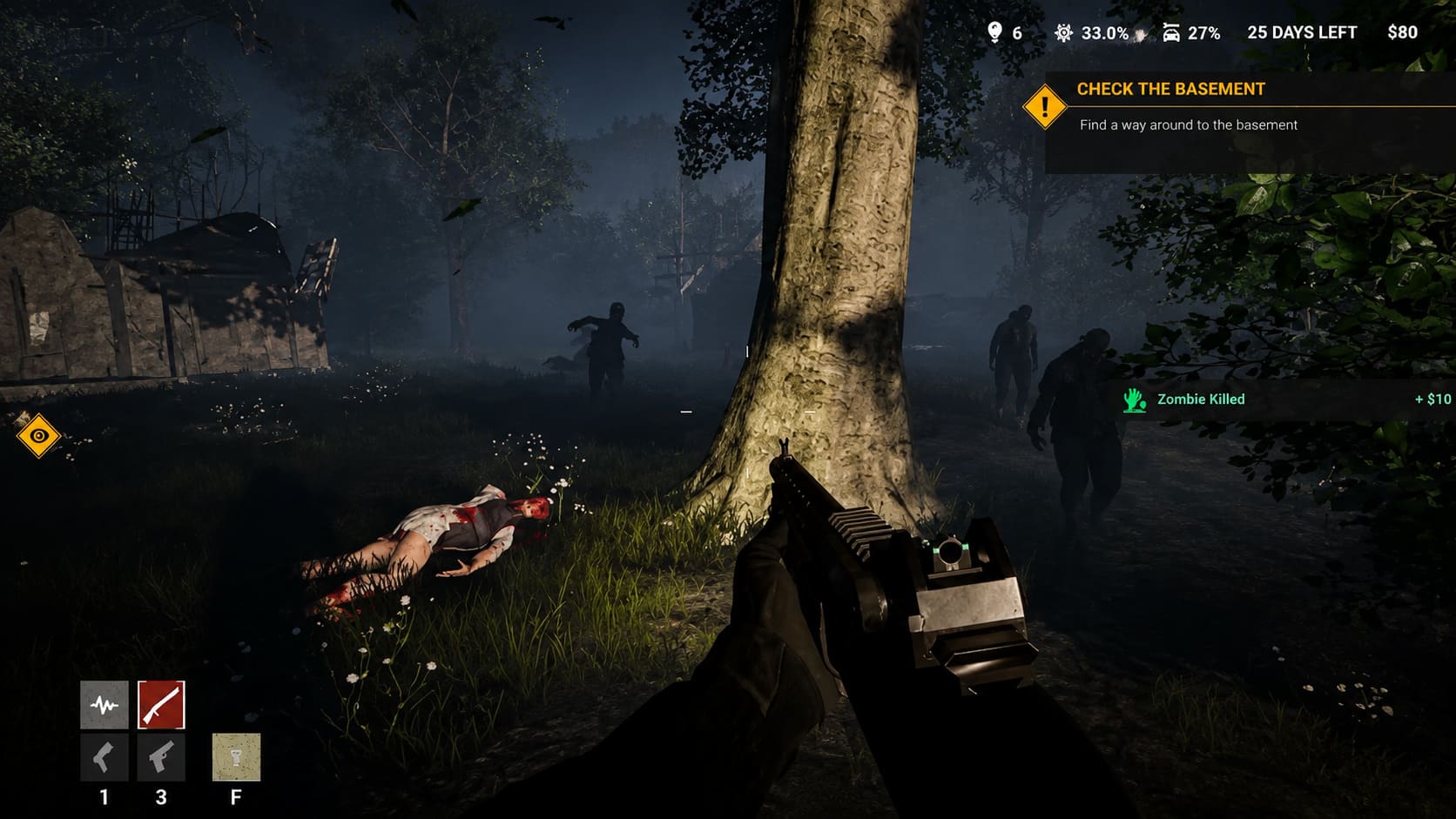
Personally, I found the upgraded inspection hammer surprisingly useful during hectic checkpoint situations. It lets you subdue aggressive civilians or weaker infected without wasting shotgun shells.
Is it essential? Not really. Would I skip it if money is tight? Absolutely. Still, if your economy is healthy, it becomes a fun utility upgrade that occasionally saves valuable ammunition.
Final Days (Days 26–30)
The last stretch completely changes your priorities.
At this point I stop worrying about expanding buildings or unlocking new facilities. The infrastructure should already be complete. Every remaining resource should support survival and escape.
Repair the Escape Vehicle
No matter how strong your base becomes, you won’t finish the campaign without a reliable vehicle.
Engine repairs, reinforced armor, and general maintenance become mandatory investments before the final escape sequence.
Ignoring the vehicle until the last moment is one of the easiest ways to lose an otherwise successful campaign.
Buy Supplies Instead of Buildings
Once Day 26 arrives, I almost never purchase additional structures.
Instead, I spend nearly everything on:
- Heavy ammunition
- Medical kits
- Explosive traps
- Emergency supplies
Those final battles demand endurance rather than expansion. Every extra magazine often proves more valuable than another unfinished building project.
My Recommended Upgrade Order
After experimenting with several different strategies, this is the progression that consistently produced the best results for me.
| Stage | Upgrade Priority |
|---|---|
| Days 1–5 | Generator → Fuel Tank → Metal Detector → Quarantine Expansion |
| Days 6–15 | Science Lab → Refugee Tents → Hydroponics → Storage |
| Days 16–25 | Guard Towers → Defense Drones → Stronger Walls |
| Days 26–30 | Escape Vehicle → Heavy Ammo → Medical Supplies |
Final Thoughts
After spending plenty of time with Quarantine Zombies, I think its greatest strength isn’t the shooting or even the zombie waves—it’s the constant pressure to make meaningful decisions. Every upgrade forces you to choose between immediate survival and long-term stability, and that’s what keeps each campaign engaging.
If I could give one piece of advice to new players, it would be this: don’t chase the biggest guns first. Build a checkpoint that earns money efficiently, keeps civilians organized, and minimizes mistakes. Once your economy is healthy, the powerful weapons and automated defenses naturally follow. By the final week you’ll have a base capable of holding back massive hordes while giving yourself the best possible chance of reaching the military extraction alive.