Path of Exile 2: How to Reset Passive Skill Tree (Complete Respec Guide)
When I first jumped into Path of Exile 2, one of my biggest concerns wasn’t surviving bosses or finding legendary loot—it was making mistakes on the Passive Skill Tree. Anyone who spent years playing the original Path of Exile remembers the anxiety of investing points into a build and realizing 30 levels later that something was fundamentally wrong.
Back then, fixing your character often felt more painful than creating a brand-new one.
Thankfully, Grinding Gear Games seems to have learned from that experience. One of the smartest quality-of-life improvements in Path of Exile 2 is the redesigned respec system. Instead of relying heavily on rare currencies and limited refund opportunities, players can now reshape their builds through a much more accessible gold-based system.
After spending dozens of hours experimenting with different archetypes, I can confidently say that the new respec mechanics encourage creativity rather than punishing it.
Why the New Respec System Matters
The Passive Skill Tree remains one of the most iconic features in the ARPG genre.
It’s enormous.
With thousands of potential routes and countless ways to customize your character, even experienced players occasionally invest points that don’t work out as expected.
Maybe you started building for critical strikes and later found gear better suited for elemental damage.
Maybe your early-game survivability wasn’t strong enough.
Or maybe you simply discovered a stronger build from the community and wanted to pivot.
In Path of Exile 2, those situations no longer feel catastrophic.
Instead of forcing players into permanent decisions early on, the game provides a flexible way to adapt as new opportunities emerge.
That’s a huge win for both newcomers and veterans.
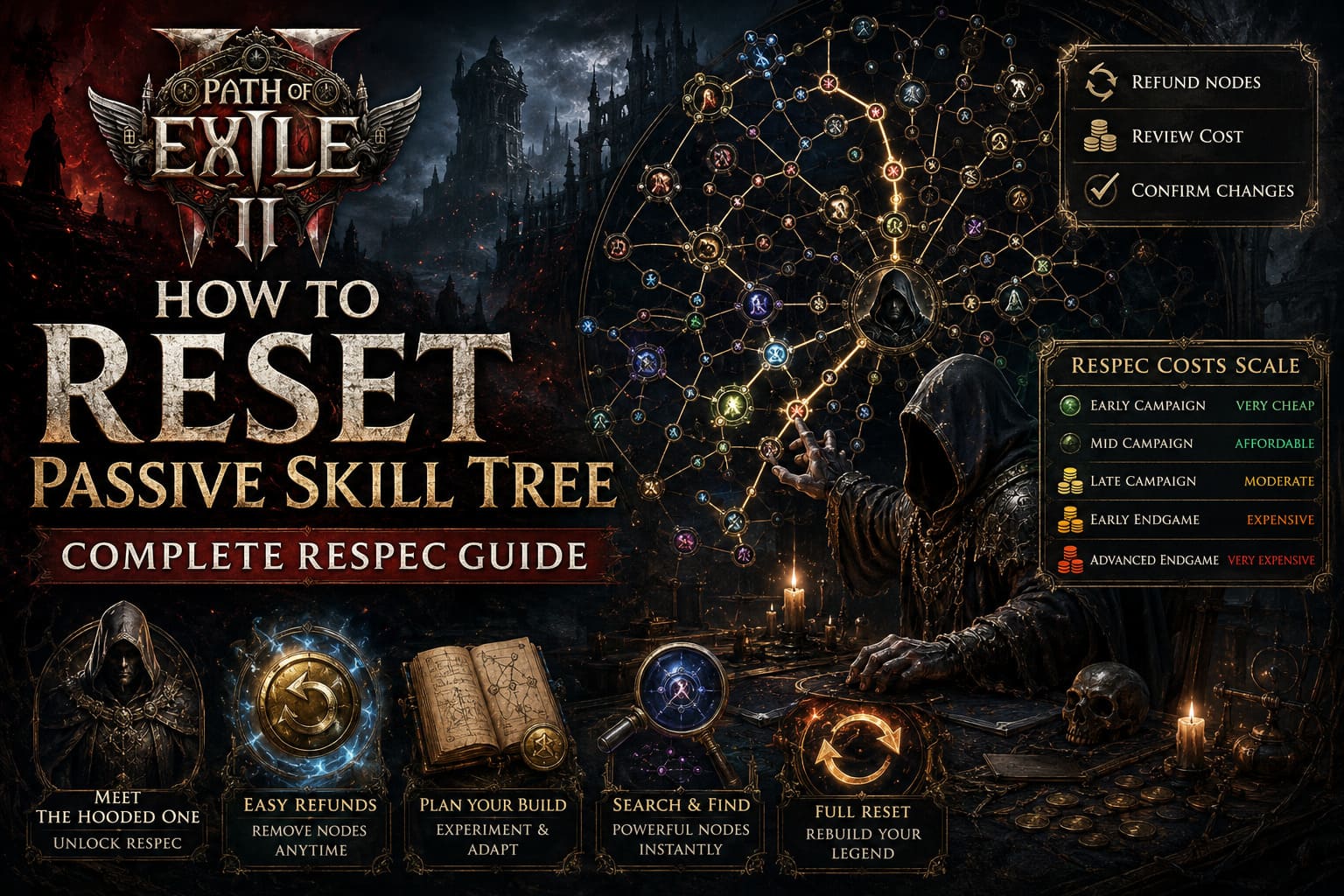
Unlocking Passive Skill Refunds
One thing many new players don’t realize is that the respec feature isn’t available immediately.
You must progress through the early campaign before gaining access to the character who handles passive refunds.
During Act 1, you’ll eventually encounter a storyline involving mysterious curses, ancient tombs, and several challenging encounters. Completing these quests ultimately introduces an important NPC known as The Hooded One.
Once awakened, this character becomes a permanent utility NPC throughout your adventure.
Among various services, The Hooded One grants access to passive skill refunds.
From that moment onward, adjusting your build becomes significantly easier.
How to Reset Passive Skill Points
The process itself is surprisingly straightforward.
Here’s how it works:
- Visit The Hooded One in town.
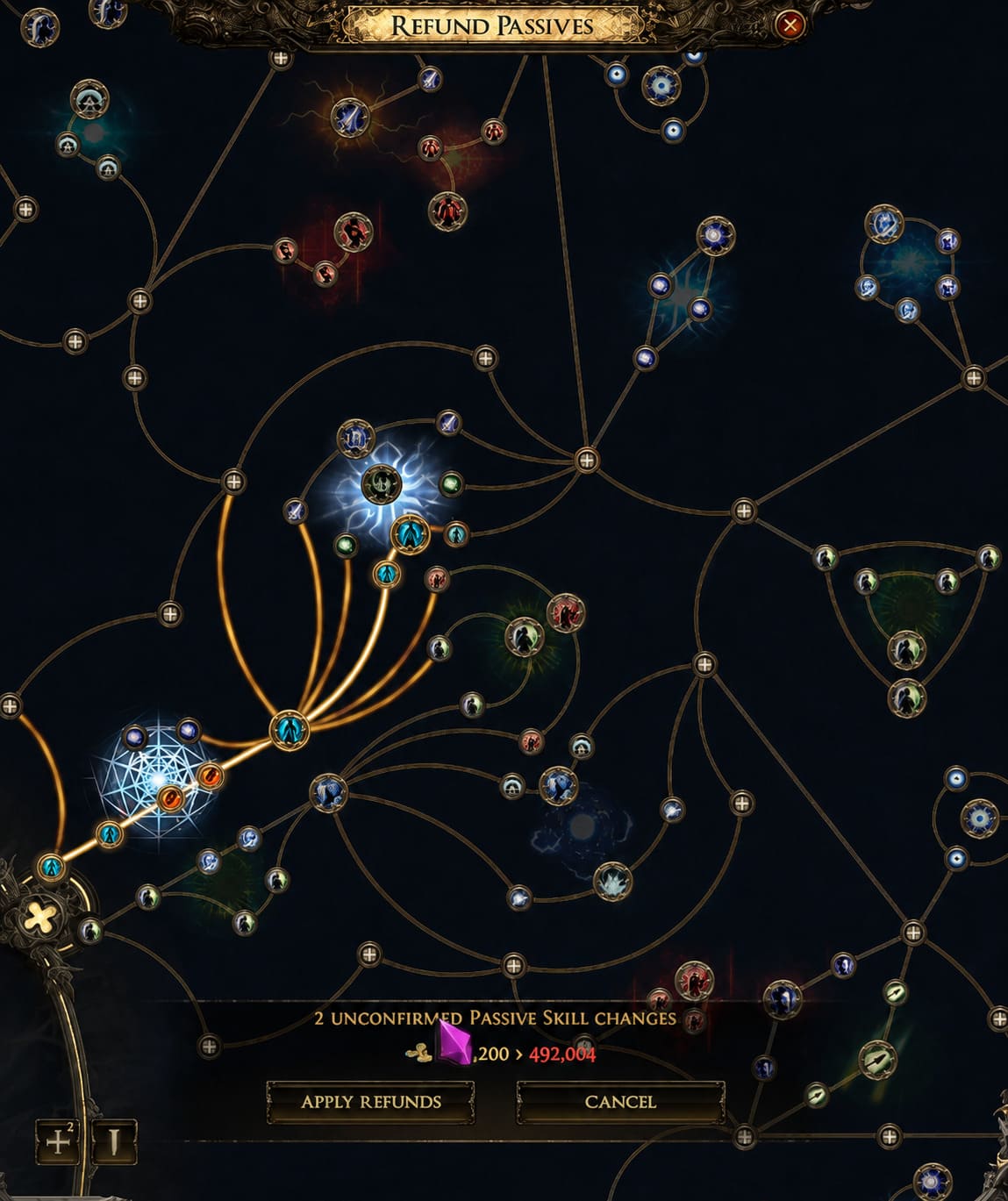
- Open the Passive Skill Tree through the refund option.
- Select nodes you want removed.
- Review the displayed gold cost.
- Confirm the changes.
That’s it.
The system is intuitive enough that most players will understand it immediately after using it once.
What I particularly like is that the game clearly shows how much gold you’ll spend before confirming anything. There are no hidden surprises waiting after you click the final button.
Understanding Respec Costs
The most important thing to know is that respec costs scale with character progression.
Early-game experimentation is intentionally cheap.
That means you can test weapon setups, defensive layers, or attribute investments without destroying your economy.
In my own playthrough, I frequently adjusted several points during the campaign simply because I found better equipment or wanted to try a different skill combination.
The costs remained manageable.
However, things change once you start approaching endgame content.
Large-scale rebuilds become noticeably more expensive, encouraging players to think more carefully about major changes.
General Cost Expectations
| Character Progression | Respec Cost |
|---|---|
| Early Campaign | Very Cheap |
| Mid Campaign | Affordable |
| Late Campaign | Moderate |
| Early Endgame | Expensive |
| Advanced Endgame | Very Expensive |
This scaling creates a healthy balance.
Players can freely learn the game early while still preserving meaningful character decisions later.
The Ascendancy Trap Many Players Ignore
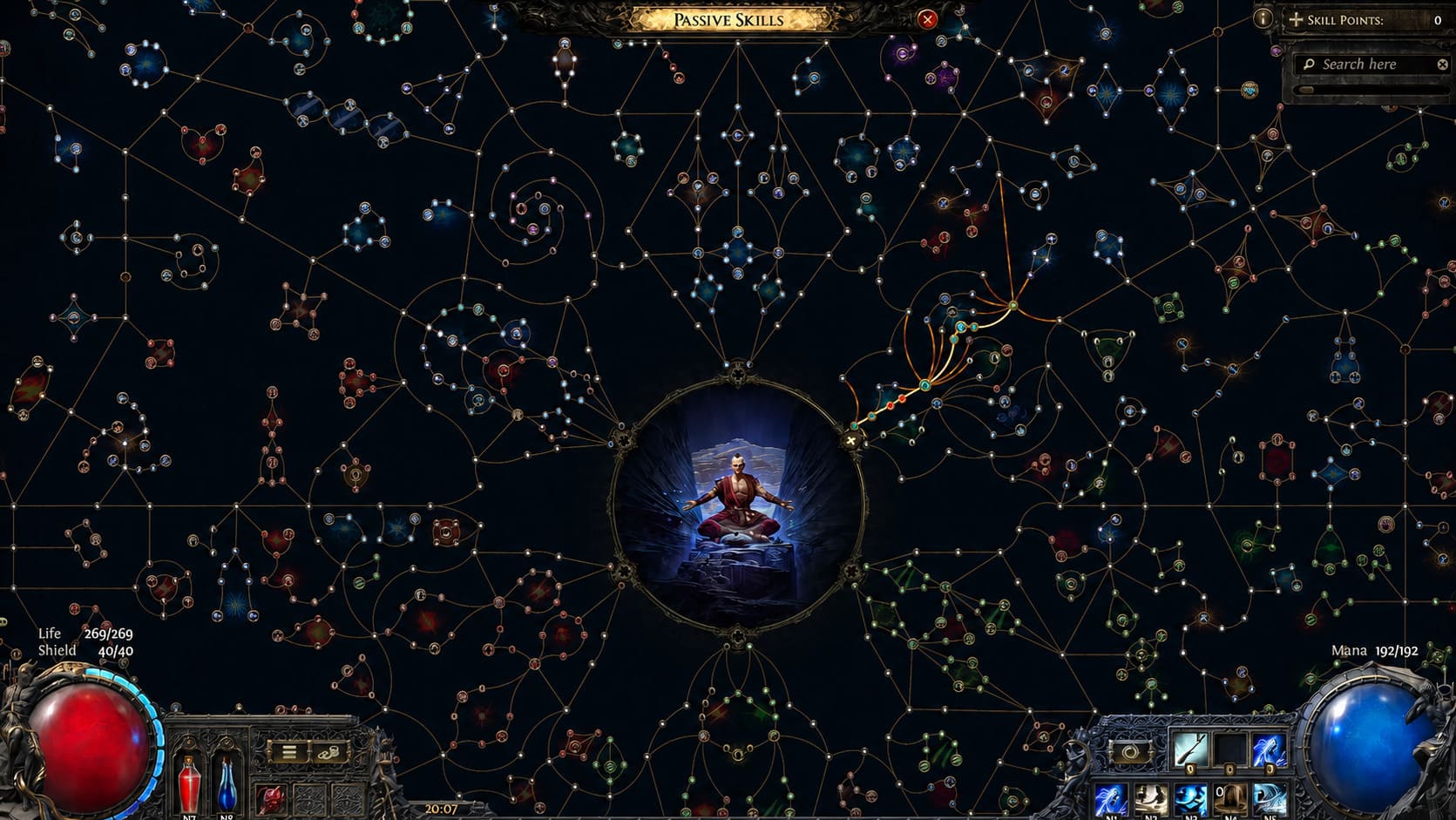
If there’s one area where caution is still required, it’s Ascendancy choices.
Ascendancies define your specialized identity within a class and often provide some of the strongest bonuses available.
Because of their power, refunding Ascendancy points costs significantly more than ordinary passive nodes.
And honestly?
I think that’s fair.
Ascendancy decisions should feel important.
The problem is that many players rush through these selections without fully understanding how their future build will evolve.
My advice is simple:
Never spend Ascendancy points immediately after unlocking them.
Take a few minutes.
Read every option.
Look at endgame build examples.
Compare synergies with your current skills.
A little patience can save a huge amount of gold later.
The Hidden Feature Most Players Miss
One of the funniest discoveries I made while browsing community discussions was learning how many players never noticed the full reset option.
There is actually a complete passive tree reset function built into the interface.
The issue?
The button isn’t always obvious.
Depending on your UI layout and current menus, it can feel strangely hidden.
If you’re planning a total rebuild, remember:
- Remove all inserted jewels first.
- Check the upper-right area of the skill tree.
- Look for the complete reset option.
This feature becomes incredibly useful when transitioning from a leveling build into an endgame-focused setup.
Many experienced players intentionally use one build for campaign progression and another for mapping efficiency.
A full reset makes that strategy much easier to execute.
Search Tools That Save Massive Amounts of Time
The Passive Skill Tree remains gigantic.
Even after many hours, I still occasionally lose track of specific clusters.
Fortunately, Path of Exile 2 includes one of my favorite quality-of-life features: keyword searching.
Simply enter a phrase such as:
- Critical Strike
- Energy Shield
- Minion Damage
- Area Of Effect
- Mind Over Matter
Matching nodes instantly become highlighted.
This might sound like a small feature, but once you’re dealing with an enormous web of interconnected passives, it becomes indispensable.
A Smart Gold-Saving Strategy for Big Respecs
This is where experienced players separate themselves from newer ones.
When rebuilding large sections of your passive tree, many people instinctively remove old nodes first and then purchase new connections afterward.
That approach often costs more.
A better method is to establish your new route before deleting the old one.
Think of your passive tree like a road network.
As long as every section remains connected to your starting location, the system can process changes more efficiently.
The general strategy looks like this:
- Build the new path first.
- Ensure the connection is valid.
- Remove obsolete travel nodes.
- Confirm everything in a single transaction.
This minimizes wasted points and often reduces overall refund expenses.
Veteran players have been using variations of this technique since early testing, and it remains one of the best ways to optimize major tree restructures.
Path of Exile 2 Spirit Walker Leveling Guide: Best Spirit Gems and Builds for Patch 0.5
What You Cannot Respec
Despite the flexibility of the new system, certain choices remain permanent.
Your Base Class
A Witch will always be a Witch.
A Warrior will always be a Warrior.
If you want an entirely different class identity, you’ll need to create a new character.
Skill Gem Decisions
Many new players confuse passive respecs with skill customization.
These are separate systems.
Passive points can be refunded.
Skill Gems operate independently.
If you make mistakes involving gem progression or skill selections, you’ll need to acquire alternative gems rather than relying on passive refunds.
Understanding this distinction prevents a lot of confusion later in the game.
My Overall Verdict on Path of Exile 2 Respecs
After spending considerable time experimenting with builds, I genuinely believe the new system is one of the best gameplay improvements Path of Exile 2 introduces.
The original game often made experimentation feel risky.
Many players became afraid to test unusual ideas because mistakes could become expensive or frustrating.
Path of Exile 2 moves in the opposite direction.
The campaign encourages learning.
The gold costs remain reasonable while leveling.
The interface is cleaner.
And the entire process feels designed around player freedom rather than punishment.
That doesn’t mean every decision is meaningless. Endgame rebuilds still require planning, and Ascendancy refunds remain costly enough to demand careful consideration.
But overall, the system strikes an excellent balance between accessibility and commitment.
If you’re still progressing through the campaign, don’t be afraid to experiment. Try new defensive layers. Test different damage paths. Explore the massive Passive Skill Tree without worrying that every point allocation is permanent.
That’s arguably the biggest lesson Path of Exile 2 teaches: the best build often comes from experimentation, and for the first time in the series, the game actively supports that philosophy.