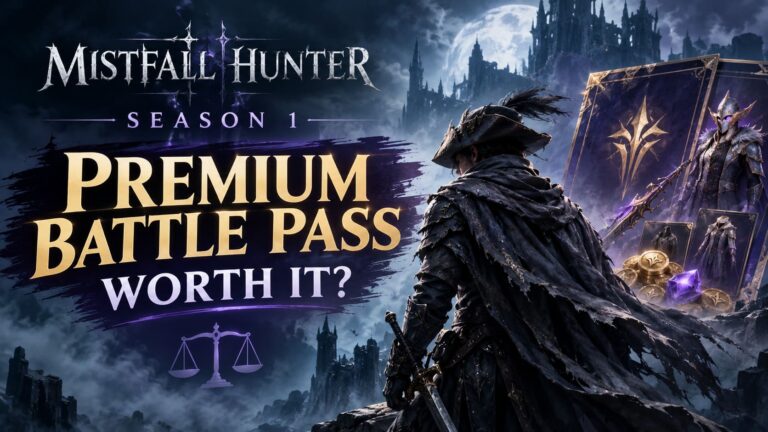
Mistfall Hunter Lore Explained: The Web of Fate, Dew, and Gyldenmist Corruption Explained
Mistfall Hunter is not the kind of extraction RPG that throws players into a map, tells them to grab loot, and calls it worldbuilding. Beneath its brutal PvPvE encounters, dangerous expeditions, and punishing extraction mechanics sits a surprisingly ambitious dark fantasy story about dead gods, broken destiny, divine corruption, and a world that may already be too damaged to save.
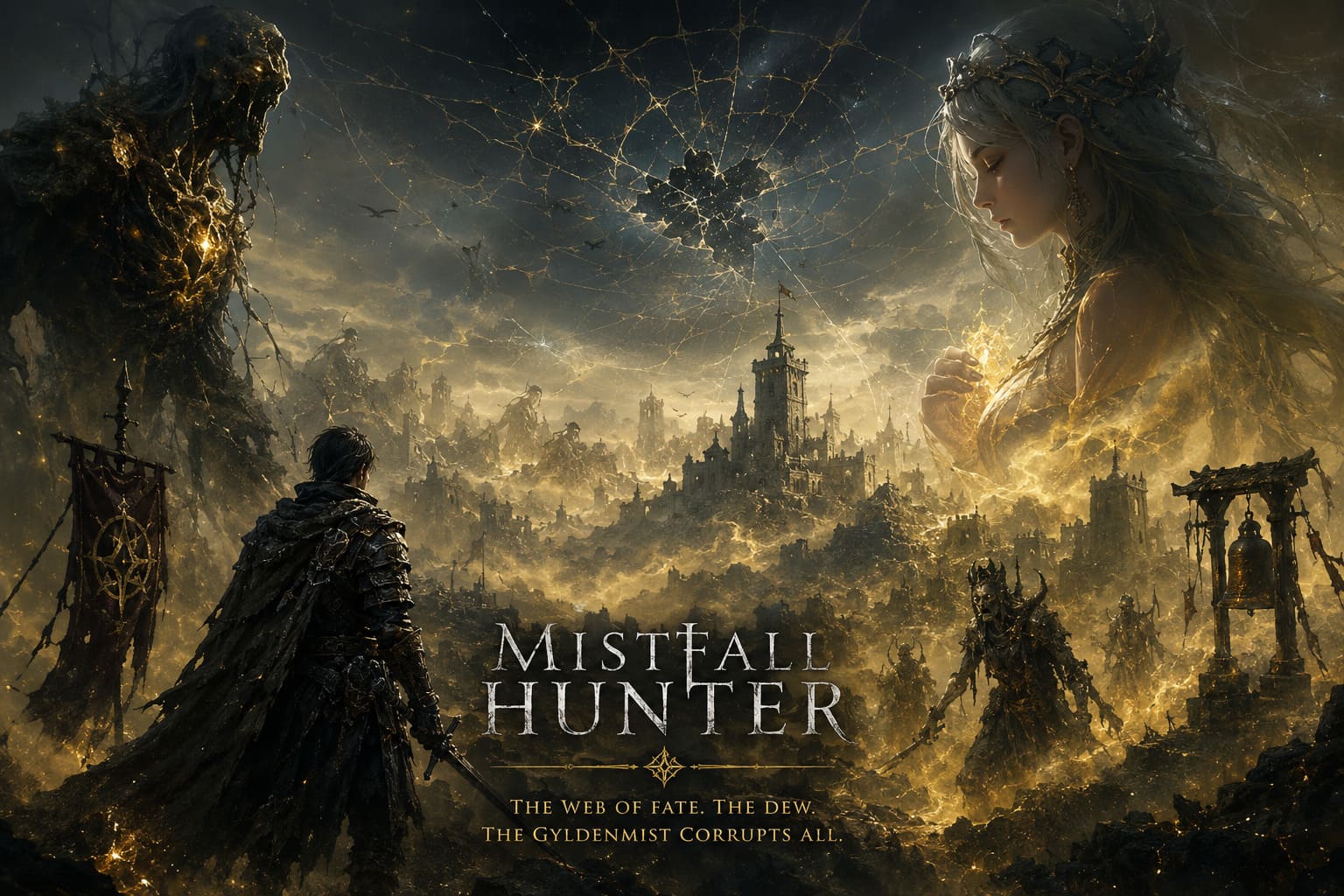
Developed by Bellring Games and published by Skystone Games, Mistfall Hunter places players inside the ruined realm of Weavereach, where reality itself has been left unstable after a catastrophic war between divine powers. The gods are gone, the land is drowning beneath a glowing golden mist, and the few surviving humans are hiding behind fragile walls while corrupted creatures roam the ruins.
That is where the Gyldhunters enter the picture.
Players are not ordinary adventurers looking for treasure or fame. They are resurrected warriors bound to a mysterious being named Dew, and their repeated expeditions into the Gyldenmist serve a much larger purpose. Every monster defeated, every fragment of divine blood recovered, and every successful extraction contributes to the attempt to repair the shattered Web of Fate.
The game rarely stops to explain all of this in one convenient lore dump. Much of its story is spread across environmental details, character concepts, enemy designs, seasonal content, and the mechanics players repeat during every run. Once those pieces are connected, the entire extraction loop starts to feel much more meaningful.
The Fall of Weavereach: A Divine War With No Winners
Long before the Gyldenmist swallowed the land, Weavereach existed under the influence of powerful divine beings known as the Supreme Gods. These gods maintained order across the world and helped keep the forces of nature, life, time, and destiny connected.
The world was not necessarily peaceful in the ordinary sense. Mortals still faced conflict and hardship, but reality followed understandable rules. Fate had structure. Death had meaning. The future moved along a path shaped by the divine order.
Everything changed when the Outer Gods arrived.
These entities came from beyond the established boundaries of reality. They represented chaos and forces that did not belong within the natural order of Weavereach. Their invasion triggered a massive divine conflict that can reasonably be compared to a localized Ragnarok.
The comparison matters because this was not a normal war with a victorious side. Nobody conquered Weavereach. Nobody took control of the pantheon. The conflict ended with the destruction of both sides.
The Supreme Gods and the Outer Gods were annihilated.
Their deaths left the world physically intact but spiritually and cosmically broken. The systems that once held reality together had lost their creators. The laws governing destiny were damaged, and the connection between mortal life and the divine order began to collapse.
Weavereach survived the war, but it became something fundamentally different. It was now a world trying to function after the disappearance of the powers that had written its rules.
What Is the Gyldenmist?
The most visible consequence of the divine war is the Gyldenmist, the glowing golden fog that has become the defining threat of Mistfall Hunter.
When the gods died, their blood spilled across the world. This was not ordinary blood. It carried an enormous concentration of divine energy, and that power did not simply disappear into the soil. The remains of the fallen gods transformed into a supernatural mist that spread throughout Weavereach.
The Gyldenmist is beautiful from a distance. Its golden glow can make ruined landscapes look almost sacred. But getting close to it reveals the truth: this is not divine blessing. It is the decaying residue of dead gods, and it corrupts nearly everything it touches.
Living creatures exposed to the mist begin to lose their identity. Their minds deteriorate, their bodies mutate, and their original personalities are replaced by violent instincts. The result is a growing population of monsters known as the Corroded.
The Corroded are not simply creatures designed to fill combat encounters. Many were once recognizable inhabitants of Weavereach. Some may have been warriors, heroes, powerful figures, or ordinary animals before the corruption consumed them.
This gives the world a much darker atmosphere. Every monster can be viewed as evidence of something that was lost.
| Lore Element | Meaning | Impact on Weavereach |
|---|---|---|
| Supreme Gods | Divine rulers who maintained cosmic order | Their deaths shattered the world’s stability |
| Outer Gods | Chaotic entities from beyond reality | Their invasion caused the divine war |
| Gyldenmist | Corrupted divine essence formed from godly blood | Mutates creatures and spreads across the land |
| Corroded | Living beings transformed by the mist | They dominate the dangerous regions outside human shelters |
| Web of Fate | The metaphysical structure connecting destiny and reality | Its destruction threatens the future of the entire world |
Humanity’s Last Shelters and the Importance of Windrest
Human civilization did not disappear immediately after the divine war. Some survivors escaped the corrupted regions and established isolated settlements where the Gyldenmist could be held back.
The most important of these safe locations is Windrest.
Windrest acts as the central refuge for surviving humans and the operational base for the Gyldhunters. It is where players prepare equipment, recover after failed expeditions, and organize new journeys into the corrupted world.
But Windrest is not a symbol of victory. It feels more like humanity’s final defensive position.
Beyond its boundaries are ruined cities, abandoned structures, corrupted forests, and monsters created by divine decay. The people inside the settlement are not rebuilding a thriving civilization yet. They are trying to survive long enough for someone to make restoration possible.
This is one reason the game’s atmosphere works so well. The world is not waiting for a chosen hero to arrive and solve everything. Civilization is already hanging by a thread, and every expedition carries the possibility of making the situation worse.
Dew: The Last Fragment of the Fate Goddess
Despite the destruction of the divine pantheon, one small piece of the old order survived.
A fragment of the Fate Goddess remained after the war. Unable to retain her original divine form, this surviving essence took the appearance of a mysterious young woman known as Dew.
Dew is one of the most important figures in Mistfall Hunter because she represents the last remaining connection between the broken world and the original structure of fate.
She travels through the ruins searching for the souls of fallen heroes. These warriors cannot move on normally because the destruction of the Web of Fate has damaged the natural order of death and destiny.
Using what remains of her divine power, Dew gives these souls new bodies and transforms them into Gyldhunters.
This is the player’s role in the story.
Your character is not merely a mercenary hired to enter dangerous zones. You are a warrior brought back from death and given another purpose. Your new existence is tied directly to Dew’s attempt to restore the world.
The resurrection system also explains why death functions differently for Gyldhunters. When a hunter falls during an expedition, the physical body can be destroyed, but the soul is not permanently erased. It can return to Windrest and eventually take physical form again.
That does not make death harmless. A failed run can still cost valuable equipment, collected resources, and rare loot. Lore and gameplay are working together here: your soul may survive, but your possessions remain trapped in the corrupted wilderness.
The Web of Fate Explained
The Web of Fate is one of the most important concepts in Mistfall Hunter lore.
It can be understood as the metaphysical framework that connects events, lives, destinies, and the larger structure of reality. The Fate Goddess once maintained this web, ensuring that the world followed a coherent path.
When she was shattered during the divine war, the Web of Fate fractured with her.
The consequences are enormous. Destiny is no longer stable, the future has become uncertain, and the world is slowly losing the structure that allows reality to function normally.
Dew’s long-term mission is to repair the damaged web. The Gyldhunters act as her agents, entering regions overwhelmed by the Gyldenmist and recovering the divine essence needed to restore what was lost.
The process is not as simple as defeating a final boss and watching the world reset. Weavereach is damaged on a cosmic scale. The restoration effort requires countless expeditions and the recovery of enormous amounts of corrupted divine power.
That makes the player community part of the lore. Each successful extraction is another small contribution to the larger attempt to rebuild the world’s destiny.
Gyldenblood and the True Purpose of Every Expedition
During expeditions, Gyldhunters battle Corroded creatures, explore dangerous ruins, gather resources, and clash with other players. On the surface, this looks like a familiar extraction gameplay loop.
The lore gives these actions a deeper purpose.
The corrupted creatures contain remnants of Gyldenblood, also called Gylden Blood. This substance is connected to the divine essence that spread across Weavereach after the gods died.
Gyldhunters recover this essence and bring it back through successful extraction. Dew can then use the collected power as part of the effort to repair the Web of Fate and reduce the influence of the Gyldenmist.
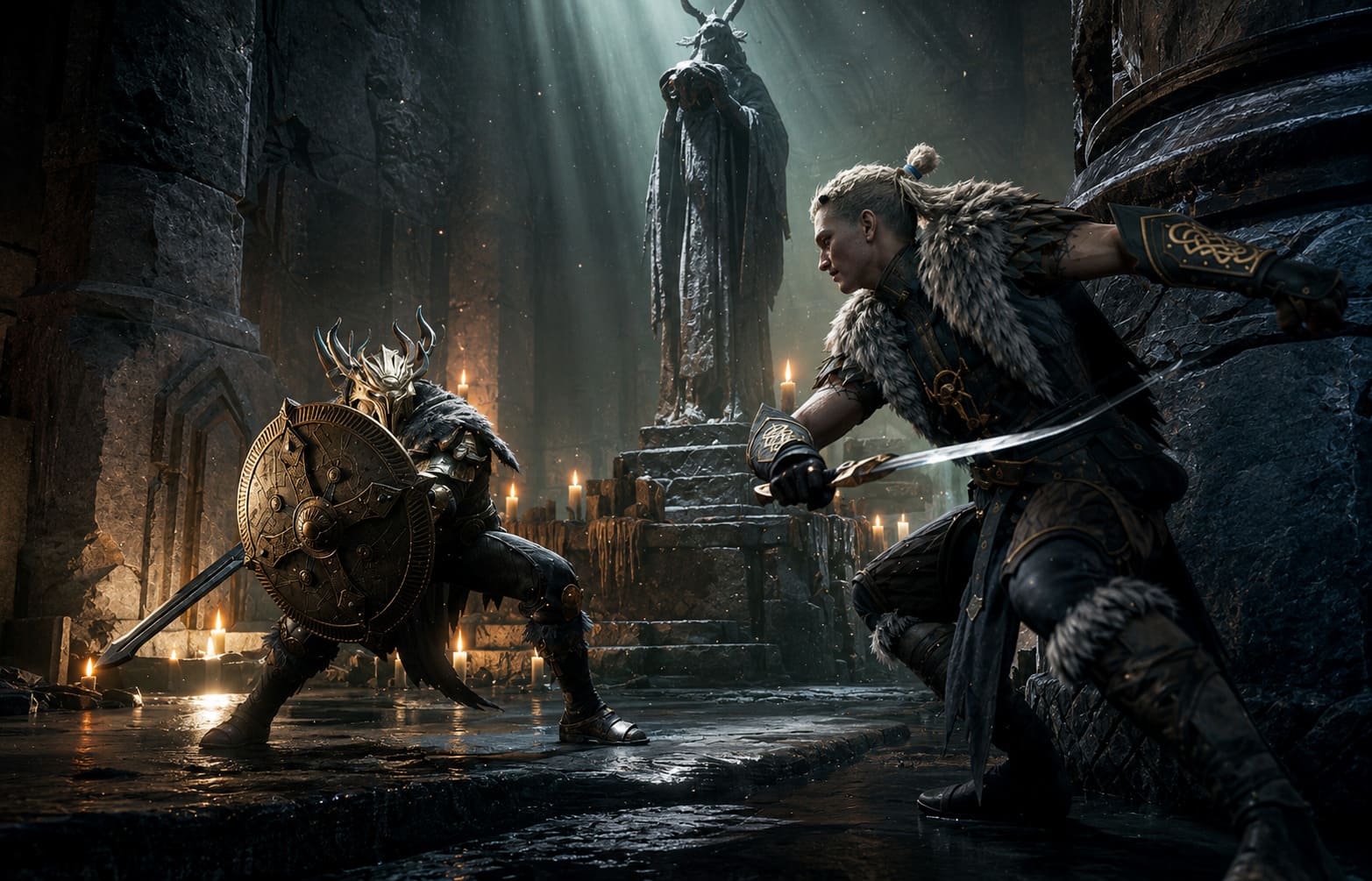
The central objectives of a typical expedition can be summarized as follows:
- Destroy the Corroded: Eliminate creatures whose bodies and minds have been consumed by divine corruption.
- Recover Gyldenblood: Collect valuable divine essence from enemies and dangerous locations.
- Survive rival hunters: Other players may become the greatest threat between you and extraction.
- Escape the corrupted zone: Loot only matters if you successfully return to Windrest.
This is where Mistfall Hunter earns its identity as a PvPvE extraction RPG. The world is hostile, the monsters are dangerous, and other hunters may decide that your collected resources are worth killing for.
Every run creates a familiar extraction-game dilemma: should you keep exploring for better rewards, or leave while you still have a chance?
The longer you remain inside the Gyldenmist, the greater the potential reward becomes. But the risk also rises. Losing a valuable loadout after twenty minutes of careful exploration can be painful, especially when another player appears during the final moments of an extraction attempt.
Why Extraction Requires the Returner Woodling
Extraction in Mistfall Hunter is not handled through a simple menu option or a convenient button.
Gyldhunters must interact with the world and complete a ritual connected to its lore.
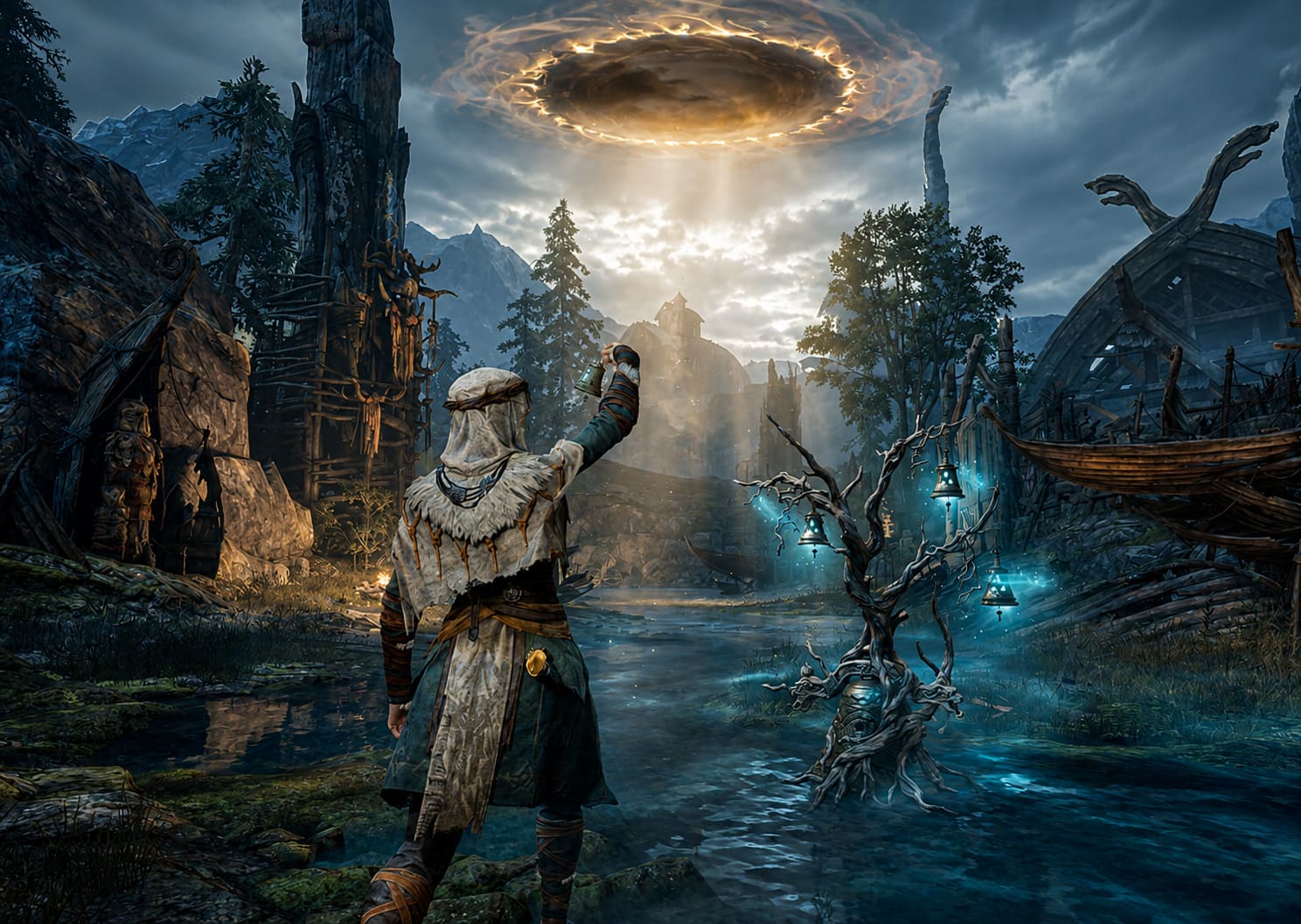
To escape with their collected rewards, players must locate a rare creature known as the Returner Woodling. Defeating this creature grants the Soul of Return, an item required to begin the journey back to safety.
The next step involves locating the enormous bells placed throughout the extraction zones. By ringing one of these bells, the hunter activates the return process and creates a path back toward Windrest.
The sound of the bells becomes a guide through the fog.
This mechanic is much more memorable than a standard extraction timer because it turns escape into a dramatic event. The player is not quietly leaving the match through an interface. They are performing a ritual while the world announces their presence.
And that is where the tension spikes.
Other players may hear the bells. Enemies may still be nearby. A successful run can become a disaster during its final moments.
The extraction system fits the setting perfectly. Even returning home requires a connection to souls, ancient rituals, and the supernatural forces shaping Weavereach.
Season 1: Soul Hunt and the Expanding Fate Chart
Mistfall Hunter is designed as a live-service game with seasonal content expected to expand its world over time. The opening season is titled Soul Hunt, and its story focuses heavily on the Fate Chart and the Soul Harvest ritual.
The seasonal narrative introduces new threats that interfere with the restoration process. One of the most disturbing is the Soulgnawer, an elite creature with a serpentine lower body and an unsettling human-like appearance.
The Soulgnawer is connected to the disruption of the seasonal rituals taking place inside the extraction zones. Players must adjust their tactics and use weapon switching, class abilities, and coordinated team attacks to defeat the threat.
The creature also demonstrates how seasonal content can add new lore instead of functioning as a simple collection of rewards. Each major enemy and ritual expands the player’s understanding of the forces still operating inside the ruined world.
Future updates are expected to explore locations such as the Hollow Grove and important landmarks connected to the ancient World Tree. The introduction of areas like the Ancestors Tree suggests that the corruption may extend into the deepest foundations of Weavereach.
That creates an interesting direction for the game’s long-term story. The Gyldhunters may not be cleaning corruption from the surface alone. They could eventually be forced to enter the oldest and most important parts of the world to confront the source of its decay.
Why Mistfall Hunter’s Lore Works So Well
Many live-service games create a large fantasy setting but struggle to connect the story to actual gameplay. The lore becomes something players read in menus while the main gameplay loop feels completely unrelated.
Mistfall Hunter avoids much of that problem.
Your character’s resurrection explains repeated runs. The Gyldenmist explains the hostile environment. The Corroded explain the enemy population. Gyldenblood gives the loot system a narrative purpose. The extraction ritual connects survival mechanics to the supernatural world.
Even the constant risk of losing equipment fits the setting. The Gyldenmist is not just a visual effect surrounding the map. It is an active force that consumes bodies, resources, and the remains of the old world.
The result is a dark fantasy extraction experience where the mechanics feel like part of the setting rather than systems placed on top of it.
Final Thoughts: Can the Web of Fate Be Repaired?
Mistfall Hunter presents Weavereach as a world that survived its apocalypse without truly escaping it. The gods are dead, divine blood has become a source of corruption, and the structure of destiny is falling apart.
Dew remains as the final fragment of the Fate Goddess, searching for fallen heroes capable of carrying out a task that may take generations. The Gyldhunters are her weapons, but they are also proof that the world still has a chance.
Every expedition becomes part of that struggle.
You enter the golden fog, fight creatures that were once something else, collect the remnants of dead divinity, and risk everything to bring those resources home. A successful extraction is more than a profitable run. It is another attempt to restore order to a world that has forgotten how to function.
Whether the Web of Fate can ever be fully repaired remains one of the biggest questions in Mistfall Hunter. The future may reveal that the corruption is deeper than anyone expects, or that the surviving fragment of the Fate Goddess has her own hidden purpose.
For now, the mission is clear: prepare your gear, watch the shadows inside the Gyldenmist, listen for the sound of the extraction bells, and do not assume that every hunter you meet wants the world to be saved.
Weavereach is broken. Fate is unraveling. And every journey into the mist may bring salvation—or leave another soul lost forever.