Is 1666 Amsterdam Coming to PS5 and Xbox Series X in 2026? Release Date and Console Details
There are games that disappear for a year or two and then quietly return. And then there is 1666: Amsterdam.
For years, Patrice Désilets’ mysterious historical action game existed in that strange category of projects that gamers talked about more than they actually played. It survived studio closures, legal battles, years of silence, and an almost unbelievable amount of development limbo. Now, in August 2026, it has finally become a real game again.
But there is one problem for console players.
1666: Amsterdam is not launching on PS5 or Xbox Series X/S in 2026.
The PC Early Access release arrives on August 25, 2026, through Steam and the Epic Games Store. PlayStation 5 and Xbox Series X/S players are currently looking at a 2027 release window, when the game is expected to leave Early Access and reach its full 1.0 version.
As someone who has followed this project for years, I have to admit that this is probably the right approach. I would rather wait another year for a finished version than see a fascinating idea arrive on consoles half-polished simply because everyone got impatient.
1666: Amsterdam Release Date and Platforms
Let’s get the basic information out of the way first.
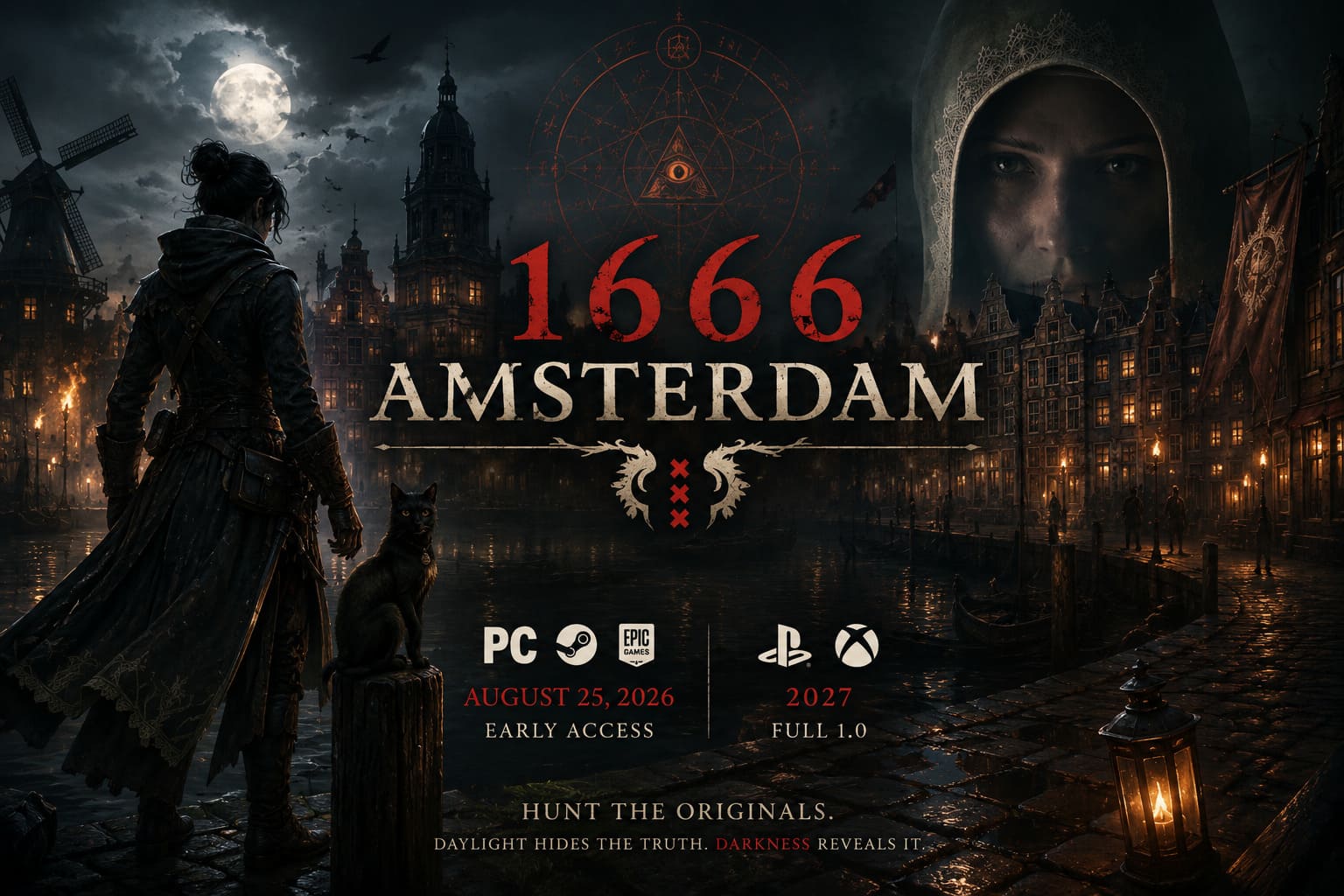
| Platform | Release | Version |
|---|---|---|
| PC | August 25, 2026 | Early Access |
| PlayStation 5 | 2027 | Full 1.0 |
| Xbox Series X/S | 2027 | Full 1.0 |
| Steam | August 25, 2026 | Early Access |
| Epic Games Store | August 25, 2026 | Early Access |
The important detail here is Early Access.
The August 2026 version isn’t supposed to be the definitive 1666: Amsterdam experience. Panache Digital Games is treating the PC launch as the beginning of a longer development phase. The studio plans to use player feedback, performance data, bug reports, and general community reaction to improve the game before its eventual console release.
That makes the 2027 PlayStation 5 and Xbox Series X/S versions particularly interesting.
Console players aren’t simply getting a delayed port. In theory, they’re getting the more complete version of the game.
And honestly, I’m okay with that.
Why Isn’t 1666: Amsterdam on PS5 and Xbox in 2026?
The simplest explanation is that Panache Digital Games wants to concentrate on PC first.
That might sound boring, but it’s actually an important decision for a relatively small studio attempting something this ambitious.
An Early Access game can change constantly. Combat can be rebalanced. Levels can be redesigned. Systems can be completely replaced. Performance problems can appear after seemingly harmless updates. Developers can push experimental builds quickly and react to player feedback.
PC makes that process much easier.
Consoles are different. Updates have certification requirements, platform-specific technical considerations and additional QA demands. Supporting PS5 and Xbox Series X/S while simultaneously rebuilding parts of the game would increase the workload considerably.
For a large publisher, that might simply mean hiring more teams.
For an independent studio, it can mean spreading the development team too thin.
So, from my perspective, keeping Early Access on PC is a sensible move.
The Weird and Wonderful History Behind 1666: Amsterdam
The story behind the game is almost as interesting as the game itself.
Patrice Désilets is best known as one of the creative minds behind the original Assassin’s Creed, Assassin’s Creed II and Assassin’s Creed: Brotherhood. Before those ideas became a defining part of Ubisoft’s catalogue, Désilets was working on another ambitious historical project.
That project eventually became 1666: Amsterdam.
Development began around the early 2010s under THQ Montreal. Then THQ collapsed in 2013, and Ubisoft acquired the studio along with its intellectual property.
Désilets’ relationship with Ubisoft subsequently deteriorated, leading to a highly public dispute over the future of the project.
The legal situation was eventually resolved, and in 2016 Désilets regained the rights to 1666: Amsterdam.
But the game still didn’t immediately return.
Panache Digital Games first focused on Ancestors: The Humankind Odyssey, which allowed the studio to establish itself and gain the resources needed to tackle another major project.
That long wait makes the game’s 2026 return feel almost surreal.
This isn’t just another newly announced action game. It’s a project that many people assumed would never exist.
What Actually Is 1666: Amsterdam?
The game takes a familiar historical setting and twists it into something much darker.
1666: Amsterdam is a third-person single-player action-adventure set during the Dutch Golden Age. But this isn’t a straightforward historical recreation.
There are demons.
There is witchcraft.
There are supernatural conspiracies.
And there is a very strange little black cat.
The protagonist, Noa, is connected to an ancient faction known as the Zaindaris. She carries the title of the Collector and is responsible for dealing with supernatural threats hiding within ordinary society.
The central enemies are known as The Originals — ancient supernatural beings capable of disguising themselves as humans.
That creates a gameplay premise I find particularly appealing: you aren’t simply walking through Amsterdam looking for enemies with giant health bars above their heads.
You have to investigate.
You have to observe.
You have to figure out who isn’t what they appear to be.
Amsterdam Changes Completely After Dark
One of the strongest ideas in 1666: Amsterdam is the contrast between day and night.
During the day, Amsterdam functions as a living historical environment. Markets, streets, docks and buildings become places to investigate rather than simply scenery between combat encounters.
You can gather information, watch people and search for clues.
Then darkness arrives.
And the entire mood changes.
The supernatural side of the city becomes much more prominent, with Noa hunting creatures that hide among ordinary people. Stealth, movement, combat and witchcraft become increasingly important.
This day/night structure is one of the reasons I’m more interested in 1666: Amsterdam than I expected to be.
A lot of open-world games give you a beautiful historical city and then turn it into a giant checklist.
This concept feels different.
The city itself is supposed to be part of the mystery.
Yes, You Can Control the Cat
And then there’s Aaron.
Aaron is Noa’s magical black cat familiar, and the little guy isn’t just there to make screenshots look adorable.
Players can use Aaron to explore areas that Noa can’t easily access. His size allows him to move through narrow spaces, climb structures and scout locations. He can also help with distractions and certain stealth situations.
This is one of those mechanics that sounds ridiculous when described in a sentence:
“It’s a historical supernatural action game where you can control a witch and her magical cat.”
But that’s exactly why it caught my attention.
It gives the game a personality.
The familiar also creates another layer of environmental interaction. Instead of treating every building as a collection of doors that either open or don’t open, the developers can design spaces around the different abilities of the two characters.
What Does Early Access Actually Offer?
The initial PC Early Access build is not just a tiny technical demo.
The first portion of the campaign is expected to provide around 15 hours of gameplay, including the introduction, early Amsterdam areas, progression systems and several major supernatural targets.
Panache also intends to use the Early Access period to expand the game with substantial updates.
The goal is reportedly to spend approximately a year in Early Access before reaching the full 1.0 release.
That means PC players will effectively experience the game’s evolution in real time.
For some people, that’s exciting.
For others, it’s a reason to stay away.
Personally, I’m firmly in the second group when it comes to games with narrative campaigns. I don’t particularly enjoy playing through a story only to discover that the next major chapter is months away.
That’s another reason the 2027 console launch makes sense.
By then, console players should be able to experience the story as a much more complete package.
Early Impressions Are Promising — But Not Perfect
The reaction to 1666: Amsterdam has been pretty much what I’d expect from a game with this much history behind it.
The atmosphere has attracted plenty of praise. The combination of 17th-century Amsterdam, supernatural horror, witchcraft and Unreal Engine 5 gives the game a visual identity that is difficult to confuse with anything else.
There are also obvious comparisons to games such as Assassin’s Creed, Dishonored and Bloodborne.
But I’m not convinced that every comparison is necessarily helpful.
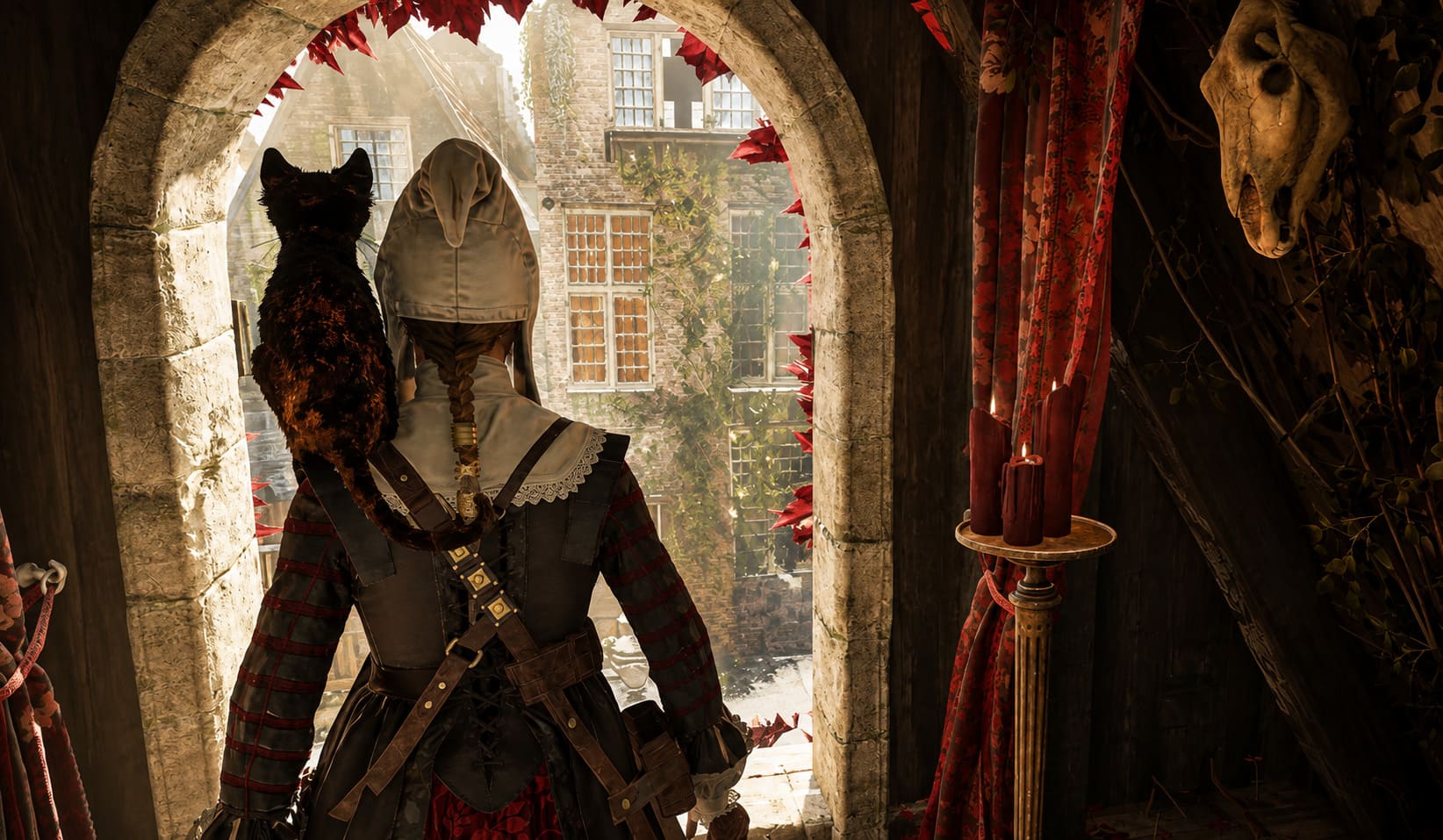
1666: Amsterdam needs to establish its own identity.
The early footage has also shown some rough edges. Movement and combat have received criticism, and some animations still lack the polish you’d expect from a major 2026 release.
That’s not necessarily a disaster.
It’s Early Access.
In fact, this is exactly the sort of thing Early Access is supposed to address.
I’d be far more concerned if Panache released the game as a supposedly finished product and ignored those problems.
The AI Controversy
There has also been some controversy surrounding the project’s use of generative AI during development and marketing.
After community criticism, Panache clarified its position and stated that AI-generated assets would not remain in the final game.
For me, the important question is what actually ships in the finished product.
Players aren’t buying a concept-art presentation. They’re buying a game.
If the final 1.0 release contains properly created artwork and the developers deliver on the project’s core vision, that’s what should ultimately matter when judging the finished product.
Aliens Fireteam Elite 2 Multiplayer Not Working? How to Fix Matchmaking Issues
So, Should PS5 and Xbox Players Be Worried?
Not really.
If anything, console players have a fairly comfortable position.
They don’t have to deal with the roughest part of Early Access. They can wait, watch how the game develops and then decide whether the finished version is worth buying.
| Question | Answer |
|---|---|
| Is 1666: Amsterdam coming to PS5? | Yes, planned for 2027 |
| Is it coming to Xbox Series X/S? | Yes, planned for 2027 |
| Is there a console version in 2026? | No |
| When does PC Early Access begin? | August 25, 2026 |
| Is the 2026 version the complete game? | No, it is Early Access |
| Should console players buy a PC version instead? | Only if they want to experience Early Access |
My Take: Waiting Might Actually Be the Best Way to Play
After all the years this project spent in development limbo, I’m not going to complain about another wait.
1666: Amsterdam has already waited more than a decade. One more year isn’t going to kill it.
What matters now is execution.
The concept is fantastic. A supernatural investigation game set in historical Amsterdam, combined with stealth, witchcraft, demons and a controllable cat, is exactly the kind of strange pitch that can either become something memorable or collapse under its own ambition.
And that’s where the Early Access period becomes important.
If Panache listens to players, improves the combat, smooths out movement, expands the world intelligently and delivers a satisfying narrative, the 2027 console version could be the best way to experience the game.
If you’re on PS5 or Xbox Series X/S, don’t expect 1666: Amsterdam in 2026.
Expect to wait until 2027.
Personally, I’d rather see Panache take that extra time and give us the game we’ve been waiting for than rush a legendary project onto consoles before it’s ready.
After everything 1666: Amsterdam has survived, the last thing this game needs is another bad ending.