EA Sports UFC 6 Fighter Ratings Guide: Evolution, Mechanics, and Community Meta
After spending countless hours breaking down fighting games, testing mechanics, and watching how competitive communities adapt after launch, I can confidently say that EA Sports UFC 6 feels less like a simple roster update and more like a complete reset of how players approach the virtual Octagon.
For years, UFC players followed the same routine: pick the fighter with the highest overall rating, abuse the strongest combinations, and hope superior stats could cover mistakes. It worked. A five-star fighter with elite speed, power, and stamina could often erase the advantage of a smarter opponent simply because the numbers were on their side.
UFC 6 finally attacks that problem.
The new system is built around a much bigger idea: a fighter is not just a collection of numbers. A rating means very little without the right animations, fighting style, timing, and strategy behind it.
The result? The online meta has changed dramatically.
The Biggest Change: Fighters Are Rated At Their Absolute Prime
One of the most interesting decisions in UFC 6 is the shift away from constantly adjusting fighters based on their current real-world careers.
Previous games often punished legends and fan favorites after bad performances. A former champion who aged or lost several fights could suddenly become almost unusable online because their attributes dropped too far.
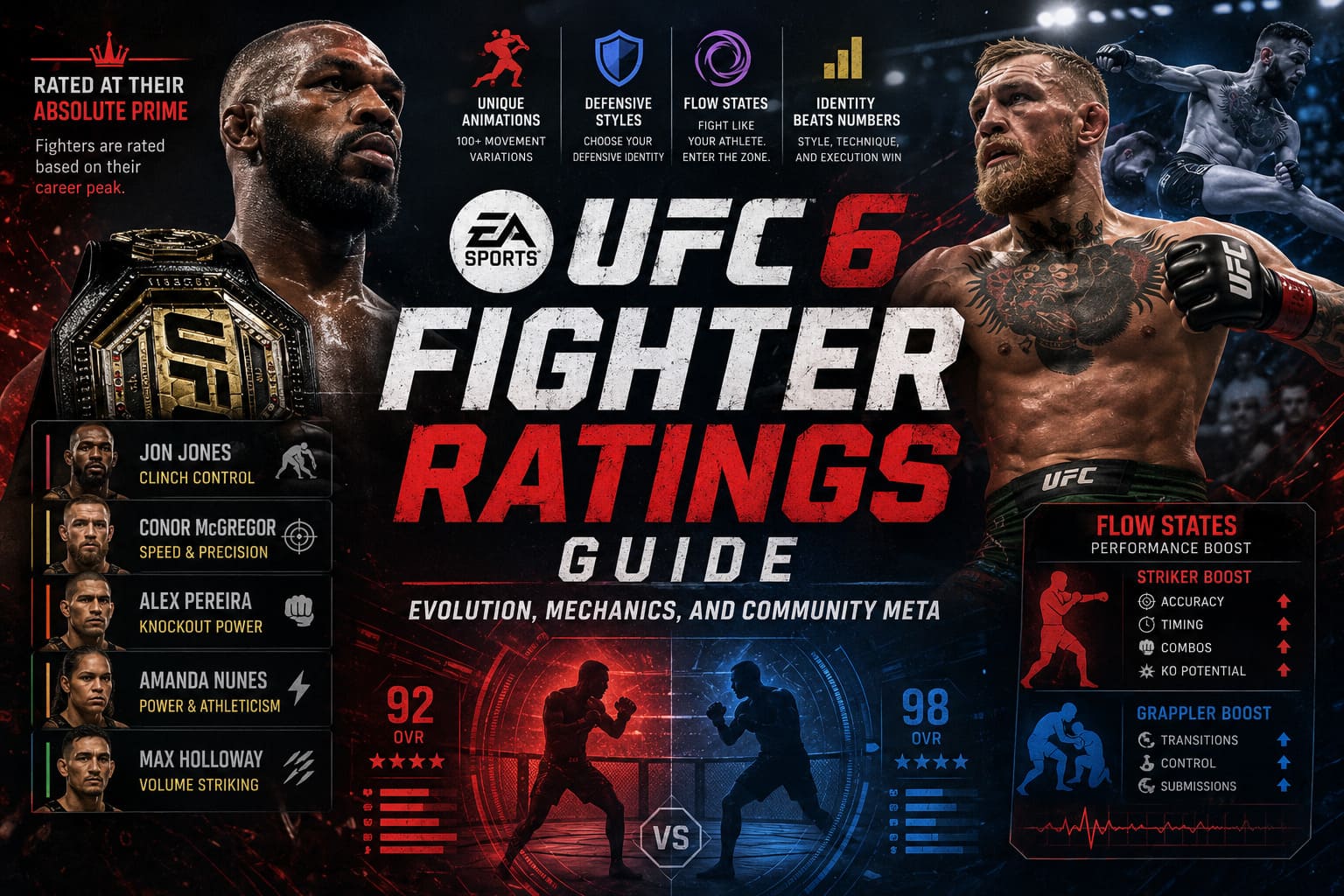
UFC 6 takes a completely different approach.
Instead of rating fighters based on their current status, EA Vancouver focuses on their career peak.
This means players are getting the most dangerous version of each athlete:
| Fighter | Prime Identity | Main Strength |
|---|---|---|
| Jon Jones | Championship Era | Clinch Control & Grappling |
| Conor McGregor | Featherweight/Lightweight Peak | Speed & Precision Striking |
| Alex Pereira | Elite Kickboxing Prime | Knockout Power |
| Amanda Nunes | Double Champion Era | Power & Athleticism |
| Max Holloway | Volume Striking Peak | Pressure Boxing |
This system creates a much more exciting roster because historical greatness matters again.
Want to play with a legendary champion? You are getting the version fans remember.
However, this decision is not perfect.
The biggest community complaint comes from fighters who compete in multiple weight classes. Because UFC 6 uses one prime template, some athletes do not realistically change when moving between divisions.
For example, a fighter may keep the same speed and power attributes whether fighting at a lighter or heavier weight class. Hardcore players have already pointed out that this creates unusual matchups where certain fighters feel stronger than they should at higher divisions.
It creates fun gameplay moments, but competitive players are already searching for ways to abuse these advantages.
Ratings Are No Longer Everything
The biggest mistake returning players make is treating UFC 6 like UFC 5.
The old mentality was simple:
Higher overall rating = better fighter.
That formula is basically dead.
A 92-rated fighter with the correct playstyle can completely destroy a 98-rated opponent if the player understands how that athlete is supposed to fight.
EA has pushed a new philosophy:
Identity beats numbers.
Every fighter now feels closer to their real-world counterpart because of several major gameplay systems.
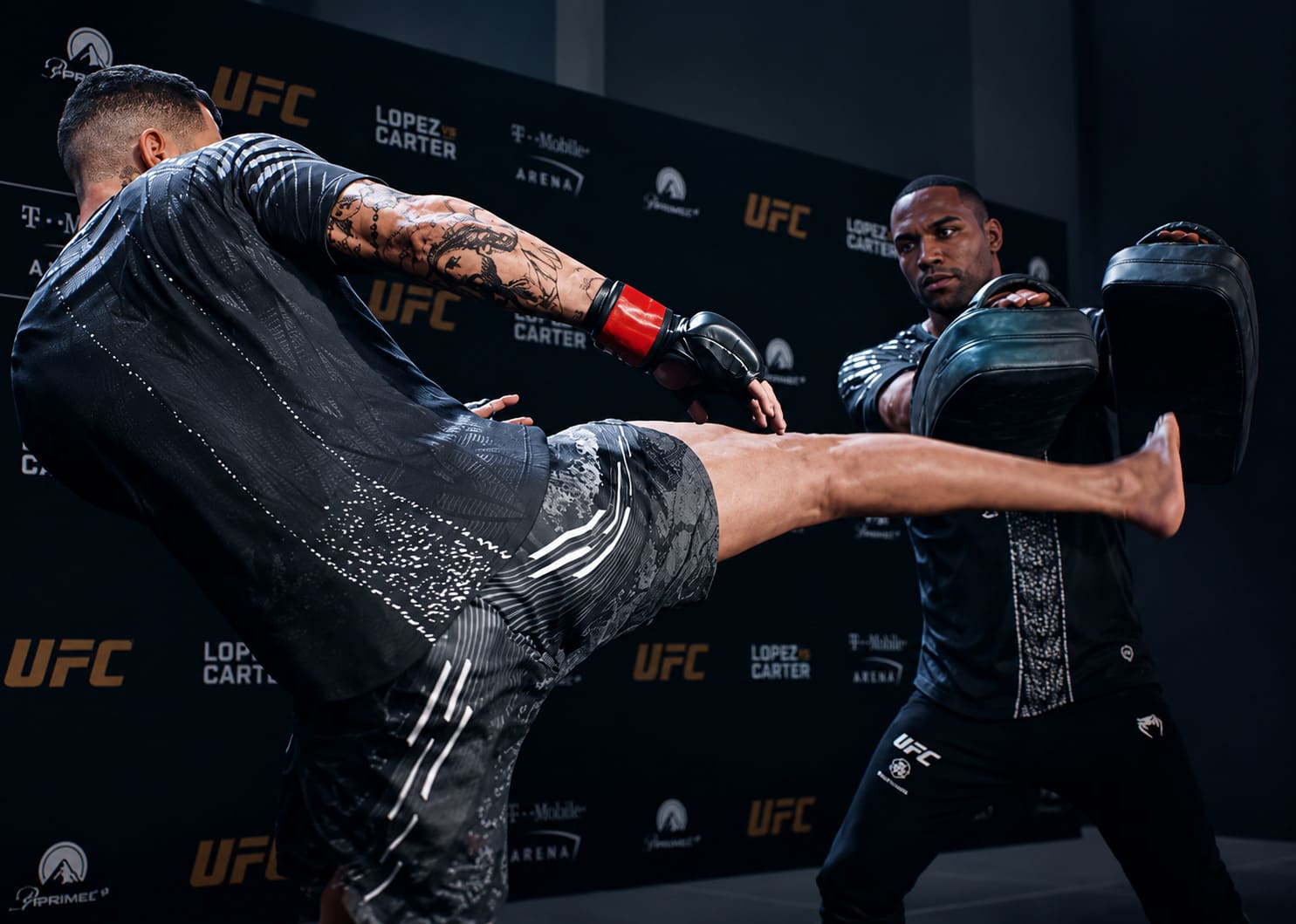
1. Unique Animations Make Fighters Feel Completely Different
This is probably the most impressive upgrade.
UFC games have always struggled with making fighters feel unique. Many athletes shared similar movements, combinations, and reactions.
UFC 6 changes that by introducing specialized animation packages.
Over 100 movement variations have been added, creating fighters who actually move like themselves.
Examples:
- Max Holloway feels like a pressure machine with endless combinations and boxing rhythm.
- Alex Pereira has explosive short-range attacks designed around devastating counters.
- Jon Jones controls distance differently because of his unique frame and striking style.
These details may sound small, but after hundreds of matches they completely change how a fighter feels.
Picking a character is no longer just choosing stats.
You are choosing a combat philosophy.
2. Wrong Techniques Can Punish You
One of my favorite changes is that UFC 6 finally rewards using fighters correctly.
In older games, almost every fighter could perform the same moves with similar effectiveness.
Now, animation style matters.
A fighter who naturally uses a technique will execute it smoothly. Someone outside their comfort zone may feel slower, heavier, or easier to punish.
This creates a much deeper learning curve.
A player who understands their fighter’s strengths has a huge advantage over someone simply copying YouTube combos.
The game is basically asking:
“Do you know how this fighter actually fights?”
If the answer is yes, you are rewarded.
Defensive Styles Finally Matter
Defense has received one of the biggest upgrades.
UFC 6 introduces multiple defensive profiles:
| Defensive Style | Gameplay Identity |
|---|---|
| Balanced | Reliable all-around defense |
| Sturdy | Absorbs pressure and survives exchanges |
| Evasive | Faster movement and counter opportunities |
| Philly Shell | Technical defense with advanced reactions |
This is a massive improvement because defensive specialists no longer feel like weaker versions of aggressive fighters.
A smart defensive player can frustrate someone who only knows how to throw endless combinations.
The days of simply holding forward and spamming pressure are over.
Flow States: The Mechanic That Changes The Entire Meta
The biggest addition in UFC 6 is easily Flow States.
This system rewards players for fighting like the athlete they selected.
Every fighter has specific behaviors connected to their real-life style. When players successfully recreate those tendencies, they build momentum toward activating a temporary performance boost.
Think of it as entering a fighter’s “zone.”
A striker might gain:
- Increased accuracy
- Better timing
- More dangerous combinations
- Higher knockout potential
A grappler could receive:
- Faster transitions
- Stronger control
- Improved submission opportunities
The idea is brilliant because it creates moments where a lower-rated fighter can become terrifying.
A four-star fighter with perfect execution can suddenly feel like a championship-level threat.
But Flow States Are Not Without Problems

The competitive community has already debated this heavily.
Some players love the mechanic because it creates memorable comeback moments.
Others believe certain Flow State bonuses are too powerful.
The biggest criticism is that a player losing most of a round can suddenly activate a powerful state and end the fight with one perfect counter.
For casual players, this creates exciting highlights.
For ranked competitors, it can feel frustrating.
The visual effects also received criticism. Many players felt the launch effects were too flashy and moved the game away from a realistic MMA atmosphere.
EA has acknowledged these concerns and plans to provide more customization options for competitive players who want cleaner visual feedback.
The Day-One Elite Fighters
The highest tier of UFC 6 includes a limited group of five-star fighters.
These are the athletes with the strongest overall packages:
| Fighter | Elite Attribute |
|---|---|
| Jon Jones | Clinch & Wrestling Control |
| Conor McGregor | Punch Speed & Accuracy |
| Alex Pereira | Knockout Power |
| Amanda Nunes | Raw Striking Power |
| Islam Makhachev | Grappling Dominance |
| Ilia Topuria | Explosive Boxing |
| Israel Adesanya | Technical Striking |
| Alexander Volkanovski | Complete Skill Set |
| Max Holloway | Volume Pressure |
| Alexandre Pantoja | Scrambles |
| Zhang Weili | Athletic Balance |
| Valentina Shevchenko | Complete MMA Ability |
These fighters are obviously powerful, but the gap between elite and average fighters is smaller than previous games.
EA Sports UFC 6 White House Venue Unlock Guide: How to Play in the UFC Freedom 250 Octagon
The Early Online Meta: Skill Finally Matters More
After the first wave of competitive matches, one thing is obvious:
Players who approach UFC 6 like UFC 5 are struggling.
The new physics system completely changes striking exchanges.
Random pressure attacks are punished.
Wild combinations drain stamina.
Poor positioning creates devastating counter opportunities.
The best players are not necessarily picking the highest-rated fighters anymore.
They are mastering specific characters.
A player who understands three fighters deeply will usually perform better than someone who constantly switches between every five-star option.
The strongest strategy right now is:
- Learn your fighter’s animations.
- Understand Flow State triggers.
- Respect stamina management.
- Build a defensive identity.
- Stop chasing raw ratings.
EA Sports UFC 6 The Legacy Mode Walkthrough: Guide to Chris Carter’s Story
Final Verdict: UFC 6 Creates A Smarter Fighting Game
EA Sports UFC 6 is not perfect. The grappling system still feels like it needs more innovation, and some balance issues will probably require future updates.
But the foundation is excellent.
The biggest victory is that the game finally makes fighters feel like fighters.
Numbers still matter, but they are no longer the entire story.
The best players will not win because they selected the highest-rated athlete.
They will win because they understand timing, movement, strategy, and the unique identity of the fighter in their hands.
For competitive MMA fans, that is exactly the direction UFC games needed.
EA Sports UFC 6 is less about finding the strongest fighter. It is about becoming dangerous with the fighter you truly understand.