Diablo 5 Next-Gen Graphics: Blizzard Confirms DLSS 5 Neural Rendering Support
There are game announcements that make you curious, and then there are announcements that make you immediately start thinking about your GPU. Diablo V managed to do both. Blizzard officially revealed the next mainline Diablo game during the franchise’s 30th-anniversary celebration on September 12, 2026, and while the story, classes, and release window naturally grabbed most of the attention, PC players quickly noticed something else: Diablo V is being built around NVIDIA DLSS 5 Neural Rendering.
That detail might sound like another technical buzzword if you have not spent much time following modern PC graphics. I have played enough ARPGs, shooters, RPGs, and painfully demanding PC ports to know that these technologies can either become genuinely useful tools or end up as expensive switches that look impressive in screenshots but make the game feel worse in motion. With Diablo V targeting a Spring 2029 release, however, Blizzard has something most developers don’t have: several years to make this technology actually work.
And honestly, that is the part I find most interesting.
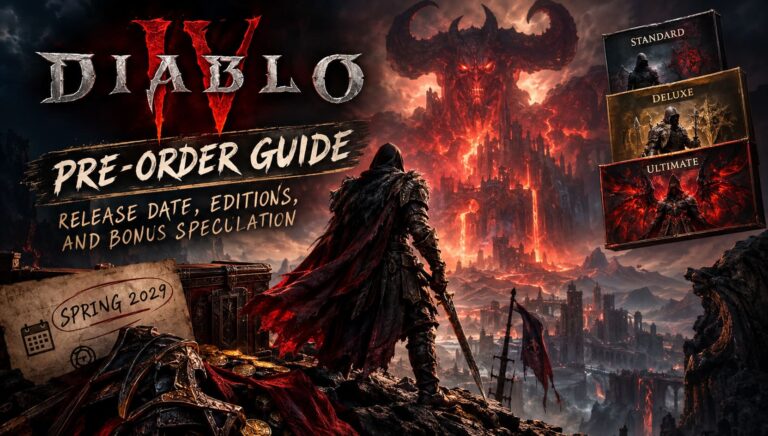
Diablo 5 Pre-Order Guide: Release Date, Editions, and Bonus Speculation
Diablo V Is Taking Sanctuary in a Very Different Direction
The setting alone makes Diablo V feel radically different from its predecessor. The story takes place roughly a century after the events of Diablo IV, but this is not simply another chapter where a new hero arrives to save the world before the credits roll.
Sanctuary has lost. Diablo has won.
The player takes control of the runaway Heir to Westmarch, traveling through a devastated world while leading a moving caravan of survivors. That premise immediately gives the game a different visual identity. Instead of walking through areas that are dangerous because monsters happen to live there, the entire world is supposed to feel like it has been fundamentally damaged by Diablo’s victory.
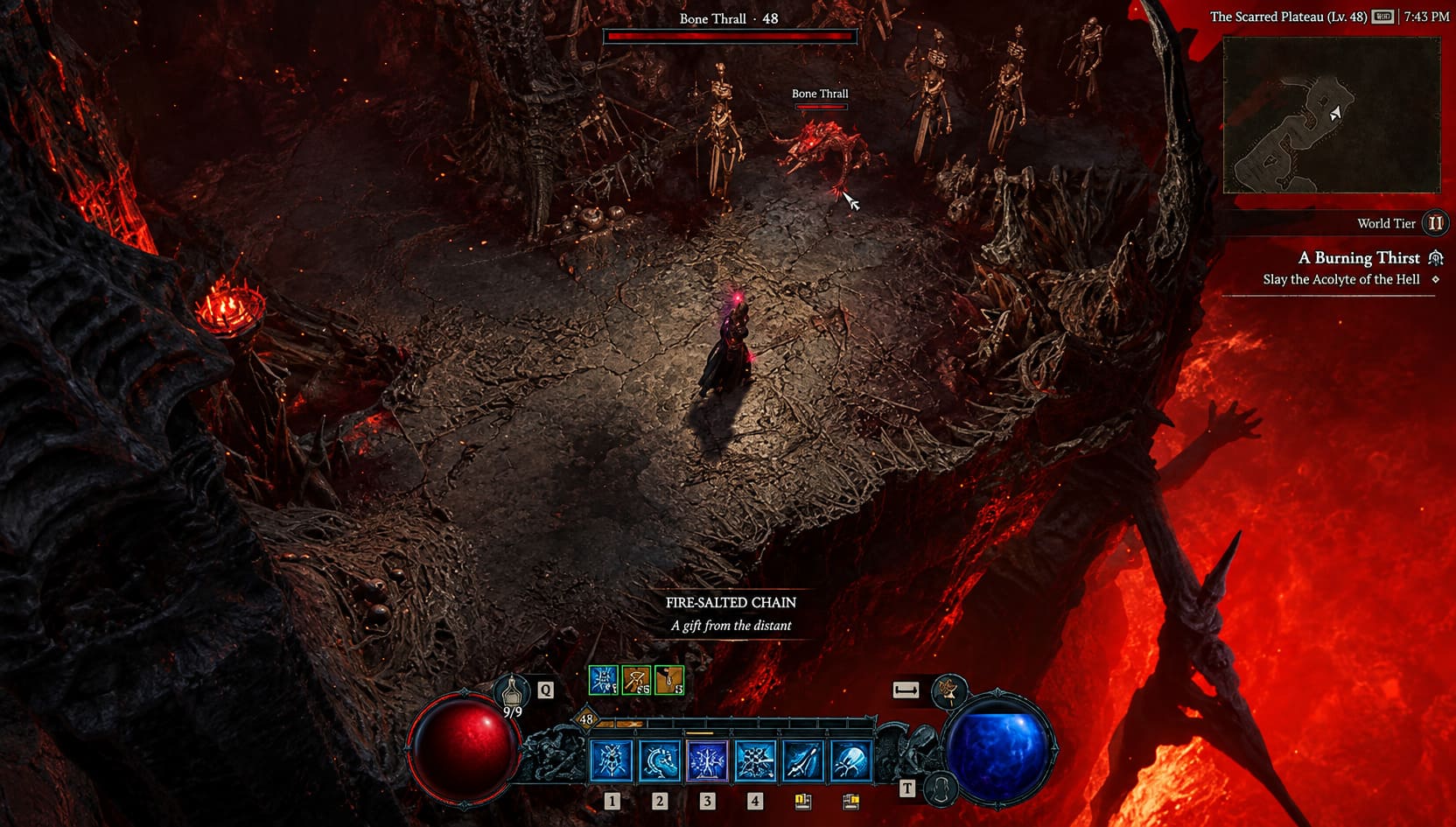
Blizzard is also pushing a darker visual direction that should appeal to anyone who still remembers the oppressive atmosphere of Diablo II. I have always thought Diablo works best when the world looks genuinely unpleasant to be in. Muddy roads, ruined churches, dying settlements, ugly creatures crawling out of places they absolutely should not be crawling out of — that’s the visual language I want from this series.
According to the announcement, Diablo V will feature environments capable of changing dynamically as Diablo’s influence spreads. Lighting, monsters, regional conditions, and parts of the landscape can react to what is happening in the world.
That is where DLSS 5 starts becoming more than a checkbox in a graphics menu.
What DLSS 5 Actually Brings to Diablo V
Previous generations of DLSS were primarily associated with technologies such as Super Resolution and Frame Generation. The basic idea was relatively easy for players to understand: render fewer pixels or generate additional frames, then use AI to reconstruct or enhance the final result.
DLSS 5 is considerably more ambitious.
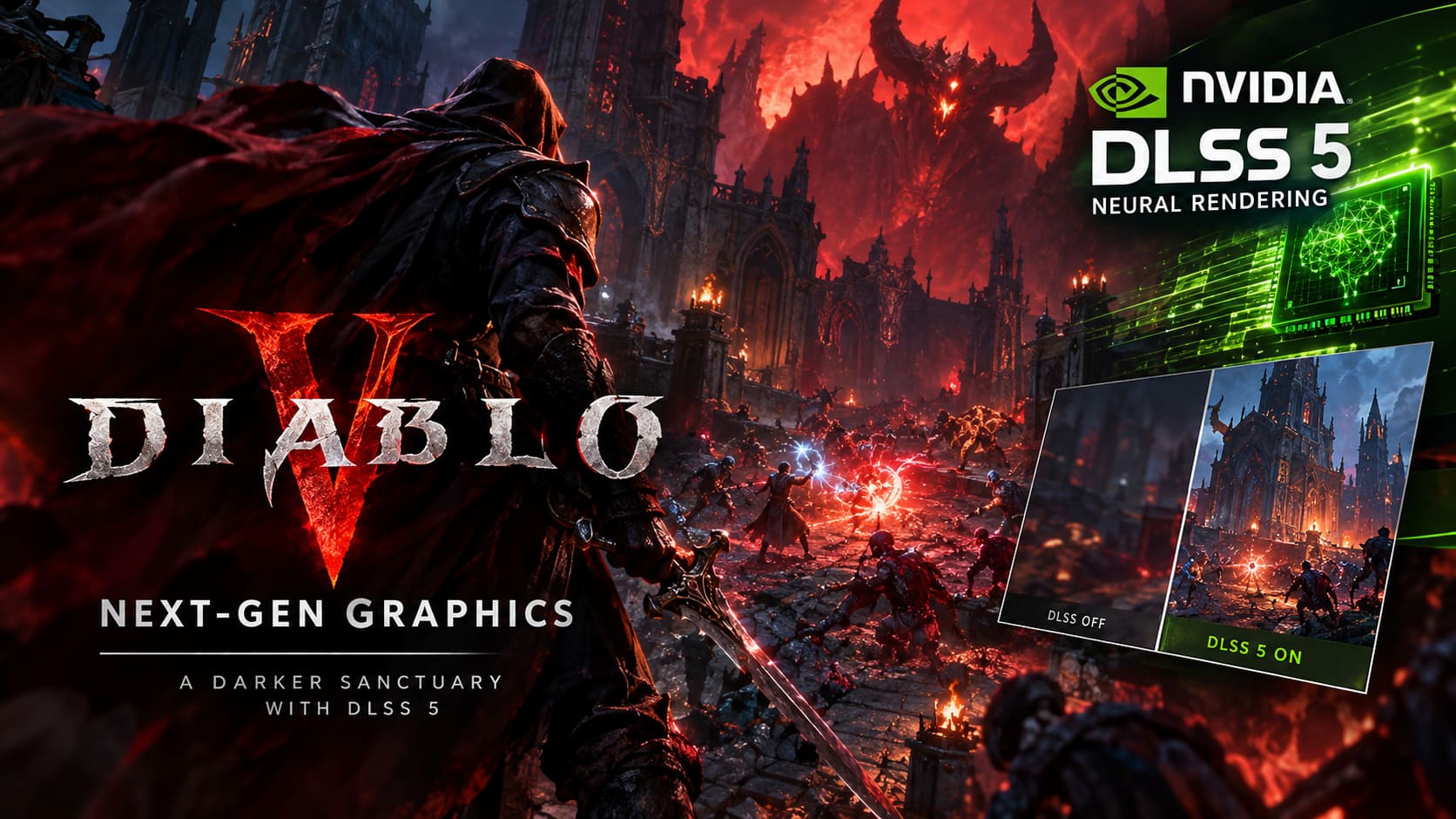
NVIDIA’s new neural rendering approach uses information coming directly from the game engine, including color data, depth information, and motion vectors. A neural model then operates as part of the final rendering process, helping reconstruct elements such as lighting, materials, shadows, and complicated environmental details.
For Diablo V, that could be particularly useful.
Think about a dark gothic cathedral with dozens of characters fighting underneath flickering candles. Now add spell effects, smoke, blood, reflective armor, particles, moving enemies, and a camera that constantly shifts around the battlefield. Traditional rendering techniques have to deal with all of those elements independently.
Neural rendering potentially gives Blizzard another way to reconstruct the final image intelligently instead of brute-forcing every visual detail through conventional rendering.
That’s exciting, but I’m not ready to call it magic.
Diablo V Could Become a Serious Graphics Showcase
One thing Blizzard appears to understand is that Diablo does not need photorealism to look incredible.
In fact, I would argue that photorealism would be the wrong direction.
The best Diablo environments are exaggerated. Architecture should look oppressive. Armor should feel heavy. Magic should illuminate entire rooms. Monsters should look disgusting enough that you instinctively want to move your character away from them.
DLSS 5 could help Blizzard preserve that exaggerated art direction while increasing the amount of visual information visible on screen.
| Feature | Potential Impact In Diablo V |
|---|---|
| DLSS 5 Neural Rendering | Higher-quality reconstruction of complex scenes |
| DLSS Super Resolution | Higher output resolution with improved performance |
| Multi-Frame Generation | Smoother high-refresh gameplay |
| Advanced Lighting | More convincing shadows, reflections, and illumination |
| Dynamic Environments | Better handling of constantly changing scenes |
| Native HDR | Stronger contrast in dark gothic environments |
The important word here is potential.
We have seen plenty of PC games launch with impressive graphics technology that sounded incredible in presentations but offered questionable real-world benefits. The final test will always be the same: sit down, play for three hours, move through a crowded dungeon, and see whether the game actually feels better.
That is where Diablo V will have to prove itself.
The Biggest Problem Is Performance
Here is where things get complicated.
DLSS 5 Neural Rendering is not free. The AI calculations require serious GPU resources, and early demonstrations have shown that enabling neural rendering can potentially create a huge performance hit to the underlying frame rate before technologies such as upscaling and frame generation are even taken into account.
A reported performance reduction of more than 50% in demanding scenarios is not something I can casually ignore.
Gamers have spent years trying to remove unnecessary latency and increase raw frame rates. If a new graphics option eats half of your performance just to reconstruct prettier lighting, there will naturally be a lot of people asking whether it is actually worth using.
And that question becomes even more important in Diablo.
ARPG combat can become absurdly busy. A late-game screen might contain dozens of enemies, projectiles, explosions, status effects, damage numbers, environmental effects, and player abilities happening almost simultaneously.
I would rather have a rock-solid 100 FPS with slightly less impressive shadows than 55 FPS with the world’s most beautiful blood splatter.
That is where Blizzard’s implementation will have to prove itself.
DLSS 5 Will Probably Be Used as a Complete Pipeline
Blizzard isn’t treating Neural Rendering as a standalone feature. The expectation is that Diablo V will combine it with DLSS Super Resolution and Multi-Frame Generation to maintain playable frame rates at demanding resolutions such as 1440p and 4K.
This makes sense.
Instead of asking one technology to solve everything, NVIDIA’s ecosystem can divide the workload. Super Resolution handles reconstruction and resolution scaling, neural rendering handles parts of the final visual presentation, and Multi-Frame Generation increases perceived frame output.
There is a catch, though.
More generated frames do not automatically mean a game feels more responsive. Anyone who has spent time comparing different implementations of frame generation knows that latency and frame pacing matter just as much as the number displayed in the FPS counter.
Diablo V will need to make sure its combat still feels immediate. A game where you click an enemy and the character appears to respond noticeably later is not going to feel good, no matter how beautiful the dungeon looks.
RTX 50-Series Players Have the Obvious Advantage
At launch, native DLSS 5 support is tied to NVIDIA’s newer GeForce RTX 50-Series hardware.
That will immediately create an interesting divide among PC players.
Someone buying a new high-end GPU specifically for Diablo V in 2029 will presumably have a much easier time taking advantage of the complete feature set. Someone sitting on an RTX 40-Series card may still get excellent performance, but the question is how much of the new neural rendering pipeline will eventually become available.
NVIDIA has indicated that it intends to explore RTX 40-Series support after the RTX 50-Series implementation is sufficiently optimized. There is currently no firm timetable for that expansion.
Personally, I would not buy a GPU four years early based on one graphics feature. PC hardware moves too quickly, and by the time Diablo V launches, today’s expensive cards may look very different in the performance hierarchy.
Modders Are Already Doing What Modders Do
The most amusing part of this whole situation is that the PC community has apparently already started experimenting.
Community developers and graphics enthusiasts have been exploring unofficial ways to bring neural rendering techniques to older RTX hardware using modified rendering pipelines, repositories, and swapchain tools. Some experiments have attempted to provide the required depth and motion-vector information to older GPUs and alter the order in which neural rendering and upscaling are performed.
That kind of experimentation is exactly why I love the PC platform.
Someone sees a technical limitation and thinks, ‘Okay, but what happens if I ignore that limitation?’
Some unofficial experiments have reportedly produced meaningful performance improvements, although these solutions come with obvious compromises. HDR can break, latency can increase, image quality can change, and modified libraries can potentially create problems with online games that use anti-cheat systems.
Those are not minor issues.
A clever graphics mod might be fantastic for a single-player game, but Diablo V is expected to have persistent online systems and multiplayer functionality. The last thing anyone wants is to experiment with a DLL injection and then discover that their account has suddenly become very interested in speaking with Blizzard’s support team.
Why Native Implementation Matters
This is why Blizzard’s decision to integrate DLSS 5 officially is more important than whatever enthusiasts can achieve through mods.
A native implementation can be designed around the game’s actual renderer from day one. Blizzard can control the data being passed into the neural pipeline, optimize how it interacts with lighting and effects, and make sure it behaves correctly with HDR, multiplayer, anti-cheat, and future patches.
That’s a completely different situation from forcing a third-party tool to guess what a game engine is doing.
The other major advantage is development time.
Diablo V is not launching tomorrow. The current target is Spring 2029, giving Blizzard years to optimize the technology before players get their hands on the finished game. NVIDIA has also been improving the efficiency of its neural models rapidly, with major performance gains reported during the technology’s early development.
If that trend continues, the version of DLSS 5 we see in Diablo V at launch could be considerably more efficient than what players are seeing in early demonstrations today.
What I Really Want From Diablo V
Graphics are exciting, but they are not what will make Diablo V succeed.
I have played enough games with gorgeous technology wrapped around mediocre gameplay to know that screenshots don’t keep me playing for 200 hours.
What I want from Diablo V is a great ARPG first.
Give me meaningful loot. Give me builds that feel genuinely different. Give me dungeons that don’t start feeling like procedural wallpaper after the first dozen hours. Give me bosses that force me to understand my build instead of simply checking whether my damage number is large enough.
Most importantly, bring back some of that uncomfortable atmosphere that made Diablo II memorable.
If DLSS 5 can make that world look better without turning my GPU into a space heater and my character into a delayed slideshow, fantastic. I’ll use it immediately.
But if I have to choose between another beautiful lighting effect and responsive combat, I’ll take the combat every single time.
Diablo V Has Time to Get This Right
The fascinating thing about Diablo V is that Blizzard is designing it for a hardware landscape that does not really exist yet.
The game has years of development ahead. Neural rendering will improve. GPU architectures will change. Drivers will improve. Upscaling algorithms will evolve. Even the way developers build their rendering pipelines may look different by the time Diablo V actually reaches players.
That gives Blizzard an unusual opportunity.
Rather than bolting new technology onto an existing engine late in development, the studio can build its visual systems around these techniques from the beginning. If the execution is good, Diablo V could become one of those games people use as a benchmark whenever a new GPU generation arrives.
And that is probably the most exciting part of this announcement for PC gamers.
Diablo V isn’t simply promising a darker Sanctuary. It is potentially building a showcase for what real-time game graphics look like at the end of the decade.
I still have plenty of questions. I want to see raw performance comparisons, latency measurements, image-quality tests, and, most importantly, actual gameplay rather than carefully controlled demonstrations. But with a Spring 2029 target, Blizzard has enough runway to turn DLSS 5 from an impressive technical feature into something that genuinely improves the way Diablo feels.
If the studio gets the balance right, Diablo V could be a rare game where the technology disappears into the experience. You won’t care that a neural network is reconstructing lighting in the background. You’ll simply walk into a ruined cathedral, see darkness swallowing the walls, watch a spell illuminate the room for half a second, and think: yeah, this is what Diablo should look like.