Diablo 5 Lore Breakdown: The Post-Apocalyptic Fall of Sanctuary Explained
For most of the Diablo series, the basic idea has always been pretty straightforward: Sanctuary is in terrible danger, the demons are coming, and somehow a handful of absurdly powerful mortals have to stop the world from falling apart. We have fought Prime Evils, watched kingdoms collapse, chased Soulstones across ruined lands, and repeatedly arrived just in time to prevent the next catastrophe. Diablo 5 changes the formula in a way I honestly find much more interesting: this time, the catastrophe already happened.
At BlizzCon 2026, Blizzard officially revealed Diablo V for a Spring 2029 release window, and the biggest surprise wasn’t another class or a flashy cinematic. It was the premise. Diablo has won. Sanctuary isn’t waiting for its apocalypse anymore because the apocalypse has become the new normal.
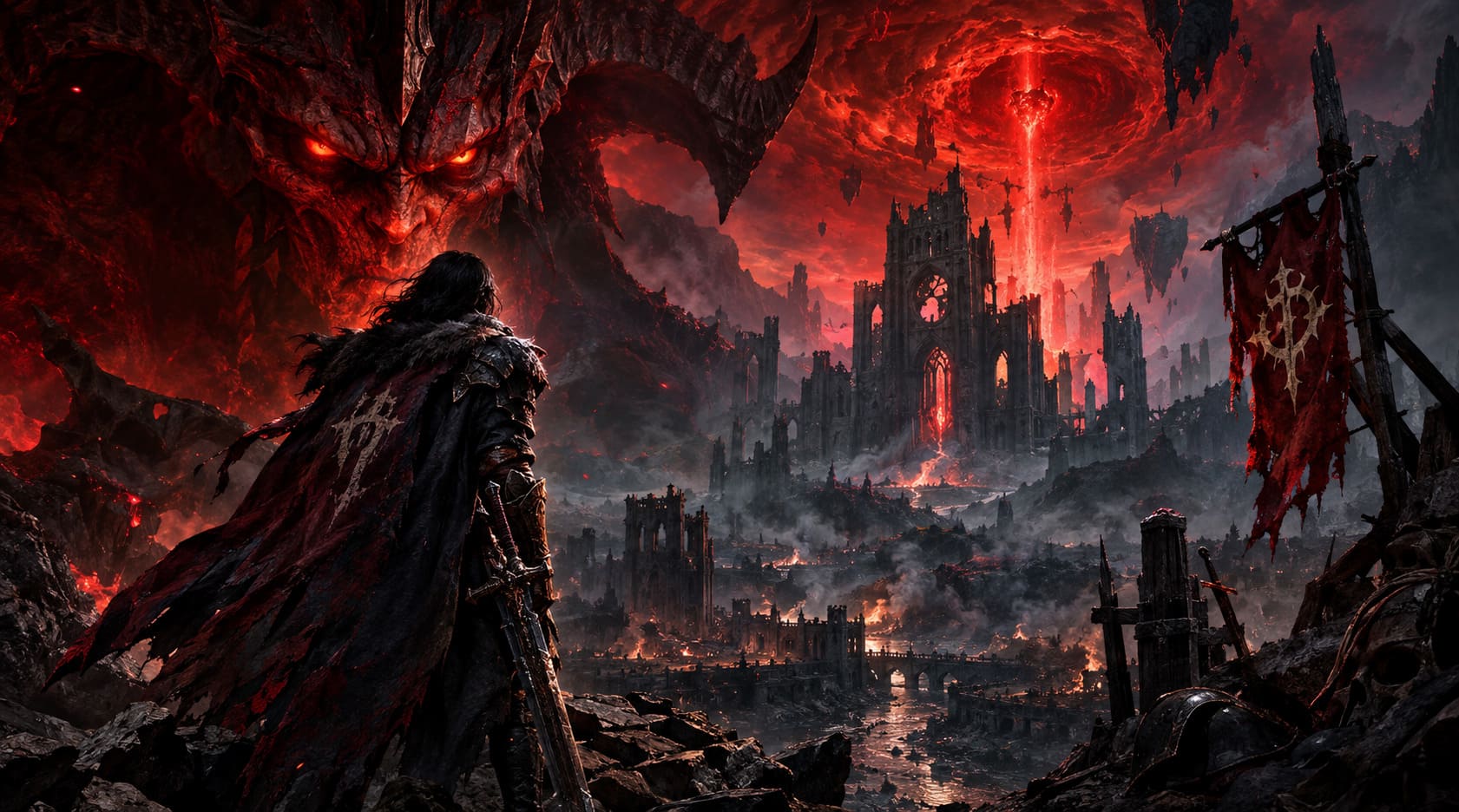
That immediately gives Diablo 5 a different identity from the games that came before it. Instead of traveling through a world that still has functioning cities, governments, armies, and places where ordinary people are trying to pretend life is normal, we’re entering a civilization that has already been crushed. Westmarch has become a ruined territory controlled by Hell, humanity has been scattered or enslaved, and even the idea of a traditional safe town seems to have disappeared.
As someone who has played enough dark fantasy RPGs to become suspicious whenever a game promises a ‘grim new era,’ I think this setup has real potential. The important part will be whether Blizzard actually commits to the consequences of Diablo’s victory instead of giving us another familiar Diablo adventure with a darker coat of paint.
Diablo 5 Next-Gen Graphics: Blizzard Confirms DLSS 5 Neural Rendering Support
A Century After Diablo 4, Sanctuary Is Almost Unrecognizable
Diablo 5 takes place roughly 100 years after the events of Diablo 4, including the aftermath of Mephisto’s defeat in the Lord of Hatred expansion. That’s a huge jump compared with the usual timeframes in the series, and it gives Blizzard plenty of room to reshape Sanctuary without constantly explaining why every old character is still around.
Apparently, there was a period when humanity managed to recover. That detail matters because it makes the eventual collapse more painful. Sanctuary didn’t simply go from one battle directly into another. There was apparently enough peace for people to rebuild, establish some sense of normal life, and believe that the worst might finally be behind them.
Then Diablo returned.
The new story begins seven years after Diablo achieved his complete victory over the mortal realm. That’s a particularly brutal choice because we’re not arriving immediately after the destruction. Seven years is long enough for survivors to understand that nobody is coming to save them.
Westmarch is at the center of this nightmare. Once one of the most imposing powers in Sanctuary, it has effectively been transformed into a giant monument to failure. Its fortifications, religious institutions, military strength, and political structures are gone or corrupted.
| Before Diablo’s Victory | After Diablo’s Victory |
|---|---|
| Fortified cities | Ruined settlements |
| Organized governments | Fragmented survivor groups |
| Holy orders | Destroyed or corrupted factions |
| Stable trade routes | Dangerous roads and wastelands |
| Traditional safe zones | Mobile survival hubs |
| Human armies | Scattered survivors and cultists |
What I particularly like about this direction is that the setting itself becomes part of the story. You’re not simply told that Diablo won through a cinematic. You are supposed to see what that victory actually did to the world.
The Player Is No Longer Just Another Wanderer
One of the more interesting changes is the protagonist.
Diablo games have traditionally been very comfortable making the player character a mysterious adventurer who wanders into somebody else’s disaster. That’s not necessarily a bad thing. It works brilliantly for an action RPG because you can become whatever class you want without having to explain too much about your background.
Diablo 5 apparently wants something more personal.
The player character is the Heir to Westmarch, meaning your connection to the ruined kingdom isn’t symbolic. It’s personal. You’re effectively running through the remains of a place that was supposed to be yours, surrounded by people who have lost everything.
That alone could make the story more emotionally effective, but Blizzard is adding another major complication: the protagonist has a mysterious connection to Diablo himself.
This is where the story could get genuinely interesting.
We’ve fought Diablo countless times, but he has generally been the ultimate enemy waiting somewhere ahead of us. Diablo 5 appears to be setting him up as something much more invasive. If the protagonist carries part of that connection within themselves, the conflict isn’t simply ‘hero versus demon.’ It becomes a question of identity.
How much of Diablo’s power can you use before it starts changing you?
How far can you go to reclaim Westmarch without becoming another monster?
And perhaps the nastiest question of all: if Diablo already owns the world, what exactly does defeating him even look like?
Those are much more interesting questions than another variation of ‘collect three artifacts and stop the ritual.’
Humanity Hasn’t Just Lost the War
The human population of Sanctuary has been devastated. According to the revealed lore, huge numbers of people have been killed, imprisoned in soul cages, dragged into the terror realm, or forced into submission.
The survivors aren’t necessarily freedom fighters waiting for a hero, either.
Many have apparently joined Diablo’s forces simply because survival became more important than resistance. Some people have become cultists, willingly serving Hell because obedience is preferable to being tortured or executed.
I think this is one of the strongest ideas in the Diablo 5 premise because it avoids the easy assumption that everyone left alive must secretly be heroic.
Realistically, if a demonic power completely conquered the world, not every survivor would pick up a sword and swear revenge. Some would hide. Some would cooperate. Some would betray their neighbors. Some would convince themselves that serving the winning side is the only rational choice.
That gives Blizzard a much messier version of Sanctuary, and that’s exactly what the series needs after so many apocalyptic stories.
The Dread Commanders Could Change the Entire World
The new Dread Commanders might be the most important lore addition outside of the protagonist.
These aren’t ordinary demons. They’re humans who have been corrupted and empowered by Diablo, receiving abilities associated with the Dukes of Hell. They function as powerful commanders across the conquered surface world, but their most interesting ability isn’t simply hitting harder.
They can alter and corrupt the environment itself.
That concept has obvious gameplay implications. Instead of entering the same overworld every time and simply fighting a different collection of enemies, the world can theoretically change depending on what these commanders are doing.
This fits surprisingly well with the procedural systems Blizzard has described. If regions and dungeons can shift between sessions, the story finally has an in-universe reason for the world to behave unpredictably.
I’ve played plenty of procedurally generated games where the explanation is basically ‘because that’s how the game works.’ Diablo 5 appears to be trying something smarter: the world changes because Hell is actively reshaping it.
That distinction may sound small, but it can make a huge difference to immersion.
Forget the Town Portal: The Caravan Is Your Home
One of the biggest structural changes in Diablo 5 is the removal of traditional safe towns.
There apparently won’t be a classic hub where you repeatedly return to sell junk, repair equipment, talk to NPCs, and then teleport back into the wilderness. Instead, your primary base is a mobile caravan carrying a group of survivors.
I love this idea on paper.
Diablo has always had towns, but they often become functional menus after the first few hours. You stop seeing them as places and start seeing them as interfaces. A caravan could solve that problem because it naturally belongs to the world. It has to move because staying in one place is dangerous.
The people inside it also become more important.
Instead of a collection of merchants who exist because the player needs a blacksmith and potion vendor, the caravan is filled with survivors carrying their own histories. One of the teased characters is a former Sister of the Sightless Eye dealing with the destruction of her order.
Then there’s the Treasure Goblin.
Yes, really.
But this isn’t simply a creature you chase across the map for loot. Blizzard has apparently turned this goblin into an actual character trying to survive in a world where the old meaning of wealth has almost completely disappeared.
That’s exactly the kind of weird Diablo storytelling I want. The setting is miserable, but the series has always benefited from strange little moments of dark humor.
Diablo 5 Classes: Familiar Faces and Something Much Stranger
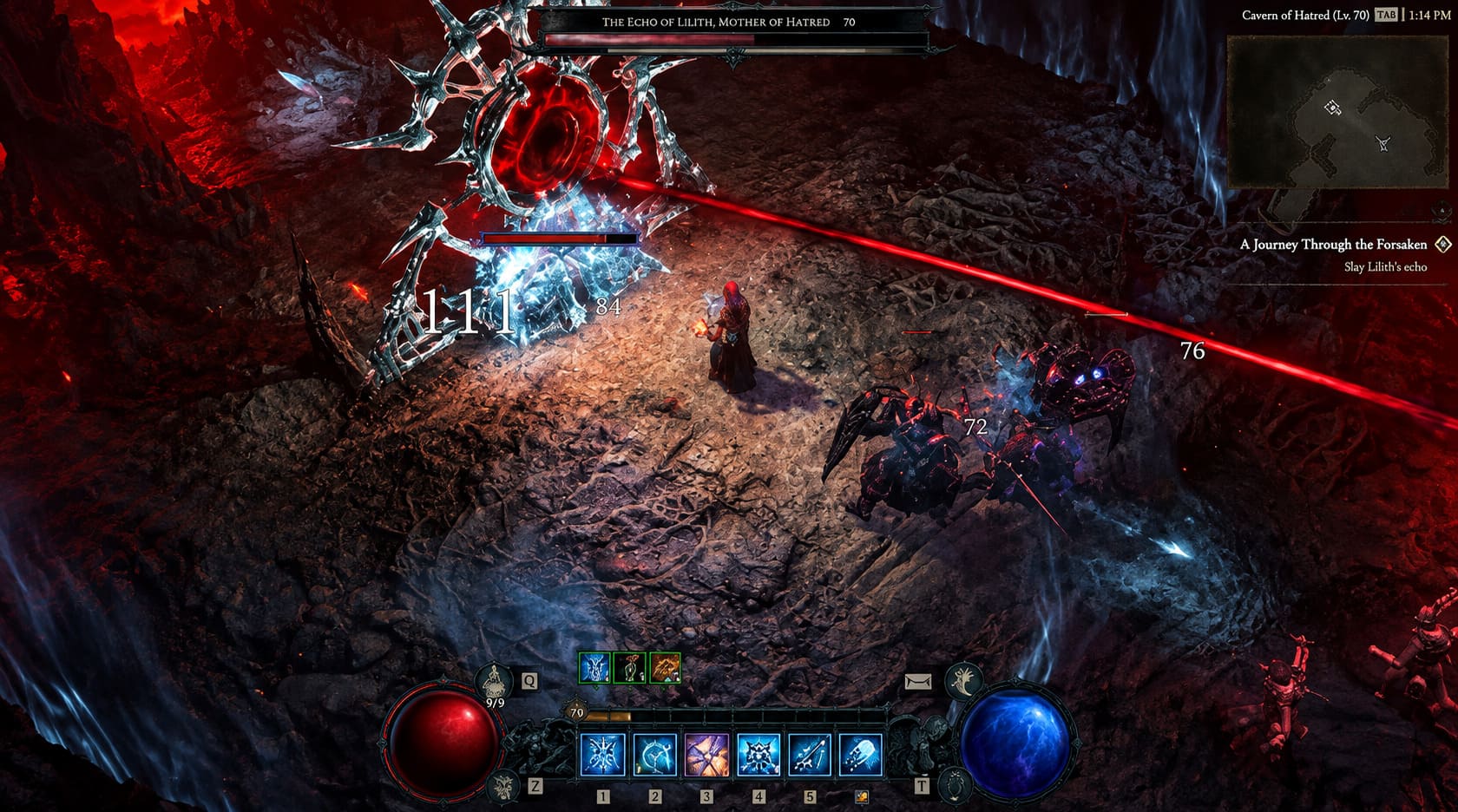
The launch roster revealed so far combines returning favorites with a brand-new archetype.
Demon Hunter
The Demon Hunter makes perfect sense in this setting. With Sanctuary overrun by Hell, a class built around ranged combat, traps, tracking, and shadow-based abilities fits naturally into the role of a hardened survivor.
I expect the Demon Hunter to feel less like a stylish assassin and more like a hunter who has spent years learning exactly how to kill things that should not exist.
Monk
The Monk also returns, bringing fast melee combat and holy energy back into the series. After the darker direction of Diablo 5, I suspect the contrast between disciplined spiritual power and Diablo’s corruption could become one of the class’s defining themes.
A Monk walking through a world where almost everything sacred has been destroyed has considerably more narrative potential than simply giving players another punch-heavy class.
Plague Knight
The Plague Knight is the class I’m most curious about.
Instead of representing purity or conventional heroism, the Plague Knight weaponizes disease, decay, pestilence, and rot. The character spreads corruption across enemies and then uses their contaminated life force as a source of power.
It’s a very Diablo concept.
More importantly, it fits the new world. In previous games, a plague-themed warrior might feel like an edgy alternative. In Diablo 5, where civilization has collapsed and survival has become grotesque, the class feels almost like a natural product of the setting.
Diablo 5 Itemization Could Finally Make Loot Feel Dangerous Again
The itemization changes may be just as important as the lore.
Blizzard is reportedly looking back toward the structure of Diablo II, including physical inventory sizes, stat requirements, runes, runewords, and deeper equipment management.
That sounds old-school, but I’m actually glad to see it.
Modern loot systems can become exhausting when you’re constantly picking up dozens of items that exist mostly to be compared numerically and immediately dismantled. If Diablo 5 wants to sell the fantasy of surviving in a destroyed world, equipment should feel valuable.
A massive sword taking up several inventory spaces makes more sense in a survival-focused setting than a system where you somehow carry an entire armory without thinking about weight or space.
The same goes for stat requirements. If you find some ancient weapon that requires extraordinary strength or magical ability to use, getting it should feel like an achievement rather than simply another colored item waiting for salvage.
Runewords and rare crafting components could become especially important because they reinforce the idea that equipment is something you build, protect, and understand rather than endlessly replace.
Why Diablo 5’s Lore Has Me More Interested Than Another Demon War
The biggest advantage of this story is that Blizzard isn’t starting with a blank slate. We’re seeing the consequences of everything that came before.
Diablo has finally achieved the thing we’ve spent multiple games preventing.
Sanctuary lost.
Humanity broken.
Westmarch destroyed.
Traditional heroes gone.
And the player character is somehow connected to the very being responsible for it all.
That’s a much stronger starting point than another ‘ancient evil has awakened’ plot.
The real test will be whether Blizzard allows the world to stay broken. If Westmarch gets rebuilt into a cheerful hub halfway through the campaign, the entire premise loses some of its bite. If the caravan becomes a meaningful community, the corrupted world remains dangerous, and the protagonist’s connection to Diablo creates actual consequences, Diablo 5 could become one of the most distinctive entries in the franchise.
I’m also hoping the game doesn’t over-explain everything. Diablo lore works best when you discover horrifying details through ruined locations, survivor stories, books, enemy designs, and small environmental clues. Give me a destroyed chapel with evidence of what happened there instead of a character standing beside it and explaining the entire tragedy.
Final Thoughts
Diablo 5 has a premise that immediately grabbed my attention because it finally asks the question the franchise has avoided for years: what happens if the heroes actually lose?
Sanctuary is no longer a world waiting to be saved. It’s a world that has already been conquered, and the people still living in it have had seven years to adapt to that reality. The ruined Westmarch, mobile caravan, Dread Commanders, corrupted survivors, and the protagonist’s connection to Diablo all point toward a much more personal and unstable version of the Diablo formula.
Whether Blizzard can turn those ideas into a great game remains to be seen, especially with a Spring 2029 release still ahead. But from a lore perspective, I’m far more interested in exploring a Sanctuary that has already fallen than playing through another apocalypse that we’re expected to stop at the last possible second.
If Diablo 5 really commits to this setting, the most exciting part may not be killing Diablo.
It may be discovering what kind of person can possibly survive in a world where Diablo already won.