Blossom: The Seed of Life Console Release – PS5 & Xbox Launch Details for 2026, Patch Notes 1.0
The indie scene never stops surprising me. Every year there’s that one small project that quietly appears and suddenly everyone is talking about it. In 2026, that game looks like it might be Blossom: The Seed of Life.
Created by solo developer Thorin from Pebbledust Games, the terraforming survival title launched on PC on March 9, 2026, and the response has been overwhelmingly positive. Players are already busy transforming a lifeless planet into forests, lakes, and breathable skies. Naturally, console gamers are asking the same question everywhere online: When will Blossom: The Seed of Life release on PS5 and Xbox Series X|S?
Let’s break down what we actually know — and why console players should keep this game on their radar.
Current Console Release Status
Right now, there is no official release date for PlayStation or Xbox versions. Neither the developer nor publisher Pretty Soon has confirmed a port yet.
That said, several signs strongly suggest a console release is likely.
Reasons a console version seems very possible:
- Full controller support already exists in the PC version.
- The game has received very positive early player feedback.
- The relaxed gameplay style feels perfect for couch gaming.
- Indie survival games often expand to consoles months after a PC launch.
For anyone who follows indie development patterns, this situation looks very familiar.
Possible Release Window for PS5 & Xbox
If we look at similar indie survival titles, the typical timeline is 6–12 months after the PC launch.
That means a realistic expectation would be:
| Platform | Possible Release Window |
|---|---|
| PC | March 2026 (Released) |
| PS5 | Late 2026 (Expected) |
| Xbox Series X|S | Late 2026 – Early 2027 (Expected) |
Developers often take this time to fix launch bugs, improve the interface for TV screens, optimize controller gameplay, and polish performance for consoles. Considering this game was developed by one person over seven years, a careful port would make sense.
Why Console Players Are Already Interested
What makes Blossom: The Seed of Life stand out is that it doesn’t follow the typical survival game formula.
Instead of just gathering wood and food, the game focuses on rebuilding an entire planet.
1. Terraforming That Changes the World
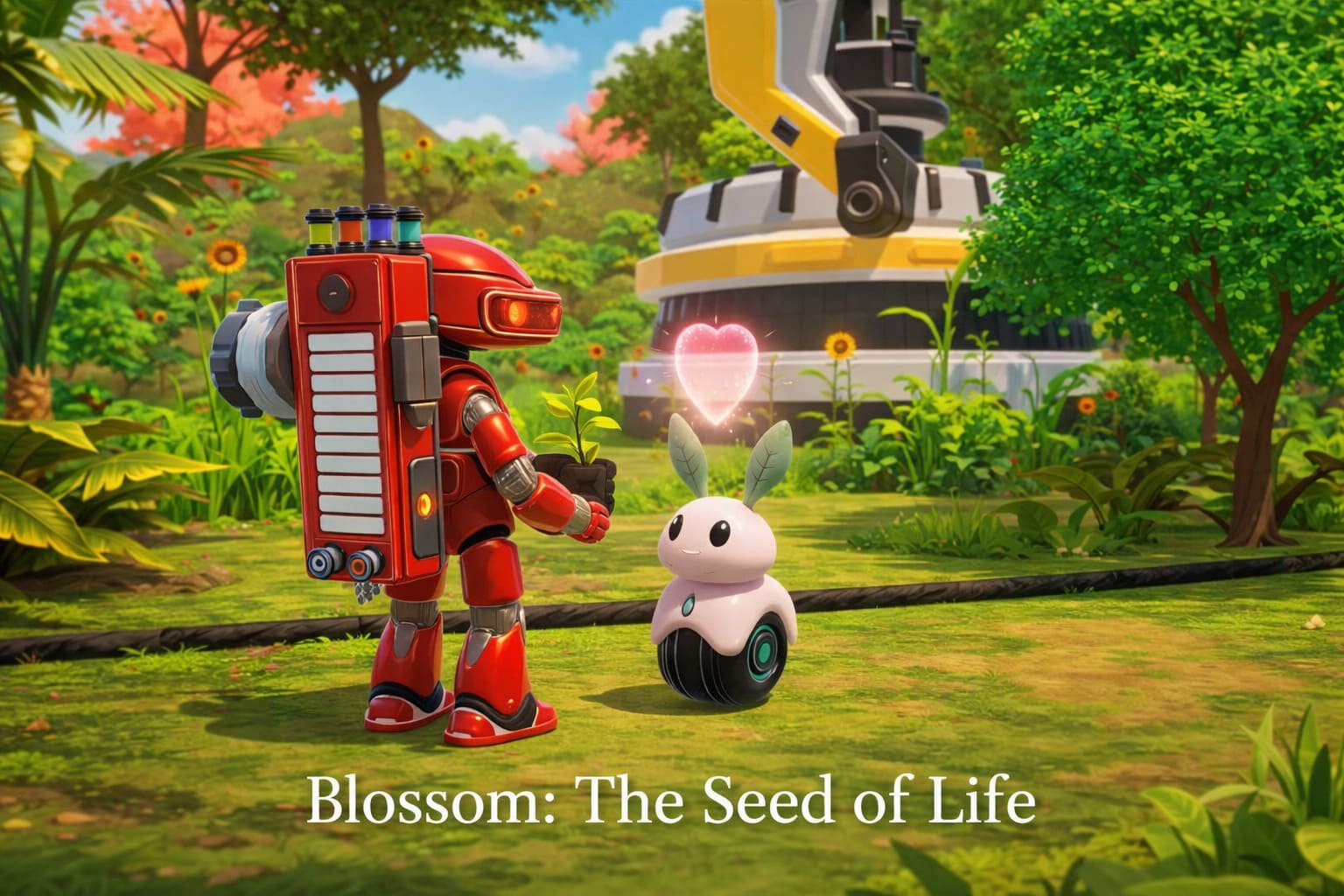
You control a small robot named Blossom whose mission is simple but massive: bring life back to a dead world.
As you progress, the planet evolves and slowly transforms in front of you.
- Ice appears as atmospheric pressure rises
- Water begins to flow across the surface
- Plants slowly spread across the landscape
- The sky eventually turns blue as oxygen levels increase
Watching the environment slowly transform is surprisingly satisfying.
2. Mobile Modular Bases
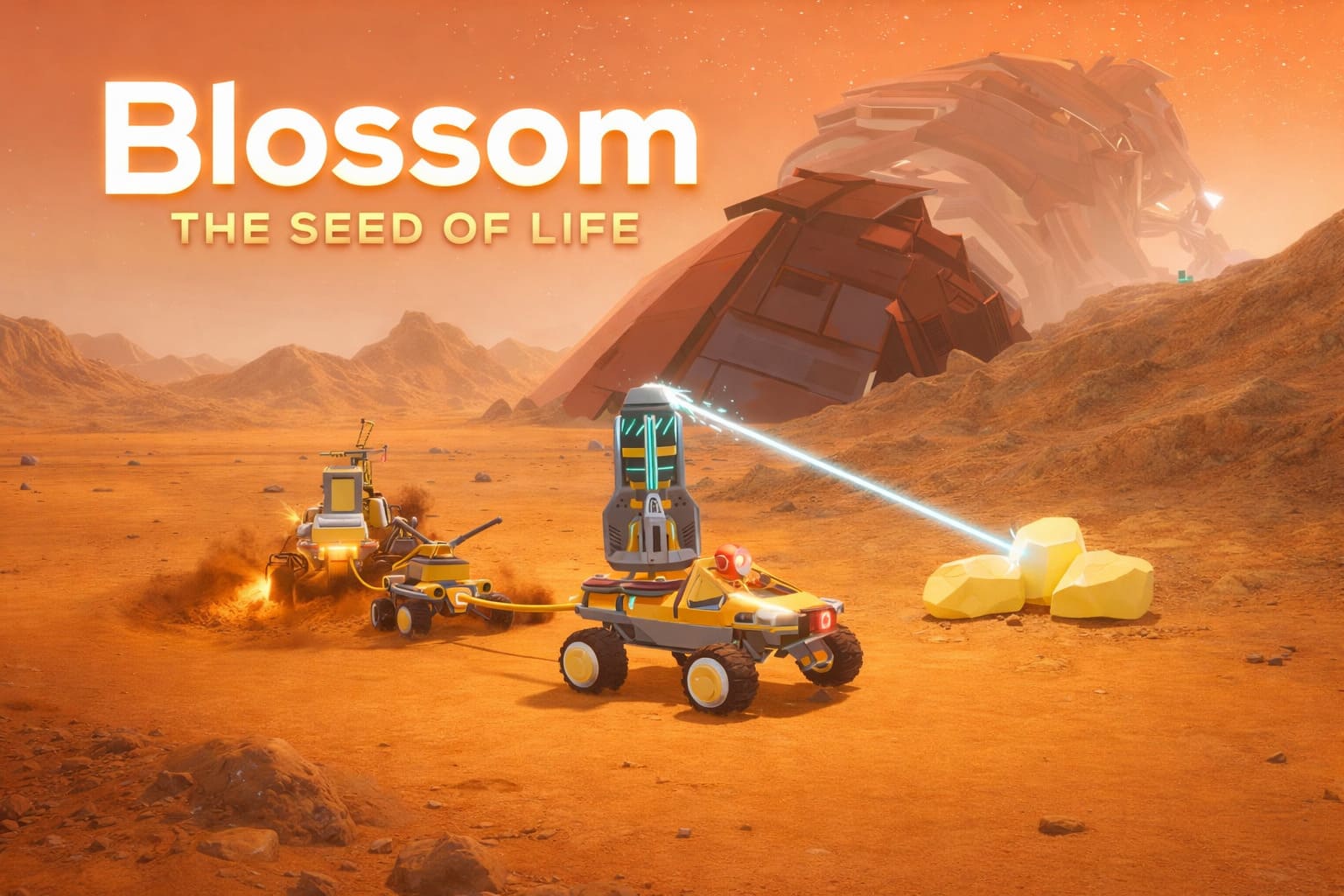
One of the most praised mechanics is the customizable rover system.
Players can build vehicles and connect modules together to create moving bases.
This means you can explore the planet with things like:
- Mobile storage
- Portable energy systems
- Research modules
- Large exploration convoys
It feels less like a static base-building game and more like a roaming survival expedition.
Blossom: The Seed of Life Crafting Recipes: The Ultimate 2026 Guide to Planetary Rebirth
3. Energy Instead of Hunger
One of my favorite design choices is that there’s no hunger bar.
Since Blossom is a robot, survival is all about power management.
Players must manage:
- Batteries
- Solar panels
- Power grids
- Energy consumption during exploration
It’s a small twist, but it makes the gameplay feel fresh compared to traditional survival games.
Performance Expectations on Consoles
Even though the console versions aren’t confirmed yet, the PC requirements are fairly modest, since the game runs on the Unity engine.
That gives us a good idea of how it could perform on current-gen consoles.
| Feature | Expected Console Performance |
|---|---|
| Resolution | Up to 4K |
| Frame Rate | 60 FPS |
| Loading Times | Fast thanks to SSD |
| PS5 Features | Potential DualSense haptics |
If the port is optimized well, it should run very smoothly on PS5 and Xbox Series X.
Should You Wait for the Console Version?
That really depends on how you prefer to play.
If you already own a gaming PC, the game is available now and priced fairly low compared to most modern releases.
But if you’re someone who enjoys relaxing games from the couch, waiting for a console version might actually be the better experience.
Personally, this feels like one of those perfect late-night console games — exploring a quiet planet, slowly building ecosystems, and watching a barren world come alive.
And honestly, that’s something the survival genre doesn’t do often enough.
Turning Mars Green: Why Blossom: The Seed of Life Feels Like the Most Relaxing Terraforming Game of 2026
When I first heard people describing Blossom: The Seed of Life as “WALL-E meets The Martian”, I assumed it was just another indie survival game trying to stand out in a crowded genre. But after the 1.0 release on March 9, 2026, it’s clear the game is doing something genuinely different. Instead of punishing mechanics like hunger, thirst, or constant danger, this game focuses on something far more satisfying: bringing a dead planet back to life.
Developed by Pebbledust Games and published by Pretty Soon, the full version expands far beyond its earlier demo. What started as a promising terraforming sandbox is now a story-driven exploration game with more than 30 hours of content.
If you enjoy calm sci-fi builders like The Planet Crafter or Astroneer, this might easily become your next obsession.
What Makes Blossom: The Seed of Life Special?
The biggest difference compared to most survival games is simple: you’re not fighting to survive — you’re rebuilding a world.
You play as a small modular robot named Blossom, left alone on a barren Mars-like planet. Your mission slowly unfolds as you collect resources, build infrastructure, and begin the long process of terraforming.
Instead of survival stats, the core mechanic revolves around energy management. Your battery is effectively your life bar, and almost every action consumes power.
This single design decision makes the game feel more strategic and less stressful.
Some standout features from the 1.0 release include:
- Complete terraforming progression — from dusty wasteland to blue skies and forests
- Modular rover convoys that act like mobile bases
- Dynamic biomes that evolve as temperature and moisture increase
- Late-game aerial vehicles for exploring the planet from above
- A full narrative mystery explaining what happened to the human colonists
Watching the planet slowly change color from red to green is easily one of the most satisfying visual progressions I’ve seen in a simulation game.
The Core Gameplay Loop Explained
Terraforming isn’t just cosmetic here — it’s a layered system where each environmental factor unlocks the next stage.
Here’s the simplified progression:
- Pressure — stabilizes the atmosphere
- Temperature — melts frozen water
- Moisture — creates fertile soil
- Oxygen — generated by growing ecosystems
Only when all of these systems work together does the planet truly begin to transform.
And honestly, that slow transformation is the main reason the game is so addictive.
The Best Feature in 1.0: Modular Rover Convoys
One of the most exciting additions is the rover convoy system.
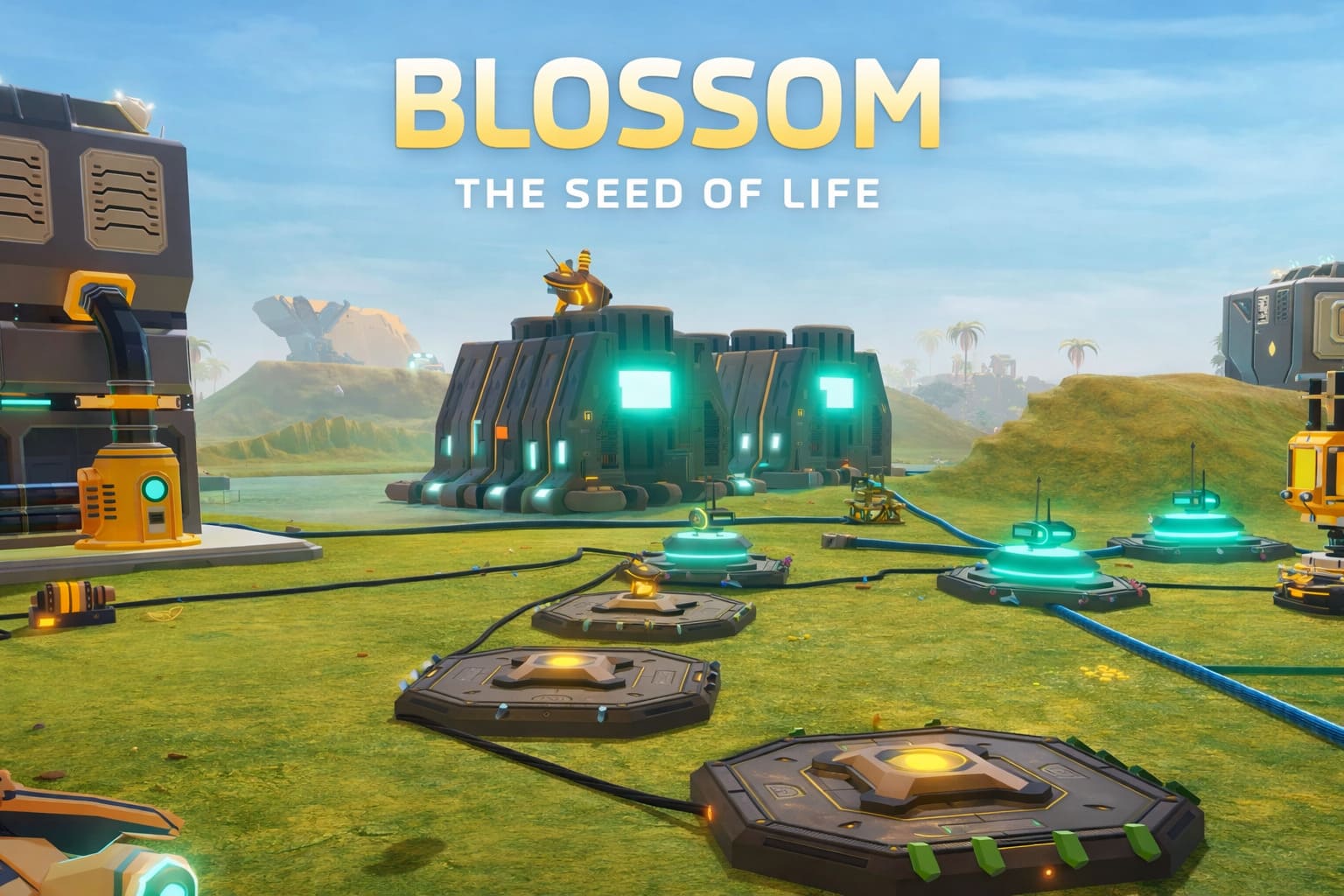
Instead of building a static base, you can connect multiple rover modules and essentially create a mobile base that travels across the planet.
A common setup many players recommend looks something like this:
- Lead Rover — cockpit and large battery pack
- Middle Module — resource storage
- Tail Module — mining laser or drone dock
This system dramatically changes exploration because your entire infrastructure can move with you.
It feels a bit like running a rolling space colony.
Automation and Base Building Improvements
Automation is another area where the 1.0 update shines.
New features make large-scale terraforming far easier:
- Autonomous drones transport materials between bases
- Improved 3D printing interface shows power and water network ranges
- Blueprint system unlocks advanced Tier 3 and Tier 4 machines
- Solar grids allow players to build long-distance energy networks
These systems make the mid-game far more strategic than the early demo versions.
PC System Requirements
One of the most surprising things about the game is how lightweight it is. Even modest gaming PCs can run it smoothly.
| Component | Minimum | Recommended |
|---|---|---|
| OS | Windows 10 (64-bit) | Windows 11 |
| Processor | Dual Core 2+ GHz | Core 2 Duo Q6867 |
| Memory | 4 GB RAM | 8 GB RAM |
| Graphics | 2 GB VRAM / DX11 | GeForce RTX 3050 |
| Storage | 3 GB | 4 GB |
Community Reaction After Launch
Since the official March 9 release, the game has been getting a very warm reception from players.
The biggest praise from the community usually focuses on three things:
What players love
- Relaxing gameplay that avoids survival stress
- The satisfying transformation of the planet
- Playing as a robot instead of a human character
Minor complaints
- Camera shake can cause motion sickness for some players
- Large rover convoys can be awkward to control in tight ruins
None of these issues are major, and they’re the kind of things patches can easily improve.
Is Blossom: The Seed of Life Worth Playing?
Blossom: The Seed of Life proves once again that great ideas don’t need massive studios.
A single developer spent years building a game about restoring life to a planet, and judging by early reactions, that effort paid off.
If the console versions do arrive later in 2026 or early 2027, there’s a good chance this quiet indie title could become one of the most relaxing survival games available on PlayStation and Xbox.
Sometimes the best gaming experiences don’t come from blockbuster releases — they grow slowly, just like the worlds we build in them.
At $16.99 (with a launch discount dropping it to around $14), the game feels like a steal.
What makes it special is the tone. Instead of feeling pressured by survival mechanics, you feel motivated by progress. Every new forest, lake, or oxygen increase feels like a personal achievement.
If you like games that reward patience and creativity, this one is easy to recommend.
Pros
- Deep and satisfying terraforming systems
- Creative modular vehicle building
- Beautiful environmental transformation
- Relaxing atmosphere
Cons
- Controls can occasionally feel clunky
- Tutorials are very minimal
Still, if 2026 ends up having a breakout indie simulation hit, Blossom might be one of the strongest contenders.