Big Walk 2026: Beginner’s Guide, Co-Op Strategies, and Pro Tips
Big Walk isn’t the kind of co-op game you can brute force. After spending hours wandering through its enormous environments, getting hopelessly lost with random teammates, and eventually figuring out how experienced groups approach every expedition, one thing became crystal clear: this game rewards communication far more than fast reactions.
If you’re expecting glowing objective markers, minimaps, or quest arrows, you’re playing the wrong game.
House House built something that constantly asks players to pay attention instead of following UI elements. Every hill, strange rock formation, abandoned structure, and distant tree line matters. Your teammates become your most valuable resource, and every successful journey feels earned.
This guide gathers the most effective beginner advice, practical team tactics, and advanced navigation methods shared throughout the community, mixed with plenty of personal experience after countless walks through Big Walk’s unpredictable wilderness.
Why Big Walk Feels Different From Other Co-Op Games
Most cooperative games split responsibilities between combat, crafting, or resource farming.
Big Walk doesn’t.
The world itself becomes the challenge.
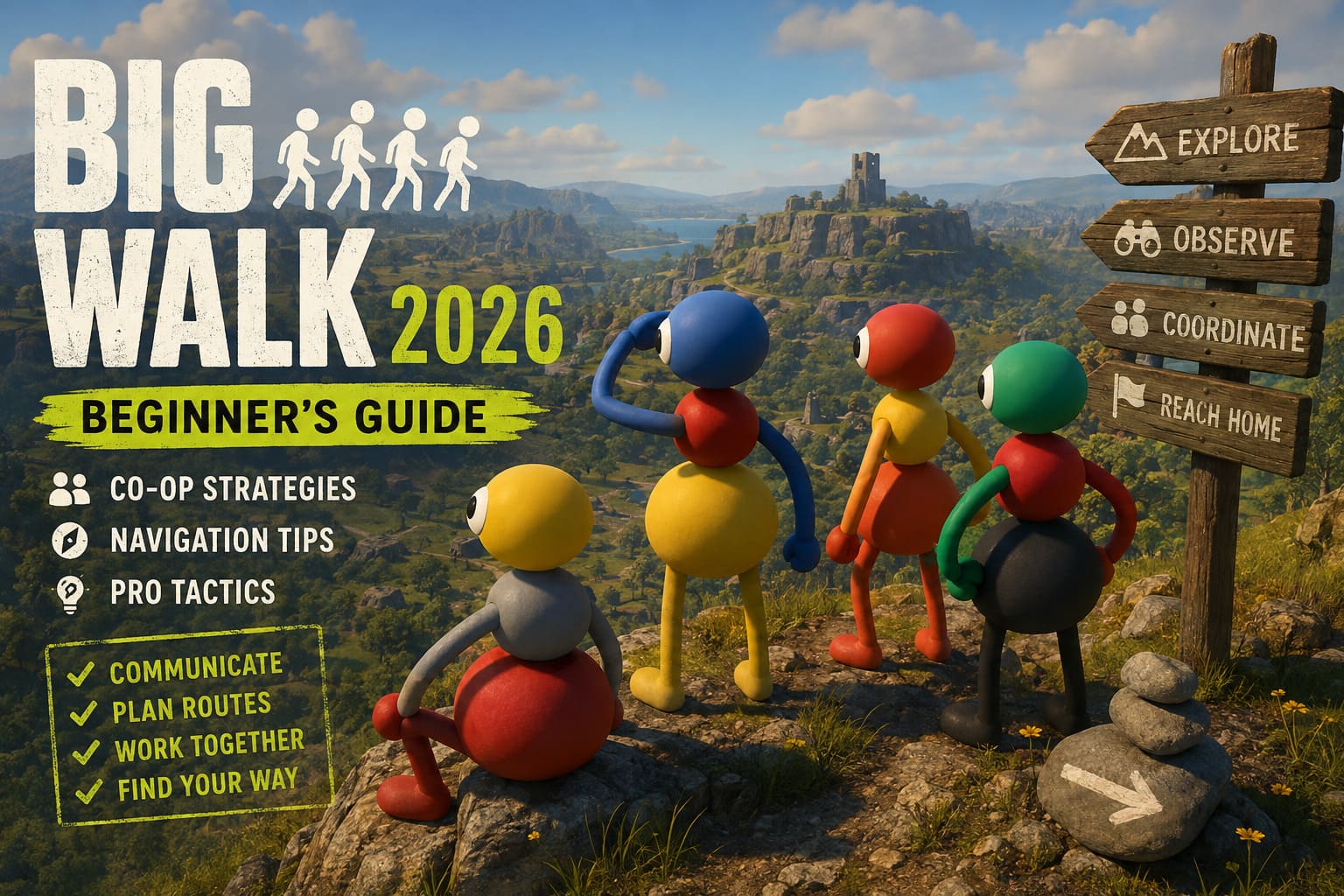
You’re constantly making decisions about direction, landmarks, communication, and exploration instead of fighting endless enemies. That completely changes the pacing. Instead of rushing toward objectives, every group naturally slows down, observes its surroundings, and begins discussing routes.
That’s exactly where inexperienced teams usually fail.
The biggest mistake I constantly see is someone deciding they’re the “main character” before sprinting several hundred meters ahead. Five minutes later everyone is asking exactly the same question:
“Where are you?”
Usually nobody knows.
The game quietly punishes solo behavior without ever flashing a warning on your screen.
Your First Hour: Build Good Habits Early
The opening hour determines whether your session becomes a smooth adventure or a two-hour rescue mission.
Instead of grabbing random items and wandering away, spend the first few minutes organizing your team.
Learn the Communication System
Voice chat is useful, but shouting over four or five excited friends quickly becomes chaos.
Big Walk’s communication wheel deserves far more attention than most newcomers give it.
Spend a few minutes learning:
- Direction pings
- Group gathering signals
- Warning notifications
- Confirmation responses
Once everyone recognizes these sounds instinctively, communication becomes dramatically faster.
Divide Responsibilities
One player trying to carry everything is a disaster waiting to happen.
A balanced group usually works much better when everyone has a dedicated purpose.
| Role | Primary Responsibility |
|---|---|
| Navigator | Keeps track of the map and overall route. |
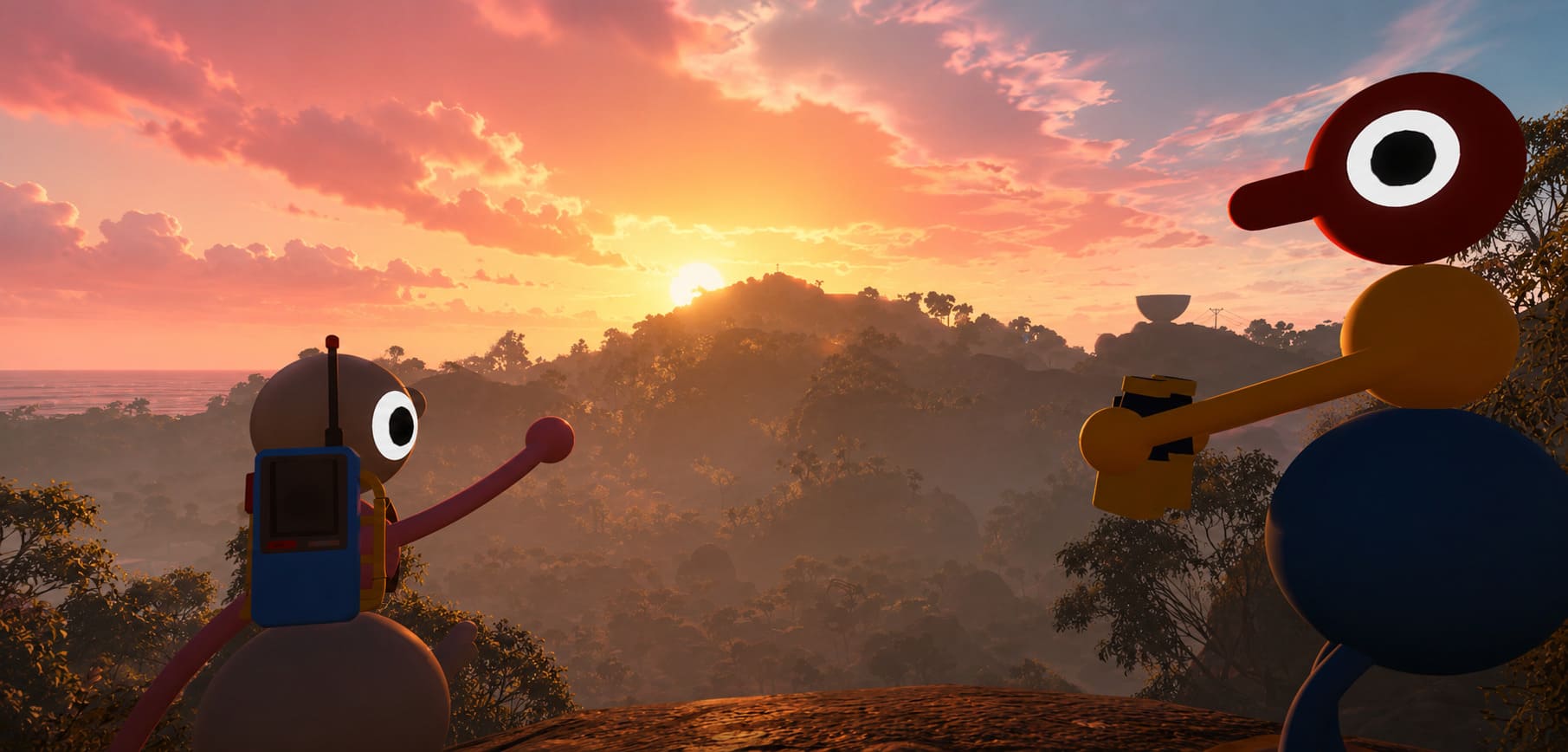
| Scout | Uses binoculars to identify landmarks and hazards. |
| Quartermaster | Carries heavy tools and puzzle equipment. |
| Tracker | Watches terrain, footprints, and environmental clues. |
This simple organization eliminates confusion once the expedition becomes more complicated.
Memorize Your Starting Area
Before leaving camp, stop.
Seriously.
Take thirty seconds to study your surroundings.
Look for memorable objects like:
- enormous rock formations
- unusual trees
- broken structures
- cliffs
- rivers
- distinctive hills
Those landmarks become your emergency recovery points if the group gets separated.
Trust me—future you will appreciate those extra thirty seconds.
The Best Co-Op Strategies Every Team Should Use
Good teamwork feels almost effortless once everyone understands a few basic principles.
Leapfrog Exploration
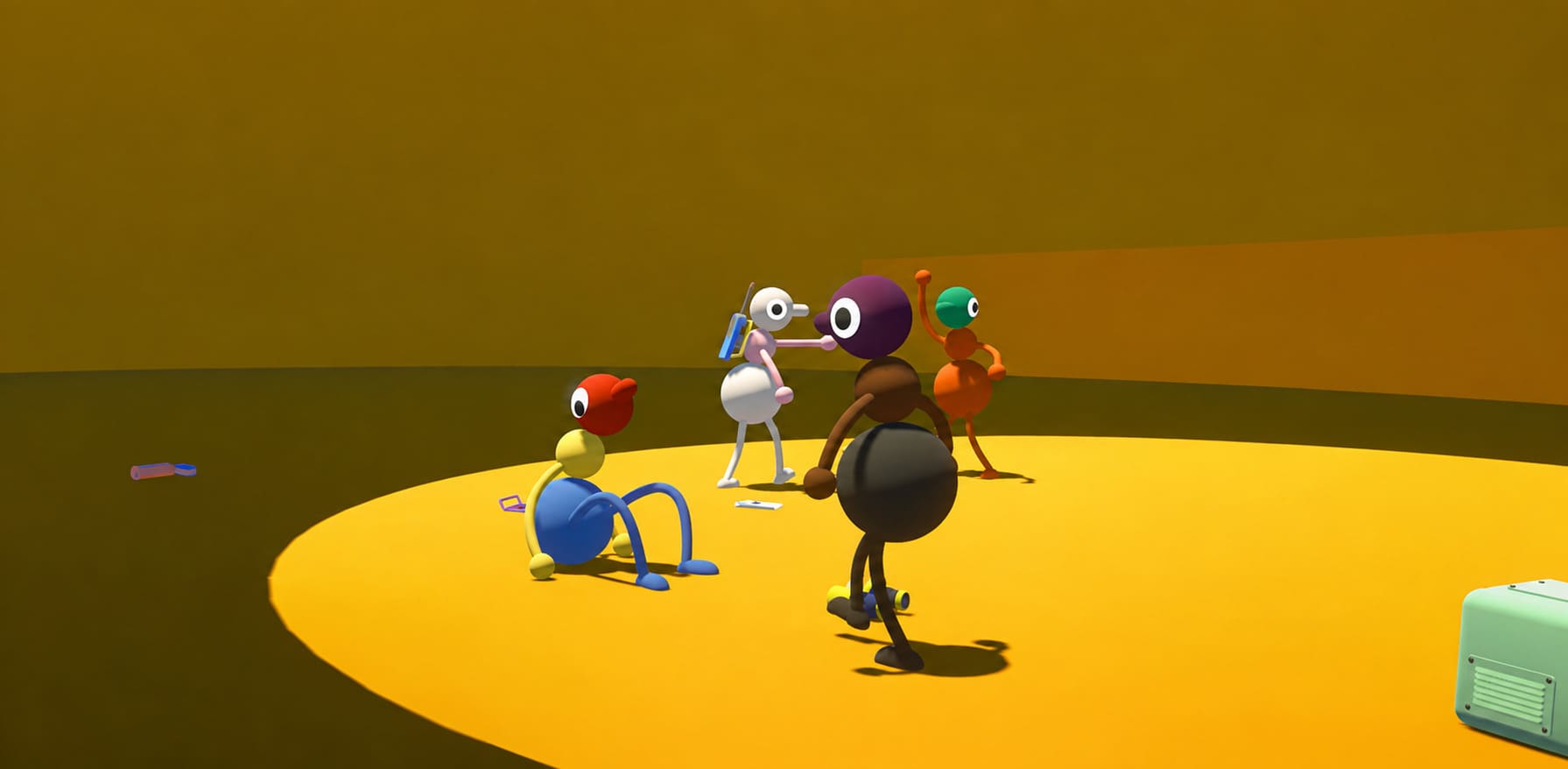
One of the smartest techniques experienced players use is leapfrog movement.
Instead of everyone walking in one crowded group:
- The Navigator remains at a safe landmark.
- The Scout advances carefully.
- Once the path is confirmed, everyone moves forward together.
Repeat.
This prevents accidental falls, avoids unnecessary backtracking, and keeps everyone oriented.
It sounds simple.
It works ridiculously well.
Use Sound as a Navigation Tool
Audio in Big Walk isn’t just background ambience.
It’s gameplay.
If thick fog rolls in or teammates disappear behind terrain, don’t immediately start running.
That’s usually the worst decision.
Instead:
- Stay still.
- Call out.
- Listen carefully.
- Let teammates respond.
- Move only after identifying the direction.
Running blindly only creates additional noise while making everyone’s position even harder to determine.
Solve Multi-Person Puzzles Efficiently
Some environmental puzzles require multiple players operating switches simultaneously.
I’ve watched plenty of groups waste fifteen minutes because everyone kept running between mechanisms.
A much better approach:
- Pair A controls switches.
- Pair B watches moving puzzle components.
- Communicate using short ping patterns.
- Confirm every action before activating mechanisms.
Simple communication saves enormous amounts of time.
Navigation Tricks That Actually Work
Big Walk hides navigation clues almost everywhere.
The game rarely explains them directly.
Watch the Wind
One of my favorite mechanics is how environmental effects quietly reveal direction.
Moving grass.
Drifting leaves.
Tree movement.
Inside many regions, prevailing wind stays surprisingly consistent.
If you lose your compass, paying attention to wind patterns often gives enough information to recover your bearings.
Learn Distance With Binoculars
Most new players use binoculars like sightseeing equipment.
Veterans use them like measuring tools.
Pick a familiar object—a specific tree or rock—and memorize how large it appears inside the binocular frame.
After enough practice, estimating distance becomes surprisingly accurate.
Soon you’ll stop saying:
“It’s somewhere over there.”
Instead you’ll confidently call:
“About 250 meters beyond the ridge.”
Your team will immediately know where to head.
Climb Smarter
Steep hills destroy momentum.
Walking directly uphill drains time and energy.
Instead:
- climb diagonally
- zigzag across slopes
- use gentler terrain whenever possible
Going downhill offers another opportunity.
Sliding can significantly speed up travel.
Just don’t launch yourself into unknown terrain while carrying important puzzle items.
I’ve learned that lesson the hard way.
How to Move Creatures Without Losing Your Mind
Creature escort missions can quickly become frustrating.
The biggest mistake?
Running directly behind them.
Most wildlife reacts unpredictably under pressure.
Instead, form a loose V-shaped formation.
Two players gently guide movement from behind while another teammate blocks unwanted escape routes ahead.
You’re not chasing.
You’re quietly steering.
Once your group understands this difference, escort objectives become dramatically easier.
Advanced Techniques High-Level Teams Already Use
Experienced groups constantly invent clever solutions the game never explicitly teaches.
These methods consistently save time.
Build Your Own Trail System
Since Big Walk doesn’t offer permanent map markers, create your own.
Leave small stacks of stones or recognizable objects at important intersections.
Whenever you encounter your own marker again, you’ll instantly realize you’ve started looping through the same area.
It’s old-school navigation.
It works brilliantly.
Read Shadows
Even your own shadow becomes useful.
The sun follows a predictable path during the day.
Watching the angle and length of your shadow gives surprisingly reliable directional information whenever tools are unavailable.
It feels almost like wilderness survival.
That’s exactly why I love this mechanic.
Create an Item Relay
Heavy objects slow movement considerably.
Instead of making one player carry everything across the map, establish a relay.
Player A throws.
Player B catches.
Player C continues.
Repeat until the destination.
The entire team keeps moving instead of waiting for one overloaded teammate.
It feels strangely satisfying once everyone gets the rhythm right.
Big Walk Beginner’s Guide: Tips, Tricks, and Mechanics to Survive the Island
Common Beginner Mistakes
Almost every new group repeats the same errors.
Avoid these and your sessions become significantly smoother.
| Mistake | Better Approach |
|---|---|
| Splitting up immediately | Stay together until everyone understands the terrain. |
| Ignoring landmarks | Memorize major environmental features. |
| Carrying duplicate equipment | Assign specialized roles. |
| Talking constantly | Use communication pings alongside voice chat. |
| Sprinting everywhere | Move deliberately and observe surroundings. |
| Depending on memory alone | Leave physical trail markers whenever possible. |
What Makes Big Walk So Addictive
After dozens of sessions, I realized the game’s greatest strength isn’t its puzzles.
It’s the stories your group creates.
Every expedition becomes memorable for completely different reasons.
Maybe someone accidentally led everyone into the wrong valley.
Maybe your Scout spotted a hidden landmark that saved the entire run.
Maybe your team spent twenty minutes arguing about which mountain looked familiar before discovering you had walked in a complete circle.
Those moments can’t be scripted.
That’s why Big Walk feels refreshing in a market overflowing with objective markers and constant hand-holding.
The game trusts players to communicate, observe, and think for themselves.
That confidence pays off.
Final Thoughts
Big Walk isn’t about reaching the finish line as quickly as possible. It’s about the conversations, mistakes, recoveries, and shared discoveries that happen along the way. The best teams aren’t necessarily the fastest—they’re the ones that communicate clearly, assign roles naturally, and treat every expedition like a collaborative puzzle rather than a race.
Master the basics first. Learn how to read the landscape instead of searching for UI shortcuts. Develop reliable team habits, create your own navigation systems, and don’t underestimate how much small details like wind direction or memorable landmarks can help.
Once your group starts thinking like explorers instead of tourists, Big Walk transforms into one of the most rewarding cooperative adventures available in 2026. Every successful journey feels earned, and that’s exactly what keeps players coming back for one more walk.