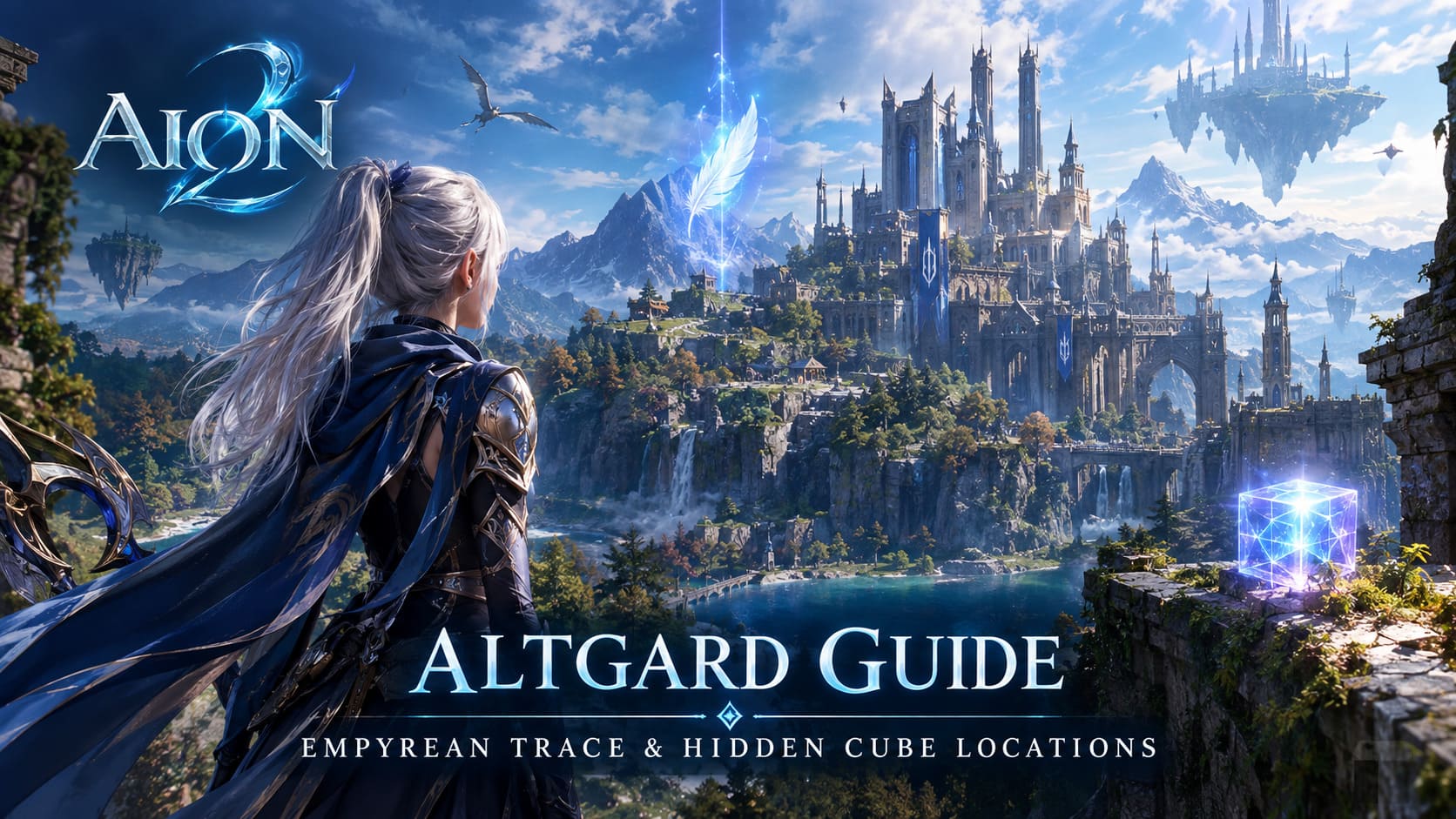
Aion 2 Altgard Guide: All Empyrean Trace & Hidden Cube Locations
If you’re playing the Asmodian side of Aion 2, Altgard is one of those regions that looks straightforward until you actually try to finish it. The roads are easy enough to follow, the settlements are packed with quests, and most of the important locations are impossible to miss.
Then you decide to go for 100% exploration.
That’s when Altgard suddenly turns into a vertical maze.
Empyrean Traces and Hidden Cubes are scattered across the region, and they aren’t simply sitting beside the main quest path waiting to be picked up. Some are above fortifications, others are tucked behind cliffs, inside ruins, underneath structures, or floating in places that seem deliberately designed to make you question whether the developers actually wanted you to reach them.
And honestly, that’s part of what makes Altgard fun.
Aion 2’s exploration system is at its best when you’re not just running from one map marker to another. You are looking up, checking rooftops, watching cliffs, managing flight time, and occasionally realizing that the collectible you’ve been searching for is directly above your head.
This guide explains how the Empyrean Trace and Hidden Cube systems work and gives you a practical route for cleaning up Altgard without wasting hours backtracking.
Altgard Exploration At A Glance
| Collectible | Main Purpose | Exploration Focus |
|---|---|---|
| Empyrean Traces | Monolith progression and permanent stat bonuses | Vertical exploration, flying and elevated structures |
| Hidden Cubes | Materials, consumables, currencies and miscellaneous rewards | Environmental searching and hidden locations |
| Regional Exploration | Completion and progression | Combining aerial and ground routes |
The important thing to understand is that these two collectibles shouldn’t be approached in exactly the same way.
Empyrean Traces are primarily about progression. Hidden Cubes are about exploration and loot.
Once you know that, planning your route becomes much easier.
Why Empyrean Traces Matter So Much
Empyrean Traces are the glowing feather-like collectibles scattered throughout Altgard. You’ll find them floating in open air, wedged between rocks, sitting on structures and hiding in places that require some serious altitude.
But collecting them isn’t just about watching a percentage counter climb.
The feathers are connected to the Altgard Monolith, a regional progression system that turns exploration into permanent character progression. As you collect the required traces and contribute them to the Monolith, you unlock increasingly valuable bonuses.
These rewards can include improvements related to:
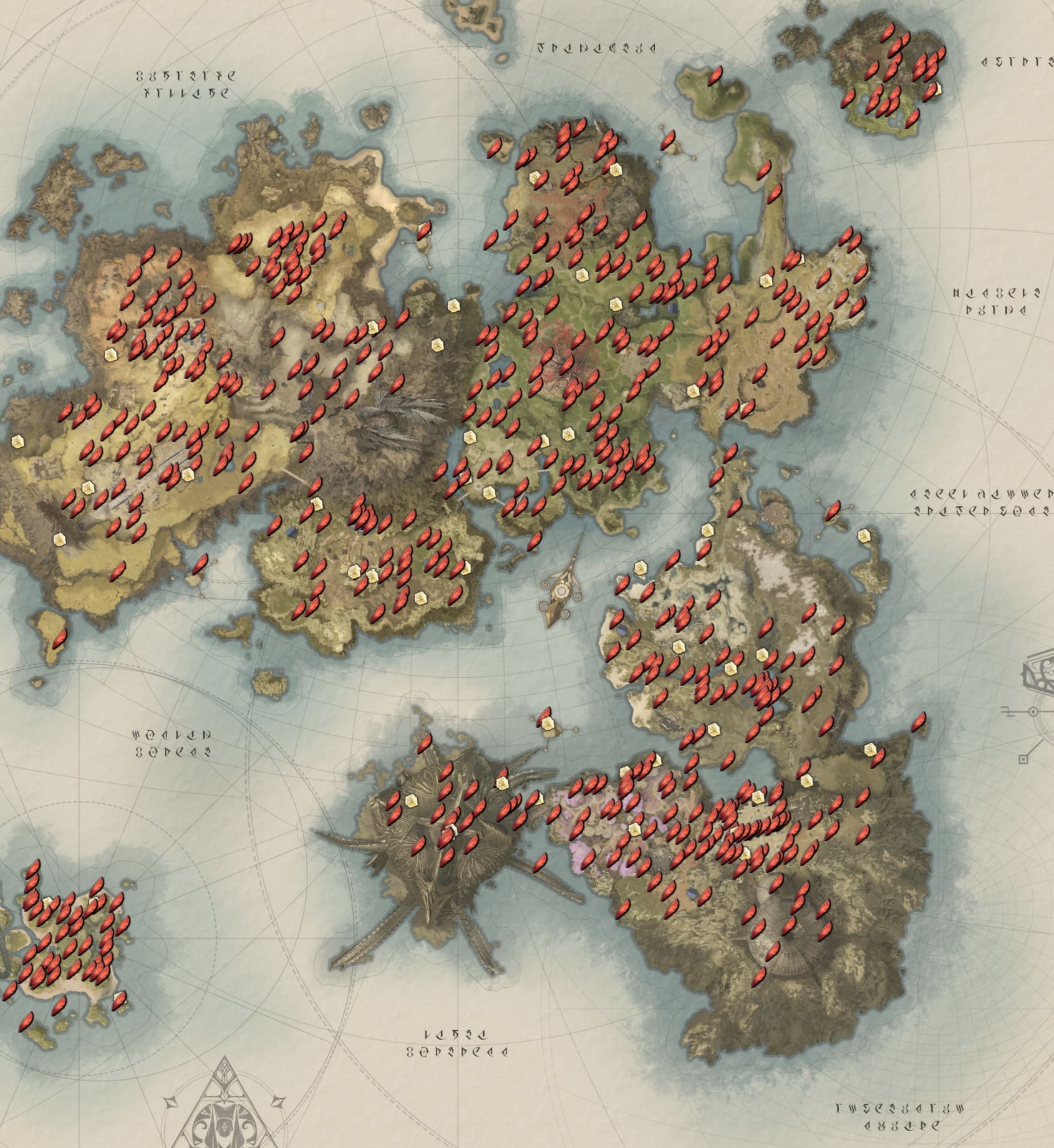
- Maximum HP
- Physical Attack
- Magical Attack
- Accuracy
- Flight Time
That last one deserves special attention.
Aion 2 is heavily built around aerial movement, and flight time can completely change how comfortable exploration feels. Having more room to maneuver means you can reach difficult collectibles without constantly worrying that your character is about to fall out of the sky.
And yes, I’ve absolutely had those moments where a collectible looked close enough, only for the flight gauge to start screaming at me halfway there.
Plan your routes.
It saves a ridiculous amount of frustration.
What Happens After You Max Out The Altgard Monolith?
One nice thing about collecting beyond the required amount is that extra Empyrean Traces don’t simply become useless clutter.
Once you’ve reached the maximum progression available from the Altgard Monolith, excess traces can be handled through Substance Morphing.
Depending on the available system options, this can turn excess exploration progress into useful materials, progression-related items, and upgrade resources.
So there is a reason to keep picking up traces even after you’ve already finished the main Monolith progression.
For completion-focused players, that makes Altgard exploration feel more worthwhile than a typical collectible hunt.
Hidden Cubes: More Reasons To Check Every Corner
If Empyrean Traces reward you for looking upward, Hidden Cubes reward you for looking everywhere else.
These collectibles are generally much easier to miss because they’re often placed around environmental objects rather than obvious landmarks.
You can find them around:
- Wooden structures and staircases
- Ruined buildings
- Trees and roots
- Carts and storage areas
- Small islands
- Enemy camps
- Towers and scaffolding
- Cliffs and secluded corners
The system also isn’t as simple as walking to a fixed chest and opening it.
Hidden Cubes use predetermined spawn locations, but their availability can rotate. A location you’ve already checked may not have an active cube when you return.
That’s important because a missing cube doesn’t automatically mean you’re in the wrong place.
If you’ve confirmed that you’re standing at a known spawn point, don’t immediately assume you’ve missed something. The cube may simply not be available at that moment.
What Do Hidden Cubes Actually Give You?
Hidden Cubes are useful because their rewards contribute to the general progression loop rather than being tied exclusively to exploration.
Typical rewards can include crafting materials, consumables, currencies and other useful items.
For an active player, that means the cubes are worth collecting naturally while you’re clearing the map instead of treating them as completely separate content.
My advice is simple: don’t make a second trip for every cube if you can avoid it.
If you’re already passing through an area for quests or Empyrean Traces, check the nearby cube locations at the same time.
That is much more efficient than finishing the entire region and then realizing you’ve still got a pile of unexplored locations behind you.
Altgard’s Major Exploration Areas
Altgard has several areas where collectibles tend to cluster. Each has its own style of exploration, and knowing what to expect makes the hunt considerably easier.
1. Altgard Fortress And The Monolith Area
The fortress is an obvious starting point, but don’t make the mistake of only checking street level.
Look up.
The fortress contains collectibles around banners, rooftops, upper walls, towers and other elevated structures. Some Empyrean Traces are positioned so that a normal ground-level route will never bring you close enough to collect them.
This is also a good place to get comfortable with Aion 2’s aerial movement before heading deeper into Altgard.
For Hidden Cubes, check:
- Under staircases
- Inside watchtower areas
- Around crates
- Near the flight-related structures
The fortress is dense enough that a slow, methodical sweep is better than sprinting through it.
2. Moslan Forest And Gribsholm Ruins
This is where the exploration starts becoming much more vertical.
The forest canopy hides Empyrean Traces above the normal player path, while the Gribsholm ruins introduce broken architecture, pillars and elevated surfaces.
Don’t just follow the roads.
Look for nearby ridges that can give you a better launch point. Flying directly upward from the ground isn’t always the most efficient approach.
In the ruins, pay particular attention to broken pillars, arches and elevated stone structures.
Hidden Cubes can also blend into the environment here, especially around trees and ruined structures.
3. Basfelt Village And MuMu Farmland
Compared with the fortress and ruins, this area feels much more open.
That doesn’t mean the collectibles are easier.
Empyrean Traces can appear above roofs, around windmills and along the cliffs surrounding the farmland. The biggest mistake here is moving too quickly because the terrain initially looks uncomplicated.
Hidden Cubes are especially easy to camouflage around agricultural objects.
Check:
- Grain sacks
- Carts
- Storage shelters
- Wooden structures
- The edges of the farmland
If you’re chasing the final few cubes later, this is exactly the kind of area you’ll wish you had searched carefully the first time.
4. Impetusium And Iduns Lake
This is probably where your flight management skills matter most.
The lake area contains collectibles positioned above water, around waterfalls and between elevated terrain.
Flying over water is already stressful when your flight gauge is limited. Doing it while trying to line up a collectible makes things even more interesting.
Use environmental elevation, air currents and flight geysers wherever possible.
Don’t burn through your entire flight gauge just because a feather is visible.
A good rule is to always think about where you’re going to land before you commit to the flight path.
Hidden Cubes are scattered around islands, trees and waterfall areas. Search behind environmental objects rather than assuming everything will be visible from the main shoreline.
5. Black Claw Village And The Mau Outposts
Black Claw is where exploration and combat become closely connected.
The area is filled with aggressive enemies, so stopping every few seconds to inspect a collectible can quickly turn into an unnecessary fight.
If you’re underleveled, consider coming back later.
Empyrean Traces can be found around Mau barricades, mountain paths, bone structures and elevated wooden platforms.
Hidden Cubes are commonly associated with the settlements themselves, including tents, weapon-storage areas and scaffolding.
If you’re trying to finish this area while enemies are constantly attacking, you’re making the job harder than it needs to be.
The Best Way To Route Altgard Exploration
Trying to collect everything by simply wandering around is possible.
It’s also a fantastic way to lose an afternoon.
A structured route is much more efficient.
Phase One: Clear The Heights First
Begin around Altgard Fortress and work around the upper elevations.
Prioritize Empyrean Traces that require climbing, jumping or gliding.
The reason is simple: once you’re already up high, you can often reach several nearby collectibles without returning to ground level.
Work around the fortress perimeter before moving deeper into the region.
Phase Two: Sweep The Ground
After dealing with the obvious aerial collectibles, move through Moslan Forest and MuMu farmland.
This is the ideal time to focus on Hidden Cubes.
Check structures as you move rather than stopping your entire run for every individual chest.
You’re essentially combining two objectives into one route.
Phase Three: Finish The Dangerous Areas
Save Iduns Lake and Black Claw Village for later.
The lake demands more careful flight management, while Black Claw can become combat-heavy.
By saving these areas for the end, you’ll have fewer reasons to repeatedly cross the map.
How to Fix Aion 2 Not Loading, Crashing on Launch, and Fatal Errors (2026 Guide)
Small Tricks That Make A Big Difference
There are a few quality-of-life habits that make Altgard completion much less painful.
Use map pins. If you’re playing with friends or a legion, sharing a location can save everyone from searching the same area repeatedly.
Keep your exploration settings visible. Anything that improves awareness of nearby exploration content is worth enabling.
Carry flight recovery consumables. Running out of flight time next to a collectible you’ve spent five minutes reaching is one of those mistakes you only make once.
Track your progress zone by zone. Don’t rely on memory. If you’re using an interactive map or another tracking tool, mark collectibles immediately.
And most importantly, don’t assume a missing Hidden Cube means your route is wrong. Because of the rotating availability system, a known spawn point may simply be empty when you arrive.
Is 100% Altgard Completion Worth It?
For players who are simply rushing through the main story, probably not immediately.
For anyone who enjoys exploration, progression optimization, or eventually wants to clean up every region, Altgard is absolutely worth completing.
The Empyrean Traces provide meaningful Monolith progression and permanent bonuses, while the Hidden Cubes add a steady supply of useful resources.
More importantly, Altgard teaches you how Aion 2 expects you to explore the world.
You stop thinking of the map as a flat surface.
You start thinking vertically.
That shift is important. A collectible on a cliff isn’t necessarily reached by climbing the cliff. A feather above a forest may be easier to reach from another ridge. A cube hidden beside a settlement may be faster to grab while you’re already completing a quest nearby.
That’s the real trick to Altgard.
Don’t hunt every collectible individually. Build a route that lets the map work for you.
Once you get into that rhythm, the region becomes much less intimidating. The completion grind looks ridiculous at first, but with a proper route, careful flight management, and a habit of checking the environment above and below you, Altgard’s exploration becomes surprisingly satisfying.
And when that final exploration objective finally disappears from your checklist?
That’s a pretty good feeling.