Beast of Reincarnation Malefacts Explained: What Are They and Who is Koo?
When I first watched the gameplay reveal for Beast of Reincarnation, I expected another stylish action RPG with flashy sword combat and oversized monsters. Instead, the more footage I saw, the more it became clear that Game Freak is aiming for something far more ambitious and atmospheric. Having spent years playing everything from brutal Soulslikes to fast-paced action RPGs and narrative-heavy adventures, I can confidently say the combat alone is not what makes this game interesting—it’s the world and its emotional core.
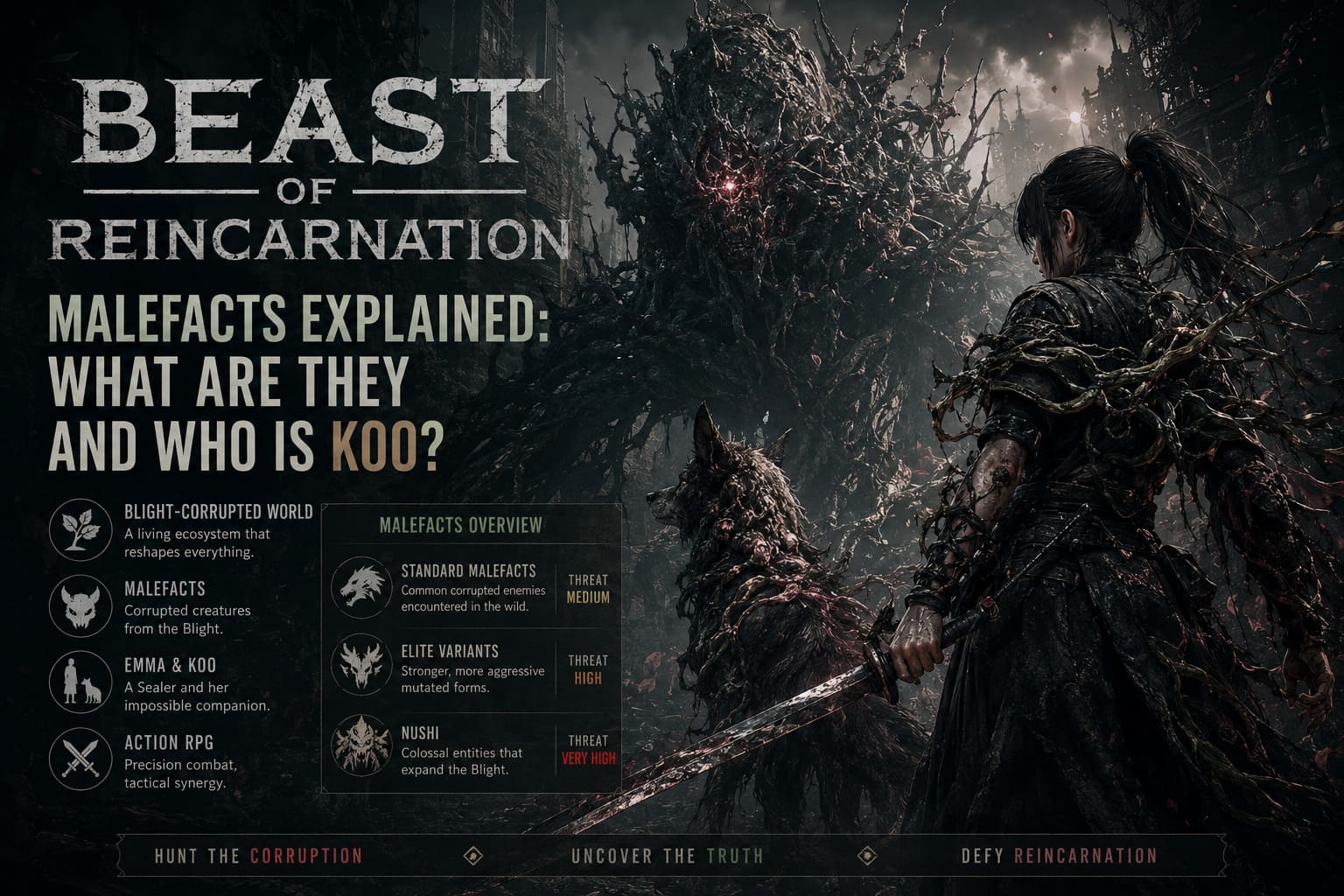
One of the biggest mysteries revolves around the Malefacts, creatures that are deeply tied to the world’s collapse, the Blight, and even the relationship between the main characters. Understanding them is essential to understanding what Beast of Reincarnation is really about.
7 Stunning Action-RPGs Like Beast of Reincarnation for Princess Mononoke Fans
What Are Malefacts?
The simplest explanation is that Malefacts are living beings transformed by the Blight, a mysterious force that has consumed nearly all organic life in the game’s world. These are not traditional monsters, but corrupted versions of once-natural creatures.
Instead of simple mutation, the Blight seems to rewrite biology entirely, fusing animal and plant matter into unstable hybrid organisms. The result is something that feels less like a fantasy enemy and more like nature itself becoming hostile and self-defensive.
This approach gives the world a unique tone. It reminds me of environmental storytelling seen in modern action RPGs, but Beast of Reincarnation leans more into biological horror rather than pure fantasy corruption.
The Blight as a Living Ecosystem
The Blight is not just a spreading infection—it behaves like a living ecosystem. Entire landscapes are overtaken by aggressive vegetation, reshaping cities, forests, and ruins into dangerous, ever-changing zones.
Exploration is therefore not static. Instead of fixed enemy placements, players traverse regions that feel alive and reactive, constantly shifting under the influence of corruption. This makes the world feel unpredictable in a way that many modern RPGs try to achieve but rarely fully succeed in delivering.
Environmental Impact
The Blight transforms the environment itself into a threat. Trees move, roots attack, and entire terrain sections can shift during encounters, making traversal and combat deeply interconnected.
Types of Malefacts in the World
Not all Malefacts are equal. From what has been shown so far, there appears to be a clear hierarchy of corrupted creatures, each serving a different role in the ecosystem of destruction.
Standard Malefacts are common enemies that players encounter throughout exploration. These creatures are dangerous but manageable, often acting as the primary obstacles during traversal and combat sequences.
At the top of this hierarchy are the massive Nushi, colossal entities that seem directly responsible for shaping regions of the Blight. Their presence appears to amplify corruption and reshape entire zones around them.
Enemy Classification Overview
| Type | Description | Threat Level |
|---|---|---|
| Standard Malefacts | Corrupted animal-plant hybrids encountered during exploration | Medium |
| Elite Variants | Stronger, more aggressive mutated forms | High |
| Nushi | Massive boss-like entities tied to regional Blight expansion | Very High |
Emma: A Protagonist Defined by Loss
Emma is not a traditional hero. She is an eighteen-year-old warrior known as a Sealer, born already infected by the Blight. Instead of dying or transforming into a monster, she gained strange abilities that allow her to manipulate plant matter.
Her vine-like hair can extend into tools for traversal, combat, and environmental interaction. This creates a fluid gameplay loop where movement and combat blend naturally together.
However, her condition has stripped away her memories and emotions, leaving her isolated from society. She is feared and rejected, not because she is evil, but because she represents something humanity cannot control or fully understand.
Abilities and Cost
Emma’s powers allow her to absorb Blight energy from defeated Malefacts, gradually unlocking new skills. But every ability she gains reinforces her connection to the corruption she is trying to eliminate.
Koo: The Impossible Companion
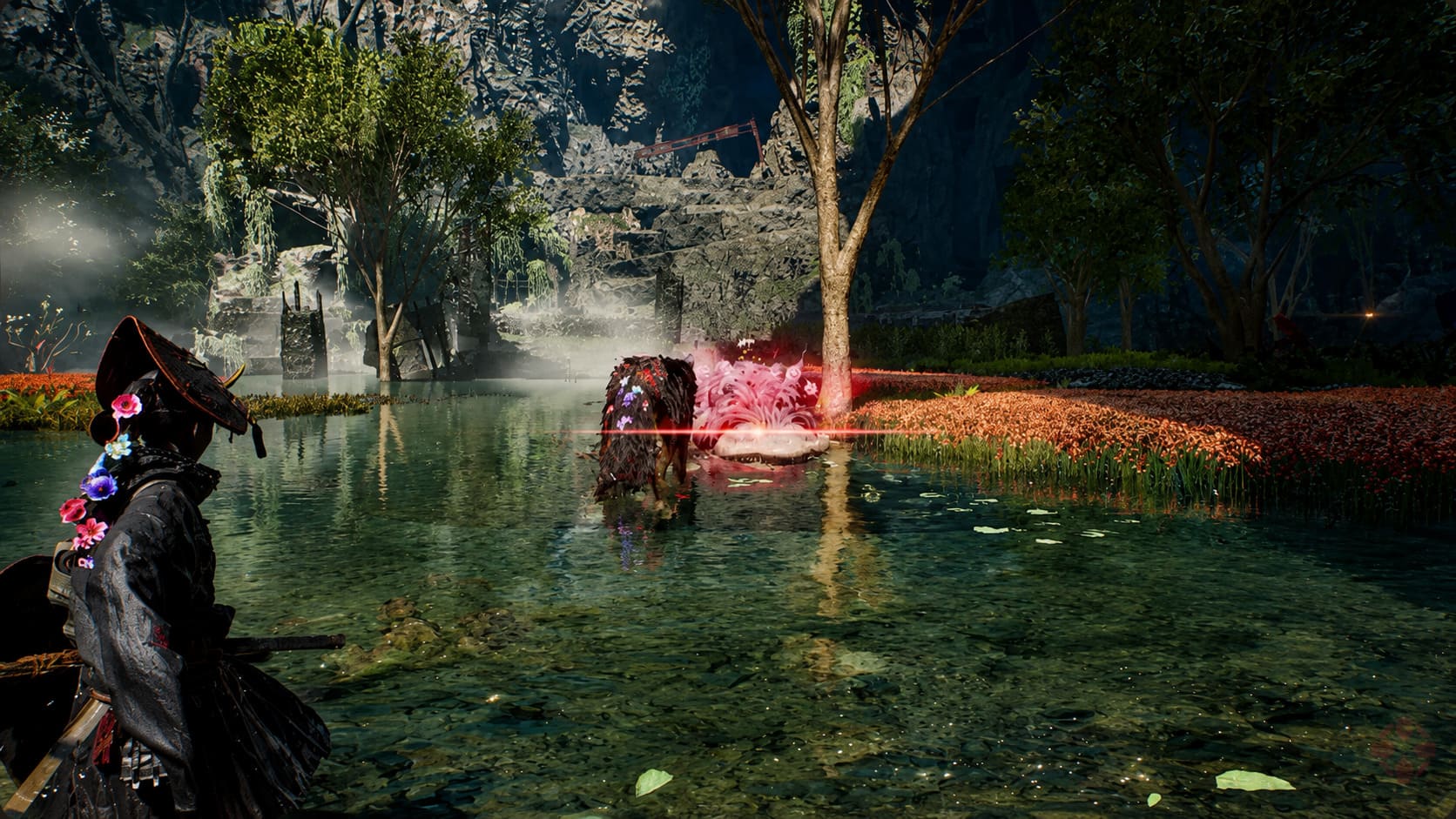
Koo is one of the most fascinating narrative elements in Beast of Reincarnation. He is a dog-like creature, visibly affected by the Blight, yet not hostile toward humans.
This creates a central contradiction in the game’s story: Emma is a hunter of corrupted beings, yet her closest companion is technically one of them.
Rather than functioning as a typical RPG companion, Koo becomes a symbolic challenge to the world’s logic. If all Malefacts are supposed to be dangerous, why does Koo remain loyal and protective?
Combat System and Synergy
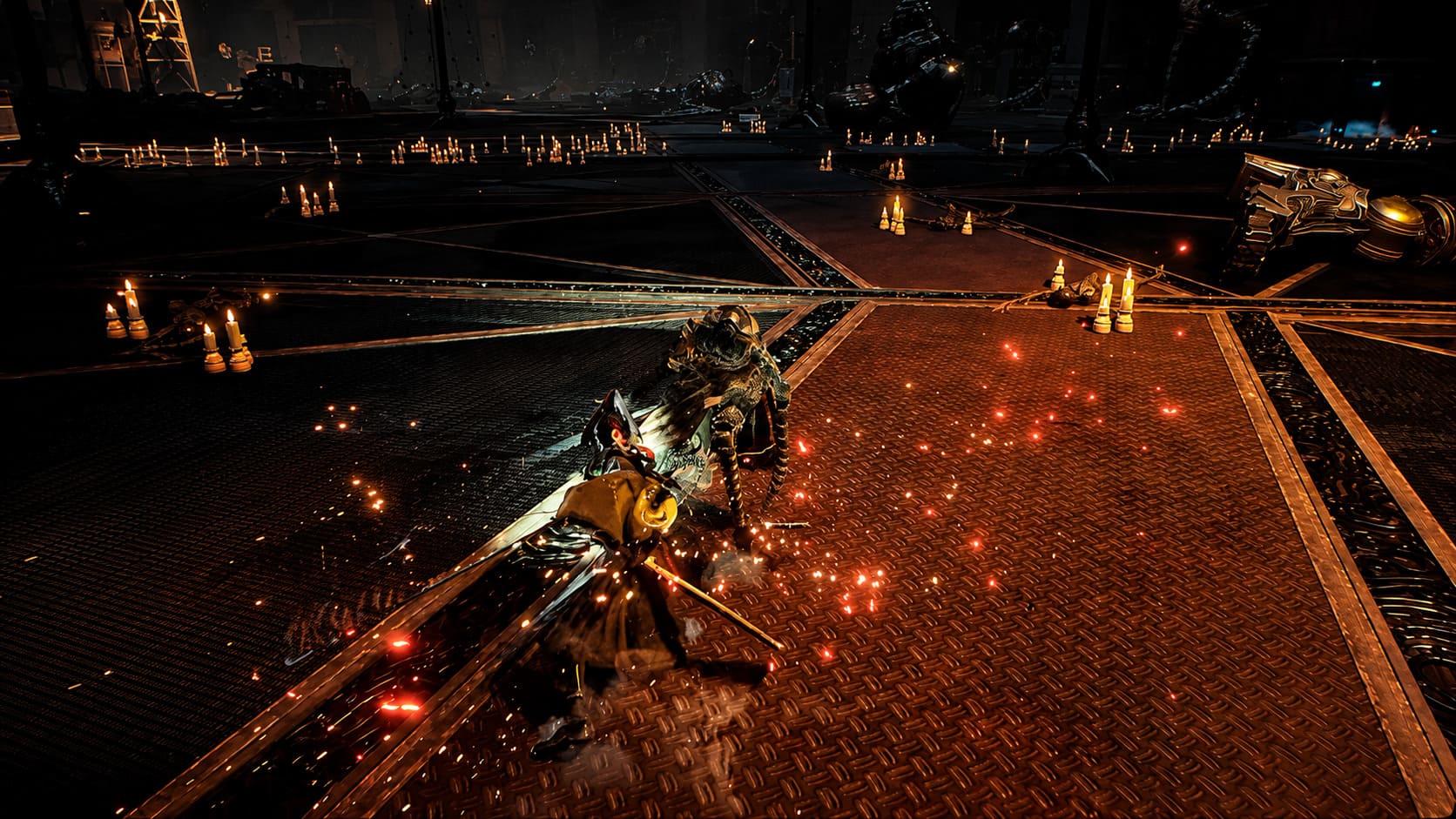
The combat system revolves around cooperation between Emma and Koo. Emma handles direct combat using a katana and ranged bow attacks, requiring precision, timing, and skillful execution.
Successful combat builds Focus Points, which can then be used to activate Koo’s abilities during battle. This creates a rhythm between aggressive action and tactical decision-making.
When Koo is activated, time slows down, shifting gameplay into a command-based interface where players select abilities before returning to real-time combat.
Koo’s Support Abilities
- Rooting enemies in place using Blight-based vines
- Detecting hidden items and environmental secrets
- Warning about incoming attacks or ambushes
- Creating tactical openings during combat
Narrative Themes Behind the Malefacts
What makes Malefacts truly interesting is not just their design, but what they represent. They are physical manifestations of a world where nature itself has turned against civilization.
At the same time, Koo introduces a contradiction that challenges the player’s assumptions. If corruption defines monstrosity, then loyalty and compassion should not exist within it—but Koo proves otherwise.
This tension between fear and trust, destruction and connection, is likely to be one of the game’s central emotional pillars.
Final Thoughts
Malefacts are more than enemies. They are a reflection of the world’s collapse, the Blight’s overwhelming presence, and the blurred boundary between humanity and nature. Through them, Beast of Reincarnation builds a setting that feels alive, dangerous, and emotionally complex.
Emma and Koo represent opposing truths existing in the same world—one defined by rejection and duty, the other by loyalty and contradiction. If executed well, this relationship could elevate the game beyond standard action RPG expectations.
For me, the most compelling part isn’t just the combat or the visuals, but the idea that something considered “corrupted” might still be capable of genuine connection. That alone makes Beast of Reincarnation worth watching closely.