Tiebreakers Review: Addictive Indie Tennis Game on Steam
If you’ve spent a serious amount of time in sports games like I have, you probably already know the cycle: big-budget tennis titles that look incredible in trailers, but somehow feel disconnected once you’re actually playing. Instead of feeling like you control an athlete, it often feels like you’re triggering animations. That disconnect kills the tension for me every time.
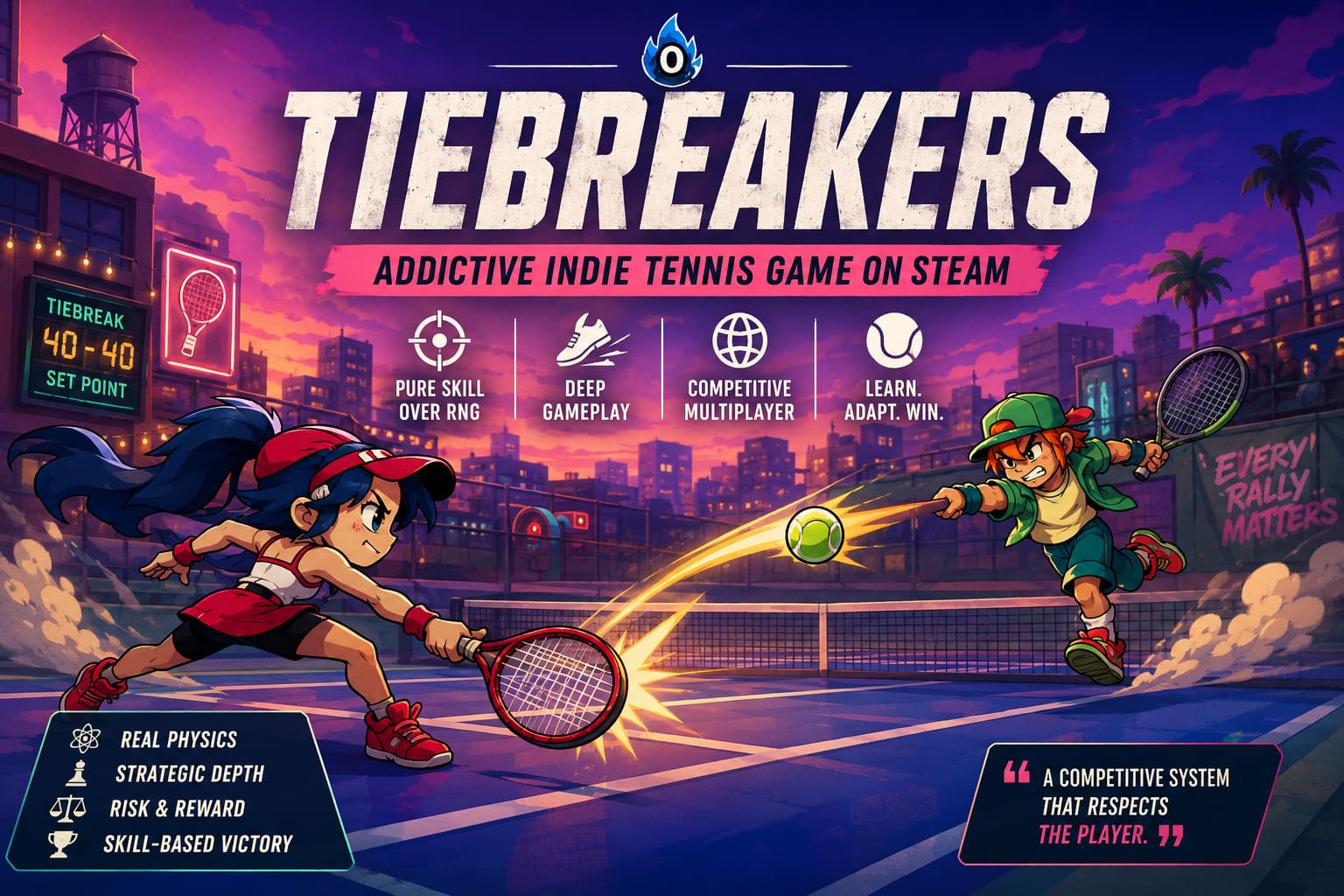
So when I launched Tiebreakers, I didn’t expect much more than another indie attempt at a sports formula. What I got instead was a surprisingly deep, skill-driven tennis experience that actually respects the player.
This isn’t just another arcade experiment. It’s a competitive system that forces you to think, adapt, and actually improve match after match.
Fable Delay Could Be the Best Thing for Xbox
First Impression: Minimal Looks, Maximum Depth
Visually, Tiebreakers is clean and straightforward. No unnecessary cinematic presentation, no overloaded UI, no distraction from the core gameplay. At first glance, it almost looks simple—too simple.
But within minutes, it becomes clear that simplicity is intentional. The depth is not in presentation, but in mechanics. Every rally feels different because every decision matters.
What stood out immediately:
- Matches feel organic instead of scripted
- Every rally has its own rhythm and pressure
- Mistakes feel earned rather than random
- Momentum actually shifts gameplay intensity
It quickly becomes one of those games where “one more match” turns into a long session without you noticing.
Gameplay: Pure Skill Over Automation
The core gameplay loop is simple on paper: move, position, and time your shots. But in practice, it evolves into something much more demanding and strategic.
The game uses physics-driven interactions that force you to adapt constantly. You can’t rely on repetitive patterns or spam mechanics. Every rally becomes a problem you need to solve in real time.
Key gameplay characteristics include:
- Shot selection directly changes rally structure
- Positioning strongly affects control and recovery
- Defensive play is as important as offense
- Bad timing is punished immediately and clearly
What makes it interesting is how quickly it teaches discipline. If you rush, you lose. If you hesitate, you lose. The balance sits in between, and learning that space is where the game becomes rewarding.
Controls: Difficult at First, Extremely Satisfying Later
The control system is not designed to be instantly comfortable. It demands attention and repetition. At first, it feels like too much is happening at once—movement modifiers, directional input timing, and shot execution all matter at the same time.
But once the system clicks, it becomes incredibly satisfying.
Core control demands
- Precise footwork before every shot
- Timing-based swing execution
- Smart switching between defensive and aggressive states
- Constant awareness of court positioning
This is not a pick-up-and-play arcade tennis game. It’s closer to a mechanical skill system that rewards practice and consistency. That’s exactly what makes it stick.
Multiplayer: Where the Game Truly Shines
The real identity of Tiebreakers appears in multiplayer. Whether online or local, matches feel tense, competitive, and unpredictable in a good way.
Online matches are less about randomness and more about reading your opponent. Once you understand their habits, the match becomes a psychological battle layered on top of mechanical execution.
What stands out most in multiplayer:
- Most matches feel balanced and competitive
- Small mistakes quickly change momentum
- Players naturally develop distinct playstyles
- Defensive strategies can genuinely dominate
Local multiplayer is equally strong. It brings back that classic couch competition energy where matches slowly shift from casual fun into full competitive focus.
Strategy and System Depth
After spending more time with the game, the underlying systems reveal themselves more clearly. Tiebreakers isn’t just about hitting the ball—it’s about managing space, timing, and risk.
Core strategic layers
| System | Impact on Gameplay |
|---|---|
| Positioning | Determines shot accuracy, recovery speed, and court control |
| Timing | Affects ball direction, power, and consistency |
| Stamina | Influences long rally stability and movement efficiency |
| Risk Management | Defines whether you play aggressively or safely |
The most surprising part is how viable defensive gameplay is. You’re not forced into constant aggression. Instead, smart resets and patience often win matches against reckless opponents.
What Makes Tiebreakers Stand Out
There are many indie sports games out there, but few manage to feel this focused. Tiebreakers doesn’t try to overwhelm you with licensing, flashy presentation, or unnecessary features.
Instead, it focuses on a few core principles:
- Pure mechanical gameplay
- Competitive fairness
- Skill-based outcomes
- Minimal but effective presentation
That focus makes it feel like a game built by people who actually understand competitive sports gameplay rather than just simulating it.
Performance and Accessibility
Another strong point is optimization. The game runs smoothly on a wide range of hardware, making it accessible without requiring high-end setups.
There’s no unnecessary visual overload or performance-heavy effects. Everything is designed to keep gameplay responsive and stable, which is crucial for a precision-based sports game.
Minor Weak Points
Even though the experience is strong overall, it’s not perfect. A few issues are noticeable during longer play sessions.
- Steep learning curve for new players
- Early matches can feel overwhelming
- Some animations could use refinement
- Multiplayer population still growing
These are not deal-breakers, but they do reflect the game’s indie nature and ongoing development state.
Final Verdict
Tiebreakers succeeds because it understands what many sports games forget: depth comes from control, not presentation.
It rewards patience, learning, and mechanical improvement. It punishes bad habits but also teaches you how to improve in a clear and satisfying way.
As someone who has played countless sports titles, this one stands out because it feels honest. No artificial advantage systems, no unnecessary complexity—just pure competitive gameplay.
If you enjoy skill-based games where improvement actually matters, Tiebreakers is absolutely worth your attention.
Final Summary
This is not a casual tennis game. It’s a competitive system disguised as a sports title, and once it clicks, it becomes hard to put down.
If you want a game that respects your skill and rewards your growth, this is it.