Forza Horizon 6 Tokyo Map Size Comparison & Complete Guide to Performance and Drift Spots
For years, the Forza community kept repeating the same dream: “Give us Japan.” Not just a few mountain roads or a tiny Tokyo-inspired district, but a full-scale Japanese Horizon festival with neon highways, endless touge passes, drifting culture, and a living city that actually feels alive. Now that Forza Horizon 6 has finally arrived, I honestly think Playground Games delivered the most ambitious open-world racing map the genre has ever seen.
As someone who has spent hundreds of hours across Horizon 3, Horizon 4, and Horizon 5, the biggest difference isn’t just the raw map size — it’s the density. Every road in Horizon Japan feels handcrafted for driving enthusiasts. Whether you love high-speed highway runs, technical drifting, or simply cruising through glowing city streets at midnight, this map constantly gives you reasons to keep driving.
Horizon Japan Is Massive — But Smartly Designed
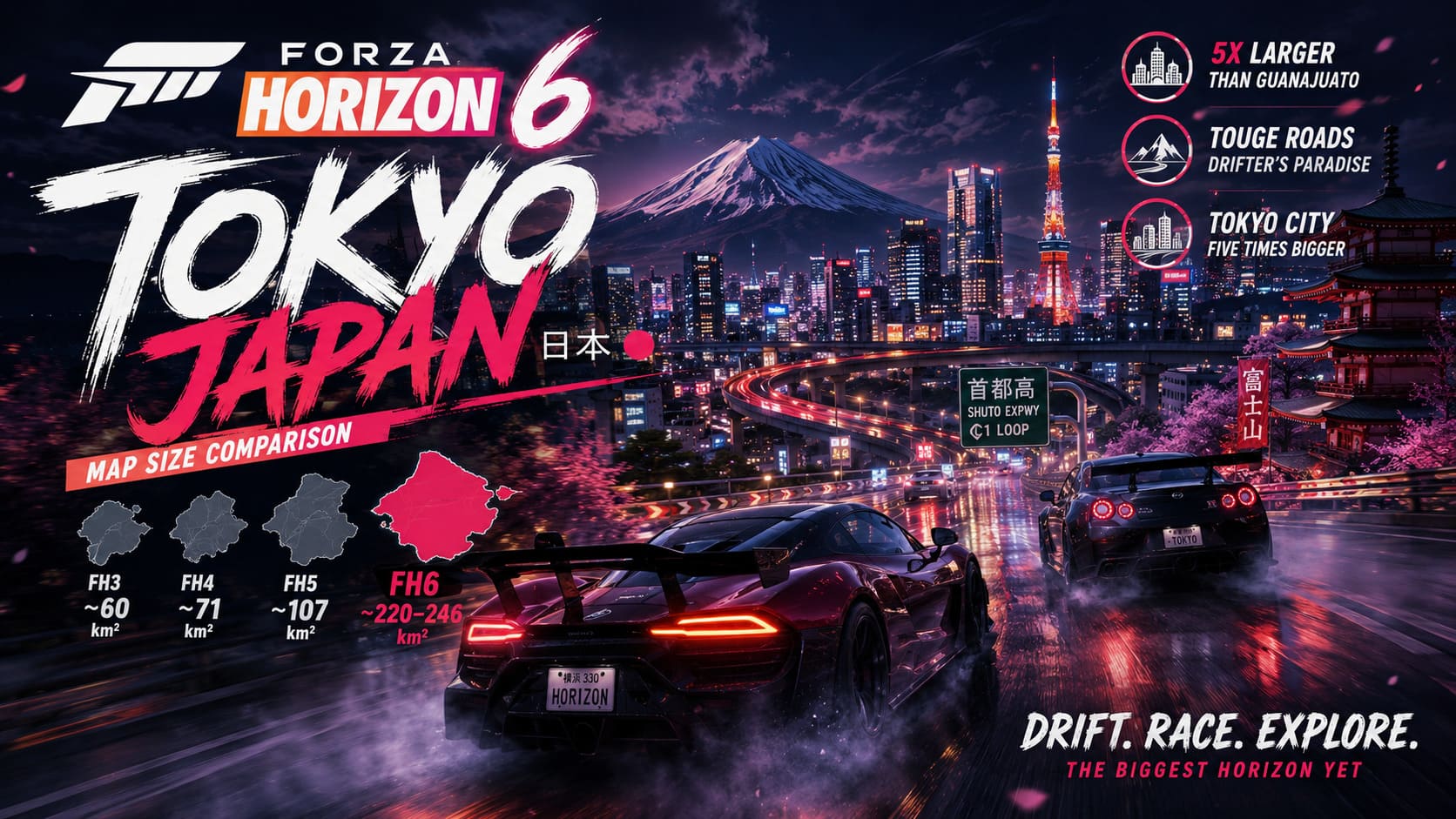
On paper, the numbers are already insane. The map reportedly spans around 220–246 square kilometers, making it more than twice the size of Mexico from Forza Horizon 5.
Here’s how the series evolved over time:
| Game | Location | Approximate Map Size |
|---|---|---|
| Forza Horizon 3 | Australia | ~60 km² |
| Forza Horizon 4 | Great Britain | ~71 km² |
| Forza Horizon 5 | Mexico | ~107 km² |
| Forza Horizon 6 | Japan | ~220–246 km² |
But honestly, the real story isn’t the square kilometers. A giant map means nothing if half of it feels empty. That was one of the criticisms many players had with Horizon 5 — beautiful visuals, but too many stretches of open land without memorable driving roads.
In Horizon 6, Playground Games clearly focused on road variety and verticality instead of simply increasing empty terrain. The roads twist, overlap, climb mountains, cut through tunnels, and weave through giant urban districts. Even after hours of driving, the map rarely feels repetitive.
Tokyo City Completely Changes the Horizon Formula
The biggest star of the game is obviously Tokyo City. And no, this isn’t another small Horizon town pretending to be a metropolis. Tokyo feels enormous.
The urban area is reportedly around five times larger than Guanajuato from Horizon 5, and you can immediately feel the difference. There are:
- Multi-layer expressways
- Dense commercial districts
- Industrial shipping zones
- Underground tunnels
- Residential neighborhoods
- Massive highway loops
- Parking structures inspired by Daikoku PA
What surprised me most is how alive the city feels at night. The reflections from neon signs bouncing across wet roads create some of the best visuals I’ve ever seen in an arcade racing game. Driving through Tokyo during heavy rain while synthwave music plays in the background genuinely feels cinematic.
Unlike older Horizon cities, Tokyo doesn’t feel like a small section you pass through in 45 seconds. It feels like an actual destination where you can spend entire sessions just exploring roads and finding shortcuts.
The Mountain Roads Are a Drifter’s Paradise
If Tokyo is the soul of Horizon 6, then the mountain passes are its heart.
Playground Games clearly understood how important Japanese car culture is to fans. The touge roads are absolutely incredible. Long downhill sections, narrow corners, blind turns, foggy weather conditions — it all feels heavily inspired by legendary roads associated with drifting culture and anime like Initial D.
The mountain regions around Mount Fuji are easily my favorite part of the map. The elevation changes constantly challenge your car setup, especially if you enjoy tandem drifting online.
Some standout drift locations include:
Best Drift Spots in Forza Horizon 6
| Location | Why It’s Amazing |
|---|---|
| Mount Fuji Touge | Endless hairpins and elevation changes |
| Shuto Expressway C1 Loop | High-speed drifting through Tokyo highways |
| Daikoku Parking Area | Perfect online meetup location |
| Industrial Docks | Tight technical drift sections |
| Japanese Alps Passes | Snow and low-grip conditions |
| Forest Tunnel Routes | Narrow roads with dangerous walls |
The Shuto Expressway deserves special mention because it completely changes the pace of the game. One second you’re drifting mountain corners, and the next you’re flying at 300 km/h through illuminated highway tunnels surrounded by skyscrapers.
It honestly feels like a mix between Forza Horizon and classic Tokyo street racing games from the early 2000s.
The Map Feels More “Alive” Than Previous Horizon Games
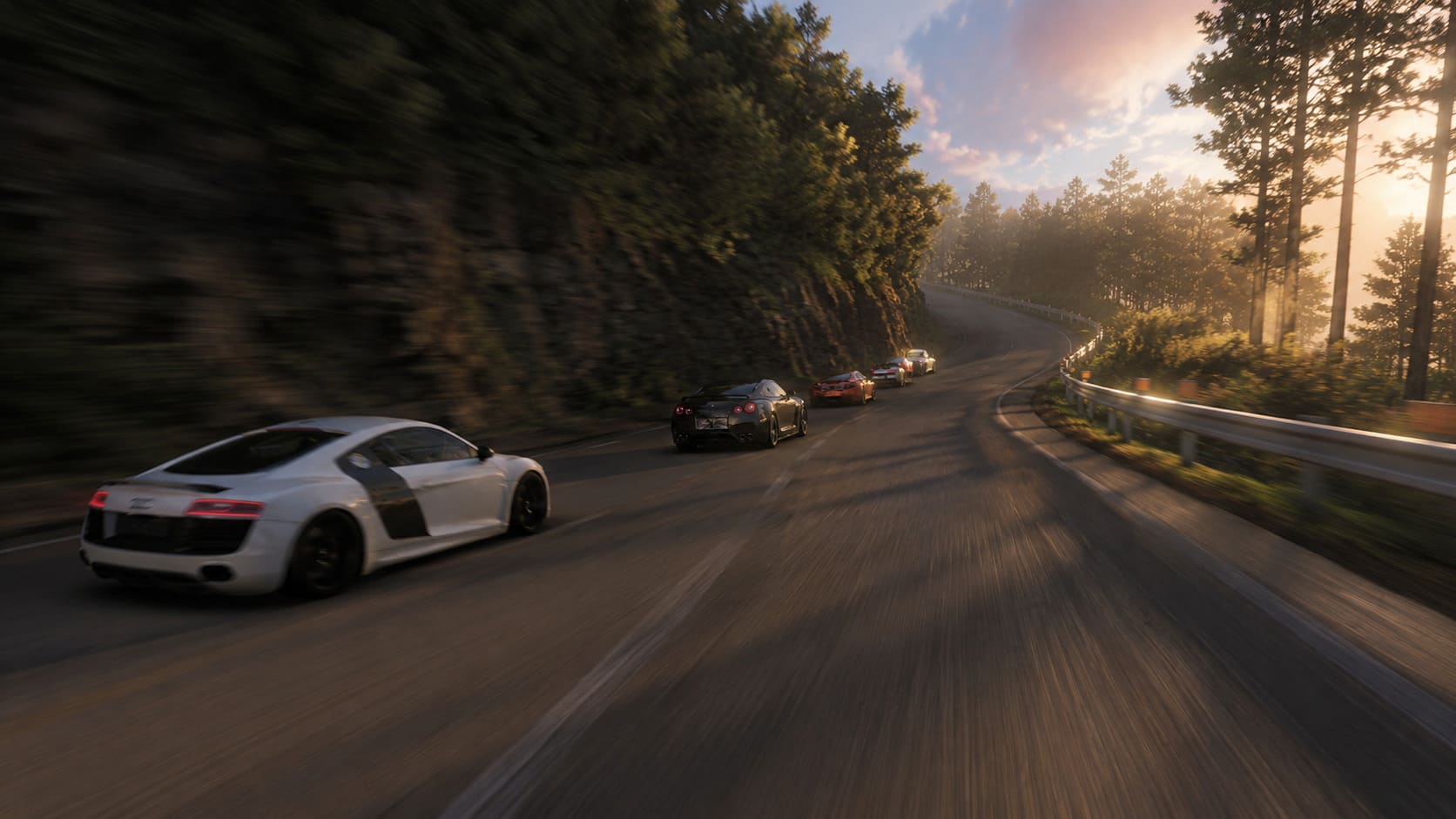
One thing I noticed almost immediately is that Horizon 6 feels less “empty” than earlier entries.
In previous games, there were often huge areas of open land separating major activities. Japan feels intentionally compressed in a good way. You constantly transition between different driving styles:
- Tight urban racing
- Highway speed runs
- Rural countryside cruising
- Technical mountain drifting
- Coastal roads
- Forest sections
- Snowy alpine passes
Because of this, the game rarely loses momentum. Every few minutes you discover another tunnel, hidden road, parking area, or scenic route worth exploring.
Even simple free-roam driving feels rewarding.
Performance and Graphics Are Seriously Impressive
Considering how dense Tokyo is, the optimization is surprisingly solid.
On Xbox Series X, the game reportedly maintains a stable 60 FPS Performance Mode with dynamic 4K resolution. Meanwhile, Quality Mode pushes ray-traced reflections and improved crowd density at 30 FPS.
On PC, the game looks incredible with modern hardware. Features like:
- DLSS 3.5
- AMD FSR 3
- Intel XeSS
- Improved ray tracing
- Better texture streaming
help the game scale well across different systems.
What impressed me most was the lack of noticeable texture pop-in while driving at high speed through the city. In many open-world games, fast movement exposes streaming issues instantly. Horizon 6 handles it far better than I expected.
If you’re playing on mid-range hardware like an RTX 4070 or RX 7700 XT, you can comfortably enjoy ultra settings at 1440p with high frame rates.
Forza Horizon 6 Xbox Game Pass Day One Release: Japan Map, Leaks, and Gameplay Secrets Revealed
Why Horizon 6 Feels Special

I think the biggest achievement here is that Playground Games finally created a Horizon map that feels designed specifically for car enthusiasts instead of just casual exploration.
Japan was always the dream setting because it naturally supports every part of car culture:
- Drifting
- Street racing
- Mountain runs
- Highway battles
- Car meets
- Tuning culture
- Night driving
And Horizon 6 embraces all of it.
The game constantly rewards players who simply enjoy driving. You don’t always need to chase objectives or events. Sometimes the best experience is just taking an R34 Skyline onto a rainy Tokyo highway at midnight and cruising while the city lights reflect around you.
Very few racing games capture that atmosphere properly.
Final Thoughts
Forza Horizon 6 doesn’t just have the biggest map in franchise history — it has the most memorable one. The combination of a massive Tokyo metropolis, detailed mountain roads, varied biomes, and dense road design creates a driving experience that feels fresh even for long-time Horizon veterans.
More importantly, the map finally delivers the fantasy fans have wanted for years: a true Japanese open-world racing playground built around drifting, speed, and car culture.
After spending time with Horizon Japan, it honestly feels difficult to go back to older Horizon maps. The scale, atmosphere, and variety simply raise the standard for what open-world racing games should look like moving forward.