Black Flag Resynced: Tailing Missions Fix & Original vs Remaster Comparison
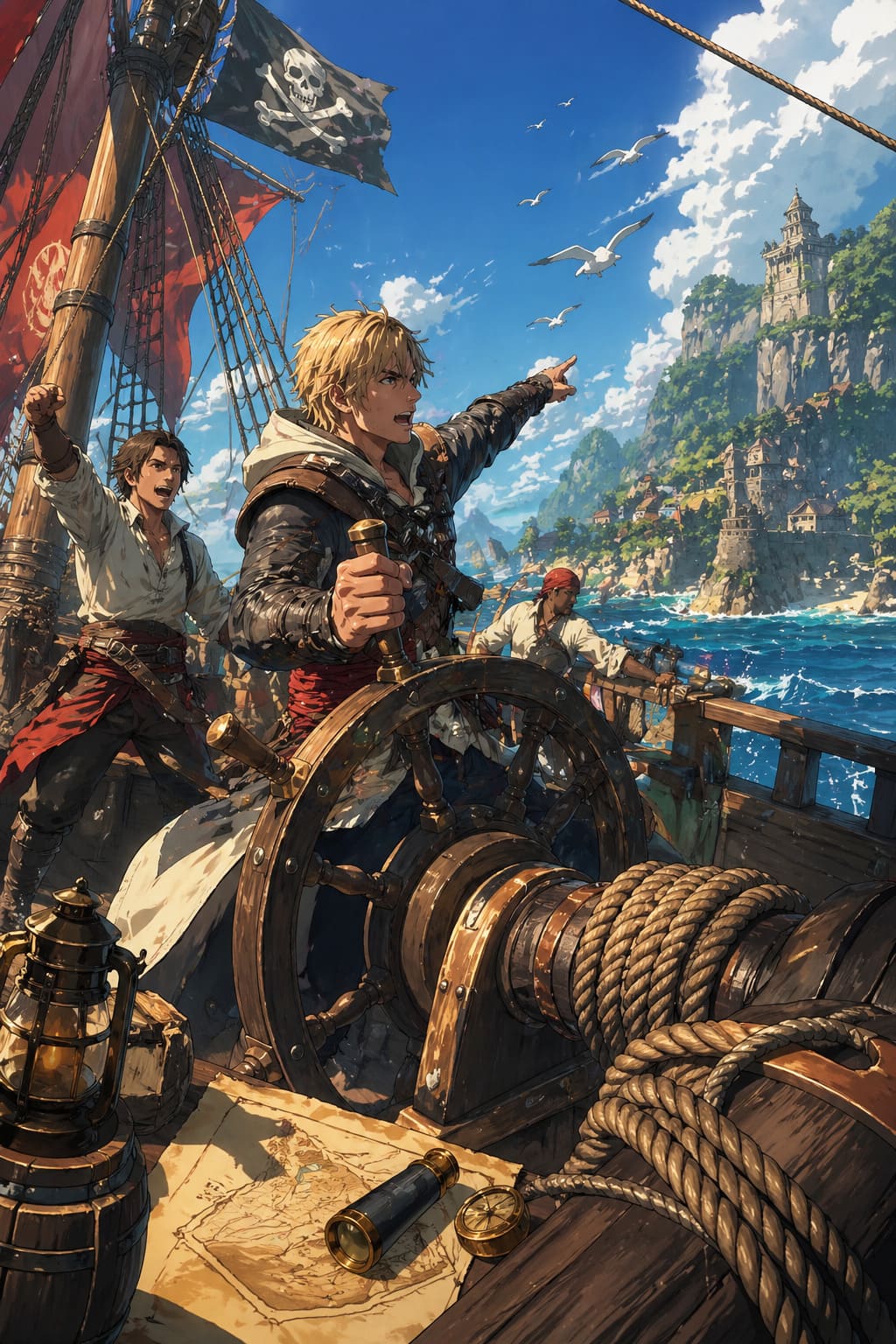
If you’ve ever played Assassin’s Creed IV: Black Flag, you probably remember two things very clearly: the incredible freedom of sailing the Caribbean as Edward Kenway… and the absolutely exhausting tailing missions that seemed to drag the pacing down at the worst possible moments.
For me—and honestly, for a lot of long-time Assassin’s Creed players—that contrast is what made the game both unforgettable and occasionally frustrating.
It was like eating a perfect meal and then suddenly hitting a spoonful of something bland every few bites.
Now, with the upcoming Assassin’s Creed Black Flag Resynced (a modern reimagining of the 2013 classic), Ubisoft is reportedly doing something fans have wanted for more than a decade: completely rethinking how tailing missions work.
Soulmask Flying Mount vs Airship: Which is Faster in 2026? Speed & Travel Guide
And as someone who still loves returning to older open-world games, I can’t help but feel cautiously optimistic.
Why Tailing Missions Became the Franchise’s Weakest Link
Before talking about what’s new, it’s worth remembering why this was even an issue in the first place.
In the original Black Flag, tailing missions were designed to be slow, stealth-focused sequences where you follow a target without being detected. The idea sounded good on paper—but in practice, it often meant instant failure for minor mistakes, repetitive rooftop hopping or slow walking sections, limited player freedom, and long restarts after breaking stealth unintentionally.
At their worst, these missions punished experimentation in a series that otherwise encourages creativity.
I still remember one mission in particular where I barely nudged a guard’s vision cone and instantly got desynchronized. No warning, no recovery—just a hard reset. That kind of design might have worked in older stealth games, but it feels out of place in a modern open-world sandbox.
What Black Flag Resynced Is Changing (And Why It Matters)
The biggest shift in Black Flag Resynced is surprisingly simple, but extremely important: failure is no longer instant or absolute.
Instead of the old “one mistake = restart” system, the new design embraces dynamic outcomes. Detection triggers adaptive responses instead of failure, missions branch into chase or combat scenarios, objectives can still be completed even if stealth is broken, and player performance affects rewards rather than mission survival.
This is a huge philosophical change for the series. Instead of treating stealth as a binary success/fail condition, it now behaves more like a flexible system—closer to modern immersive sims.
How Tailing Feels in the Resynced Version
From what has been shared by developers and early impressions, gameplay now feels less like “walking behind someone carefully for 10 minutes” and more like an evolving encounter.
If you get spotted, the game reacts instead of punishing you with a restart. The target may run away, guards may be alerted dynamically, you transition into pursuit or combat, and you can still recover the mission flow.
This change alone transforms the pacing. It removes that constant anxiety of perfection and replaces it with adaptability. And honestly, that feels more like Assassin’s Creed should have evolved years ago.
Updated Stealth and Parkour Systems
One of the most interesting parts of Resynced is that it doesn’t just tweak missions—it modernizes movement systems too.
Stealth improvements include more reliable Eagle Vision tagging, improved target tracking through environmental obstacles, smarter crowd AI for social stealth blending, and expanded use of NPC distractions such as dancers and street groups.
The movement system is reportedly inspired by later entries like Assassin’s Creed Unity, which means faster vertical movement, smoother rooftop transitions, better downward traversal options, and reduced “sticky” ledge issues.
In practice, this makes tailing missions less about patience and more about fluid movement and reacting on the fly.
Naval Tailing: Still Weird, Still Fun
Naval tailing missions in the original Black Flag were always a little absurd. Sneaking a massive pirate ship through narrow waterways without being noticed never really made sense—but it was part of the charm.
In Resynced, these missions are refined rather than removed. Ship detection builds up more slowly, steering is more precise in tight areas, weather effects like fog and rain now impact stealth more meaningfully, and navigation feels more readable overall.
The addition of environmental factors actually sounds like a great touch because it gives players more tools—and more excuses—when things go wrong.
My Take: Fixing Frustration Without Killing Identity
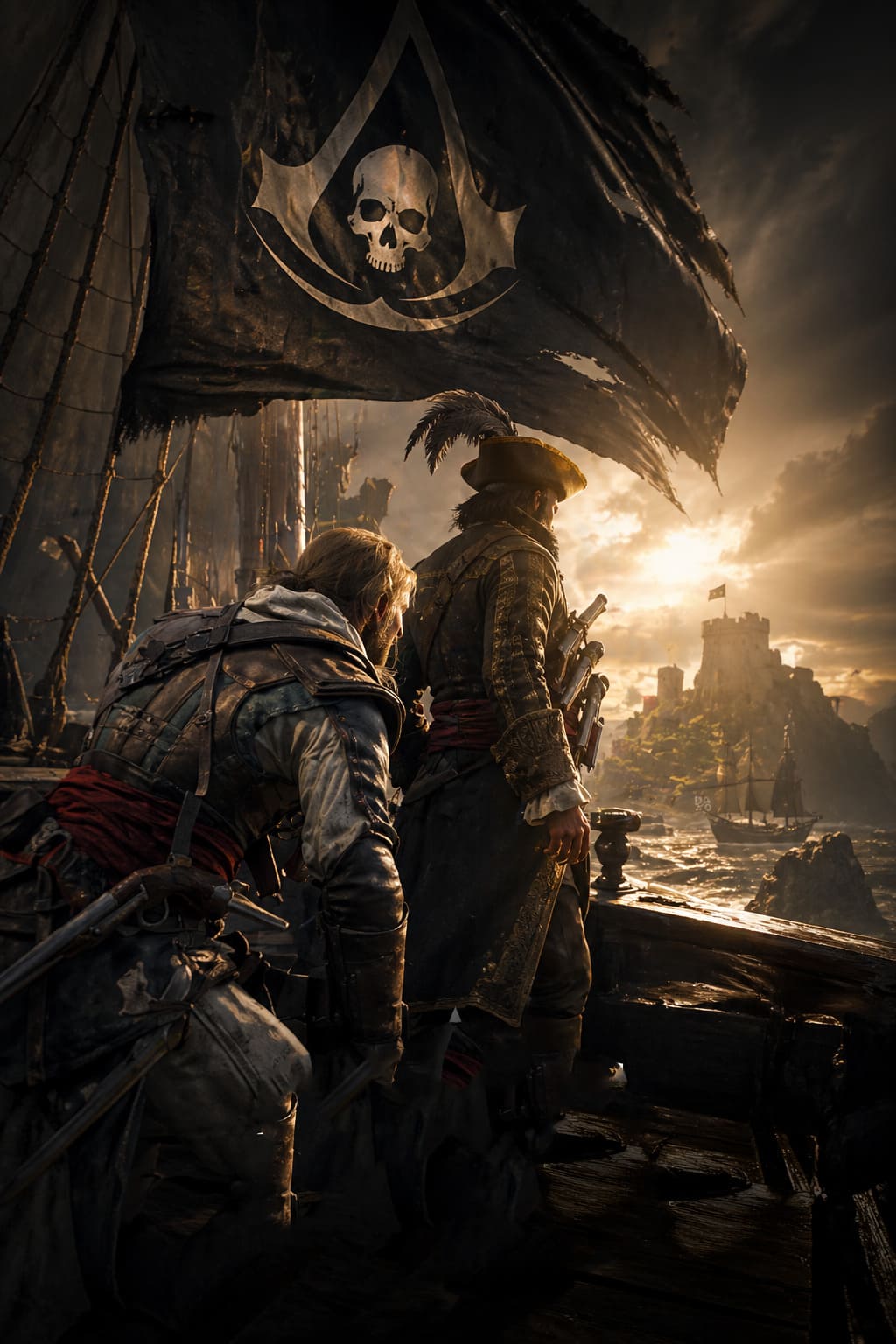
As a player who enjoys both stealth games and open-world chaos, I think this redesign hits an important balance.
The original issue wasn’t that tailing missions existed—it’s that they didn’t respect player flexibility. What Resynced seems to be doing is preserving stealth tension, removing punishing restart loops, encouraging improvisation, and rewarding recovery instead of perfection.
That’s a smarter design philosophy for modern gaming in general.
PC Performance and Technical Adjustments
Because Black Flag Resynced reportedly uses a more advanced engine with features like ray tracing and updated rendering systems, optimization becomes a big concern.
Common issues and fixes include mission freezing that can often be reduced by lowering shadows and disabling anti-aliasing, stuttering that may improve by disabling fullscreen optimizations, low FPS that can be addressed by reducing global rendering settings, and driver conflicts that are less severe since legacy PhysX is no longer required.
Even though these sound like standard PC troubleshooting steps, they matter more in a game where timing and movement are everything.
Community Mods vs Official Redesign
For years, players have already been trying to fix tailing missions themselves through mods that extend detection timers, speed up mission pacing, improve field of view for visibility, or modify stealth scripts.
But mods always felt like a patch over a deeper design issue. If Resynced truly implements systemic changes, it might make those mods obsolete—not because they were bad, but because the game finally evolved past needing them.
Why This Change Actually Matters for the Franchise
This isn’t just about one game. If Ubisoft is willing to revisit Black Flag and redesign core mechanics like this, it suggests a broader shift in how older Assassin’s Creed titles might be treated in the future.
We could potentially see more flexible stealth systems in remakes, reduced reliance on strict mission scripting, more player-driven outcomes, and less frustration with more experimentation.
And honestly, that’s the direction I want to see the series go.
Is Black Flag Resynced the Definitive Version?
If everything works as described, then yes—this could very well become the definitive version of Black Flag.
Not because it changes the story or replaces what made the original great, but because it removes one of its most outdated design flaws.
Tailing missions go from being something you endure to something closer to a dynamic stealth challenge that reacts to how you play.
And that alone is worth paying attention to.
For me, the most exciting part isn’t nostalgia—it’s seeing a classic game potentially reworked with modern design philosophy without losing its identity.
If Assassin’s Creed Black Flag Resynced delivers on that promise, it might not just fix tailing missions… it might redefine how we revisit older games entirely.
Assassin’s Creed Black Flag Resynced vs Original (2026): A Pirate Classic Reforged or Just Polished?
There’s something special about Assassin’s Creed IV: Black Flag. Even now, more than a decade later, it still stands as one of the most immersive pirate games ever made. So when Assassin’s Creed Black Flag Resynced was announced as a full remake rather than a simple remaster, I was skeptical—but also curious.
After digging into early comparisons and gameplay footage, one thing is clear: this isn’t just Ubisoft dusting off an old classic. It’s a bold attempt to modernize it without losing its soul. Whether they’ve succeeded depends on what you value more—nostalgia or evolution.
A Caribbean Rebuilt from the Ground Up
Let’s start with the obvious: the visual leap is massive. The original game was pushing the limits of the PS3 and Xbox 360 era, and while it looked great for its time, it can feel dated today with flatter lighting and less detailed environments.
In Resynced, the world feels far more grounded and believable. Lighting reacts dynamically thanks to modern rendering technologies, storms feel alive rather than scripted, and cities like Havana and Nassau are now seamless, removing immersion-breaking loading screens between exploration.
What stood out to me personally was the ocean. In the original, sailing felt cinematic. In the remake, it feels physical. You’re not just watching waves—you’re dealing with them. Still, I get why some players miss the brighter, more saturated Caribbean look of the original. The remake leans more into realism, which slightly changes the tone.
Combat: From Counter-Kill to Controlled Chaos
This is where things get interesting—and a bit controversial. The original combat system was built around a simple but satisfying rhythm: wait, counter, instant kill. It looked cool, but it was also very easy once you mastered it.
The remake shifts toward a more active and aggressive system. Perfect parries matter more, enemies feel less predictable, and you can chain multiple takedowns in quick succession. Fights are faster, more dynamic, and require more attention.
Personally, I like this change because it adds tension and engagement. However, if you loved the effortless flow of the original combat, you might miss that old-school feel.
Stealth and Freedom: Finally Less Punishing
One of the biggest frustrations in the original game was stealth, especially during tailing missions where a single mistake meant instant failure.
Thankfully, that design philosophy has been updated. You can now crouch freely instead of relying only on environmental hiding spots, and getting detected doesn’t automatically end the mission. Instead, situations evolve into chases or combat encounters, giving you a chance to recover.
This change alone makes the game feel much more modern and respectful of the player’s time. It removes unnecessary frustration without removing challenge.
Parkour: Small Changes, Big Difference
Traversal has also seen subtle but important improvements. Movement feels more responsive and less automated, with the return of mechanics like back ejects and side ejects that give players more control.
Climbing and navigating dense environments feels smoother overall. It’s not a complete overhaul, but it refines the system in a way that makes a noticeable difference during regular gameplay.
What’s Gone—and What’s New
| Feature | Original (2013) | Resynced (2026) |
|---|---|---|
| Modern Day Story | Present (Abstergo) | Removed |
| Multiplayer | Included | Removed |
| Story Content | Base + DLC | Expanded pirate storyline |
| Ship Features | Upgrades | Pets, officers, deeper systems |
| Sea Shanties | 25+ | Expanded with new tracks |
Some of these changes will definitely divide players. The removal of modern-day segments won’t be missed by everyone, especially those who preferred staying immersed in the pirate setting. Multiplayer, however, might be a bigger loss depending on your preferences.
On the positive side, the remake adds new story content, including missions involving iconic pirate figures like Blackbeard and Stede Bonnet, along with deeper world-building and more character-focused moments.
Performance: The Price of Next-Gen Beauty
The technical leap comes with higher system requirements, especially on PC. Running the game at maximum settings with full visual features enabled requires high-end hardware.
That said, modern upscaling technologies help bridge the gap, making the game more accessible to players without top-tier setups. Console versions also appear to be well optimized, offering a smoother experience out of the box.
So… Is It Actually Better?
Short answer: yes—but not universally for everyone. If you’re looking for a modern, immersive pirate experience with smoother gameplay and fewer frustrations, the remake is easily the definitive version.
However, if you prefer the simplicity, stylized visuals, and classic feel of the original, there’s still a strong case for going back to the 2013 release.
Final Thoughts: A Respectful Reinvention
What makes Assassin’s Creed Black Flag Resynced stand out is that it doesn’t try to reinvent the game into something completely different. It stays true to the core experience—sailing, exploration, and pirate fantasy—while refining the systems around it.
It avoids the trap of over-modernizing and instead focuses on improving what already worked. And in doing so, it delivers a remake that feels both familiar and fresh at the same time.
If anything, it shows how remakes should be handled: respect the original, but don’t be afraid to fix what didn’t age well.