Naval Combat Changes: Black Flag Resynced vs Skull and Bones 2026
There’s something oddly timeless about the idea of piracy in video games. Maybe it’s the freedom of the open sea, maybe it’s the chaos of cannon fire erupting across waves, or maybe it’s just the fantasy of living outside the rules for a while.
Whatever it is, Assassin’s Creed IV: Black Flag has always been one of those rare games that nailed the feeling.
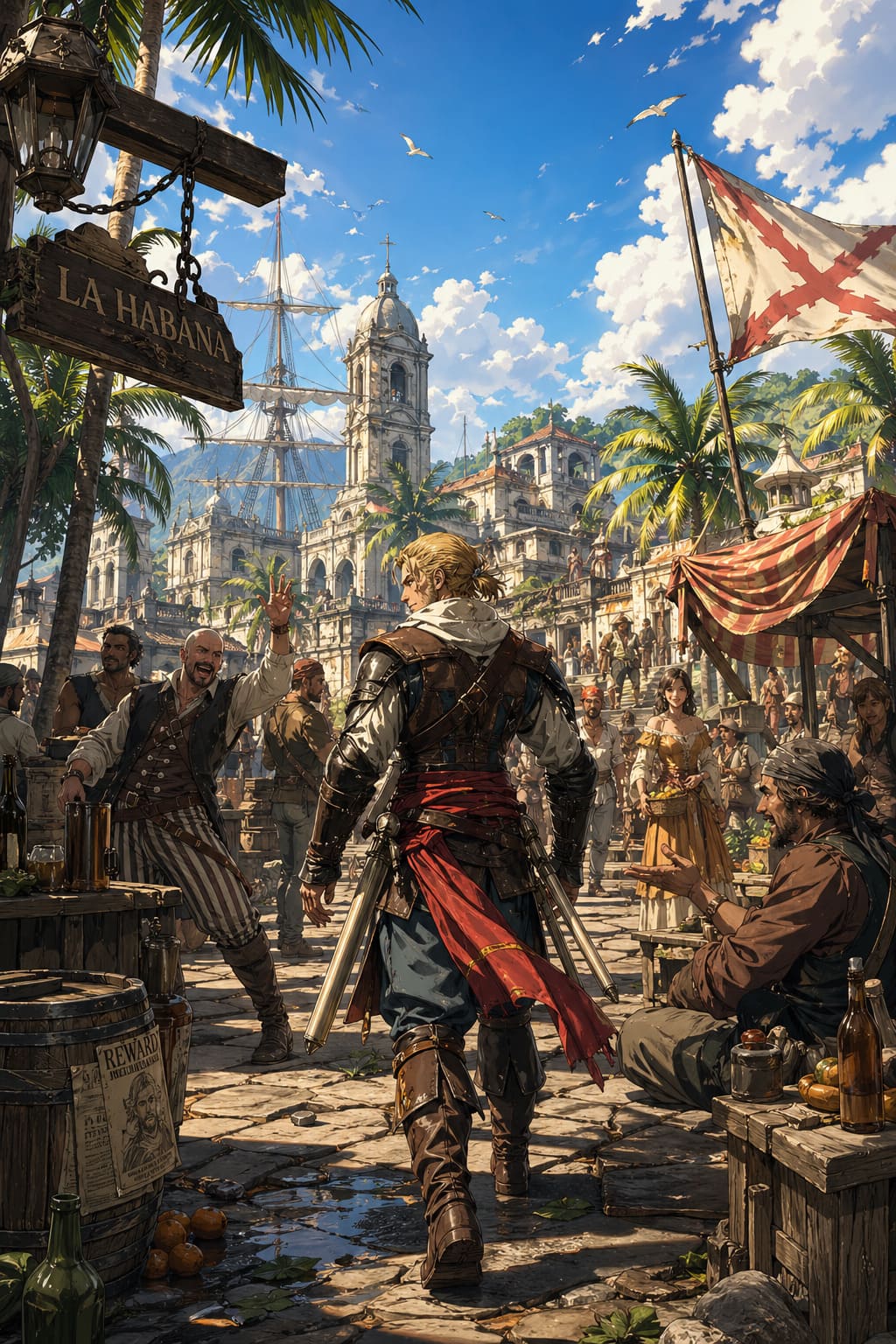
Now, with the rumored (and heavily discussed) Assassin’s Creed Black Flag: Resynced, Ubisoft is not just remastering a classic—they’re rebuilding it into something that feels like a full generational leap.
And as someone who has spent far too many hours sailing virtual oceans across different games, I can say this: this isn’t just nostalgia bait. It’s a redesign of how naval combat should feel today.
Sparking Zero Leaked DLC Characters: Why 2026-2027 is the Series’ True Comeback Era
A Pirate Fantasy Rebuilt, Not Repainted
The biggest mistake many remakes make is staying too loyal to the past. From what’s been revealed, Resynced doesn’t fall into that trap. Instead of simply polishing textures and calling it a day, Ubisoft is rethinking core systems—especially naval combat.
The result is a version of Black Flag that feels familiar at first glance, but rapidly reveals itself to be far more complex, dynamic, and tactical than the original ever was.
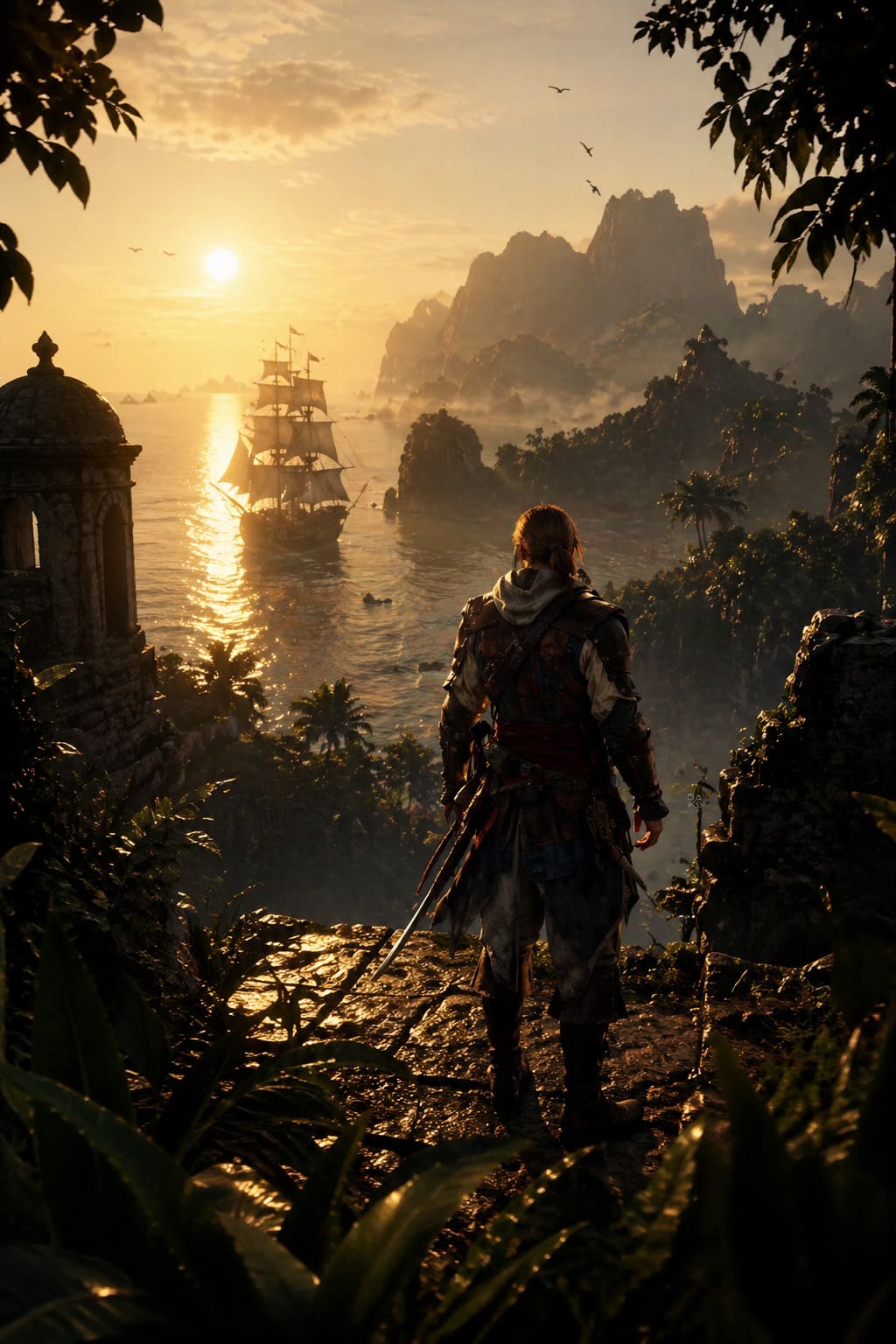
You still play as Edward Kenway. You still sail the Jackdaw across the Caribbean. But the way you fight, command, and survive at sea has been fundamentally restructured.
Naval Combat: From Simple Broadside Exchanges to Tactical Warfare
In the original game, naval combat was already fun—but relatively straightforward. You position your ship, fire broadsides, maybe launch some mortars, and board when the enemy is weak enough.
In Resynced, that simplicity is gone.
Key Changes in Ship Combat Systems
- Multiple firing modes for weapons
- Targeted damage systems for enemy ships
- Environmental weapon effects
- More meaningful positioning during fights
Instead of every weapon doing one job, ships now behave more like mobile tactical platforms.
Weapon System Evolution
| Weapon Type | Original Function | Resynced Upgrade |
|---|---|---|
| Broadside Cannons | Standard damage output | Can now target hull weak points for amplified damage |
| Swivel Guns | Secondary chip damage | Become devastating after weak points are exposed |
| Chain Shot | Slows enemy ships | Now capable of disabling rigging completely |
| Fire Barrels | Area denial | Replaced with shrapnel-style explosive tools that damage sails |
What stands out is that it rewards thinking ahead. You’re no longer just reacting—you’re setting up plays.
For example, disabling sails before a broadside strike becomes a real strategy instead of a bonus effect.
The Officer System: Your Crew Finally Matters
One of the most interesting additions is the Officer System, which introduces three key crew members that actively shape gameplay.
Instead of your crew being mostly decorative or background support, officers now define how your ship performs in combat and exploration.
What Officers Actually Do:
- Unlock unique ship abilities
- Provide mission-specific story arcs
- Enhance crew efficiency and combat synergy
- Influence how your ship handles in different scenarios
This makes the Jackdaw feel less like a generic vessel and more like a living system shaped by the people on board.
It adds identity to your ship beyond just upgrades, turning progression into something more personal.
Weather That Actually Affects Combat
One of the most impressive upgrades is the new dynamic weather system, and it’s not just cosmetic.
Storms now actively change how naval battles play out: waves physically affect ship movement, wind influences turning speed and cannon accuracy, visibility changes scouting and targeting, and storm conditions can block or expose tactical positioning.
Imagine lining up a perfect broadside, only for a massive wave to shift your angle at the worst possible moment. That kind of unpredictability can turn a winning fight into a scramble in seconds.
Boarding Combat: Less Repetition, More Personality
Boarding in the original Black Flag was fun—but admittedly repetitive after a while. Resynced tries to fix that by adding variation based on ship type and combat context.
Boarding Improvements:
- Environmental kill opportunities (ropes, debris, railings)
- Faster and more fluid combat animations
- Objective variation depending on enemy vessel class
- More dynamic enemy resistance patterns
Boarding no longer feels like a scripted mini-game. Instead, it feels like an extension of the fight you just had at sea.
There’s also a lighter immersive layer added to the ship itself: pets like cats or monkeys aboard the Jackdaw, expanded sea shanty systems for crew immersion, and more visible crew interactions during travel.
These don’t change gameplay directly, but they improve atmosphere significantly.
Stealth and Naval Missions Finally Get Smarter
One of the most frustrating parts of the original game was tailing missions. They often punished players too harshly for small mistakes.
Resynced completely reworks this system.
New Systems:
- No instant failure if spotted
- Missions dynamically shift into combat or chase sequences
- Improved scouting via Observe Mode
- Tagging enemies from a distance using the crow’s nest
This makes stealth feel less like a punishment and more like a flexible approach to encounters.
Community Reaction: Excitement Meets Skepticism
As expected, the community reaction is mixed—but in an interesting way.
On one side, players are excited about visual upgrades, expanded combat systems, removal of modern-day interruptions, and improved naval physics. On the other hand, there are concerns about faster combat pacing, DRM and account requirements, and whether the original feel might be lost.
Both perspectives make sense. When you modernize a beloved game, you always risk shifting its identity.
A Risky but Exciting Reinvention
From everything known so far, Assassin’s Creed Black Flag: Resynced isn’t trying to be a safe remaster. It’s a full reinterpretation of pirate combat in a modern engine.
It’s not just about better visuals or smoother sailing. It’s about turning naval combat into a tactical sandbox where weather, crew, positioning, and weapon choice all matter.
If you expect the exact same experience with sharper graphics, this might surprise you. But if you’re open to a more complex and dynamic version of one of Ubisoft’s best games, this could become the definitive pirate experience of its generation.
Either way, the Caribbean is coming back—and it’s more dangerous than ever.
Assassin’s Creed Black Flag Resynced vs Skull and Bones (2026): A Pirate Fan’s Honest Take After Years at Sea
There’s something about pirate games that just hits differently. Maybe it’s the freedom, maybe it’s the chaos, or maybe it’s the simple joy of hearing cannons roar across open water.
Either way, in 2026 we’re finally looking at a real clash between two very different visions of the pirate fantasy: Assassin’s Creed Black Flag Resynced and Skull and Bones.
I’ve spent a lot of time with both styles of games over the years—cinematic single-player epics and grind-heavy live-service titles—and this matchup is honestly fascinating. These aren’t just two pirate games. They represent two completely different philosophies.
Naval Combat: Precision vs Personality
If you’re here purely for ship combat, both games deliver—but in very different ways.
Skull and Bones has evolved into something that feels almost like a naval RPG-shooter hybrid. It’s fast, systems-driven, and rewards optimization.
- You’re constantly tweaking builds: fire damage, flooding, armor shredding
- Wind direction actually matters in a meaningful way
- Different ship classes change your entire playstyle
It scratches the same itch as min-maxing in games like Destiny or Warframe—except with cannons.
Black Flag Resynced, on the other hand, isn’t trying to be that kind of game—and that’s exactly why it works.
- Ship combat feels heavier, more cinematic
- Every cannon volley has impact, not just DPS value
- The boarding system is still unmatched
And that’s the big one. While Skull and Bones still treats boarding like a reward animation, Resynced lets you earn it. Swinging onto an enemy ship, pistols firing, crew clashing—it’s messy, chaotic, and incredibly satisfying.
My take: If you want mastery and mechanics, go Skull and Bones. If you want adrenaline and immersion, Black Flag Resynced wins.
The World: A Game You Visit vs A World You Live In
This is where the gap becomes impossible to ignore.
Skull and Bones feels like a network of systems. It’s designed for efficiency rather than immersion.
- Hub-based exploration
- Vendors, contracts, seasonal loops
- Limited on-foot gameplay
It works—but it never fully sells the fantasy of being a pirate outside your ship.
Meanwhile, Black Flag Resynced leans fully into immersion.
- Seamless transitions between sea and land
- Fully explorable cities like Havana and Kingston
- Underwater exploration and shipwreck diving
This is the difference between logging in to grind and actually getting lost in a world. There’s something special about docking your ship, walking into a tavern, then climbing rooftops at sunset. Skull and Bones just doesn’t try to compete here.
Content Philosophy: Endless Updates vs Complete Experience
| Feature | Skull and Bones (2026) | Black Flag Resynced (2026) |
|---|---|---|
| Story | Seasonal, evolving | Full 40+ hour narrative |
| Multiplayer | Co-op and PvP focused | Single-player only |
| Progression | Gear grind and builds | Character and ship upgrades |
| Updates | Live-service model | Complete one-time experience |
Skull and Bones is built for long-term engagement with seasonal resets and evolving content. It’s the kind of game you come back to again and again—if the loop clicks for you.
Black Flag Resynced offers something increasingly rare: a finished, polished journey with a clear beginning and end. No battle passes, no pressure, just a complete adventure.
Combat on Land: Not Even Close
This one’s simple.
Skull and Bones offers minimal land gameplay, mostly limited to hubs and menus with little depth.
Black Flag Resynced delivers full stealth mechanics, melee combat, and classic traversal systems that feel meaningful and integrated.
If you care about what happens off your ship, the difference is massive.
The Feel Factor
There’s something that doesn’t show up in feature lists: soul.
Skull and Bones is technically impressive, but it can sometimes feel like managing systems rather than living an adventure.
Black Flag Resynced creates moments you actually remember: boarding ships during storms, sailing with your crew singing in the background, barely escaping battles with a destroyed hull.
That emotional layer is what keeps players coming back—even years later.
Community Sentiment in 2026
Player feedback tells a clear story. Skull and Bones has struggled to maintain consistent player numbers, with activity often tied to seasonal updates.
Black Flag Resynced, on the other hand, is generating strong anticipation. The focus on a pure pirate narrative and removal of unnecessary elements has resonated with fans.
This isn’t just nostalgia—it’s trust in a formula that already worked.
Final Verdict
Play Skull and Bones if:
- You enjoy live-service progression systems
- You want co-op and PvP gameplay
- You like experimenting with builds and optimization
Play Black Flag Resynced if:
- You want a complete single-player pirate experience
- You value exploration beyond naval combat
- You prefer immersive, cinematic gameplay
Bottom Line
Both games do something well, but they aim at different audiences. Skull and Bones is for players who enjoy long-term systems and multiplayer loops.
Black Flag Resynced is for those who want to feel like a pirate, not just manage one.
In 2026, the crown clearly goes to Black Flag Resynced. It doesn’t just compete—it reminds everyone why pirate games matter in the first place.