Diablo 5 Lore: What Happened 100 Years After Diablo 4 Lord of Hatred?
The biggest surprise about Diablo 5 isn’t another new class, another giant demon, or even another world-ending prophecy. It is the fact that the world has already lost.
After playing through enough dark fantasy RPGs to know the usual routine, I honestly expected Diablo 5 to begin with another desperate warning about an approaching catastrophe. Someone discovers a forbidden ritual, a Prime Evil starts gathering power, a village burns, and eventually the hero gets dragged into another impossible battle. That’s basically the rhythm of the series.
But this time Blizzard is apparently taking a much nastier approach.
Diablo 5 jumps roughly 100 years beyond the events of Diablo 4: Lord of Hatred, and Sanctuary is no longer waiting for the apocalypse. The apocalypse happened. The defenses failed. The old civilizations disappeared. The heroes who once stood between humanity and Hell are either dead, forgotten, or reduced to legends that barely resemble the truth.
And then there is Diablo himself.
The Lord of Terror hasn’t simply returned. He has already won.
That one decision changes almost everything about the story and, at least on paper, makes Diablo 5 feel considerably darker than the previous games.
Diablo 5 Lore Breakdown: The Post-Apocalyptic Fall of Sanctuary Explained
A Century After Diablo 4, Sanctuary Is Barely Alive
The most interesting part of this new timeline is that Blizzard isn’t treating the 100-year time skip as a simple excuse to create a new cast of characters. The century is apparently going to be a major part of the actual lore.
After the events surrounding Mephisto and the Lord of Hatred, Sanctuary was left in an incredibly fragile state. The Prime Evils had spent generations manipulating humanity, corrupting kingdoms and turning mortal conflicts into opportunities for demonic expansion. Removing one major threat didn’t suddenly repair all the damage.
If anything, it created another problem.
The power vacuum was enormous.
The remaining human factions had already been weakened by decades of war. Religious institutions were fractured, major cities were vulnerable, and organizations such as the Horadrim were shadows of what they had once been. Without a strong force capable of uniting Sanctuary, smaller conflicts could grow unchecked.
Over the following decades, that weakness became permanent.
The Horadrim eventually disappeared, leaving behind fragments of knowledge rather than an organized order capable of fighting Hell. Old strongholds were abandoned. Holy sites became ruins. Entire settlements were swallowed by corruption or simply erased from history.
This is where I think the 100-year jump could work incredibly well.
One of the problems with long-running fantasy franchises is that the player can start feeling like every catastrophe is temporary. Tristram gets destroyed, then another town appears. A kingdom falls, another faction takes its place. A legendary hero dies, and someone else immediately picks up the sword.
Diablo 5 appears to be saying: no, this time the damage stayed.
The Lost Seven Years May Be the Real Mystery
The century is important, but there is a much more specific period that seems to matter to the Diablo 5 story: the final seven years before the game begins.
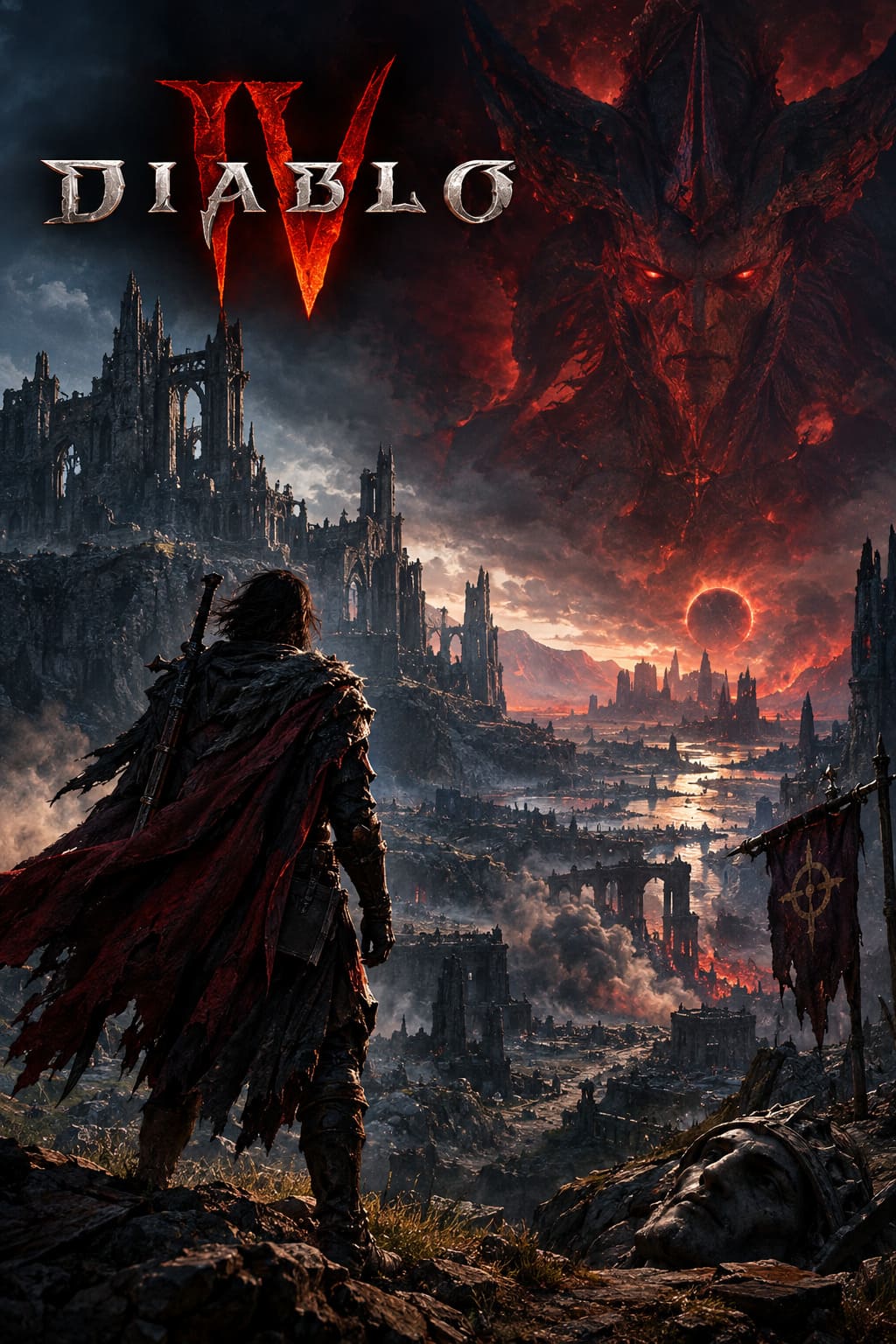
According to the new lore setup, Diablo achieved his complete victory approximately seven years before the beginning of the campaign.
That distinction is important.
For roughly 93 years, Sanctuary was apparently deteriorating through wars, political collapse, demonic corruption and the slow disappearance of organized resistance. But those final seven years were different. That was when Diablo himself became the dominant power.
And this is where things get seriously creepy.
Diablo’s victory isn’t presented as simply an army occupying human territory. His presence appears to have begun changing Sanctuary itself.
Imagine returning to an area you explored dozens of hours ago, only to discover that the landscape doesn’t obey the same rules anymore. Forests have become hostile biological nightmares. Weather patterns are distorted. Wildlife has mutated. Old landmarks have been physically reshaped by demonic influence.
That sounds much more interesting to me than simply covering familiar zones in red fog and calling them corrupted.
What Happened During Those Seven Years?
This is probably one of the biggest questions surrounding Diablo 5 lore.
How exactly did Diablo defeat the remaining resistance?
Who tried to stop him?
Were there surviving Horadrim?
Did the forces of Heaven intervene?
What happened to the strongest heroes from the previous games?
And perhaps most importantly, why did Sanctuary’s final defenses fail so completely?
The game seems positioned to answer those questions gradually rather than explaining everything through a giant opening cinematic.
Players will apparently investigate the remains of the old world, recover fragments of history and discover what actually happened during the missing years.
I love this approach.
It gives the player a reason to explore ruins beyond simply collecting better gear. A destroyed fortress isn’t just a dungeon anymore. It might contain the last record of a battle that changed the fate of humanity.
Sanctuary No Longer Has Safe Towns
Another major change is the disappearance of the traditional Diablo hub.
Anyone who has played these games knows the routine. You return to town, sell your garbage, repair your equipment, talk to NPCs, stash your loot and head back into Hell. Tristram, Kyovashad and other settlements aren’t just convenient menus with buildings around them. They give the world a sense of stability.
Diablo 5 appears to be removing that stability.
There are no major fortified cities where humanity can comfortably hide anymore. Staying in one place for too long is dangerous because Diablo’s forces control huge parts of the world.
Instead, the game introduces a Mobile Survivor Caravan.
The caravan essentially becomes your moving home.
This is one of those mechanics that sounds strange on paper but could become one of the best ideas in the entire game.
Rather than having one safe city that magically remains untouched while demons destroy everything outside its walls, the player is responsible for a moving group of survivors. Traders, craftsmen, refugees and other specialists travel with you.
The caravan can apparently develop depending on player decisions.
That means your progression isn’t just about building a stronger character. You are potentially building a small moving piece of humanity.
Resources matter. Survival matters. The areas you visit matter.
And if the caravan system is handled properly, it could make the world feel much more dangerous because there is no guaranteed reset button waiting for you at the end of every dungeon.
The Heir of Westmarch Is a Very Different Diablo Hero
The protagonist is also getting a pretty unusual origin.
Instead of playing another nameless warrior who somehow becomes the most important person in Sanctuary, Diablo 5 puts players in the role of a runaway heir connected to the fallen kingdom of Westmarch.
Westmarch has always been one of the more interesting human powers in Diablo’s lore. It represents military strength, religion, politics and the stubborn human desire to build civilization in a world that constantly wants to destroy it.
Now that kingdom is gone.
The protagonist isn’t simply fighting for survival. They are carrying the remains of a civilization that no longer exists.
That gives the character a personal reason to hate what Diablo has done, but Blizzard is adding another complication that could be even more important.
The protagonist has a mysterious connection to Diablo himself.
And that’s where things become properly dangerous.
A Hero Who Can Be Corrupted by Diablo
The connection between the protagonist and Diablo isn’t just a convenient superpower.
It apparently makes the character unusually vulnerable to the Lord of Terror’s influence. The hero can perceive things that ordinary humans cannot, potentially track Diablo’s movements and access powers that would otherwise be impossible for a mortal.
But there is a catch.
The closer the protagonist gets to Diablo’s power, the greater the risk of becoming something that isn’t entirely human anymore.
This creates a classic temptation story, but I think it fits Diablo extremely well.
The best Diablo stories have always been about corruption. Characters don’t simply get attacked by evil; they make decisions while knowing that power comes with a price.
So the central question in Diablo 5 may not be:
‘Can you kill Diablo?’
It could be:
‘How much of yourself are you willing to sacrifice to become strong enough to kill him?’
That’s much more interesting.
The New Classes Feel Built for a Broken World
The class lineup is also being expanded, with familiar archetypes returning alongside a completely new option.
Among the returning favorites are the Monk and Demon Hunter, both of whom fit surprisingly well into a post-apocalyptic Sanctuary.
The Monk brings fast melee combat and spiritual discipline into a world where religious institutions have largely collapsed. The Demon Hunter, meanwhile, practically belongs in a setting where humanity has spent generations being hunted by demons.
Then there is the new Plague Knight.
The name alone tells you what kind of game we’re dealing with.
The Plague Knight combines heavy armor, brutal close-range combat and disease-based abilities. Instead of simply avoiding Sanctuary’s corruption, this class weaponizes it.
That could lead to some really disgusting and satisfying combat builds.
| Class | Combat Identity | Lore Connection |
|---|---|---|
| Monk | Fast melee and spiritual abilities | Survivor of a fractured religious world |
| Demon Hunter | Ranged attacks and demon-killing tools | Specialist against Hell’s forces |
| Plague Knight | Heavy armor and disease effects | Weaponizes the corruption of Sanctuary |
I’m particularly curious about how the Plague Knight will work at high levels. Diablo has always been at its best when a class has a clear fantasy but enough mechanical depth to let players break it in creative ways.
Diablo 5 Is Also Bringing Back Bigger Inventory Items
The gameplay changes aren’t limited to classes and the world.
Blizzard is also apparently returning to a more old-school approach to inventory management, including larger item grid spaces inspired by Diablo 2.
This might sound like a tiny detail, but longtime Diablo players know how much inventory design can affect the feel of the entire game.
A massive sword taking up more physical space makes it feel like an actual object rather than another icon that happens to have a damage number attached to it.
The same philosophy appears to be influencing other systems.
Traditional equipment belts, item sets, deeper crafting and attribute requirements for powerful equipment are all being brought back or expanded. The goal seems to be creating an itemization system that feels more deliberate and less disposable.
Personally, I’m glad to see this direction.
One of my biggest frustrations with modern loot-heavy games is the moment when equipment starts feeling like colored confetti. You pick something up, compare three numbers, salvage it and move on.
A harsher Diablo game should make you hesitate when you find something genuinely valuable.
If a rare weapon forces you to reorganize your entire build because you finally meet its attribute requirements, that’s memorable loot.
The World of Diablo 5 Could Be Its Best Feature
For me, the biggest selling point isn’t even the new class roster.
It’s the world.
A Sanctuary that has spent a century losing is much more compelling than another version of Sanctuary where the apocalypse is conveniently happening right when the player arrives.
There should be stories everywhere.
A ruined cathedral where the final priest spent seven years defending refugees. A forgotten military bunker belonging to Westmarch. A village that survives by moving every few weeks because demons eventually discover its location. A ruined Horadrim library containing records that contradict everything humanity thinks it knows about Diablo’s victory.
That is the kind of environmental storytelling I want from this game.
The player shouldn’t feel like they’re walking through a theme park designed around combat encounters. The world should feel like it existed before the character arrived and will continue changing after they leave.
Why the 100-Year Time Skip Actually Makes Sense
The century-long jump also gives Blizzard an opportunity to escape some of the franchise’s continuity problems.
New characters can exist without constantly being compared to the heroes of previous games. Old kingdoms can become myths. Entire cultures can disappear. Weapons and traditions can evolve.
Most importantly, Blizzard doesn’t have to keep finding increasingly ridiculous reasons why Sanctuary somehow survived the last catastrophe with its civilization mostly intact.
Now the answer is simple.
It didn’t.
That’s a bold reset without completely rebooting the lore.
Diablo Has Already Won. Now What?
That is ultimately what makes Diablo 5 such an intriguing prospect.
Previous games were largely about stopping evil before it reached its final objective. This time, the objective has already been achieved.
Diablo won.
Humanity lost.
The kingdoms are gone. The old heroes are legends. The Horadrim have disappeared. The world itself has been twisted by the Lord of Terror.
And somewhere in that nightmare, a runaway heir from a dead kingdom is trying to figure out how to fight an enemy whose influence is already inside them.
That’s a much darker starting point than I expected from the next Diablo.
If Blizzard actually follows through on this premise instead of turning the first few hours into another predictable ‘rebuild the resistance’ story, Diablo 5 could have the strongest narrative hook the series has had in years.
The planned 2029 release window still leaves a long road ahead, and there is plenty that can change during development. But the central idea is already compelling.
This isn’t a story about preventing the fall of Sanctuary.
It’s about surviving after the fall.
And honestly, after years of watching Diablo’s heroes arrive just in time to save the world, I’m more interested in seeing what happens when they arrive a century too late.