Ultimate Star Wars Zero Company Sharpshooter Build and Class Guide
There is something incredibly satisfying about playing the sniper in a good turn-based strategy game. You sit back, study the battlefield, wait for the perfect opening, and then one carefully planned shot suddenly makes the entire enemy formation fall apart. After spending plenty of time with tactical games over the years, from XCOM-style campaigns to squad-based RPGs, I’ve always found that the sniper role is either one of the most rewarding classes in the game—or one of the most frustrating when its mechanics are misunderstood.
In Star Wars Zero Company, the Sharpshooter definitely belongs in the rewarding category. Bit Reactor’s Clone Wars-era tactical RPG puts a huge emphasis on positioning, cover, squad coordination, and making every action point count. You are leading Hawks and a team of very different specialists against the Infinite Coil and the growing threat of the Shadow Plague, so simply having a character with a big rifle isn’t enough. You need to build and play that character properly.
For me, the Sharpshooter works best as a battlefield controller rather than a character who simply stands in the back and shoots whatever happens to be closest. With the right abilities, equipment, and squad setup, the class can pick apart enemy formations before they ever get close to your frontline. Here’s the Star Wars Zero Company Sharpshooter build I would focus on if the goal is reliable damage, strong positioning, and the ability to turn one successful kill into an entire chain of attacks.
Ultimate Star Wars Zero Company Scout Build and Class Guide: Best Abilities, Loadouts, and Strategy
What Makes the Sharpshooter So Powerful?
The Sharpshooter is essentially your long-range execution specialist. While an Assault character can rush forward and a Heavy can put pressure on several enemies at once, the Sharpshooter has a much more specific job: identify the most dangerous target and remove it from the equation.
That sounds simple, but good sniper play is mostly about what happens before you pull the trigger. High ground, line of sight, enemy cover, flanking opportunities, and the location of your other squad members all matter. A Sharpshooter in a terrible position can feel surprisingly weak, while the same character on a good rooftop or elevated platform can completely dominate a section of the map.
This is one reason I enjoy sniper classes in tactical games. You aren’t just calculating damage—you are effectively solving a positioning puzzle every turn.
The main things I would prioritize are:
- Aim and hit reliability
- Critical hit potential
- High-ground positioning
- Action-point efficiency
- Armor penetration
- Safe repositioning after revealing your location
The last point is particularly important. A sniper might be powerful, but once enemies know where that rifle is coming from, your supposedly safe perch can become a giant “shoot me” sign.
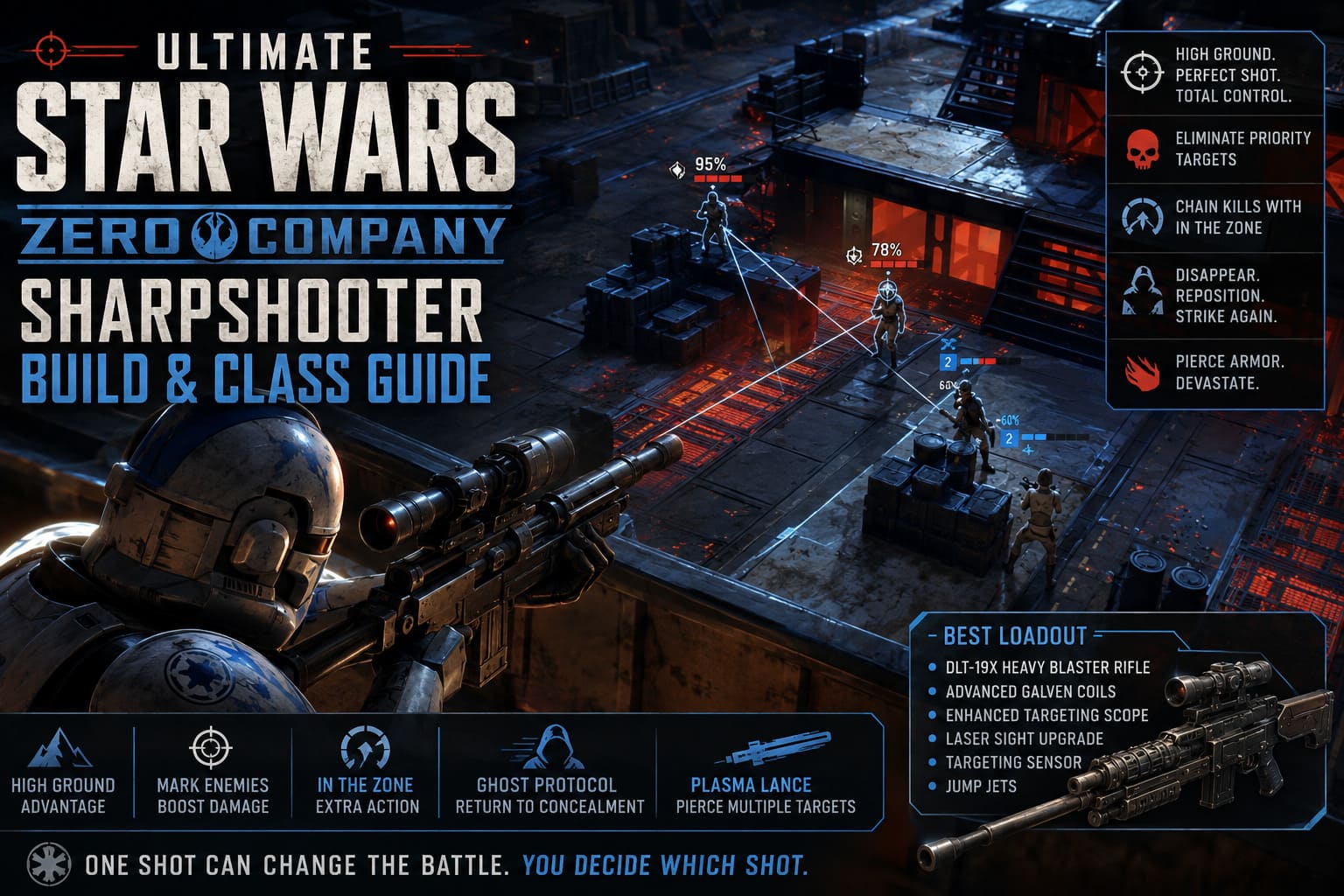
My Recommended Sharpshooter Build: The Shadow Marksman
For this guide, I would build the Sharpshooter around a concept I like to call the Shadow Marksman. The idea is straightforward: stay difficult to reach, exploit advantageous sightlines, eliminate priority targets, and use action-point mechanics to keep the shooting sequence going.
Rather than turning the class into a general-purpose fighter, this build doubles down on what makes the Sharpshooter special.
Tier 1: High Ground Advantage
High Ground Advantage should be one of the first abilities you prioritize.
Elevated positions are already valuable in a tactical game, but a passive that further improves your effectiveness from high ground makes those locations even more important. Whenever the map gives you a rooftop, ridge, balcony, or other elevated firing position, you should be thinking about how to get your Sharpshooter there without exposing the character unnecessarily.
The important thing here is consistency. You don’t want a build that only becomes impressive under very specific circumstances. A bonus tied to something you should already be doing—finding strong firing positions—is much easier to take advantage of throughout a campaign.
Tier 2: Target Sighted
Target Sighted is where the Sharpshooter starts becoming more useful to the entire squad.
Marking an enemy and increasing the damage they take gives you a powerful tool against tougher targets. Instead of immediately shooting the strongest enemy you see, sometimes it makes more sense to mark that target first and let the rest of your squad capitalize on the opening.
I particularly like abilities like this in tactical games because they prevent the sniper from becoming a selfish damage dealer. Your Sharpshooter can contribute to a coordinated attack even when pulling the trigger isn’t the optimal first move.
Against elite enemies, bosses, or targets hiding behind cover, this can be much more valuable than simply squeezing out a little extra personal damage.
Tier 3: In The Zone
If you’re looking for the ability that really defines this build, In The Zone is it.
The possibility of receiving an action point back after killing a vulnerable enemy changes how you approach the entire turn. Suddenly, a Sharpshooter isn’t necessarily limited to one attack followed by a retreat. If you’ve prepared the battlefield properly, you can potentially move through several targets in succession.
This is where the build starts feeling like the classic tactical-game sniper fantasy.
The trick is not to waste this opportunity on random targets. Let your Assault or other frontline characters pressure enemies and expose weaknesses. Once an enemy becomes flanked, uncovered, or otherwise vulnerable, your Sharpshooter can step in and finish them.
A good turn might look something like this: your frontline breaks an enemy’s position, the Sharpshooter eliminates that target, In The Zone refunds the action point, and you immediately transition to another exposed enemy. When everything lines up, it can feel almost unfair—and those are usually my favorite turns in tactical games.
Tier 4: Ghost Protocol
The biggest weakness of any sniper is being discovered in a bad location.
Ghost Protocol addresses exactly that problem by allowing the Sharpshooter to return to concealment after securing a kill. This isn’t merely a defensive luxury. In my experience with tactical games, the ability to disappear after creating chaos can be just as valuable as another damage increase.
Think of it as insurance.
You eliminate an important target, the enemy now knows where the threat came from, and instead of sitting there waiting for retaliation, you can disappear and reposition. That gives you another chance to establish a favorable angle while forcing the opposing squad to waste time searching for you.
The Sharpshooter should feel like a predator rather than a turret. Shoot, relocate, disappear, and find another angle.
Tier 5: Plasma Lance
At the top of the build, Plasma Lance gives you the kind of ability you want available when an ordinary blaster shot simply isn’t enough.
Its armor-piercing properties and powerful energy damage make it particularly useful against heavily protected enemies. Even better, the ability to penetrate multiple targets in a straight line means you can sometimes get much more value from it than a standard single-target attack.
The key is patience. Don’t fire a powerful ability just because you have it available. Look for moments where enemies are aligned or where a heavily armored target is blocking something else you desperately need to eliminate.
Saving a major ability for the right turn is one of those small habits that separates a decent tactical player from someone who consistently clears difficult encounters.
Best Sharpshooter Loadout
The build itself is only half of the equation. Your equipment should reinforce the same philosophy: maximum accuracy, strong damage, and enough flexibility to survive when the battlefield stops going according to plan.
| Equipment | Recommended Choice | Why It Matters |
|---|---|---|
| Primary Weapon | DLT-19X Heavy Blaster Rifle | Excellent long-range damage |
| Weapon Mod | Advanced Galven Coils | Improves damage and armor penetration |
| Scope | Enhanced Targeting Scope | Increases aim reliability |
| Critical Mod | Laser Sight Upgrade | Improves critical hit potential |
| Utility | Targeting Sensor | Helps reveal hidden threats |
| Mobility | Jump Jets | Provides rapid access to elevated positions |
DLT-19X Heavy Blaster Rifle
The DLT-19X Heavy Blaster Rifle fits the Shadow Marksman philosophy perfectly. You aren’t trying to win close-range firefights, so the weapon’s long-range strengths should be embraced rather than compensated for.
Its weakness at close distances is actually another reminder that positioning matters. If enemies are regularly getting close enough to punish your Sharpshooter, the problem may not be the rifle—it may be where you’re placing the character.
Advanced Galven Coils
For weapon modifications, Advanced Galven Coils are a natural fit for this setup. Increasing damage while adding armor penetration makes each successful shot more meaningful, particularly when you’re dealing with enemies that can shrug off weaker attacks.
Enhanced Targeting Scope
I would prioritize the Enhanced Targeting Scope because reliability is incredibly valuable on a sniper.
There is nothing worse than spending an entire turn setting up what looks like the perfect shot, only for the attack to fail because your accuracy wasn’t high enough. More aim means fewer wasted opportunities and more confidence when you commit to an attack.
Laser Sight Upgrade
The Laser Sight Upgrade pushes the build further toward critical-hit potential. Since you’re already trying to attack from maximum range, getting additional value from that distance fits naturally into the strategy.
How to Play the Sharpshooter With the Rest of Your Squad
The Sharpshooter shouldn’t operate independently.
This is probably the biggest mistake I would avoid when playing the class. It is tempting to find the highest rooftop, park the sniper there, and forget about them until something appears in the crosshairs. That approach might work in easy encounters, but it wastes a huge amount of the class’s potential.
Your frontline units should actively create opportunities for the Sharpshooter.
An Assault or Scout can push enemies out of comfortable defensive positions, destroy cover, create flanks, or simply force opponents to move. Once an enemy is exposed, the Sharpshooter can capitalize on that opening.
This creates a satisfying division of labor: your frontline creates the opportunity, while your Sharpshooter turns it into a kill.
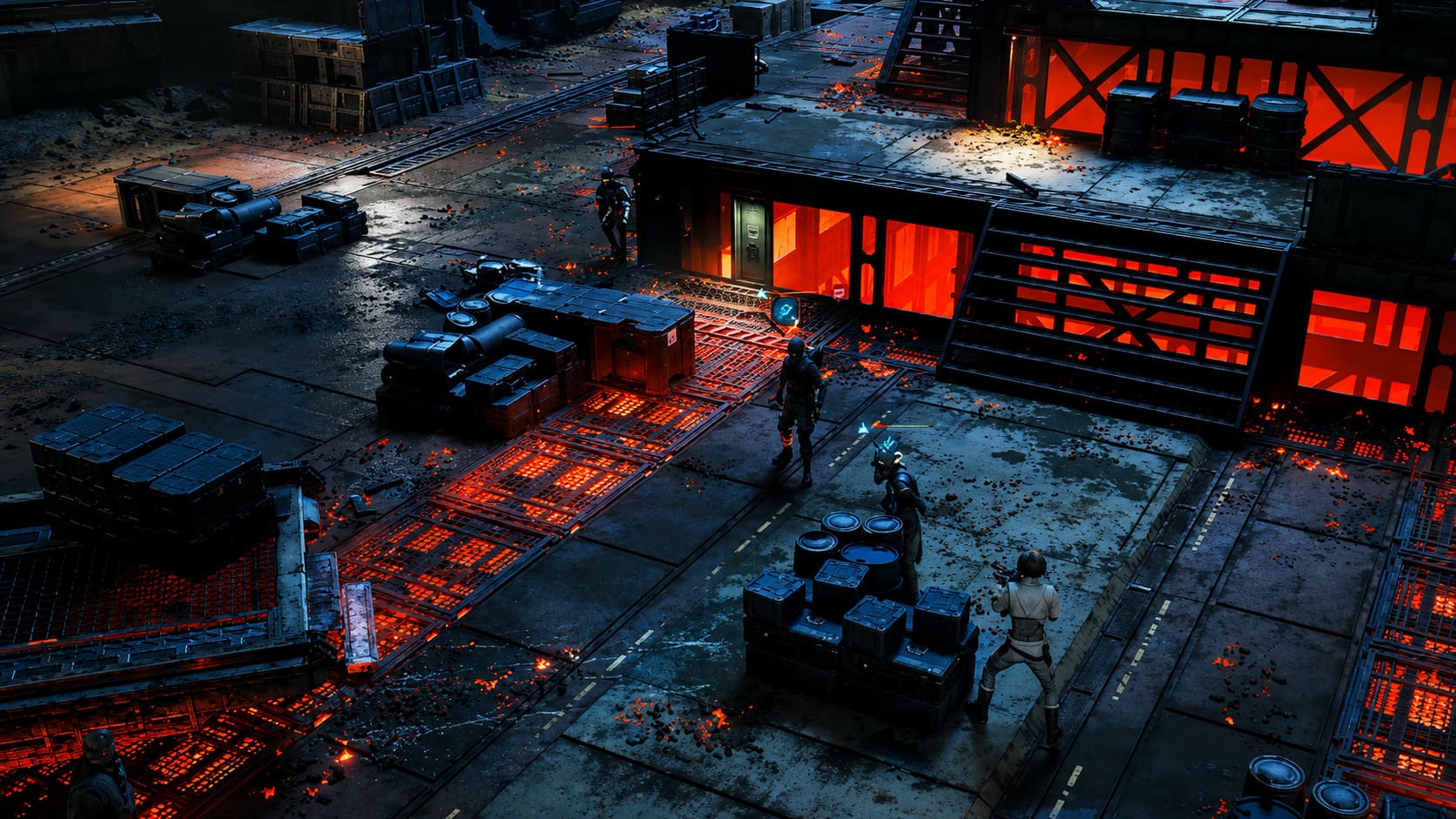
High Ground Should Be Your First Priority
Whenever I load into a new tactical map, one of the first things I look for is elevation.
Don’t automatically move there on the first action, though. First check whether the position actually provides useful sightlines. A rooftop that looks impressive but only lets you see one tiny section of the battlefield isn’t necessarily better than a slightly lower position with visibility across several enemy routes.
You also need to think about escape routes.
A great sniper position isn’t just somewhere you can shoot from. It should ideally give you multiple options when the enemy starts closing in. If there is only one ladder leading to your position, you’re potentially creating your own trap.
Don’t Ignore Squad Bonds
The bond system can also make your Sharpshooter considerably more effective.
Building relationships between squad members isn’t something I would treat as a side activity. Tactical synergy can make a noticeable difference, especially when one character is supporting another through additional defensive or action-based benefits.
Pairing your Sharpshooter with a reliable frontline partner is particularly sensible. The frontline character can absorb pressure and create openings while the sniper stays focused on eliminating priority targets.
The best tactical squads aren’t simply collections of powerful characters. They are teams where every member makes another member better.
Managing Reloads and Action Points
One of the less glamorous parts of playing a powerful ranged character is managing ammunition and action economy.
The DLT-19X can deliver impressive damage, but you still need to pay attention to reload timing. Reloading immediately before a major enemy push is obviously terrible, but so is waiting until you’re completely empty and then discovering that you don’t have enough action economy to recover.
Try to reload during turns where enemies are repositioning or your frontline is holding defensive positions. Planning one turn ahead is usually better than reacting to the current situation.
The same principle applies to action points. Never assume that every available action needs to be spent immediately. Sometimes ending a turn in an excellent position is more valuable than squeezing in one mediocre shot.
Common Sharpshooter Mistakes to Avoid
Even with a strong build, there are several easy ways to ruin an otherwise excellent Sharpshooter turn.
- Shooting the weakest enemy first: Save your strongest attacks for targets that actually threaten your squad.
- Ignoring elevation: If your build benefits from high ground, make high ground part of your normal positioning routine.
- Standing in the same place too long: Once enemies identify your location, expect them to respond.
- Forgetting squad synergy: Your Sharpshooter is much stronger when other classes create exposed targets.
- Wasting powerful abilities: Save major attacks for armored enemies, grouped targets, or critical moments.
- Ignoring escape routes: A firing position is only good if you can survive after using it.
Final Thoughts
The Sharpshooter is one of those classes that gets better the more you understand the underlying systems of Star Wars Zero Company. At first, it can seem like a straightforward sniper: find a distant target and shoot. Once you start combining high ground, critical-hit bonuses, enemy marking, action-point refunds, concealment, and squad positioning, the class becomes much more interesting.
For me, the Shadow Marksman approach is the most satisfying way to play it because it rewards planning rather than simply stacking raw damage. You establish a firing position, let your squad manipulate the battlefield, pick the right target, secure the kill, and then disappear before the enemy can properly respond.
That is exactly what I want from a tactical sniper.
If you’re building your Hawks squad around reliable long-range damage, I would make the Sharpshooter one of your core specialists. Invest in accuracy and critical potential, make high ground a habit, build useful squad bonds, and—most importantly—learn to think one turn ahead. Once you do, those distant targets stop looking like threats and start looking like opportunities.