EA Sports College Football 27 Team Upgrade Guide: Mastery of Player Progression, Skill Points, and Chemistries
When I first jumped into EA Sports College Football 27 Ultimate Team, I made the same mistake I always make in sports games—I upgraded everything that looked shiny. A few hours later I had almost no Training left, barely any Coins, and several players that were already falling behind the power curve.
After spending more time with Ultimate Team, it became obvious that player progression is the real game within the game. Pulling a great card is exciting, but building that card correctly is what separates an average roster from one that consistently wins online.
EA completely redesigned how upgrades work this year. Instead of throwing Training at every player until they’re maxed out, you now have to think about Skill Points, upgrade tokens, archetypes, ability costs, and chemistry planning. It feels far more strategic than previous versions, and honestly, I think that’s a good thing.
If you’re trying to build a competitive roster without wasting resources, here’s the approach that’s worked best for me.
Why Player Progression Matters More Than Overall Rating
One thing I’ve noticed after dozens of games is that Overall Rating doesn’t tell the whole story anymore.
I’ve beaten teams with several players rated higher than mine simply because my roster was built around good abilities and chemistry bonuses instead of raw numbers.
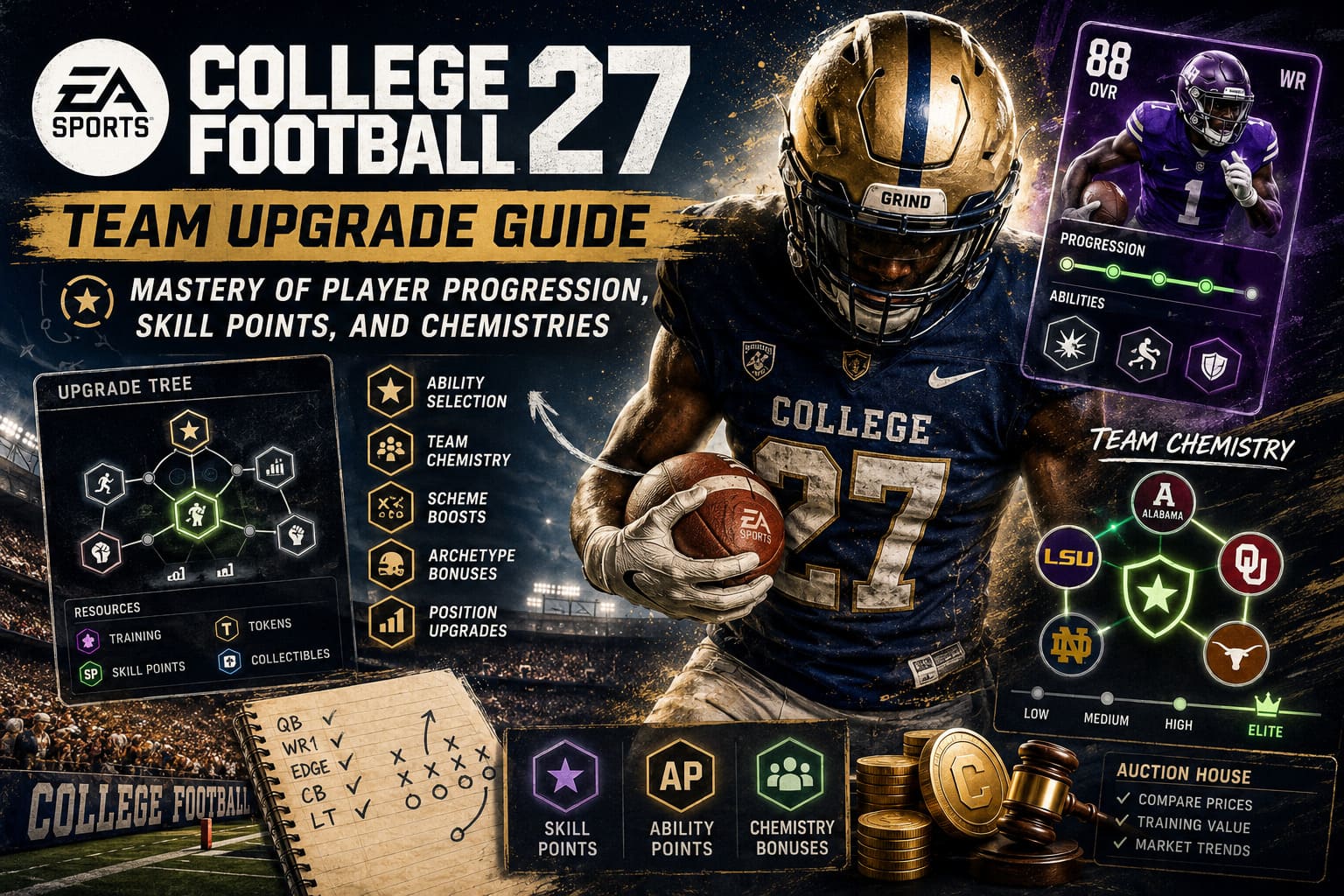
A properly upgraded 88 OVR player can sometimes outperform an untouched 90 OVR card depending on several different factors.
- Ability selection
- Team chemistry
- Scheme boosts
- Archetype bonuses
- Position-specific upgrades
That’s a huge shift from older Ultimate Team modes.
Understanding Different Card Types
Not every player card is designed to grow in the same way.
Some cards are clearly intended as long-term projects, while others are nearly complete the moment you unlock them.
| Card Type | Upgrade Potential | Best Use |
|---|---|---|
| Starter Cards | High over time | Long-term progression |
| Welcome Program Players | Medium | Early roster foundation |
| Promo Champions | Very High | Core starters |
| Limited Edition Players | Elite | Endgame lineups |
| Seasonal Reward Cards | Depends on program | Flexible upgrades |
One mistake I see people making is investing heavily into cards they’ll replace within a week.
Unless you’re absolutely certain someone will stay in your lineup for a long time, I’d avoid spending valuable upgrade resources.
The New Upgrade System Feels More Like an RPG
This is probably my favorite addition in College Football 27.
Instead of buying upgrades endlessly with one currency, progression now has multiple layers.
Usually it starts with a Training investment that unlocks the player’s upgrade tree.

After that, things become much more interesting.
You’ll begin using:
- Skill Points
- Overall upgrade tokens
- Seasonal progression rewards
- Program-specific collectibles
I actually like this system because it slows everyone down equally.
In previous Ultimate Team games, players with millions of Coins could immediately buy enormous advantages.
Now, everyone eventually runs into progression walls that require actual gameplay.
Grinding objectives finally feels worthwhile.
Don’t Waste Training Early
Training disappears much faster than people expect.
During launch week I upgraded several decent players simply because they were starting for me.
Big mistake.
Those cards were gone within days.
Now I follow a much simpler rule.
If I can’t imagine using the player for multiple promos, I don’t spend much Training on them.
Instead, I save most of it for players that become genuine building blocks.
Those usually include:
- Quarterback
- WR1
- Edge Rusher
- Cornerback
- Left Tackle
Those positions usually stay in my lineup much longer than rotational players.
Skill Points Are More Valuable Than They Look
At first I assumed Skill Points were just another upgrade currency.
They’re actually much more important.
Once Training unlocks the progression path, Skill Points become the real bottleneck.
That’s why I rarely spend them immediately.
Instead I ask myself:
- Will this player still start next month?
- Does upgrading unlock a major ability?
- Does it improve an important attribute threshold?
- Will chemistry make the investment even stronger?
If the answer is “no,” I usually wait.
Patience saves a surprising amount of resources.
Archetypes Finally Matter
Older Ultimate Team modes often allowed players to feel fairly similar after enough upgrades.
That isn’t really the case anymore.
Each archetype unlocks different ability paths.

For example, Power Running Backs naturally lean toward physical running, broken tackles, and downhill momentum.
Meanwhile, Elusive Backs gain access to abilities focused on acceleration, cutting, and route running.
The same idea applies across nearly every position.
Instead of forcing every player into the same role, the game encourages building specialists.
Personally, I enjoy this direction because it makes roster construction feel more authentic.
Ability Points Are Your Real Salary Cap
If someone asked me what resource matters most in Ultimate Team, I probably wouldn’t answer Coins.
I’d answer Ability Points (AP).
Every lineup has a limited AP budget.
The strongest abilities consume more of that budget, forcing difficult decisions.
You can either:
- Spread abilities across your entire roster.
- Build around a handful of superstar players.
I’ve experimented with both approaches.
The second one has produced much better results.
I’d rather have one dominant pass rusher and one elite receiver with premium abilities than eight players carrying mediocre upgrades.
Those impact players decide games.
Team Chemistry Is Still King
Chemistry remains one of the easiest ways to make your entire roster stronger.
The difference now is that changing chemistry isn’t cheap.
Switching team chemistry on multiple players can drain a huge amount of Coins surprisingly quickly.
Because of that, I always recommend deciding your theme team early.
Changing direction later becomes expensive.
For example, if you’re halfway committed to one college program before switching to another, you’ll probably spend far more than necessary.
Planning ahead saves a fortune.
Chemistry Bonuses Stack Faster Than You Think
The best chemistry boosts don’t appear immediately.
They arrive gradually as more players share the same program.
| Chemistry Tier | Typical Benefit |
|---|---|
| Low | Small attribute increases |
| Medium | Better position-specific ratings |
| High | Noticeable athletic boosts |
| Elite | Team-wide improvements for matching players |
Once those higher tiers activate, even lower-cost cards begin playing far above their listed Overall Ratings.
That’s one of my favorite parts of Ultimate Team every year.
Building synergy often matters more than buying expensive cards.
My Favorite Ways to Earn Upgrade Resources
You don’t have to spend money to keep improving your roster.
It definitely requires consistency, but it’s completely possible.
The activities I prioritize are:
Daily Objectives
They’re quick.
They’re predictable.
Most importantly, they constantly move your Field Pass forward.
Skipping them slows your progression more than people realize.
Solo Challenges
Some players ignore these after launch.
I wouldn’t.
They’re one of the safest sources of upgrade items, Coins, and progression rewards.
House Rules Events
These limited-time events are honestly some of the most enjoyable modes in Ultimate Team.
Games are shorter.
Rewards usually come faster.
Even if you only have thirty minutes available, you can make meaningful progress.
Auction House Advice That Saved Me Thousands
Here’s something I wish someone had told me on day one.
Don’t look only at player prices.
Look at Training value.
Sometimes a seemingly overpriced card actually gives excellent Training after a quick sell.
Other times a cheaper-looking card offers terrible value.
Before buying anything, I compare:
- Coin cost
- Training return
- Current market trends
That tiny habit has saved me thousands of Coins throughout the season.
Assassin’s Creed Black Flag Resynced: How to Fix Missing Crimson Pack Pre-Order Bonus Cosmetics
My Personal Upgrade Priority
Whenever I build a new Ultimate Team roster, I generally follow this order.
- Quarterback
- Pass Rush
- Wide Receiver
- Cornerback
- Offensive Line
- Everything else
Improving these positions usually produces the biggest impact on gameplay.
Running backs, linebackers, and safeties are important too, but I’ve found that elite quarterbacks and dominant edge rushers influence games much more consistently.
Final Thoughts
I genuinely think EA Sports College Football 27 has one of the better progression systems we’ve seen in an Ultimate Team mode in years.
Yes, it’s more complicated.
Yes, there are more currencies to manage.
But there’s also much more room for smart decision-making.
The biggest lesson I’ve learned is that resource management beats impulse upgrading every single time.
Don’t spend Training just because you can.
Don’t throw Skill Points at temporary players.
Build around long-term starters, commit to a chemistry plan early, and keep pushing through Field Pass objectives whenever new content drops.
If you stay patient, you’ll eventually end up with a roster that’s not only stronger on paper but also performs far better on the field. And in competitive Ultimate Team, that’s what really separates consistent winners from everyone else.