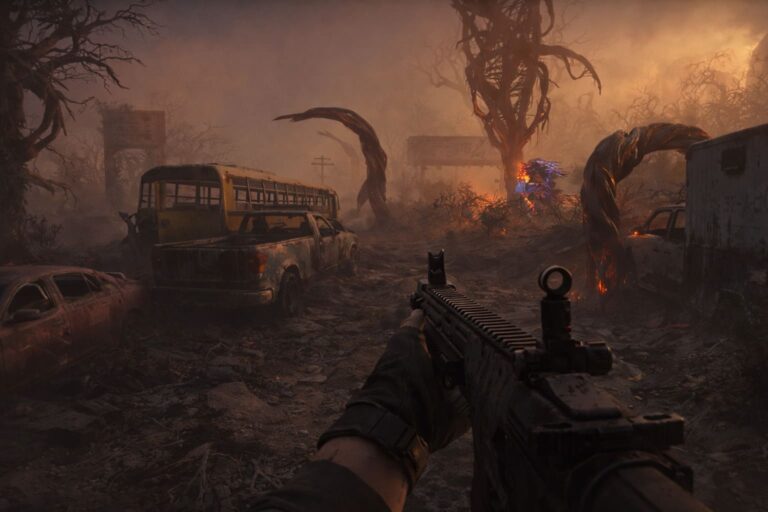
One Shot on Nightmare: Can Alien: Isolation 2 Live Up to the Original’s Most Brutal Challenge?
If there’s one survival horror game that still manages to feel unfair in the best possible way, it’s Alien: Isolation. I’ve played my share of tense stealth games, but this one has a special place in that “never again… okay maybe again” category.
The “One Shot” achievement is basically the game asking: how calm are you under pressure when everything wants you dead?

This isn’t just a trophy—it’s a test of patience, map knowledge, and restraint. And doing it on Nightmare difficulty? That’s where things get personal.
Below is a rewritten, experience-driven guide that blends proven community strategies with a more grounded, practical approach—less myth, more survival instinct.
Black Flag Resynced Console Release Date & Jackdaw Naval Build Guide
What “One Shot” Really Means
The requirement sounds simple: complete all 18 missions without dying once. In reality, it means no death screen mistakes, no careless panic reloads, no “I’ll just rush this room” decisions, and absolute discipline in every encounter. You can technically play on lower difficulties, but Nightmare Mode is where this achievement feels “authentic”—and brutally honest.
Nightmare Difficulty: What Changes the Game
Nightmare Mode doesn’t just make enemies tougher. It removes comfort entirely. The HUD is almost gone, health is hidden, the motion tracker becomes unreliable, resources are extremely scarce, and the map is disabled. What this really means is simple: you stop reacting and start remembering. Sevastopol becomes a mental map, not a visual one.
| System | Normal Experience | Nightmare Reality |
|---|---|---|
| HUD | Full UI support | Almost everything removed |
| Health | Visible HP bar | Completely hidden |
| Motion Tracker | Reliable | Glitchy and inconsistent |
| Resources | Manageable | Extremely scarce |
| Map | Available | Disabled |
The Real Core Strategy: Controlled Patience
A lot of guides push save tricks or exploits, but the most reliable approach is simpler: move slowly, but never aimlessly. The Alien AI reacts to hesitation and noise. If you stall too long, you get boxed in. If you rush, you get noticed. The sweet spot is deliberate movement with a clear objective in mind.
Saving Smart: Not Exploiting, But Surviving
Saving matters a lot, but it should feel like insurance rather than a crutch. Save before entering new zones, before scripted encounters, and when something feels risky—because it probably is. Don’t overwrite saves impulsively. Keeping a mental chain of checkpoints helps stabilize long runs.
Movement: The Most Underrated Survival Skill
Running feels tempting, but it often gets you killed faster than anything else in the game. Walking should be your default state. Run only in known-safe corridors, crouch less than expected, and never sprint into unknown rooms. The Alien punishes noise patterns, not just individual sounds, which makes predictable sprinting extremely dangerous.
Enemy Behavior Breakdown
The Xenomorph is the real threat, not because it is invincible, but because it adapts. Flamethrower use only buys time and should be treated as emergency deterrence. Staying still too long creates dangerous positioning. Vent movement is influenced by noise and objectives rather than pure randomness.
Working Joes are slow but persistent. Avoid them whenever possible and never assume safety just because they are walking away. Humans are inconsistent threats; they should be avoided entirely since their gunfire often attracts worse dangers.
Mission Pressure Points
Some missions create spikes in difficulty that can break even experienced players. Mission 5 introduces the first serious Alien pressure, Mission 14 becomes a density and timing test, and Mission 18 punishes any final-stage relaxation with environmental hazards.
Mission 5 – First Real Test
This mission teaches the core truth of the game: you are not in control. Staying close to walls, avoiding unnecessary exploration, and focusing on objectives instead of loot is the safest path forward.
Mission 14 – Reactor Core Stress Test
This section is dangerous not because of a single enemy, but because of density. There is no breathing room. Waiting, observing patrol cycles, and avoiding panic decisions are essential. Rushing here almost always ends a run.
Mission 18 – Final Sequence
The finale is deceptive. Players relax and that’s where mistakes happen. Transit systems and environmental hazards become more dangerous than enemies. Focus until the final moment triggers completion.
Tools That Actually Matter
The flamethrower is an emergency tool, not a solution. Noisemakers are one of the best distraction tools in the game. Medkits should be used proactively rather than hoarded. Rewire systems are often overlooked but extremely powerful for environmental control.
A Simple Survival Mindset Shift
Most failures in “One Shot” runs come from switching between overconfidence and panic. The most stable approach is consistency: treat every room as dangerous before entering it. This mindset removes hesitation spikes, which are one of the biggest causes of failure.
Alien: Isolation 2 in 2026 — The Return of Fear, or Just Hype Done Right?
If you’ve been around survival horror games for a while, you already know how rare it is for a sequel to feel genuinely dangerous for its legacy. And yet, in 2026, that’s exactly the conversation surrounding the long-awaited return of the Alien: Isolation universe. Whether you’re a long-time fan of the original 2014 cult classic or someone who discovered it later through streaming clips and “unfair AI” memes, the current wave of hype is impossible to ignore.
The phrase that keeps coming up everywhere right now is simple: “False Sense of Security.” And honestly, it fits the franchise too well to ignore.
A Teaser That Changed the Conversation
On Alien Day 2026 (April 26), Creative Assembly finally broke years of silence with a teaser titled “False Sense of Security.” It wasn’t long, it wasn’t flashy in a blockbuster sense—but it didn’t need to be.
What it did show was enough to send the community into full speculation mode:
– A dark, rain-soaked environment
– Heavy industrial tones and flickering lighting
– The return of the iconic emergency save station system
– A subtle but unmistakable shift in atmosphere
That last point matters more than it sounds. The original Alien: Isolation was built on tension through isolation, silence, and controlled vulnerability. Seeing the save station return is basically Creative Assembly saying: yes, we remember what made you suffer… and love it.
A New Setting? Goodbye Sterile Space?
One of the biggest takeaways from the teaser is the environment shift. Instead of endless corridors of a spaceship like Sevastopol, we’re now possibly looking at something far more grounded—and more dangerous.
Early interpretations point toward:
| Element | Old Game (Alien: Isolation) | Rumored Sequel Direction |
|——–|—————————-|————————–|
| Setting | Space station interiors | Planetary surface / industrial colony |
| Atmosphere | Sterile, claustrophobic | Wet, open, decayed industrial zones |
| Threat visibility | Tight corridors | Mixed vertical terrain + weather obscurity |
| Survival style | Pure stealth + hiding | Expanded environmental interaction |
If this direction is accurate, it’s a bold move. Moving from pure claustrophobia to environmental unpredictability could either elevate the fear—or dilute what made the original so special.
Personally, I think it’s a risky but exciting shift. Horror doesn’t always need smaller spaces; it needs control loss. Rain, wind, visibility problems, and open industrial ruins can do that just as effectively as vents and lockers.

Unreal Engine 5 — A Necessary Upgrade or Just Marketing?
Another major talking point is the rumored transition to Unreal Engine 5.
While the original game used a custom internal engine, the sequel is widely believed to have moved toward UE5. If true, this opens up some serious technical possibilities:
– More realistic lighting systems (perfect for horror)
– Improved volumetric fog and weather effects
– Dynamic shadow behavior (key for Xenomorph tension)
– Higher fidelity AI navigation environments
But let’s be honest: engine upgrades alone don’t make horror better. They just make it prettier while it tries to scare you.
The real question is whether Creative Assembly can translate fear into systems, not just visuals.
Why 2026 Feels Like the Perfect Storm
This isn’t happening in a vacuum. The hype around the sequel is amplified by a very specific set of conditions in the Alien franchise.
1. The “Romulus Effect”
The success of Alien: Romulus revived mainstream interest in grounded survival horror again. It leaned heavily into tension over spectacle—something fans of Isolation instantly recognized.
2. Franchise Visibility Explosion
Between TV expansions, spin-offs, and VR experiments, Alien is no longer dormant. It’s everywhere again.
3. Nostalgia + Streaming Culture
Alien: Isolation never really died. It lived on through Twitch horror streams, Xenomorph AI reaction clips, and challenge runs. That kind of longevity creates something powerful: expectation inflation.
What Fans Are Actually Expecting
The community isn’t just asking for “more Alien.” They’re expecting evolution.
1. Smarter AI Systems
– Multi-layered Xenomorph behavior
– Ability to adapt across vertical environments
– Less predictable stalking patterns
2. Environmental Interaction
– Using electricity, fire, or pressure systems as traps
– Temporary environmental control mechanics
– Dynamic destruction or alteration of space
3. Multiple Threat Layers
Instead of a single unstoppable predator, some players speculate secondary stalker entities, human factions with unpredictable AI, and competing survival pressures.
4. More Player Agency
– More strategic hiding tools
– Limited crafting or improvisation
– Risk-based survival choices
The Risk of Over-Engineering Fear
Here’s where things get tricky. Horror games often lose their identity when they try to become too interactive.
The original Alien: Isolation worked because you were weak, you were slow, and you were watched.
If the sequel adds too many systems, too many tools, or too many counter-strategies, the tension could collapse into optimization gameplay instead of fear.
There’s a thin line between “I survived because I was smart” and “I survived because the systems let me.” And only one of those is actually scary.
Release Expectations — Patience is Still Required
Despite all the excitement, one reality remains unchanged: this game is still early in development.
Most industry speculation suggests no release before 2027, possibly even 2028 for full launch. Current phase: early production and pre-alpha systems testing.
That means everything we’re seeing right now is more about direction than content.
Final Thoughts — Hope, Fear, and Healthy Skepticism
As someone who enjoys survival horror across different styles—from psychological horror to systemic survival sims—this moment feels interesting but also fragile.
On one hand, the return of Alien: Isolation’s universe is exactly what horror gaming needs right now: slow tension, unpredictable AI, and atmosphere-driven gameplay.
On the other hand, modern game development often struggles with restraint. Bigger maps, more systems, and more features don’t always translate into better fear.
Still, if Creative Assembly understands one thing from their original success, it’s this: fear doesn’t come from what you fight. It comes from what you can’t control.
And if “False Sense of Security” is any indication, they might still understand that better than most studios today.
Summary
– New teaser suggests return of core survival horror identity
– Possible shift to planetary industrial environments
– Unreal Engine 5 could elevate atmosphere significantly
– Community expects smarter AI and environmental interaction
– Release likely still years away
– Biggest challenge: preserving tension while evolving systems
If this sequel lands correctly, it won’t just be another horror game release. It could redefine what modern stealth survival horror means again—just like the original did over a decade ago.